
Somewhere in the back of a ranch outbuilding or an old dealership photo album, there is probably a Bronco roadster nobody thought to keep. The ford bronco 1969 roadster farewell is one of those quiet endings that history books skip past, the kind that only becomes visible once you notice the model is simply gone from the option sheet a year or two later.
Car Features
7 min read
The Fading of the Bronco Roadster by 1969
The ford bronco 1969 roadster farewell was quiet and unannounced, a body style fading from the order sheet as buyers chose comfort over the truck's rawest configuration.
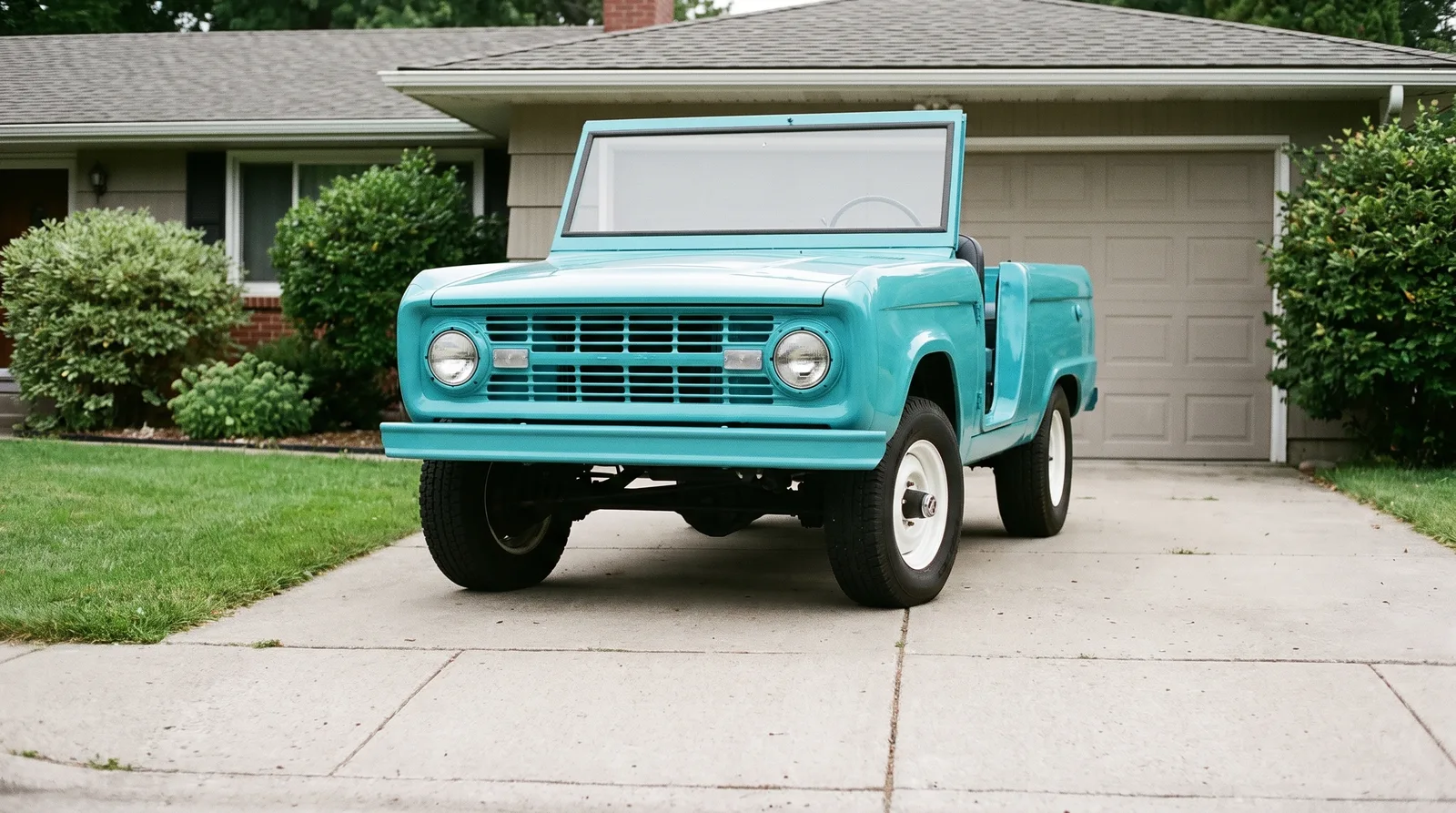
A body style that never quite found its audience
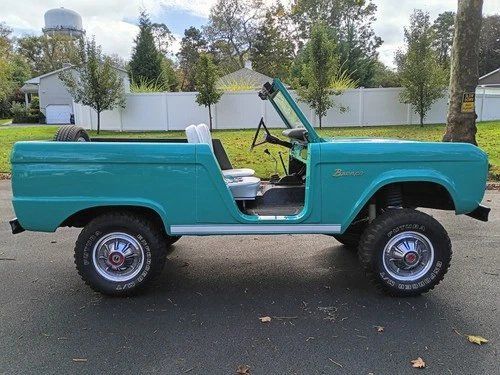
Ford offered the Bronco in three body configurations from the start: the wagon with a full steel top, the pickup-style half cab, and the roadster, an open body style with no doors and minimal weather protection beyond a fold-down windshield. The roadster was the purest expression of the Bronco's original off-road intent, stripped of anything that was not essential to climbing a trail or fording a creek. Ford built the roadster through the 1968 model year and then withdrew it, which makes 1969 the first year a buyer could not order one new.
It was also, by most measures, the least practical version Ford sold. No doors meant no real security and limited weather protection. For a buyer using the truck as a daily driver rather than a dedicated trail rig, that tradeoff simply did not make sense, and the sales figures reflected it from the earliest years of production.
Why 1969 marks the moment the roadster's absence became final
By the time the 1969 model year opened, Ford's own order data from the preceding seasons had already told product planners what dealers had been reporting anecdotally for a while: buyers overwhelmingly preferred the wagon body, with the half cab pickup taking a distant second. The roadster had represented a shrinking sliver of total production for years, and Ford's planners had little reason to keep tooling and marketing effort behind a configuration that so few people actually ordered.
There was no dramatic announcement. No farewell tour, no special edition to mark the end. The roadster simply stopped appearing on the order sheet after 1968, a quiet exit for a body style that had represented the Bronco's rawest character, and by 1969 that absence was simply the new normal for anyone shopping a Bronco showroom.
What the roadster's decline says about the truck's buyers
The shift away from the roadster tells a bigger story about who was actually buying Broncos as the 1960s wore on. The truck's audience was broadening beyond the hardcore trail user who wanted the lightest, most stripped configuration possible. Suburban buyers, families, and people who wanted a rugged-looking vehicle for everyday use were becoming a larger share of the customer base, and those buyers wanted doors, weather protection, and comfort features the roadster simply did not offer.
This is a pattern that shows up across the entire off-road SUV segment during this era, not just at Ford. Manufacturers kept discovering that the purest, most stripped-down versions of their trucks sold in small numbers while the more civilized configurations carried the volume. The Bronco's roadster is one of the clearer, earliest examples of that pattern playing out inside a single model line.
A body style worth remembering, not just cataloging
There is something bittersweet about writing the roadster's ending as a footnote in a 1969 changes summary rather than a chapter of its own. It deserved better than a quiet fade from the order sheet, but that is often how these things go in automotive history. The configurations that mattered most to the original engineering vision are not always the ones that survive the market's verdict.
What remains is a small, dwindling population of original roadster Broncos scattered across collections and barns, each one a physical reminder of what the truck looked like before comfort and practicality reshaped the lineup. Anyone who owns one, or is lucky enough to find one for sale, is holding a piece of the Bronco's original, unfiltered intent.
"The roadster disappeared so quietly that most people never noticed it was gone until they went looking for one and could not find it anywhere near a dealer lot."
- Nora Beckett
Learning more about the year the roadster faded
The roadster's decline is only one thread inside a larger 1969 model year story that includes drivetrain changes, trim updates, and shifting buyer preferences across the whole lineup. For the complete picture of that year, see more on the 1969 ford bronco, which places this quiet farewell alongside everything else that changed in the same twelve months.
For collectors hunting an early, stripped-down Bronco configuration today, patience is the only real strategy. These trucks surface rarely, and when they do, they tend to move fast. Checking classic Broncos on the market regularly is still the most reliable way to catch one before somebody else does.
What the roadster teaches us about reading old sales figures
There is a lesson here that extends well past the Bronco itself. Whenever a low-volume configuration disappears quietly from a manufacturer's lineup, the temptation is to assume it was a failure, something buyers actively rejected. The truth is usually more mundane. The roadster was not disliked. It was simply outnumbered by buyers who wanted something more practical for everyday use, and a company the size of Ford has little reason to keep a niche configuration on the books once the sales data makes the pattern obvious.
I think about the roadster differently than most footnotes in Bronco history because it represents a road not taken by the majority of buyers rather than a mistake corrected by the factory. The wagon and half cab won because they served more people better, not because the roadster was flawed in some fundamental way. That distinction matters if you are trying to understand the truck's history honestly rather than just repeating whichever version of the story is easiest to tell.
Anyone who does manage to find a genuine roadster today is holding onto a small, stubborn piece of a decision the market made decades ago. It is worth treating that history with some tenderness rather than dismissing it as a dead end. Every surviving example is a reminder that not every good idea needs to win the sales race to matter.
I keep coming back to a photograph I saw once of a roadster Bronco parked outside a feed store somewhere in the high desert, doors nowhere in sight, mud splashed halfway up the fenders. Nobody dressed that truck up for a magazine spread. It looked exactly like what it was built to be, a stripped-down working machine that did not need doors to prove it belonged on that dirt lot. That image says more about why the roadster mattered than any sales figure ever could, even if the sales figures are the reason it eventually disappeared.
Stories like that are why this small, quiet farewell still deserves attention instead of being reduced to a single line in a bigger production summary. The roadster represented an idea about what an off-road truck could be stripped down to its essentials, and even though the market moved on, the idea itself never really went away. It just found new expression in later generations of stripped, purpose-built off-road vehicles that owe more to that original open Bronco than most buyers today realize.
Sources and notes
Related Reading
#Ford Bronco
#1969 Ford Bronco
#Bronco roadster
#Bronco body styles
#classic SUV history
#rare Bronco

About the author
Nora Beckett
Automotive features writer and photographer who tells the human stories behind the cars, from show fields to cross-country road trips.
Related Listings - Ford Bronco




Comments
Be the first to comment on this article.