
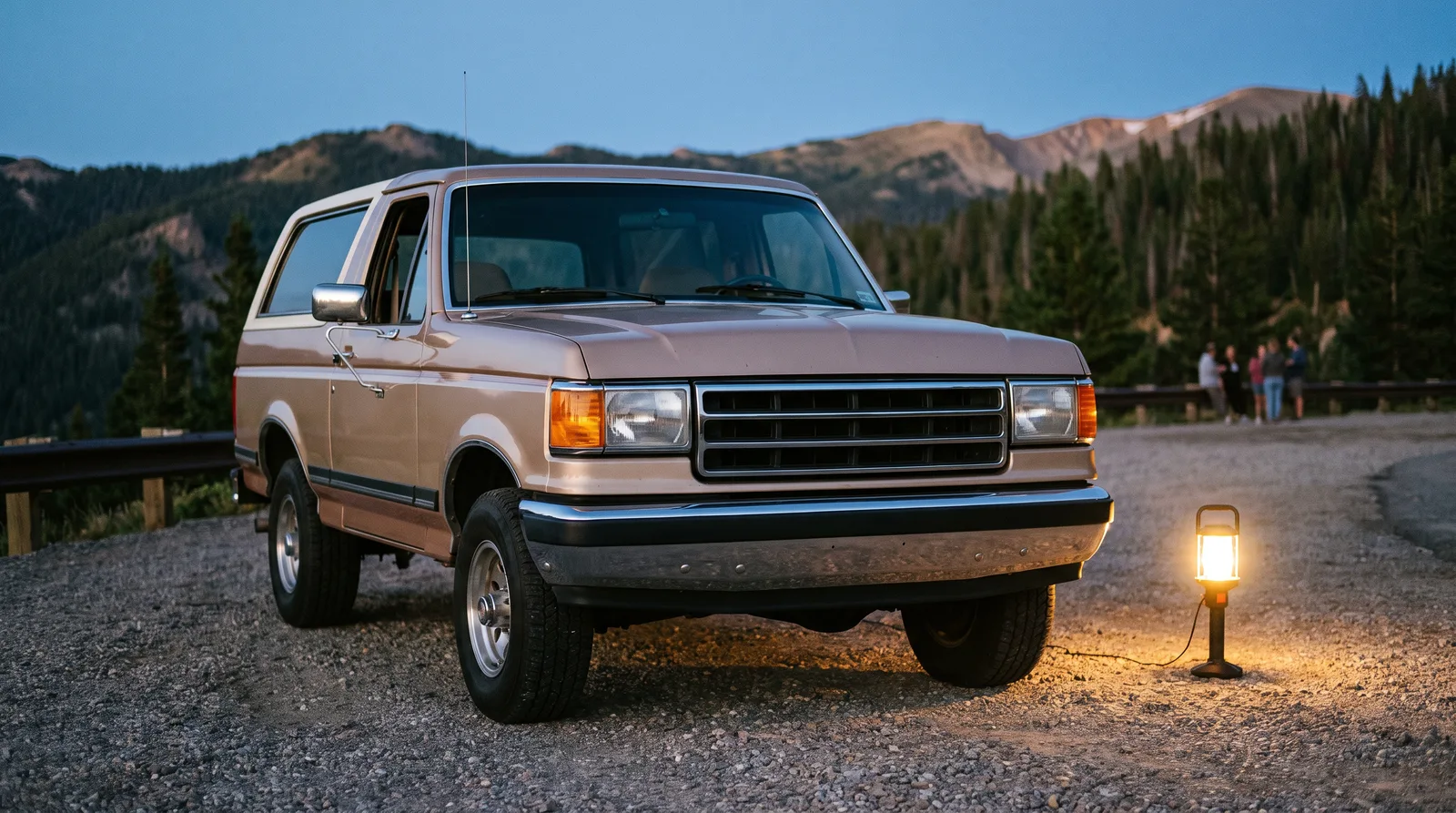
Line up a 1986 Bronco next to a 1987 Bronco and the family resemblance is obvious, but the details tell a very different story about what Ford's designers were chasing. The ford bronco 1987 aero restyle softened the squared off, upright front end that had defined the full-size Bronco since 1980 and replaced it with a sloped, rounded nose designed to cut through the air more efficiently. It was a modest change in absolute terms, a few inches of sheet metal reshaped around new lighting and grille hardware, but it marked the moment the Bronco stopped looking like a truck from the 1970s and started looking like one built for the decade it was actually competing in.
Car Features
7 min read
The 1987 Bronco Restyle and Its Smoother Face
The 1987 Bronco traded its upright, boxy nose for composite headlamps and a sloped grille, an aerodynamic update that also brought sequential fuel injection and a friendlier cabin.
What actually changed at the front
The centerpiece of the 1987 update was a new composite headlamp system, replacing the older sealed beam rectangular units with sleeker, more integrated lighting that matched a trend spreading across Ford's entire truck and car lineup at the time. The grille was reshaped to slope back toward the windshield rather than standing nearly vertical, and the hood line dropped to follow that same angle. Bumpers, fender caps, and the front air dam were all redesigned together as a single package rather than as isolated parts, which is part of why the restyled truck reads as meaningfully different despite sharing its basic cab structure and frame with the truck it replaced.
Underneath the new nose, Ford paired the restyle with fuel injection for the standard inline six, with the 5.8 liter V8 following a year later for 1988, a change that improved both driveability and fuel economy without requiring a driver to know or care that anything under the hood had changed. The pairing of a smoother face with a smoother running engine was not a coincidence. Ford wanted the 1987 Bronco to feel like a genuinely new product even though its underlying architecture had not been touched.
Reading the design intent
Aerodynamics research had become a serious priority across the American auto industry by the mid 1980s, driven by both fuel economy regulation and a growing consumer appetite for cars and trucks that simply looked more modern than their boxy predecessors. Ford's own passenger car lineup had already gone through a similar transformation with vehicles like the Taurus, and the 1987 Bronco restyle brought a version of that same design language to the truck side of the business. The result was a front end that tested better in the wind tunnel and, just as importantly to Ford's marketing department, looked like it belonged next to those newer passenger models on a dealer lot.
How collectors and researchers date these trucks
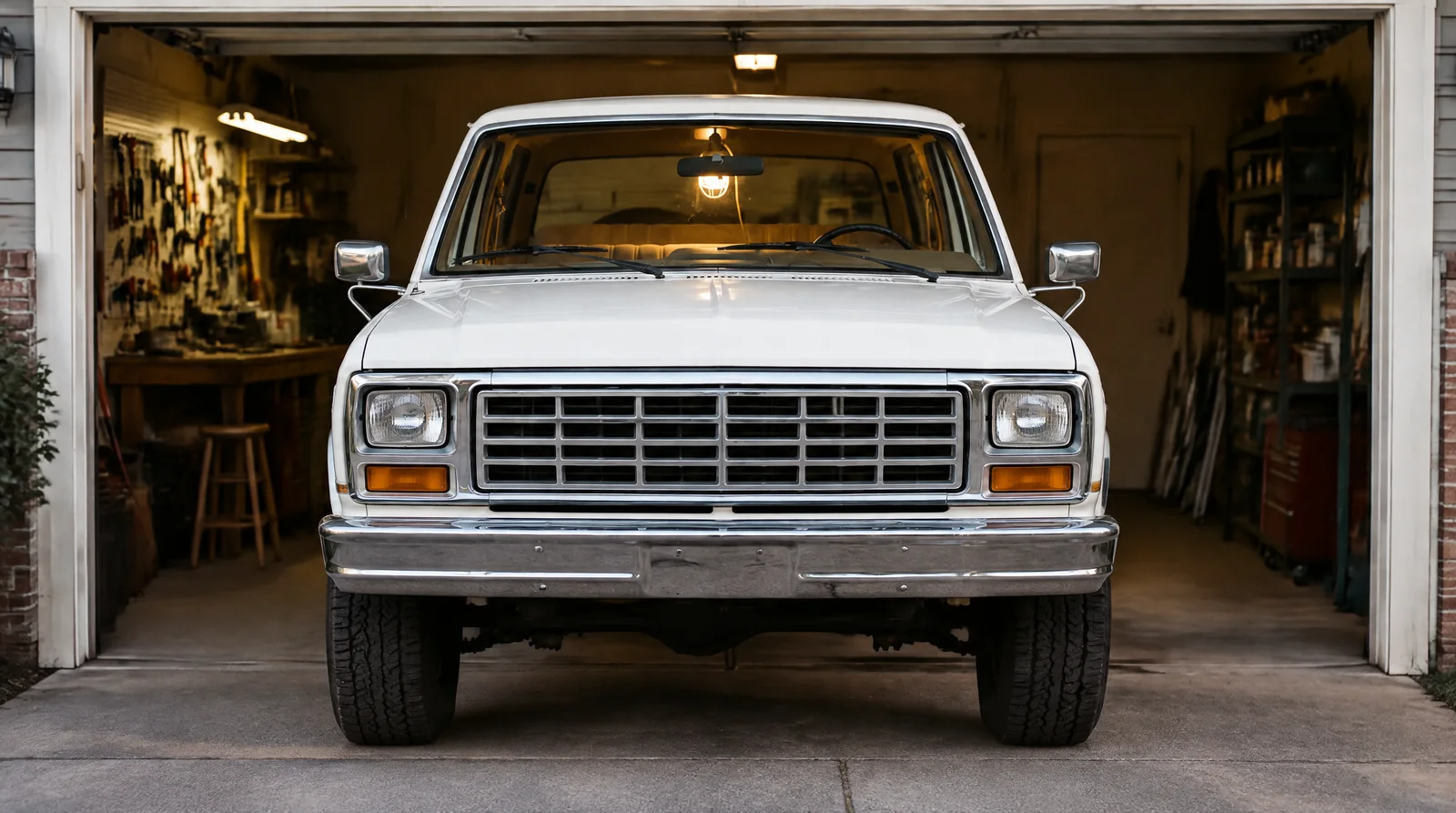
For anyone documenting a Bronco's history, the 1987 restyle is one of the clearest visual dating markers in the entire full-size production run. A truck with the older upright grille and sealed beam headlamps predates the change, full stop, regardless of what a seller's paperwork claims. That makes the restyle a useful reference point when verifying an undocumented truck's actual model year, since body panels from before and after the change are not interchangeable in a way that would let an owner casually blend the two looks. If you want the full story of how this restyle fits into the broader full-size Bronco run from 1980 through 1996, the earlier bullnose years explain exactly what the 1987 changes were reacting against.
"The nose is the fastest way to date one of these trucks without pulling a VIN. Ford changed enough sheet metal in 1987 that the two looks simply do not overlap."
- Sarah Whitfield
The interior changed too, quietly
While the exterior restyle gets most of the attention, Ford also revised the dashboard and instrument panel for 1987 as part of the same program. The new dash carried a more rounded, integrated look that matched the softer exterior lines, and gauge clusters were redesigned for better legibility at a glance, a small but real improvement for a truck that many owners used for long highway hauls as often as they used it off road. Switchgear was reorganized as well, with climate and audio controls grouped more logically than in the earlier bullnose dash, a change drivers noticed within the first week of ownership even if they never could have described exactly what had improved.
Ford also used the 1987 model year to expand the availability of options that had previously been limited to higher trim levels, including power windows, power locks, and improved air conditioning systems. None of these changes were unique to the Bronco specifically, since Ford was rolling similar updates across its F-series pickup line at the same time, but the timing meant that a 1987 Bronco buyer got a meaningfully more comfortable truck than a 1986 buyer had, even setting aside the exterior styling entirely.
Spec snapshot of the change
| Feature | Before 1987 | 1987 restyle |
|---|---|---|
| Headlamps | Sealed beam, rectangular | Composite, integrated design |
| Grille angle | Near vertical | Sloped toward windshield |
| Fuel delivery | Carbureted | Fuel injection on the inline six for 1987, extended to the 5.8 liter V8 for 1988 |
| Design goal | Utility first styling | Aerodynamic efficiency and updated appearance |
The 1987 aero restyle did not reinvent the full-size Bronco, and it was never meant to. It was a calculated refresh that let Ford keep an aging platform competitive against newer rivals without the enormous cost of an entirely new frame and body. For a collector today, a well kept example from this window offers a useful middle ground, carrying the improved driveability and updated looks of the later trucks while still predating the more substantial 1992 redesign that eventually replaced this face altogether. If a truck from this generation interests you, it is worth taking time to browse classic Bronco listings and comparing pre and post 1987 examples side by side, since the difference is easy to spot once you know exactly what to look for.
What makes the 1987 restyle worth documenting carefully today is how easy it is to misdate a truck without knowing the specific markers to check. A seller who is not deliberately misrepresenting a vehicle can still get a model year wrong from memory alone, especially on a platform that changed as gradually as this one did across sixteen years of production. Cross referencing the front end styling against the VIN and any available build documentation remains the most reliable way to confirm exactly which side of the 1987 line a given truck falls on, and that kind of careful verification is worth the extra time before any purchase or restoration decision is made.
A restyle with staying power
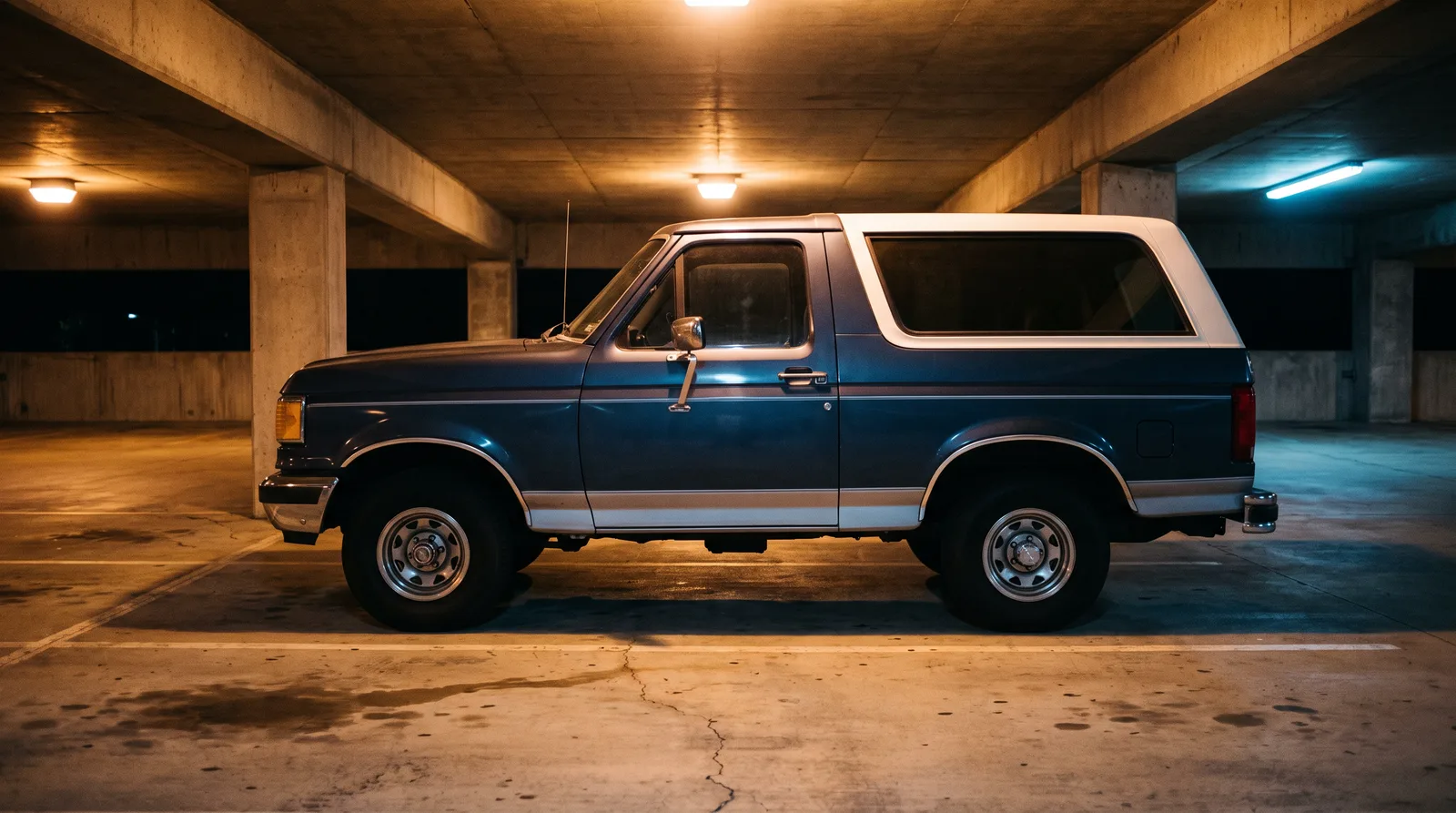
Ford kept this basic front end design in production, with only minor detail changes, all the way through the 1991 model year before the more substantial 1992 redesign arrived. That five year run shows how well the 1987 update accomplished its goal. Rather than needing another expensive facelift a couple of years later, Ford had bought itself half a decade of a competitive, modern looking truck front end for the cost of a single tooling investment, which says as much about the restyle's design quality as any wind tunnel figure could.
Sources and notes
Related Reading
Have a
Ford Bronco
for Sale?
Reach thousands of serious classic car collectors across the US.
Sell It Here →
Selling a classic? Here's how: compare the places to sell classic cars
Are You a Classic Car Dealer?
List your full inventory and connect with targeted classic car buyers.
Join as a Dealer →

About the author
Sarah Whitfield
Third-generation classic car collector specializing in pre-war American and European coachbuilt automobiles. Researcher and concours enthusiast.
Related Listings - Ford Bronco
Comments
Be the first to comment on this article.