
Ask a longtime Bronco club member about the ford bronco brick era and you will probably get a story before you get a fact, and that is exactly how this stretch of the truck's history deserves to be told. A friend of mine, a guy named Pete who has owned three of them over the years, tells it like this. He bought his first 1988 Bronco off a rancher who had used it to haul feed for a decade and never once washed the engine bay, and when Pete finally got around to detailing it, he found the original build sheet still folded up behind the glovebox, untouched since the day the truck left the dealership. That kind of story is what the brick era Bronco community runs on, trucks that worked for a living long before anyone thought to call them collectible.
The Brick Bronco Years, 1987 to 1991
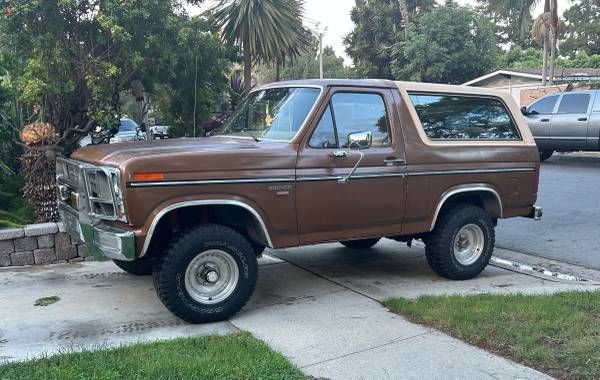
Club regulars call the 1987 to 1991 full-size Broncos the brick era for their toughness, a fuel injected, well loved stretch of the truck's history told through the community that still drives them.
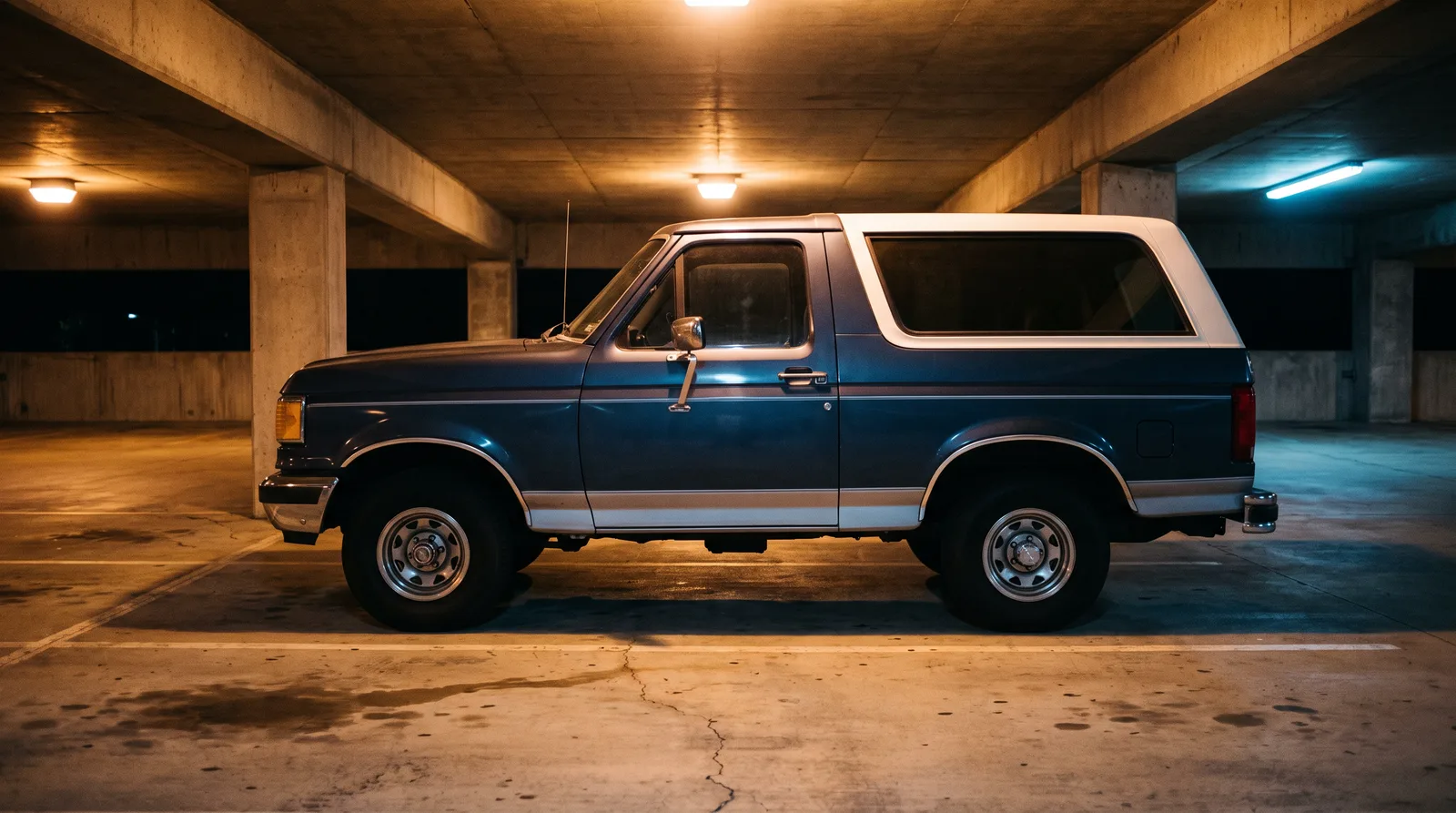
Why the nickname stuck
Club regulars use "brick" for the Broncos built across the late 1980s not because the trucks were boxy, since Ford had actually softened the styling with the 1987 aero restyle by this point, but because the trucks themselves were tough as a brick and just as hard to kill. These were the years when Ford's full-size Bronco was arguably at its most refined as a daily driver, with fuel injection spreading across the engine lineup starting in 1987 and a smoother running four speed automatic overdrive transmission arriving for the 1990 model year. A brick era Bronco from 1987 to 1991 combines the toughness of the earlier bullnose trucks with meaningfully better manners on the highway, and old timers in the club will tell you that combination is why so many of these trucks are still working ranches and farms decades later.
The stories that come with every one of them
Every club meeting I have been to for the last twenty years has at least one guy telling a brick era Bronco story that starts with "so this thing would not die." There is the one about the Bronco that got submerged past its floorboards in a flash flood and drove home anyway. There is the one about the truck that towed a boat across three states with a cracked exhaust manifold nobody noticed for a year. These are not the polished, documented stories you get from a concours judge. They are the kind that get passed around a parking lot before a show even opens, and they are a big part of why this era of Bronco has such a loyal following among people who actually use their trucks rather than trailer them.
What the documentation actually shows
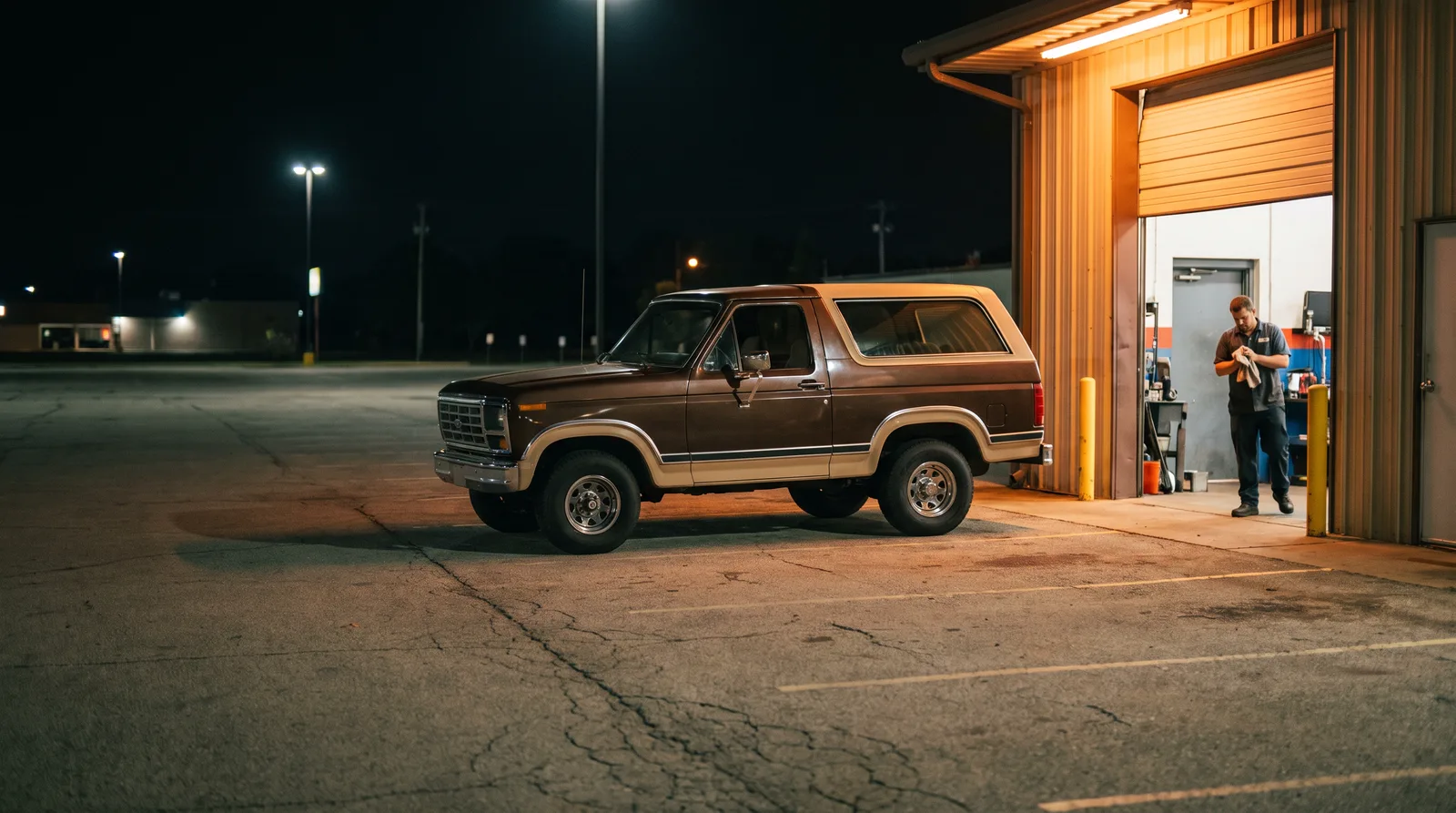
Behind all the parking lot stories, there is a real production history worth understanding, and this is where this started if you want the full arc of the full-size Bronco from 1980 through 1996. The brick era sits in the middle of that run, benefiting from everything Ford had learned in the earlier bullnose years while still predating the more rounded restyle that arrived in 1992. Trim levels during this window ranged from the basic Custom up through XLT and the increasingly popular Eddie Bauer edition, which added leather seating, unique two tone paint, and badging that turned a work truck into something a family would happily drive on a Saturday.
"You can tell a brick era truck by how it sounds when you shut the door. There's a solidity to it that the later trucks lost a little of when Ford softened everything up in '92."
- Wayne Coburn
The Eddie Bauer effect
Pete's second brick era Bronco was an Eddie Bauer, and he still talks about how different it felt from the work truck he had before it. The Eddie Bauer package was Ford's way of telling buyers that a Bronco did not have to look like it belonged on a construction site, and it worked well enough that the trim became one of the most requested options of the era. Two tone paint, plusher seats, and badging borrowed from a well known outdoor outfitter turned a utilitarian truck into something a family could take camping without anyone feeling like they were roughing it more than they wanted to. Club shows from this period are full of Eddie Bauer trucks that have survived in remarkably original condition, in part because owners who paid extra for the trim tended to take better care of the truck afterward.
That said, club old timers will also tell you not to overlook the plain Custom trim trucks. A base model brick era Bronco with a clean drivetrain and honest miles is often the better buy for someone who actually wants to use the truck rather than show it, since parts and service knowledge for the simpler trim levels are just as widely available within the community, and the purchase price tends to be noticeably lower.
Buying into the club today
If you show up to a Bronco meet with a brick era truck, you will find a welcoming crowd, mostly because these trucks are common enough that nobody treats them as too precious to actually drive to the show. That is part of the appeal for a new owner. You are not buying a trailer queen, you are buying into a community of people who will tell you exactly which junkyard still has a good donor truck three counties over, and who will show up with tools if your fuel pump decides to quit on the way home from a rally.
| Detail | Brick era Bronco (1987 to 1991) |
|---|---|
| Trim levels | Custom, XLT, Eddie Bauer |
| Fuel delivery | Fuel injection arrived on the inline six for 1987 and reached the 5.8 liter V8 for 1988 |
| Transmission | E4OD four speed automatic overdrive arrived for 1990, replacing the earlier three speed |
| Reputation | Known among owners for durability and ease of roadside diagnosis |
If you are thinking about joining that club, there is usually a decent supply of these trucks at any given time, and it is worth browsing what is currently listed as classic Bronco for sale before you commit, since condition and honest maintenance history matter more with a working truck like this than they do with a garage queen. Talk to a club before you buy if you can. The stories you hear will tell you more about a specific truck's character than any spec sheet ever will.
Pete still has that first Bronco, the one with the untouched build sheet behind the glovebox, and he still hauls feed with it on the weekends his grandkids visit the ranch. Ask him if it is a collector car and he will laugh at you. To him it is just a truck that refused to quit, and that is the whole reason the brick era holds the place it does in this community's memory.
Sources and notes
Related Reading

Longtime Corvette owner, judge and club figure who knows the cars, the records and the people behind them.
Related Listings - Ford Bronco
Comments
Be the first to comment on this article.