
Every appraisal has a moment where the number on paper and the number in the seller's head do not match, and the jeep cj cj8 collector market is full of exactly that gap right now. The CJ-8 Scrambler spent decades as an afterthought in the classic Jeep world. It is not one anymore, and pricing it correctly requires more discipline than nostalgia alone can provide.
Car Features
7 min read
Collecting the Scrambler: The CJ That Got Away
Condition, documentation, and real-world liquidity, not auction headlines, decide what a Jeep CJ-8 Scrambler is actually worth in today's collector market.
Condition still decides everything
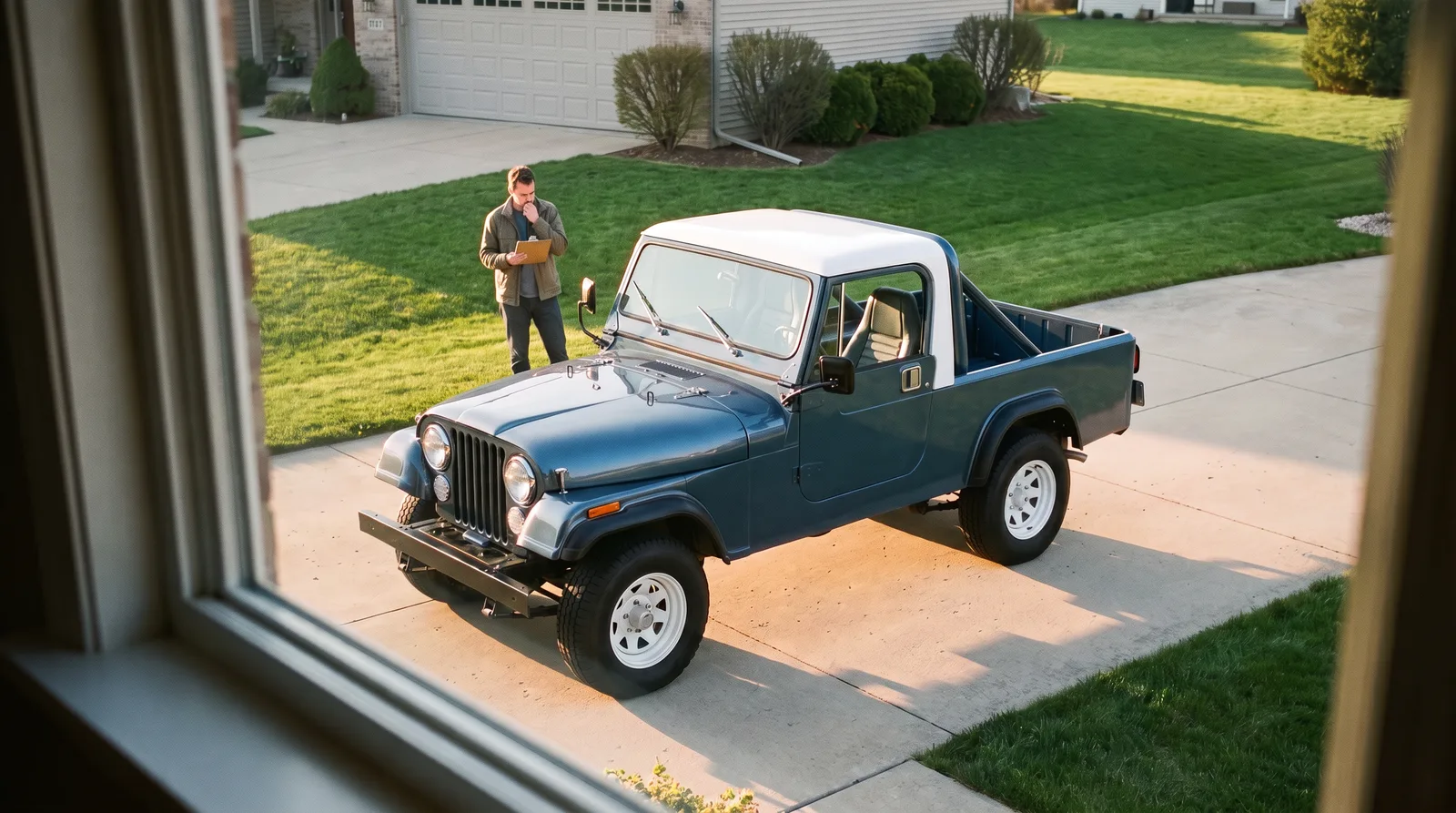
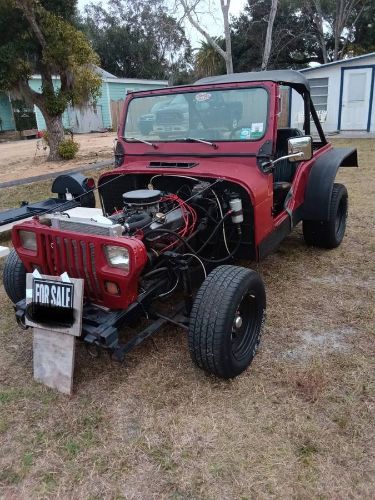
Before any conversation about rarity or provenance, condition sets the baseline for a CJ-8's value, the same as it does for any collector vehicle. Rust is the primary threat, particularly in the frame, floor pans, and the bed structure that distinguishes the Scrambler from a standard CJ-7. A truck with solid original sheet metal and a documented mechanical history commands a real premium over a similar-looking example that has been patched, welded, or quietly re-skinned.
Buyers new to the model often underestimate how much cosmetic condition can mask structural problems. A fresh coat of paint over a repaired frame rail looks fine in photos and terrible under a lift. Anyone serious about buying should have a trusted inspector look underneath before money changes hands, not after.
Documentation moves the needle more than people expect
Two visually similar CJ-8s can carry very different values depending on what paperwork comes with them. Original title history, dealer invoices, and any surviving build records help confirm authenticity in a market where engine swaps, bed replacements, and mixed-year parts are common enough to matter. A well-documented truck with a clean chain of ownership reduces risk for a buyer, and reduced risk is worth real money in any collector market, not just this one.
This is where the Scrambler market still has some catching up to do compared to more established collector segments. Because the model spent so long being treated as a working truck rather than a collectible, a lot of early documentation was simply thrown away. Owners who kept theirs, even by accident, are sitting on an advantage they may not fully appreciate.
Liquidity is thinner than the hype suggests
It is easy to look at a handful of strong auction results and assume every CJ-8 will find an eager buyer at a premium price. That is not quite the reality. The market for these trucks, while growing, is still relatively thin compared to mainstream collector vehicles. A strong sale price at a well-attended auction does not automatically translate into the same result for a private sale in a smaller regional market, and sellers who price against the headline number rather than their actual buyer pool often sit on a truck far longer than expected.
That gap between top-line auction results and real-world liquidity is one of the first things I flag for any client asking whether now is the right time to sell. The answer usually depends less on the model's overall trend and more on whether there is an active, motivated buyer for that specific truck, in that specific condition, in that specific region.
"A high auction result tells you what one buyer paid on one day for one truck. It does not tell you what your truck is worth. I've seen sellers hold out for six months chasing a number that only ever existed once."
- Marcus Feld
Downside risk buyers should weigh honestly
Rising values invite exactly the kind of enthusiasm that leads buyers to overlook downside risk, and the CJ-8 market is not immune to that pattern. Parts availability, while better than it was a decade ago, still lags behind more common CJ-7 and CJ-5 platforms for certain Scrambler-specific components, particularly bed panels and trim. A buyer who needs a hard-to-find part for a restoration may wait months and pay a premium once it turns up.
There is also the reality that collector enthusiasm can cool. The current appetite for the CJ-8 is tied closely to broader interest in overland and adventure vehicle culture. That interest has been durable so far, but any appraiser who tells you a collector market is guaranteed to keep climbing is selling something other than an honest opinion. Treat current values as a real, defensible trend, not a promise.
Where the CJ-8 fits against comparable classics
| Factor | CJ-8 Scrambler | Standard CJ-7 |
|---|---|---|
| Production run | 1981-1986 | 1976-1986 |
| Relative rarity | Lower production volume | Higher production volume |
| Documentation availability | Thinner, improving | More established |
| Parts availability | Good for shared parts, tighter for bed-specific items | Strong overall |
For anyone wanting the origin story behind why the model exists in this awkward, appealing middle ground between truck and trail rig, where this started covers the design decisions that shaped the CJ-8 from the outset and still influence how it is valued today.
A practical read on buying in today
None of this means the CJ-8 is a bad collector bet. It means buyers should go in with clear eyes rather than auction-headline expectations. A well-documented, structurally sound example bought at a fair price against current market data remains a reasonable hold. A rough truck bought on hype, with the assumption that any Scrambler will keep appreciating regardless of condition, is a much riskier proposition.
Anyone actually shopping right now should take the time to shop classic CJ listings and compare asking prices against documented sales, not just the headline numbers making the rounds in enthusiast circles.
How I approach a valuation request
When a client brings me a CJ-8 to appraise, I do not start with a national average or a headline auction number. I start with the specific truck: its VIN and what it decodes to, its current mechanical state, its ownership chain, and any receipts or records the owner can produce. Only after that groundwork is done do I layer in comparable sales, and even then I weight recent, regionally relevant sales far more heavily than a single spectacular result from across the country.
That approach sometimes disappoints clients who came in expecting a bigger number based on something they saw online. It is a more honest number, and an honest number is worth more in the long run than a flattering one that falls apart the moment a serious buyer starts asking questions.
What separates a strong appraisal from a rough guess
The difference between a credible valuation and a rough guess almost always comes down to how much verification work went into it. Anyone can pull a few recent sale prices and average them. A defensible appraisal accounts for condition differences, documentation gaps, regional demand variation, and the practical cost of any needed repairs before arriving at a final figure. That extra rigor is exactly what protects both buyer and seller from an unpleasant surprise later.
The bottom line on value
The CJ-8 collector market rewards patience and documentation over impulse. That has always been true of durable collector segments, and there is no reason to expect the Scrambler to be an exception just because its rise has been more dramatic than most.
Sources and notes
Related Reading
Have a
Jeep CJ
for Sale?
Reach thousands of serious classic car collectors across the US.
Sell It Here →
Selling a classic? Here's how: sell my classic car
Are You a Classic Car Dealer?
List your full inventory and connect with targeted classic car buyers.
Join as a Dealer →

About the author
Marcus Feld
Accredited collector-car appraiser who reads the market through hammer prices, condition tiers and risk.
Related Listings - Jeep CJ

Comments
Be the first to comment on this article.