
Every club has a truck people argue about, and in the full-size Bronco world that truck is usually one from the ford bronco obs era. OBS stands for Old Body Style, a nickname that only started getting used after Ford moved on to newer designs in the mid 1990s, and it covers the final rounded generation of full-size Broncos built from 1992 through the last year of production in 1996. I have a buddy named Ray who bought his 1994 OBS Bronco new off the lot, drove it through two kids growing up in the back seat, and still argues with anyone who will listen that it was the best truck Ford ever built. He is not entirely wrong.
Car Features
7 min read
The OBS Bronco Years, 1992 to 1996
The final rounded generation of full-size Broncos, nicknamed OBS by later enthusiasts, closed out thirty years of production with a driver airbag, flush glass, and a comfort focus club members still argue about.
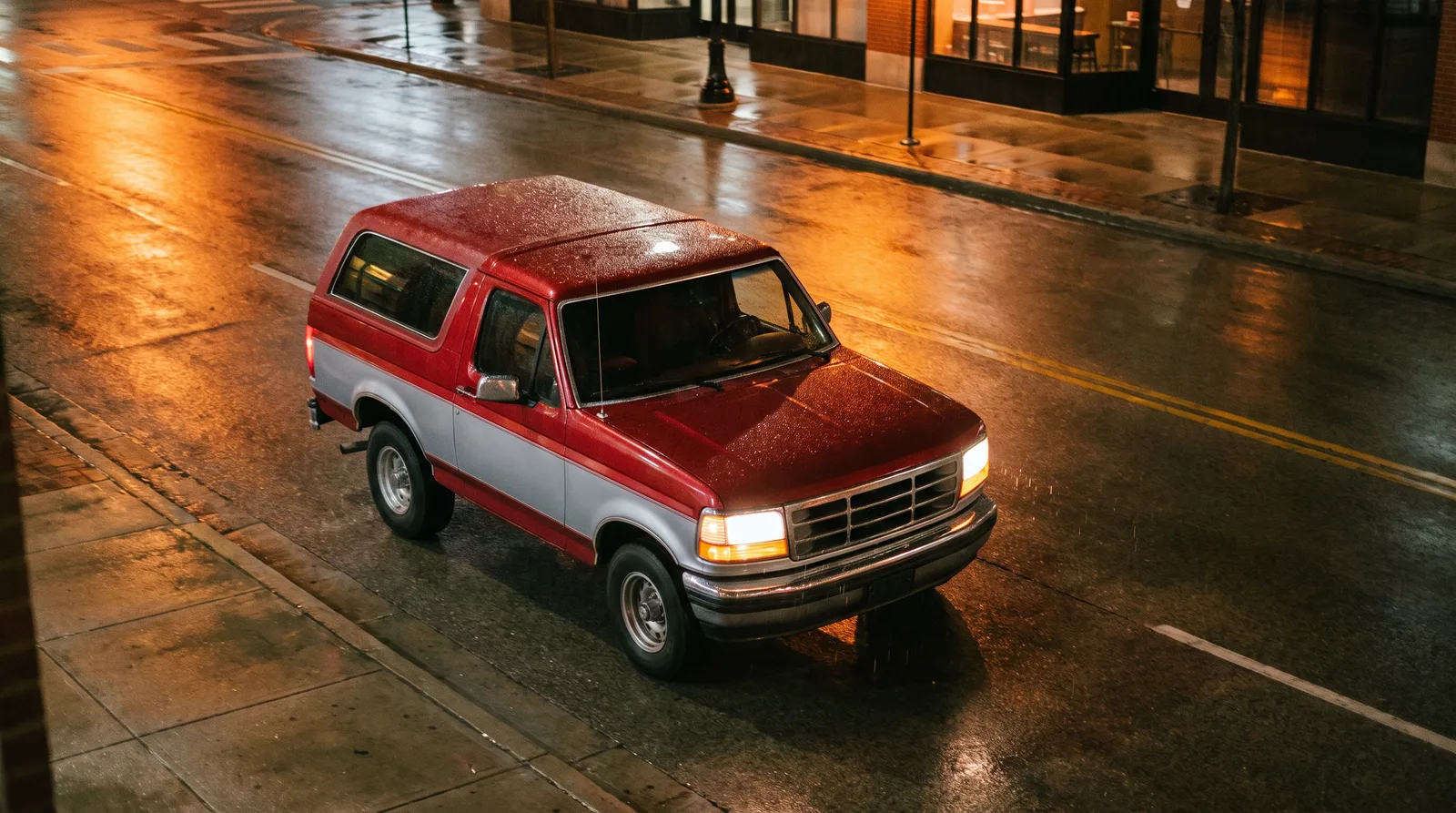
What actually changed for 1992
The OBS era brought the most complete redesign the full-size Bronco had seen since the bullnose generation debuted back in 1980. The body panels were rounded off further than the 1987 aero restyle had already softened them, flush glass replaced the recessed windows of earlier trucks, and the interior got a genuinely modern dashboard with better ergonomics than anything Ford had put in a Bronco before. A driver side airbag was added as standard equipment for the 1994 model year partway through the run, a safety feature that had been unheard of on a truck this size just a few years earlier, and it signaled how seriously Ford was starting to take passenger protection across its whole lineup, not just its cars.
Under the hood, the engine choices carried over largely unchanged from the fuel injected lineup that had matured through the late 1980s, though Ford continued refining the electronics and emissions calibration through each model year of the OBS run. Ray's truck came with the 302 V8, and he will tell you it never once left him stranded in over a decade of daily use, hauling everything from lumber to a fishing boat without complaint.
The last chapter of a thirty year story
What makes the OBS era emotionally significant to club members is knowing how the story ends. Ford discontinued the full-size Bronco after the 1996 model year, replacing it in the lineup with the new Ford Expedition for 1997, a larger, more car like SUV built for a market that had shifted decisively toward comfort over the go anywhere ruggedness the Bronco name had always represented. Nobody driving an OBS Bronco off the lot in 1992 or 1993 knew they were buying into the final chapter, but in hindsight, these trucks carry a certain weight as the last of a lineage that stretched back three decades to the original 1966 model. If you want read the background on the whole full-size run these trucks close out, that story covers everything from the 1980 debut through this final generation.
Why club members treat these trucks differently
Talk to enough Bronco owners and you will notice OBS trucks get discussed with a different tone than the older bullnose or brick era trucks. There is less romance about toughness and more appreciation for how genuinely comfortable and modern these final trucks felt to drive, closer in spirit to an SUV than to the utilitarian trucks Ford built in 1980. That comfort came with tradeoffs some old timers still grumble about, a little less of the mechanical simplicity that made earlier Broncos easy to wrench on in a driveway, but Ray and plenty of others will tell you the tradeoff was worth it every single winter morning the truck started right up and warmed the cabin fast.
"These are the trucks people bought to keep, not to flip. Ray's still got his. A lot of guys in this club still have theirs. That says something about how these things were built."
- Wayne Coburn
Trim levels and what they actually mean now
Ford carried the familiar trim structure through the OBS years, running from the base Custom up through XLT, an XLT Sport monochrome variant, and the popular Eddie Bauer package. The Bronco's Silver Anniversary special edition, marking twenty five years of the nameplate, had actually arrived a year earlier for 1991, in the closing days of the previous generation, but its influence carried over into how buyers thought about the nameplate as OBS trucks reached showrooms. The Eddie Bauer trucks from this era in particular have developed a following of their own, combining the plush two tone treatment the trim was known for with the more refined mechanical underpinnings of the final generation. Ray's brother in law has one of those anniversary trucks, and he treats it with a reverence Ray finds a little excessive for what is, at the end of the day, still a truck built to haul a boat and get muddy on the weekend.
Club meets in recent years have started drawing a noticeable split between owners who baby their OBS trucks as the last of a bloodline and owners who, like Ray, just keep using them the way they always have. Both camps show up to the same shows, park next to each other, and argue good naturedly about which approach honors the truck more. Nobody has settled that argument yet, and honestly, nobody really wants to.
What to know before buying one today
| Feature | OBS era Bronco (1992 to 1996) |
|---|---|
| Body style | Fully rounded, flush glass, final full-size design |
| Safety | Driver side airbag standard from the 1994 model year |
| Engines | Carryover fuel injected six and V8 options, with electronics and emissions calibration refined year to year |
| Final year | 1996, replaced by the Ford Expedition for 1997 |
These are also, plainly, some of the most livable classic Broncos on the market today for someone who wants to actually drive their truck rather than trailer it to shows. The comfort improvements that make old timers grumble are the same ones that make these trucks genuinely pleasant on a modern highway. If that appeals to you, it is worth taking time to find a classic Bronco from this final generation and see for yourself why guys like Ray never got around to selling theirs.
There is a practical case for buying an OBS Bronco too, beyond nostalgia. Parts interchangeability with the contemporary F-150 pickup, which shares much of the same body architecture and mechanical hardware, means these final Broncos are generally easier and cheaper to keep running than earlier generations, since the supply of donor parts is far larger. A club member looking for a fender, a dashboard component, or an interior trim piece has a much wider net to cast than someone chasing parts for a 1966 or even a bullnose era truck, and that practicality matters a great deal to owners who plan to actually drive their trucks rather than store them.
The community's honest verdict
Ask around at enough shows and you get a fairly consistent answer about the OBS Bronco's place in the lineage. It is not the truck people romanticize the way they do the original 1966 model, and it does not have the working truck mystique of the brick era trucks from the late 1980s. What it has instead is a reputation as simply the most complete, most livable version of the idea Ford started chasing back in 1966, a truck refined across three decades into something a family could genuinely depend on every day. Ray would tell you that is exactly the point, and after riding along with him a few times over the years, it is hard to argue with him.
Sources and notes
Related Reading
Have a
Ford Bronco
for Sale?
Reach thousands of serious classic car collectors across the US.
Sell It Here →
Selling a classic? Here's how: compare the places to sell classic cars
Are You a Classic Car Dealer?
List your full inventory and connect with targeted classic car buyers.
Join as a Dealer →

About the author
Wayne Coburn
Longtime Corvette owner, judge and club figure who knows the cars, the records and the people behind them.
Related Listings - Ford Bronco
More in Car Features
Comments
Be the first to comment on this article.