
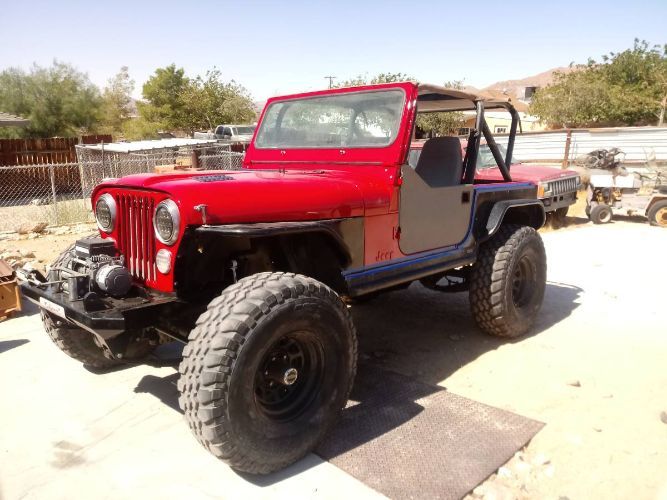
There is a particular kind of Scrambler you see at overland meets now, sitting on 35s with a rooftop tent and a fresh coat of paint that is trying hard to look factory but is not quite. That truck is the jeep cj cj8 restomod story in one image, and it says a lot about where classic Jeep culture has landed after decades of the CJ-8 being nobody's first choice.
Car Features
7 min read
The Modern Scrambler: Restomod and Overland Revival
The overland movement rediscovered what the CJ-8 Scrambler was built to do, and restomod builders are now proving it with careful, respectful builds.
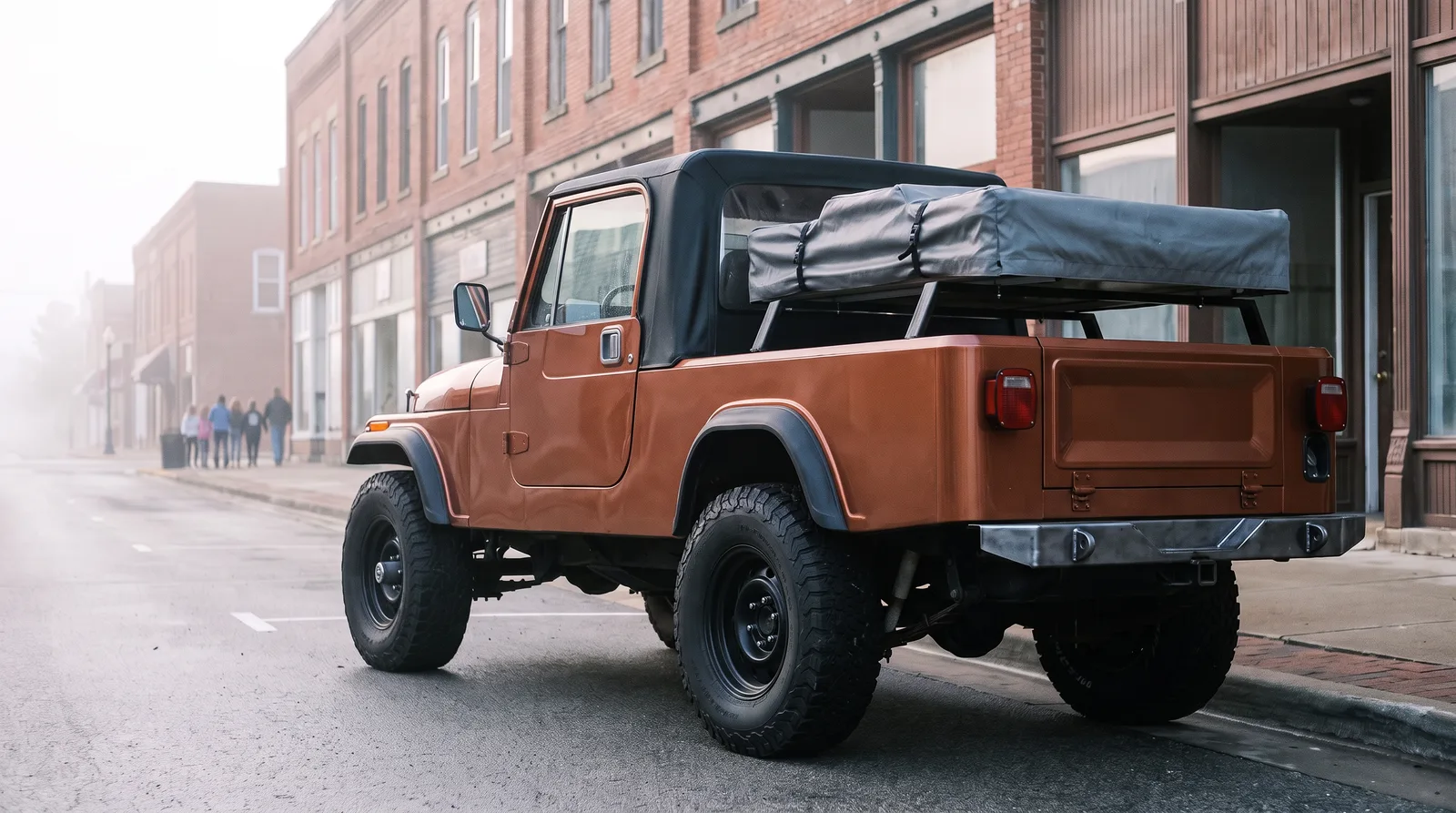
Why the Scrambler became a restomod favorite
The overland movement did not invent the idea of building a capable, comfortable, long-legged off-roader out of an old truck, but it did give that idea a name and a huge audience, and the CJ-8 turned out to be perfectly suited for it. The stretched wheelbase that once made the Scrambler an awkward seller gives builders extra stability at speed and room for gear storage that a standard CJ-7 simply cannot match. Add a pickup bed that can carry fuel cans, recovery gear, and camping equipment without cramming it into the cab, and you have a platform that modern adventure travelers recognize as genuinely useful rather than just nostalgic.
That practicality, combined with a growing appreciation for the model's rarity, has made the CJ-8 a favorite subject for builders who want something with more character than a stock modern truck but more livability than a bare-bones trail rig. The restomod approach lets them have both.
What a typical build actually involves
Most Scrambler restomods start from the frame up, and the scope varies enormously depending on budget and intent. On the mild end, builders keep the original drivetrain and focus on suspension upgrades, modern tires, and creature comforts like improved seats and sound deadening. On the more ambitious end, entire drivetrains get swapped for modern fuel-injected engines and updated transmissions, paired with disc brake conversions and reworked axles that can handle both highway speeds and serious trail use.
What ties these builds together, whether mild or extensive, is a growing respect for the original body lines and proportions. A decade ago it was common to see Scramblers cut up and reshaped to chase a specific trail-rig look. The current wave of builders tends to be more careful, preserving the factory silhouette even while updating everything underneath it. There is real pride in a build that reads as period-correct from twenty feet away and only reveals its modern upgrades on closer inspection.
The overland connection runs deeper than aesthetics
It would be easy to write off the Scrambler's overland popularity as a trend chasing a look, but the connection runs deeper than that. Long before the word overland entered common use among American enthusiasts, the CJ-8 was already doing the job that concept describes: covering long distances over rough terrain with meaningful cargo capacity and enough mechanical simplicity to be fixed far from a dealership. Builders who understand that history tend to approach their Scrambler projects with genuine respect for what the truck was designed to do, rather than treating it as a blank canvas.
That respect shows up in small ways. Builders who research the model's background often reference more on the jeep cj8 scrambler before finalizing a build plan, wanting to understand the original engineering intent before deciding what to change and what to leave alone. It is a more thoughtful approach than simply copying whatever look is popular on social media that month.
"The best restomod builders I've met treat the original engineering like a conversation partner, not an obstacle. They ask what the truck was trying to do in 1982 before they decide what it should do in 2026."
- Patrick Walsh
Values, expectations, and the honest tradeoffs
A well-executed restomod can command a real premium over a stock CJ-8, particularly when the build quality is high and the work is well documented with photos and receipts. But it is worth being honest about the tradeoff. Modifying an original example, even tastefully, removes it from the pool of numbers-matching survivors that pure collectors chase. Some buyers want exactly that tradeoff, a truck they can actually drive and camp out of without worrying about originality. Others want the untouched article and will pay accordingly for it.
Neither approach is wrong, but conflating the two markets leads to disappointed sellers who expect restomod pricing for an unmodified truck, or original-survivor pricing for a heavily built one. Understanding which market a given truck belongs to, before listing it or bidding on it, saves everyone time.
Anyone weighing a restomod project against buying something already built should first look at what is currently changing hands. Reviewing our complete history of the CJ platform overall gives useful context on how the Scrambler fits into the wider family before committing to a specific build direction, and browsing classic CJs on the market shows the real range of condition and price a buyer can expect to encounter.
The builders who define the current scene
A handful of small shops and individual builders have become known within the community for a particular restomod philosophy, one that treats the CJ-8 as a design worth preserving rather than a starting point to be erased. Their trucks tend to sell, when they do sell, well above what a comparable build from a less considered shop would fetch, and that price gap is a pretty clear signal about what buyers actually value in this space right now.
Talking to a few of these builders over the years, a common thread emerges. They almost all describe an early project, often their first Scrambler build, where they made changes they later regretted, cutting into original sheet metal or discarding parts that turned out to be harder to replace than expected. That early lesson shapes how carefully they approach every build that follows.
Budgeting for a real build
Anyone considering a Scrambler restomod project should go in with realistic expectations about cost. A quality build, done properly with attention to both mechanical function and preserving the truck's character, is rarely cheap. Sourcing a solid donor truck, addressing any structural issues before layering on upgrades, and paying for skilled labor on the more involved mechanical work all add up quickly. Buyers who assume a restomod will be a budget alternative to buying an already-completed build often find the math does not favor doing it themselves unless they already have significant mechanical skill and time to spend.
Where the trend goes from here
The overland and restomod movement shows no sign of slowing down, and the CJ-8's particular combination of rarity, capability, and character means it is likely to stay a favorite subject for builders for years to come. What started as a slow-selling factory oddball has become, four decades later, one of the more desirable platforms for exactly the kind of long-range, self-reliant travel it was quietly built for all along.
Sources and notes
Related Reading
Have a
Jeep CJ
for Sale?
Reach thousands of serious classic car collectors across the US.
Sell It Here →
Selling a classic? Here's how: compare the places to sell classic cars
Are You a Classic Car Dealer?
List your full inventory and connect with targeted classic car buyers.
Join as a Dealer →

About the author
Patrick Walsh
Automotive journalist covering classic car shows, events, and the enthusiast community across North America.
Related Listings - Jeep CJ

More in Car Features
Comments
Be the first to comment on this article.