
Every long-running engine family starts somewhere. For the jeep cj engine go devil story, that somewhere is a flathead four-cylinder that predates the CJ nameplate itself and ended up defining what a Jeep engine was supposed to feel like for decades after. Here is the result: 134 cubic inches, roughly 60 horsepower, and a reputation that outlasted the engine's own production run by a wide margin.
Car Features
7 min read
The Go-Devil Four: Where the Jeep Engine Story Begins
Sixty horsepower and a proven L-head design, the Go-Devil four is the engine every later Jeep CJ powerplant traces back to.
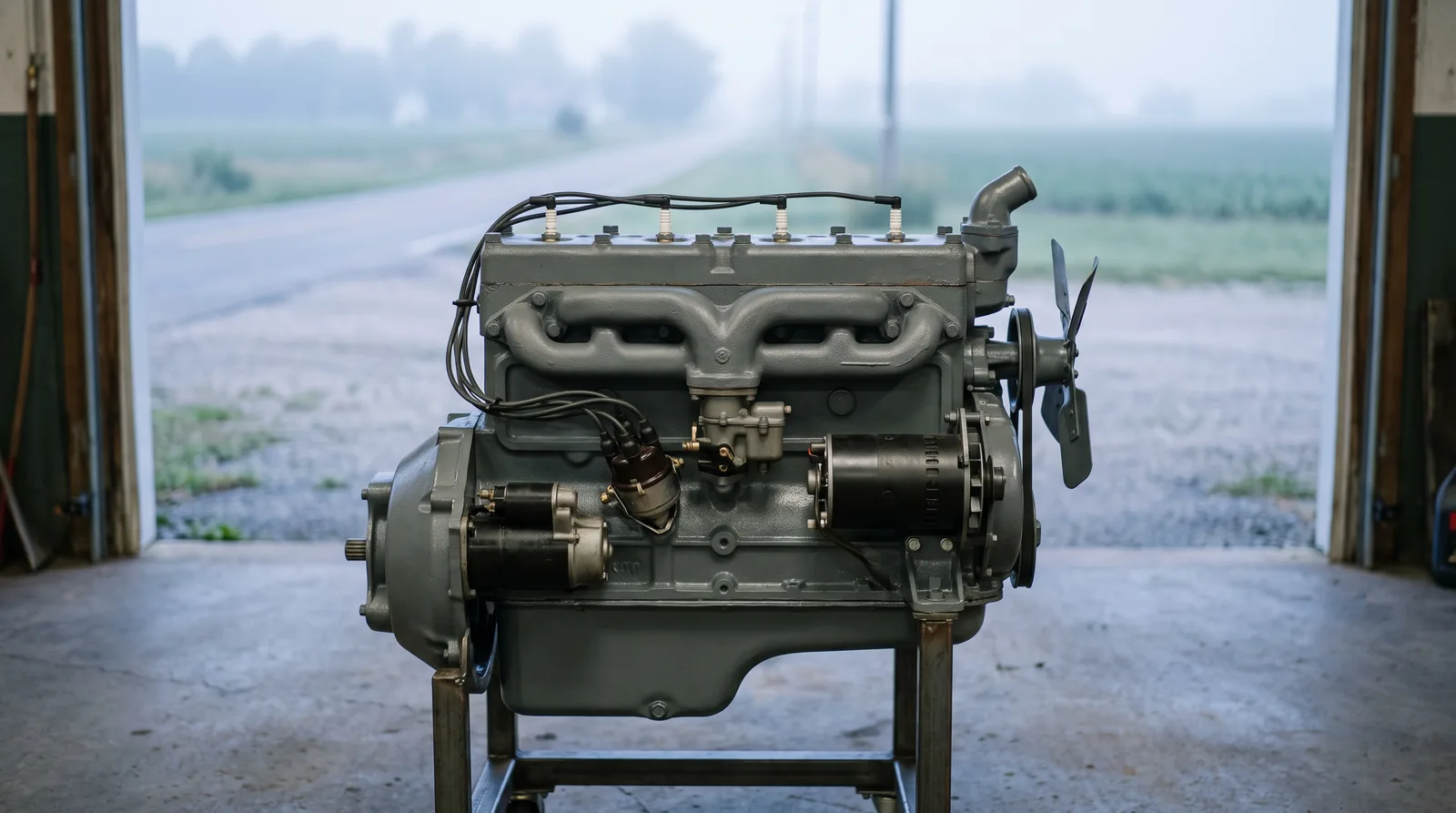
The number that matters: 60 horsepower
Sixty horsepower sounds laughably small by any modern standard, and it was not much even by the standards of the 1940s. But that number tells only part of the story. The Go-Devil four was built around torque and reliability, not top-end power, and it delivered both in a package simple enough to service in the field with basic tools. That combination, low weight, honest low-end grunt, and mechanical simplicity, is the actual reason the engine mattered, not the horsepower figure on a spec sheet.
The Go-Devil traces its roots to Willys-Overland's prewar engineering work and became the standard powerplant for the military Jeep before carrying directly into the earliest CJ-2A civilian models after World War II. That direct line from military hardware to civilian farm and utility vehicle is part of what gave the early CJ line its no-nonsense reputation from day one.
Why simplicity won over power
Postwar buyers of the CJ-2A were not cross-shopping sports cars. They were farmers, ranchers, and rural buyers who needed a vehicle that could run a power takeoff implement, climb out of a muddy field, and get fixed by whoever was around if something went wrong. The Go-Devil's L-head configuration, with valves in the block rather than the cylinder head, was already old technology by the late 1940s, but it was proven technology, and proven technology is exactly what that buyer wanted.
Parts commonality with military surplus engines also helped keep the Go-Devil affordable and easy to service in the early postwar years, when military parts stocks were still filtering into civilian hands through surplus channels. A rural buyer with a broken Go-Devil in 1948 had a real shot at finding a fix without waiting weeks for a dealer part.
Where the numbers actually landed
Rated output for the Go-Devil sat around 60 horsepower and roughly 105 pound-feet of torque, figures that stayed relatively consistent across its civilian production run in the CJ-2A and into the early CJ-3A. Compression ratios were modest by design, a deliberate choice that let the engine run reliably on the lower-quality fuel commonly available in rural areas during the postwar years. None of these numbers were impressive in isolation. Together, they added up to an engine that did exactly what it was asked to do, consistently, for a buyer who valued that consistency over speed.
Fuel economy, by the standards of the era, was reasonable, another point in the engine's favor for buyers running it daily on farms and ranches where fuel cost and availability mattered more than most modern owners appreciate.
| Spec | Go-Devil Four |
|---|---|
| Displacement | 134 cubic inches |
| Configuration | L-head inline four |
| Horsepower (rated) | Approximately 60 hp |
| Primary application | Military Jeep, CJ-2A, early CJ-3A |
What came after it
The Go-Devil did not disappear so much as get succeeded by an evolution of its own basic architecture. As Willys engineers looked for more usable power without abandoning the L-head four's proven reliability, the path forward led toward an F-head configuration that kept the same fundamental block while improving breathing and output. That successor engine picked up the story where the Go-Devil left off, and readers interested in how that transition unfolded can find the full account in a related story covering the engine that took over.
For the broader arc of every engine that powered the CJ line across its four-decade run, from this first flathead four through the six-cylinder options that arrived decades later, the jeep cj engines history lays out the complete lineage in one place.
"Sixty horsepower and a rated torque figure that beats the horsepower number. That ratio tells you everything about what this engine was built to do, and it was not win a stoplight race."
- Dan Reeves
Why the Go-Devil still matters to buyers today
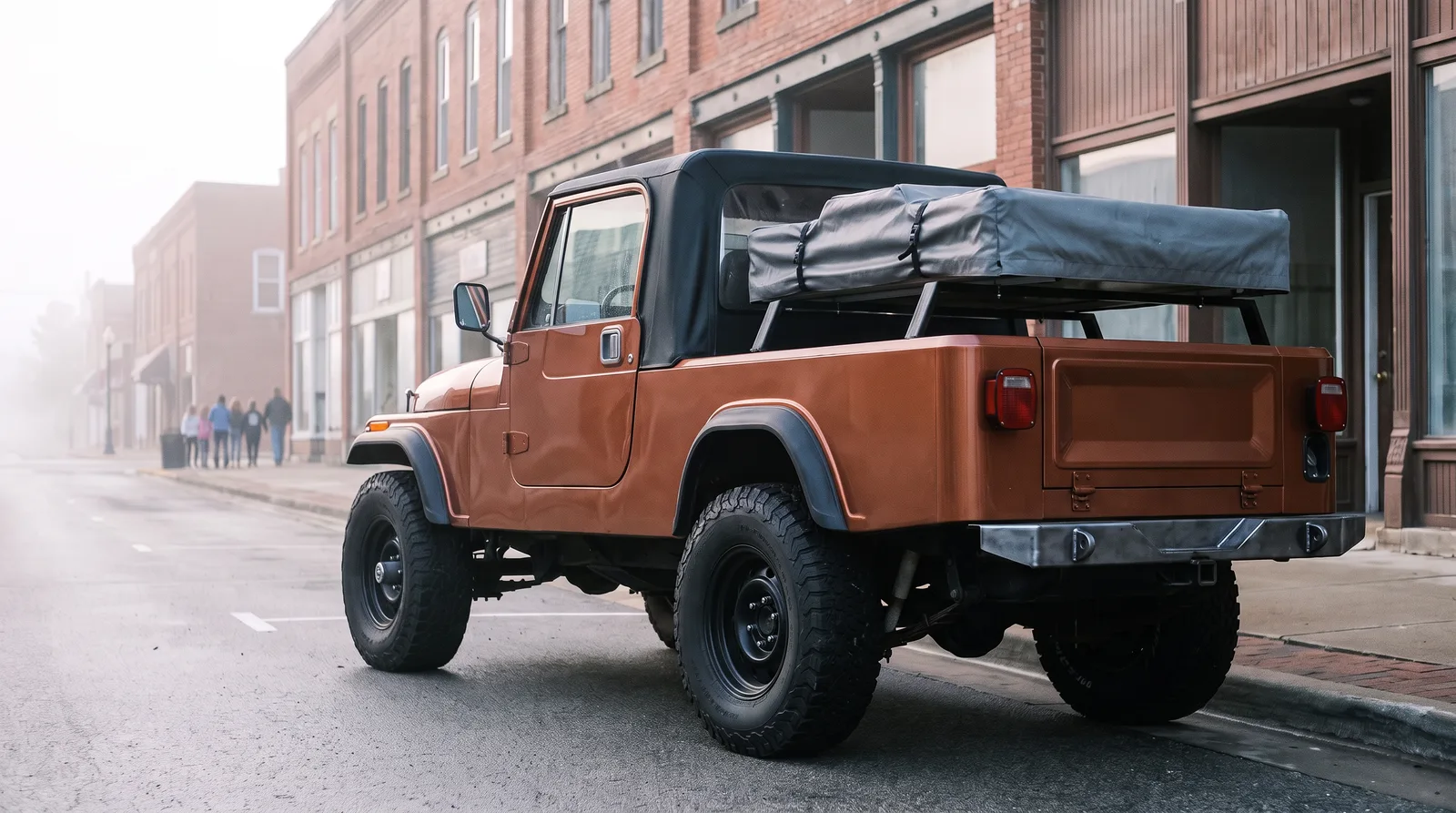
A CJ-2A or early CJ-3A with an original, running Go-Devil engine holds genuine appeal for collectors who value mechanical authenticity over performance. These are not fast trucks by any measure, and nobody buying one should expect otherwise. What they offer instead is a direct, unbroken mechanical link back to the earliest civilian Jeeps, running the same basic engine architecture that carried GIs through World War II and then went straight to work on American farms.
For buyers weighing an early flathead-powered CJ against later six-cylinder options, it helps to actually look at what is available. Browsing CJs for sale now gives a real sense of how many original Go-Devil examples remain on the market and what condition they tend to be in.
What breaks and what does not
Owners of original Go-Devil engines report a fairly consistent pattern of wear points after decades of service: valve train components and the cooling system tend to need the most attention, while the fundamental bottom end holds up remarkably well given its age. That durability is not an accident. The engine was designed with generous tolerances and conservative operating parameters from the start, a direct result of its military origins where field reliability mattered more than squeezing out maximum performance.
That same conservative design philosophy is a big part of why so many Go-Devil engines are still running today, decades after their expected service life would have seemed reasonable to predict. An engine built to survive a war and then keep working on a farm afterward was never going to be delicate.
Reading the numbers against context
Sixty horsepower means nothing on its own. Compared against the roughly 45 to 55 horsepower typical of competing farm and utility vehicles in the immediate postwar years, the Go-Devil was actually competitive, not behind the curve. The number that mattered more to period buyers was the torque figure and where in the rev range it arrived. A low-revving four that delivers usable pulling power right off idle beats a higher-horsepower engine that needs to be wound out, for anyone actually working a field or towing an implement.
That is the kind of context that gets lost when people look at old spec sheets purely through a modern lens. Sixty horsepower reads as trivial today. In 1948, matched against the actual jobs these trucks were bought to do, it was more than adequate, and the reliability that came with it was worth more to most buyers than any additional horsepower would have been.
The engine that started everything
Every Jeep engine that came after it, through the F-head Hurricane, the various six-cylinders, and eventually the AMC engines of the CJ-7 era, exists in some sense as an answer to the question the Go-Devil first asked: how much can a simple, reliable engine actually accomplish. The answer, for a generation of postwar buyers, was more than enough.
Sources and notes
Have a
Jeep CJ
for Sale?
Reach thousands of serious classic car collectors across the US.
Sell It Here →
Selling a classic? Here's how: sell my classic car
Are You a Classic Car Dealer?
List your full inventory and connect with targeted classic car buyers.
Join as a Dealer →

About the author
Dan Reeves
Performance engine builder from North Carolina's motorsports corridor, focused on swaps, forced induction and making real, repeatable power.
Related Listings - Jeep CJ

More in Car Features
Comments
Be the first to comment on this article.