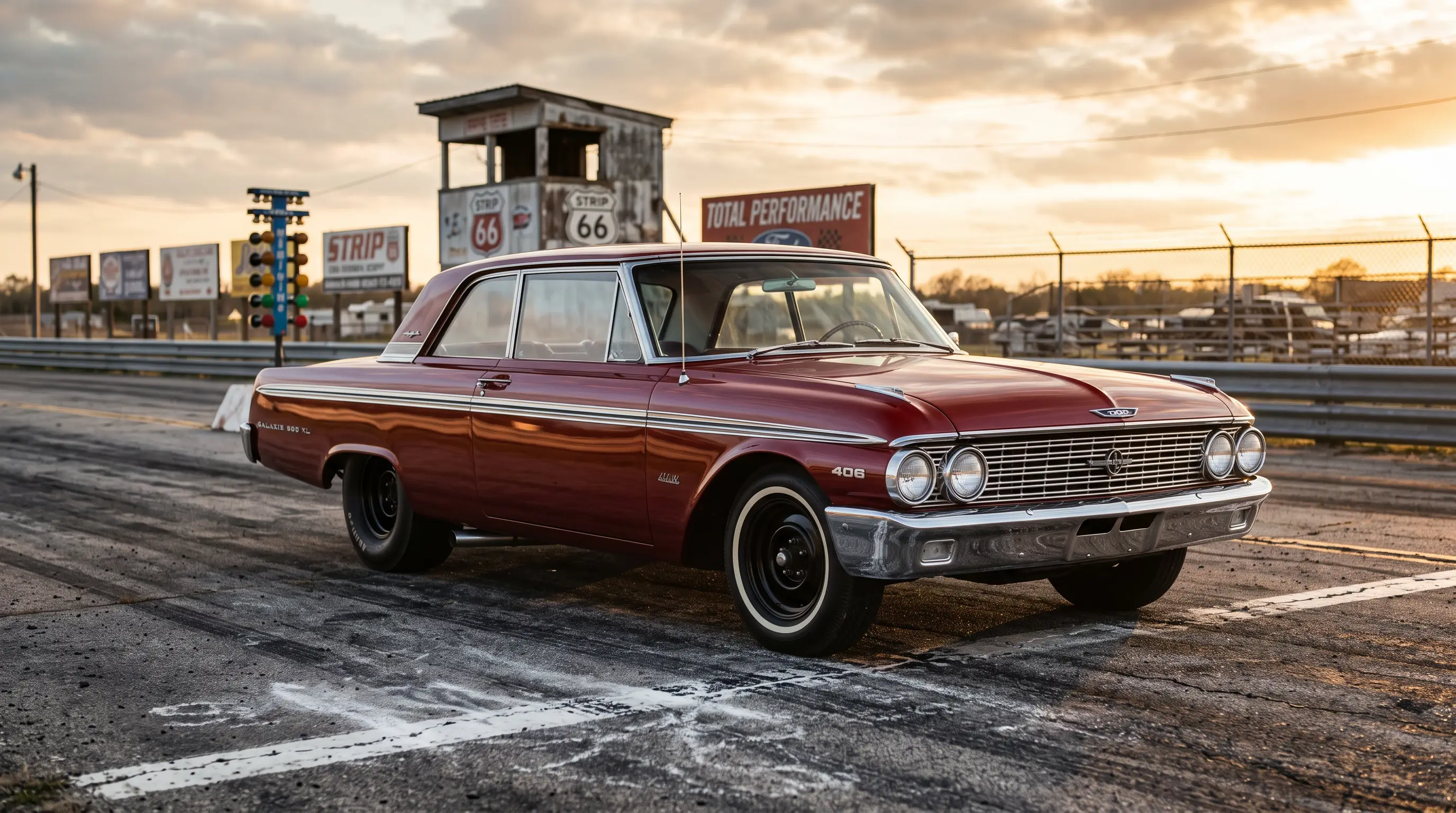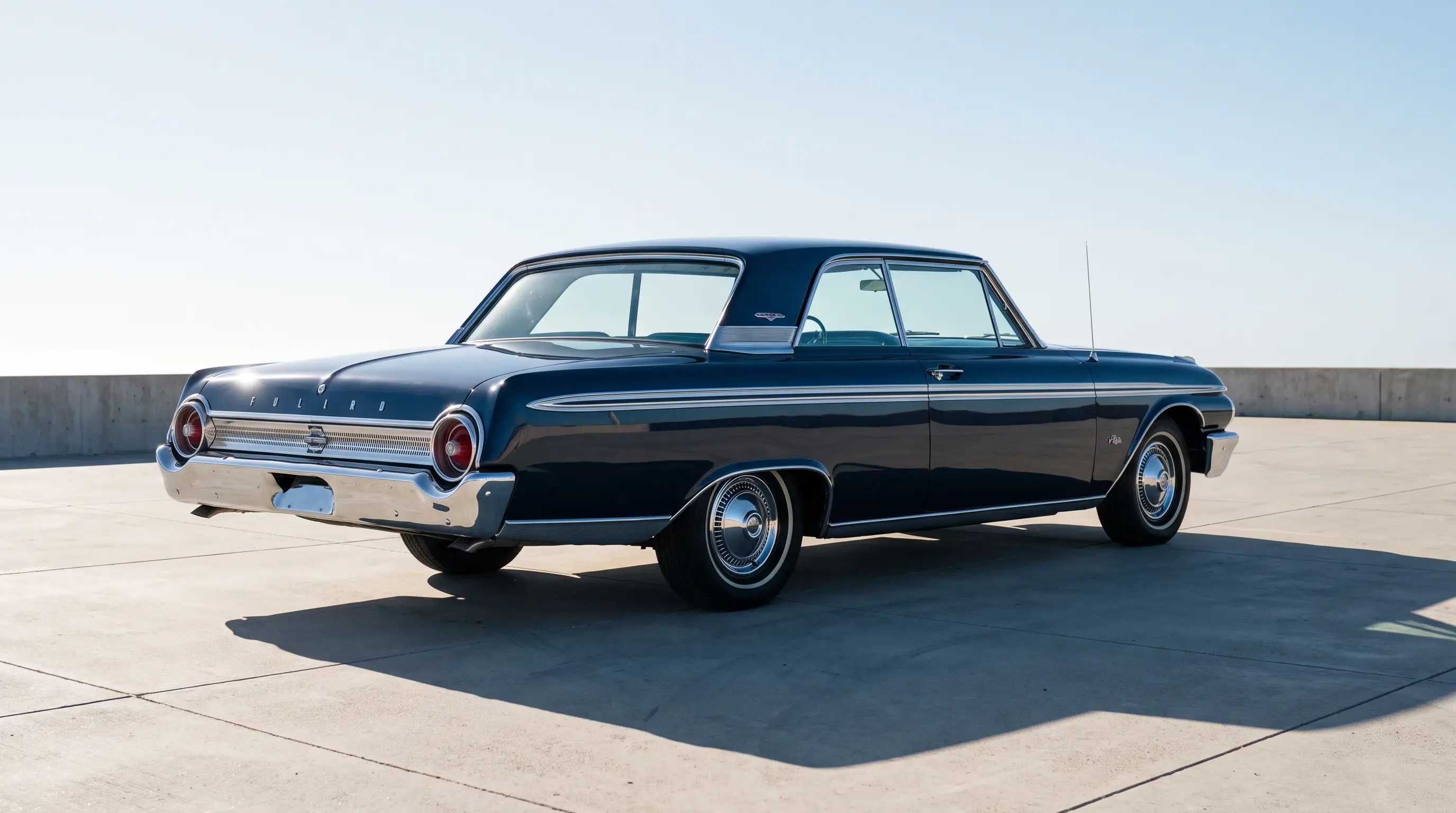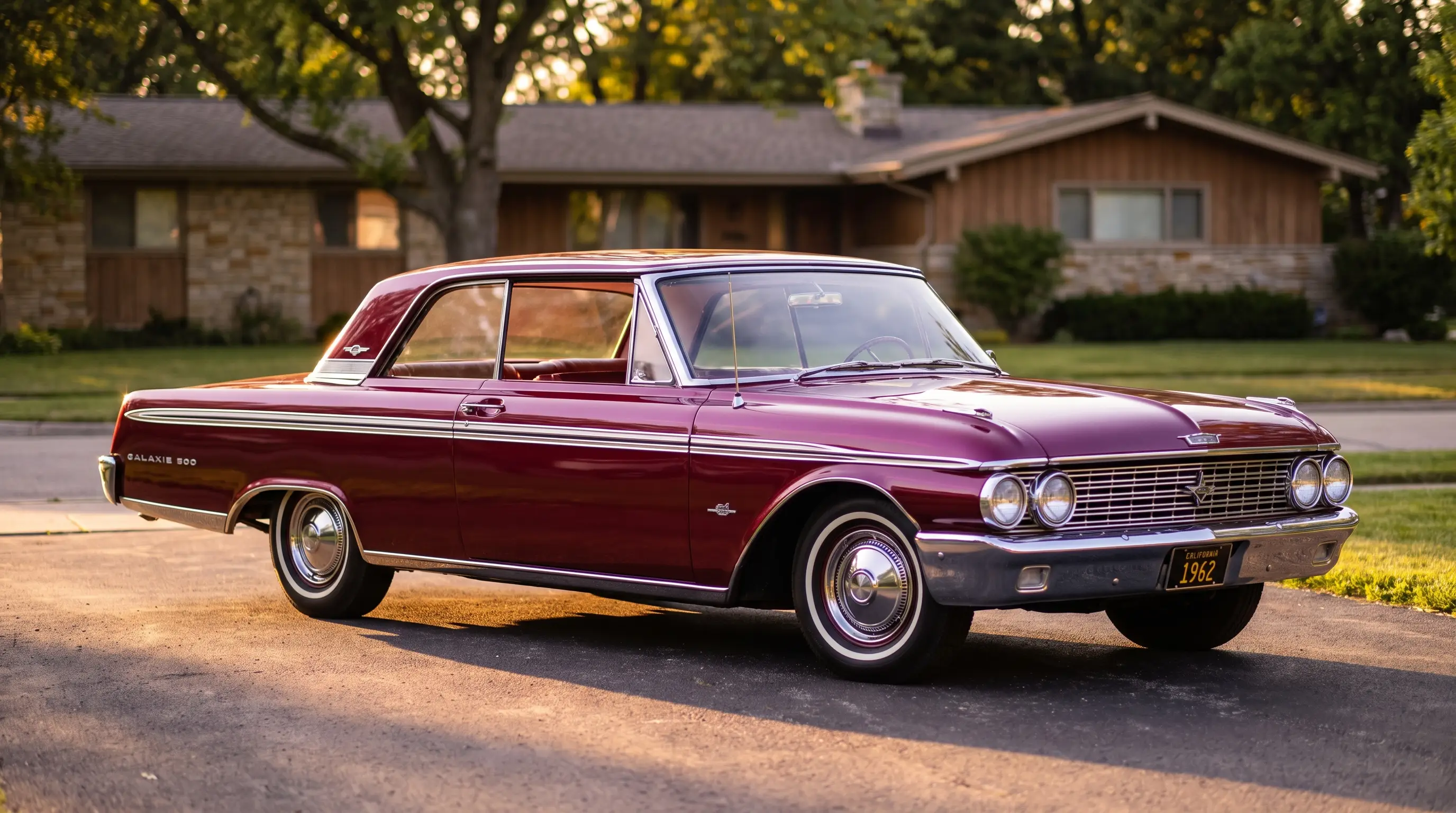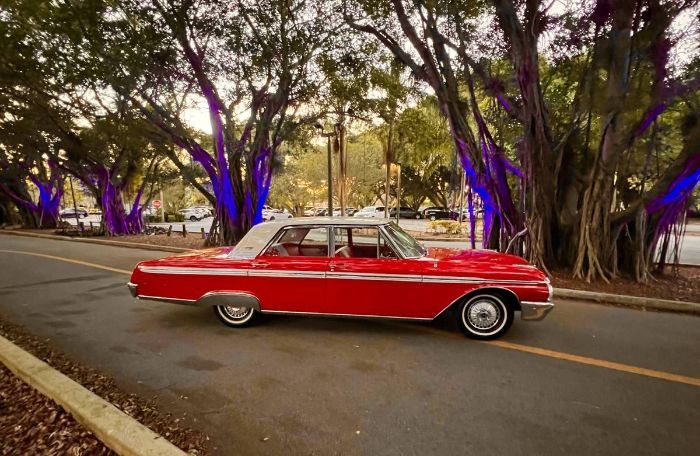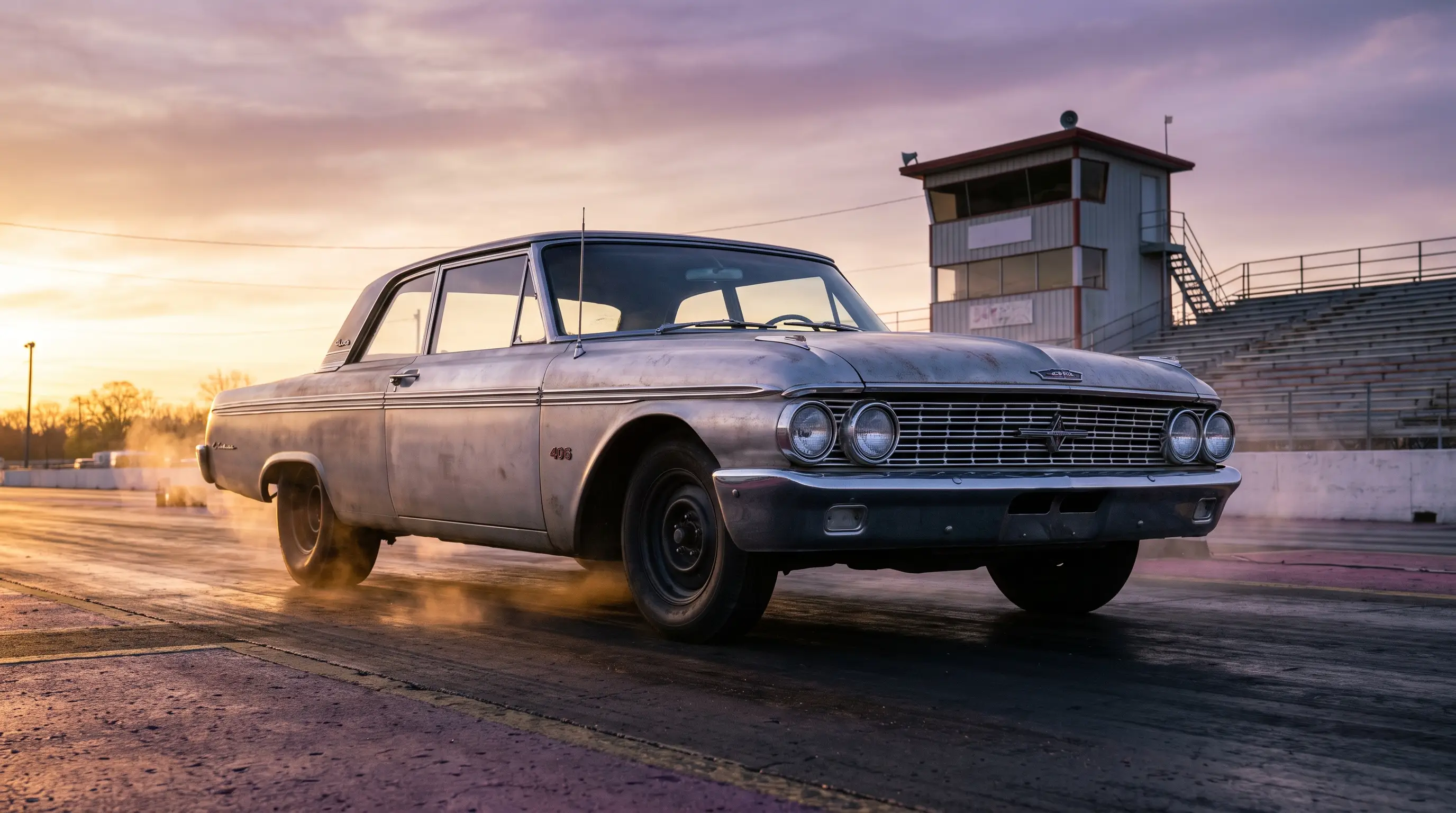
Most people who know the phrase "Ford factory lightweight" think immediately of 1963 and the 427 cars that terrorized Super Stock classes that season, but the ford galaxie 1962 lightweight experiments were the quiet dress rehearsal that made 1963 possible. Ford's Total Performance push was still finding its footing in 1962, and the Galaxie was the test bed for a set of ideas about weight, homologation, and what a full-size stock car could actually do at the strip if the factory took drag racing seriously rather than treating it as an afterthought.
A company deciding to take racing seriously
Ford's Total Performance campaign is usually dated to 1963 in the popular telling, but the institutional decision to chase competition success across NASCAR, drag racing, and road racing simultaneously had been building inside the company for at least a year before that banner went up. The 406 engine's arrival in 1962 was part of that shift, a genuine performance option rather than a token big-inch upgrade, and it came alongside quieter internal conversations about how much a full-size Galaxie could be trimmed down without losing the homologation status that let it compete as a production car.
The full story of the Galaxie's 1962 model year covers the broader context, but the lightweight question deserves its own attention because it explains where Ford's engineering priorities were actually pointed that year, even when the showroom cars looked unchanged.
What "lightweight" actually meant in 1962
It is important to be precise here, because the term gets used loosely. Ford's 1962 efforts were not the aluminum-hood, aluminum-bumper factory lightweight package that would arrive formally the following year. In 1962 the work was closer to internal engineering exploration, drag teams and factory-affiliated racers experimenting with weight reduction on 406-powered cars, deleting sound deadening, running lighter-gauge trim pieces where regulations allowed, and documenting what a genuinely stripped Galaxie could run at the strip. Some of the specific parts substitutions from this period remain uncertain in the public record and deserve caution rather than a confident claim, since Ford's own documentation from this transitional year is thinner than the well-cataloged 1963 lightweight program that followed it.
What is clear is the direction of travel. Every lesson learned running a 406 Galaxie stripped down for competition in 1962 fed directly into the specification sheet for the 1963 lightweight cars, which arrived with factory aluminum body panels and a genuine parts list rather than a shop-floor improvisation.
The drivers and teams doing the early work
Factory-affiliated drag racers and regional Ford dealers running competition programs were the ones actually doing this experimentation in 1962, often with minimal fanfare compared to the NASCAR side of Ford's effort, which got far more press coverage that year. These were not glamorous test sessions covered by national magazines. They were regional strips, dealer-sponsored cars, and a handful of engineers paying close attention to what worked and what did not, building the case internally for a formal lightweight program the following season.
That quieter, less documented character is exactly why this chapter of Galaxie history gets skipped over so often. There was no press release. There was just a growing body of evidence that a full-size Ford, properly lightened, could compete with cars that had no business losing to something the size of a Galaxie.
Reading the parts bin as a historical document
One useful way to trace this period is to look at what Ford's parts counter was quietly offering to racers in 1962, separate from what the sales brochure was showing to families. Heavy-duty suspension pieces, certain axle ratios, and select interior deletions were available to buyers who knew to ask, even though none of it was advertised the way a modern performance package would be. This informal channel between Ford's engineering staff and its most serious customers is itself a kind of historical document, one that rarely survives as anything more concrete than word of mouth and the occasional dealer invoice tucked into a glovebox for sixty years.
That informality also explains why so few 1962 lightweight-adjacent Galaxies carry clean paper trails today. A car built or modified this way rarely had a single dramatic build sheet the way a 1963 factory lightweight does. It had a series of small decisions made by a racer, a dealer, or a regional Ford representative, none of which were designed with future historians in mind. Piecing together a genuine example now means cross-referencing casting numbers, dealer records where they survive, and period photographs rather than trusting a bill of sale that simply says "special order."
Why this matters to the bigger Galaxie story
Understanding the 1962 groundwork changes how you read the 1963 lightweight cars that get all the attention today. Those cars did not appear from nowhere. They were the formalized, homologated version of lessons Ford had already learned informally the year before, on Galaxies that looked, from the outside, no different than the family car parked in the next driveway. The 1962 Galaxie's role in this story is not as the finished product but as the proving ground, and that role deserves more credit than it usually gets in a hobby that tends to celebrate the finished lightweight cars while skipping past the year that made them possible.
For collectors, this means a documented 1962 406 car with a genuine competition history, however modest, carries a historical weight well beyond its numbers on paper. If that kind of car interests you, there is classic Galaxie for sale inventory worth checking regularly, since documented competition history on a 1962 car is rare enough that it does not sit on the market long once word gets around.
There is also a broader lesson here about how manufacturers actually innovate, one that applies well beyond Ford or the 1962 model year. The showroom rarely reflects what an engineering department is really thinking about at any given moment. The interesting decisions, the ones that eventually reshape an entire model line, tend to happen quietly, in test sessions and dealer conversations that nobody thought to write down carefully at the time. The 1962 Galaxie's lightweight groundwork is a small but genuine example of that pattern, a year of unglamorous testing that made a legendary follow-up possible, and it rewards the kind of patient, record-checking curiosity that most flashier chapters of automotive history do not require, curiosity that pays off far more often at a regional swap meet than it ever does in a glossy auction catalog.
"The 1963 lightweights get the magazine covers. The 1962 cars did the unglamorous work of proving the idea would actually hold up at the strip, and that part of the record deserves better documentation than it has gotten."
- Tom Ramirez