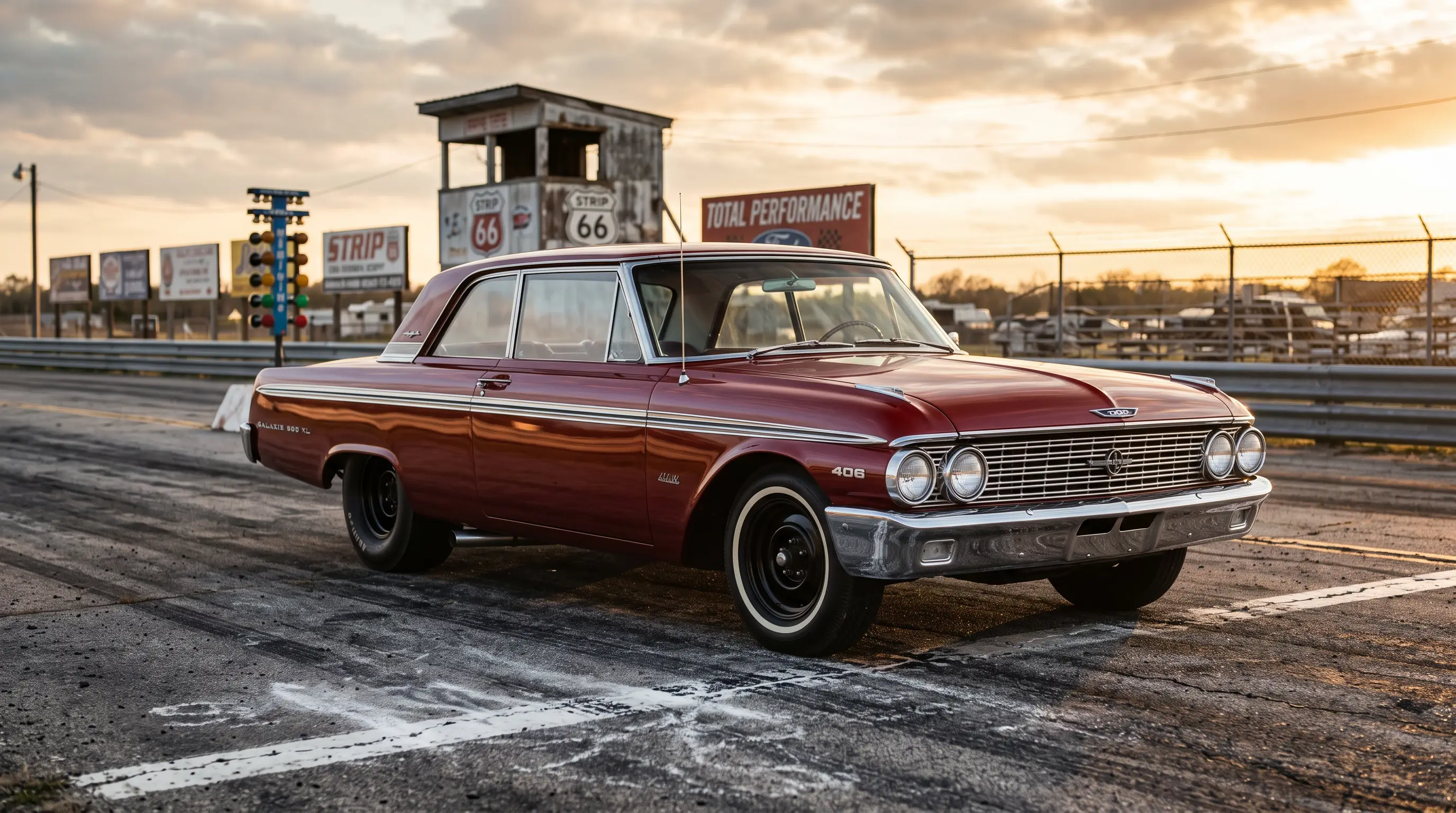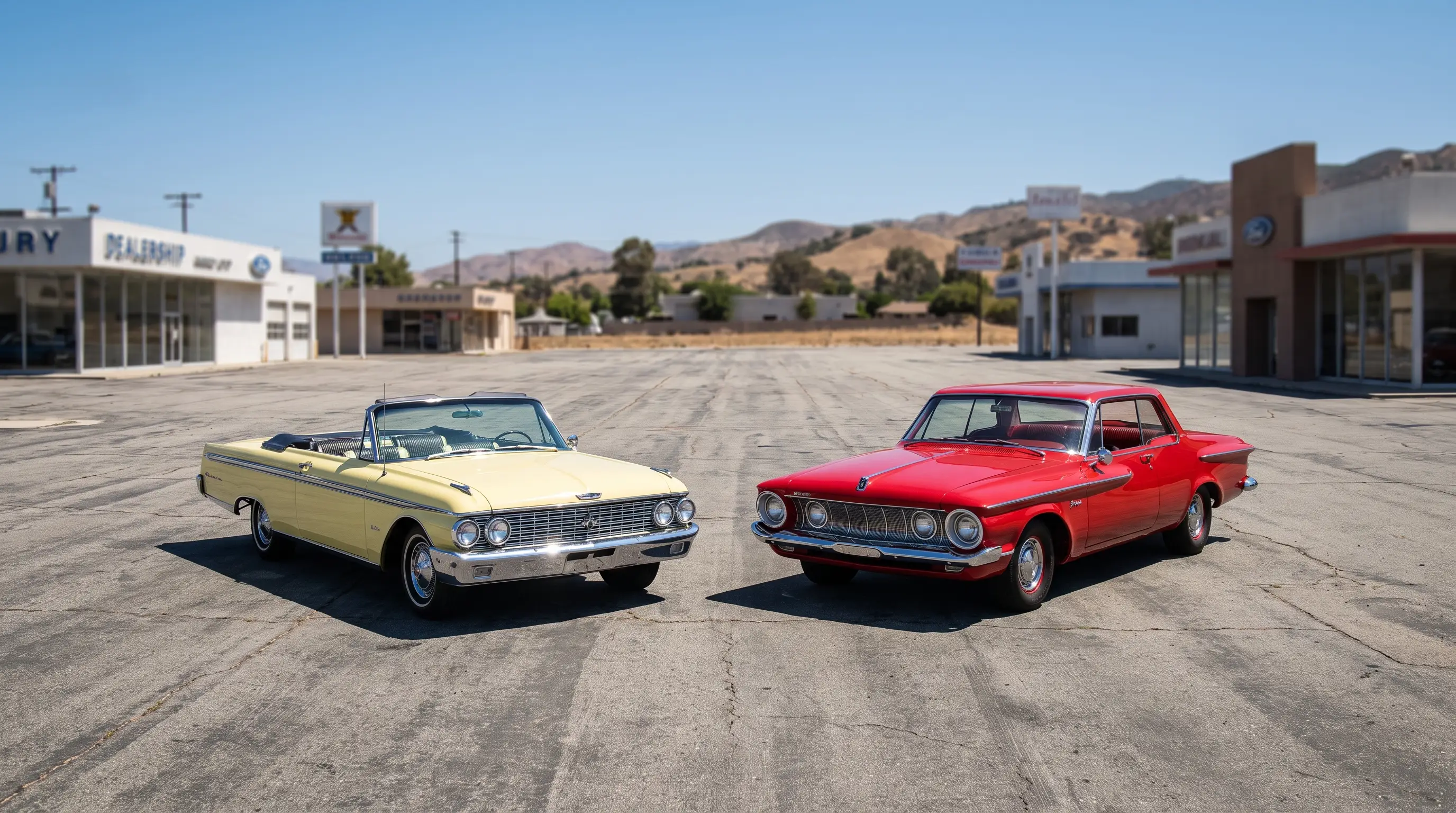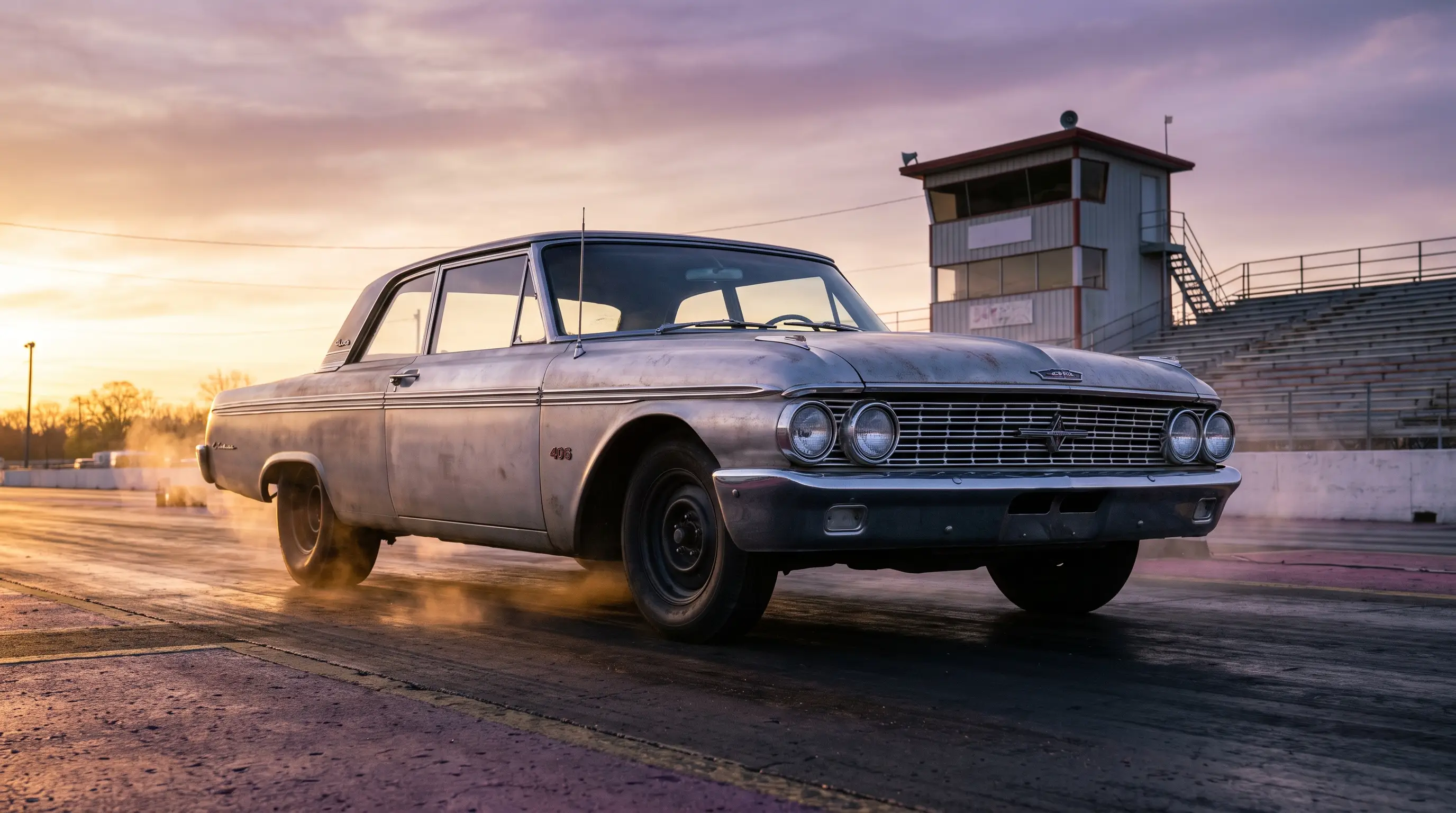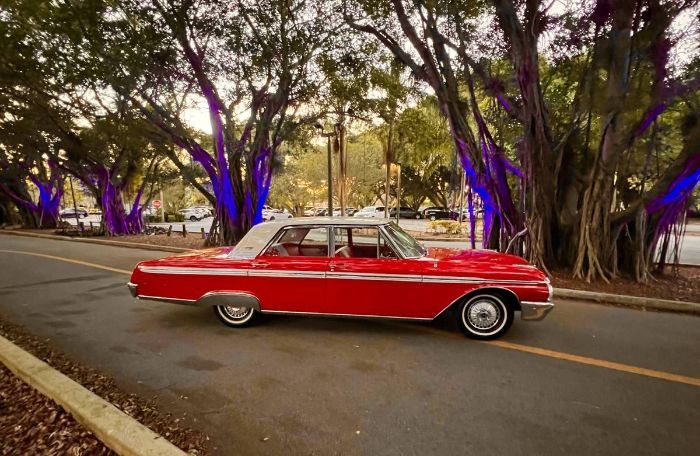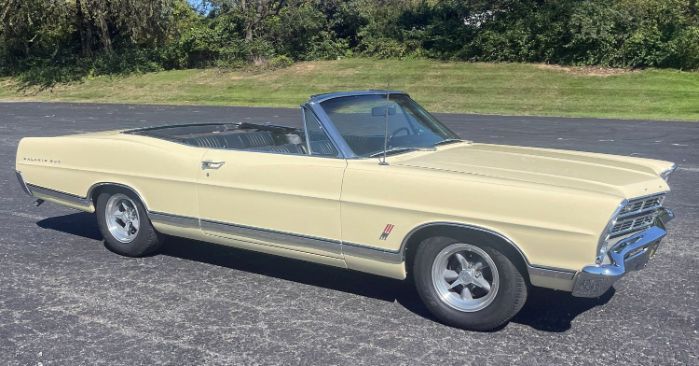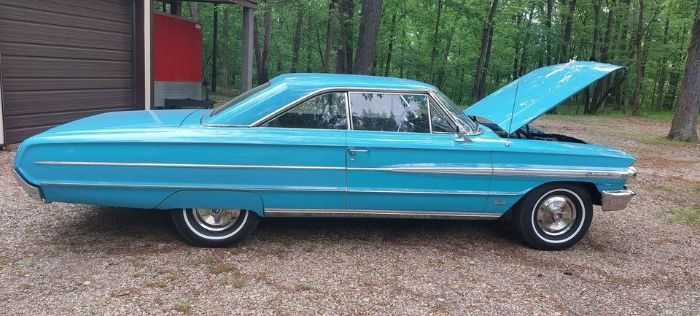
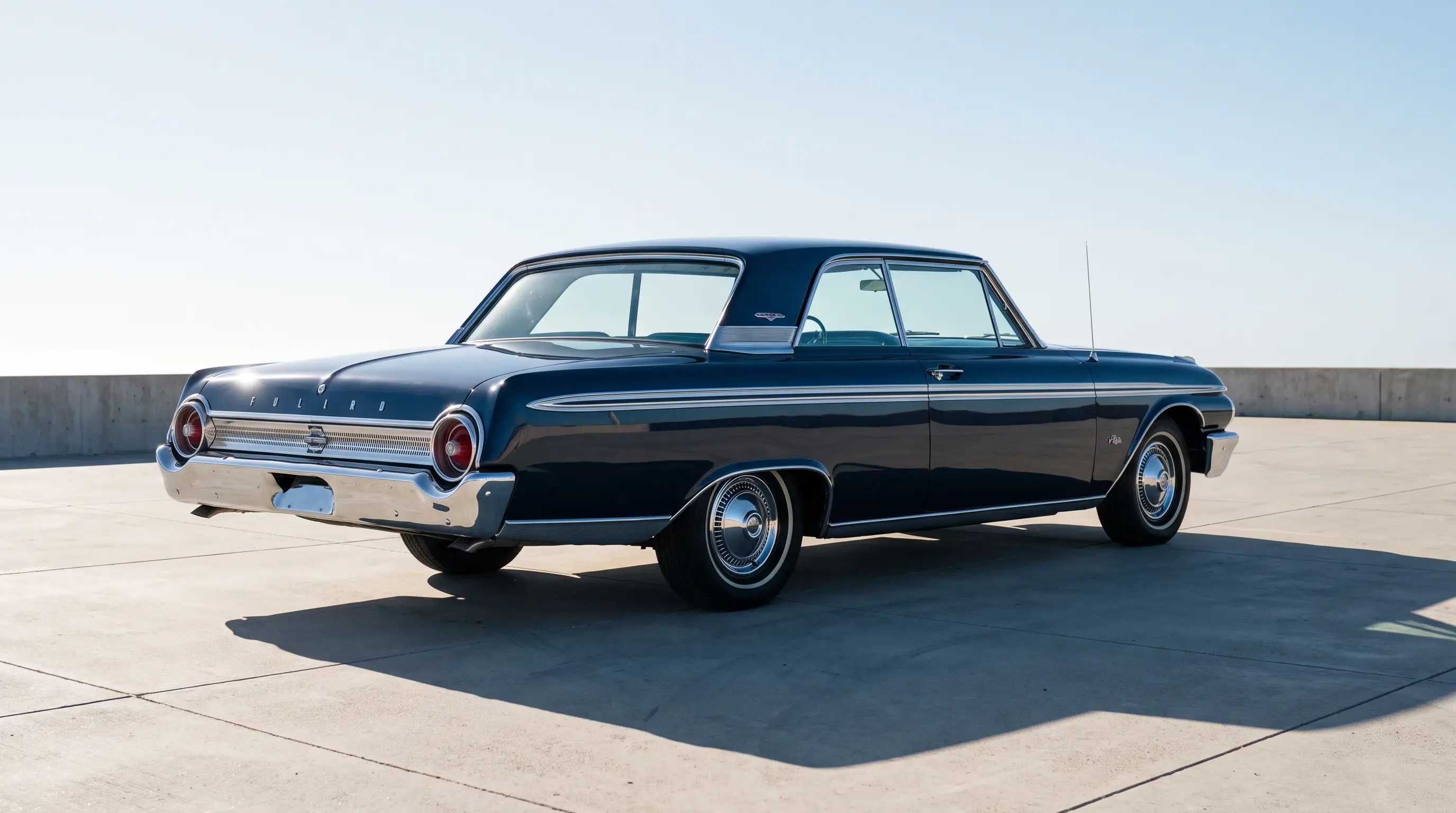
A 1962 Ford Galaxie parked under a gas station awning at dusk looks like it is still listening for something, a low hum from an engine that has not started yet, a promise that has not quite arrived. That stillness is the whole point of the ford galaxie 1962 styling jet age look, a design language that borrowed its vocabulary from aircraft and rockets without ever shouting about it the way some of its rivals did. Ford's designers in 1962 were working in the last stretch of an era obsessed with speed as a shape, and the Galaxie wears that obsession quietly.
A car dressed for a decade that trusted machines
By 1962 the tailfin had mostly retreated from American design, but the instinct that produced it, the belief that a car should look like it belongs alongside a jet fighter or a satellite launch, had not gone anywhere. It had simply matured. The Galaxie's clean flanks, its crisp character line running the length of the body, and its restrained but present chrome all read as a car that had absorbed the jet age's confidence without needing to wear it as a costume. Where some competitors leaned on gimmick and glitter, Ford leaned on proportion.
For the deeper history behind this design moment, the 1962 ford galaxie story covers the year in full, but the styling itself deserves its own quiet attention, because it is easy to miss what the car was doing with its surfaces if you only read the spec sheet.
The grille as a small piece of theater
Look at the front of a 1962 Galaxie long enough and you start to see a face built for confidence rather than aggression. The horizontal grille bar, the quad headlights set into a clean frame, the hood line that runs flat and level rather than scooped or finned, all of it reads as calm rather than eager. This was intentional. Ford's stylists in this period were told to build a car for a buyer who wanted to look successful, not dangerous, and the front end of the Galaxie delivers exactly that kind of understated arrival.
There is a small, quiet detail in the way the parking lights sit just beneath the headlights, a detail almost nobody who is not looking for it ever notices. It does not need to be noticed. It just needs to be right.
Chrome that knows when to stop
Compare a 1962 Galaxie to a car from just a few years earlier and the restraint becomes obvious. Ford had learned, along with the rest of the industry, that the late 1950s chrome arms race had gone too far, and the Galaxie's trim reflects a correction. A single body-length spear, modest rocker trim, and taillights that sit in their own quiet housing rather than screaming for attention. The car still glitters in the right light, it simply does not insist on it.
This is where the jet age idea shows its second face. A jet does not need decoration to look fast. Its speed is in its shape, its cleanness, the way air is clearly meant to move over it without catching on anything. The Galaxie's designers understood that a car could borrow that same confidence, communicating speed and modernity through line rather than ornament.
Interiors built like cockpits, not parlors
Step inside a 1962 Galaxie and the dashboard continues the same conversation the exterior started. Clean, legible gauges, a horizontal sweep of trim that echoes the exterior's own horizontal emphasis, and a steering wheel that sits at an angle meant to suggest control rather than leisure. None of it is dramatic by later standards. All of it is deliberate. The car was styled, inside and out, to make an ordinary commute feel like it was happening inside something a little more purposeful than a living room on wheels.
That is the quiet trick of the whole design. It never asks you to notice it working. It just works, every time you sit down and reach for the wheel. Even the door panels carry a thin horizontal accent that mirrors the exterior spear, a small continuity most owners never consciously register but would immediately miss if it were gone.
Color as its own kind of confidence
The paint charts of 1962 tell a version of this story that the sheet metal alone cannot. Ford offered the Galaxie in a range of colors that leaned toward clarity rather than novelty, deep blues, clean whites, a handful of warmer tones that read as considered rather than trendy. Buyers picking a color in 1962 were not choosing something wild to match a jet age fantasy, they were choosing a shade that would still look composed a decade later, parked outside a church or a dealership or a driveway on a Tuesday morning. That instinct, color as restraint rather than color as spectacle, runs through the whole car.
Two-tone treatments existed but were used sparingly on the Galaxie compared to some competitors, another quiet signal that Ford's stylists trusted the shape itself to carry the design rather than leaning on a paint scheme to do the work the sheet metal should have been doing on its own.
What the roofline was actually saying
The Galaxie's various roof treatments in this period, from the formal hardtop to the more traditional sedan roofline, were themselves a kind of dialogue about what modernity meant to different buyers. A formal roof said permanence, a certain trust that a family car should look dignified rather than sporty. It is worth remembering that not every buyer in 1962 wanted their car to look like it belonged on a runway. Some wanted it to look like it belonged at a company dinner, and Ford built the Galaxie to satisfy both instincts within the same basic body, which is a harder design problem to solve than it looks from a distance of sixty years.
Why this year still reads as modern
Sixty years on, the 1962 Galaxie has aged the way a well-tailored coat ages, not as a costume from a specific year but as a shape that still makes sense. Its jet age confidence has outlasted flashier contemporaries because it was never built to shock, only to reassure. If you want the complete arc of how the Galaxie got to this design and where it went afterward, the full story traces the whole lineage, and if a car wearing this particular restraint has caught your eye, there are classic Galaxies on the market right now waiting for someone who notices the parking lights.
"The 1962 Galaxie does not perform for you. It simply arrives, and lets the shape do the talking, which is a rarer kind of confidence than people give this car credit for."
- Nora Beckett