
I heard the ford galaxie 1963 grand national championship story first from a man named Ollie at a swap meet in Ohio, standing next to a parts car with a 427 emblem barely hanging on by one rivet. He'd been a teenager in 1963, and he still talked about that season like it happened last month. Ford, he said, did not just win races that year. Ford won the whole argument about whose full-size car actually belonged on a superspeedway, and the paperwork backs up every word of what he told me.
Car Features
7 min read
How the 1963 Galaxie Won the Manufacturers Battle
Ford's 1963 NASCAR manufacturers championship rode on the Galaxie's back, built by Holman-Moody and driven by Lorenzen, Jarrett, and Lund.
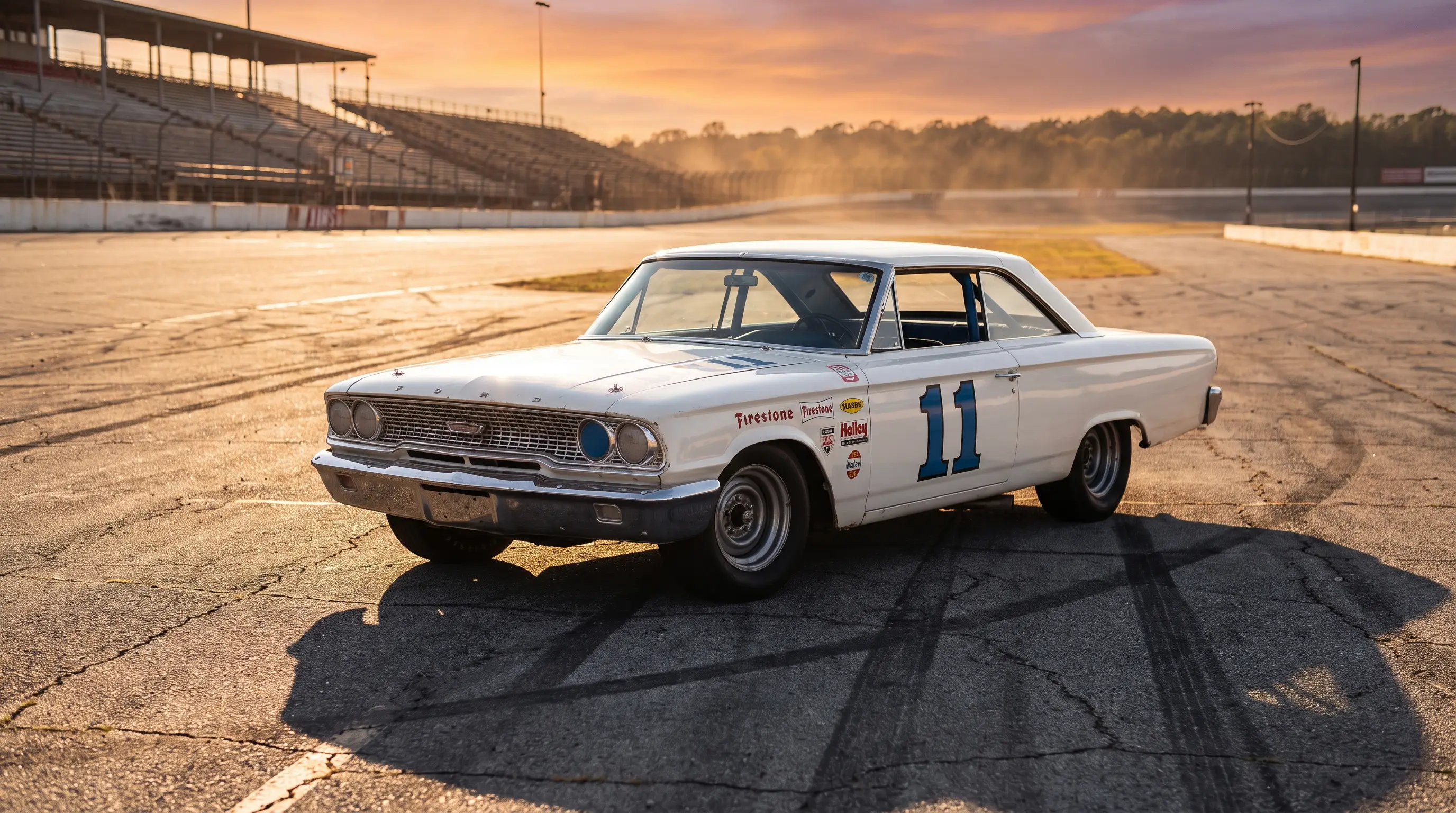
The manufacturers title was the real prize
NASCAR in 1963 crowned individual drivers, sure, but the fight everyone in Detroit actually cared about was the manufacturers championship, the tally of wins credited to each brand across the whole Grand National season. Chevrolet had walked away from factory racing in January 1963, after GM's corporate office ordered every division to cease race support amid antitrust fears, and Mopar was running its own aggressive program with the max wedge cars. Ford, under Total Performance boss Lee Iacocca's push, poured resources into the Galaxie specifically to make sure the Blue Oval, not a competitor, ended up on top of that manufacturers list at season's end.
The Galaxie carried that fight almost entirely on its own. There was no separate midsize Ford muscle car doing the job yet, no Mustang, no Torino. The full-size body was it, and Ford leaned on the 427 low-riser and later high-riser top-oiler engines (the side-oiler block did not arrive until 1965) to make that body competitive against lighter Mopars and Chevrolets that had, in theory, better power-to-weight numbers.
Holman-Moody built the cars that won it
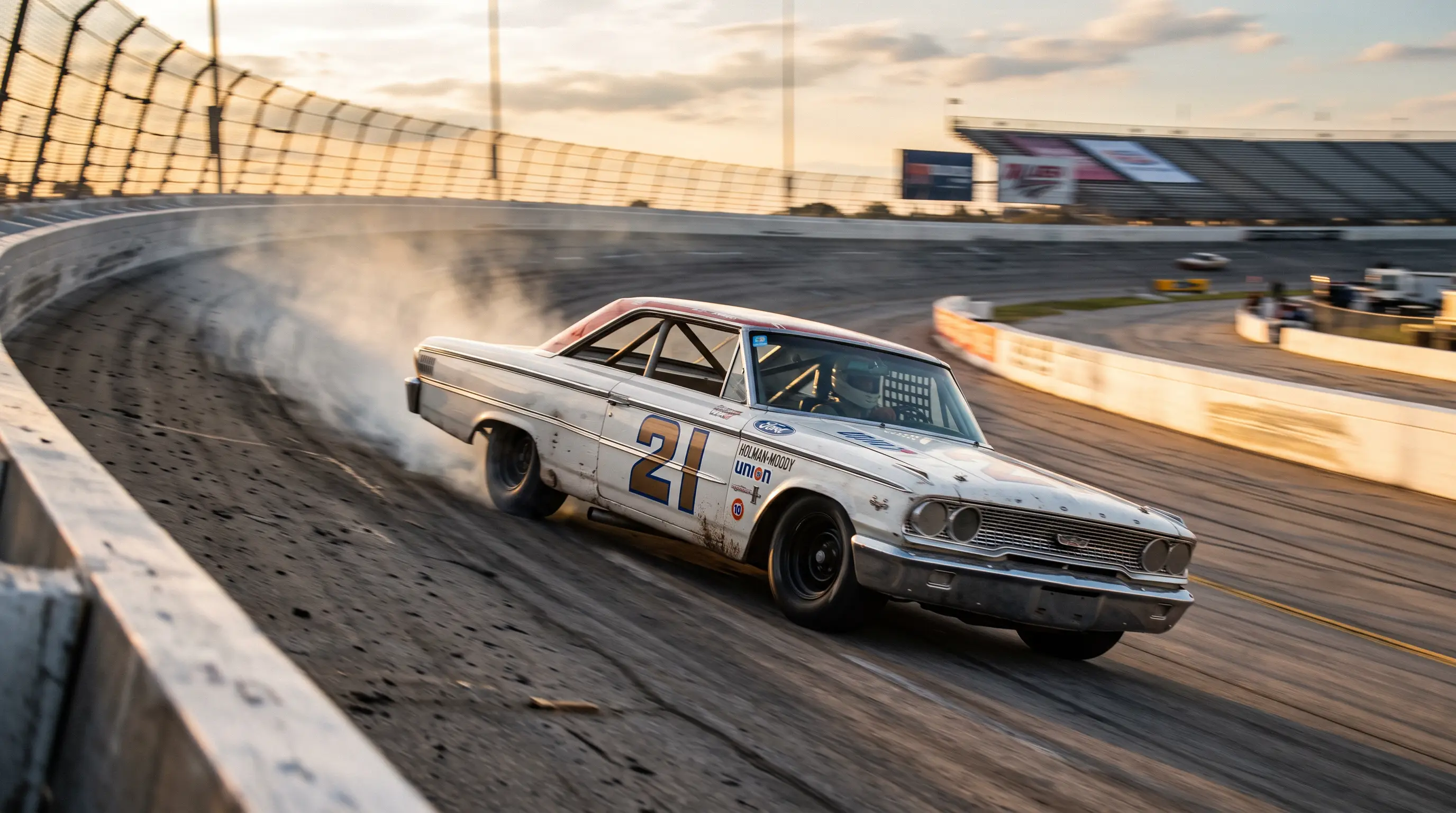
Ford's factory-backed teams ran through Holman-Moody in Charlotte, the operation that turned production Galaxies into cars that could survive 500 miles at Daytona wide open. Drivers like Fred Lorenzen, Ned Jarrett, and Tiny Lund carried the Galaxie to a string of wins across the 1963 season, and it was that accumulation of finishes, not any single dramatic upset, that put Ford at the top of the manufacturers standings. Ollie remembered watching a broadcast recap that fall and hearing the announcer read off how many races Ford had actually won that year. It was not a close number: Ford closed out the 1963 Grand National season with 23 wins, enough to take the manufacturers title outright.
What made the championship stick in people's memory wasn't just the win count. It was that Ford had built the case methodically, race after race, with a car that looked almost exactly like what a customer could order at a dealership. That connection between showroom and racetrack was the entire point of Total Performance, and 1963 is the year it actually delivered a title to prove the strategy worked.
The rivalry that made it matter
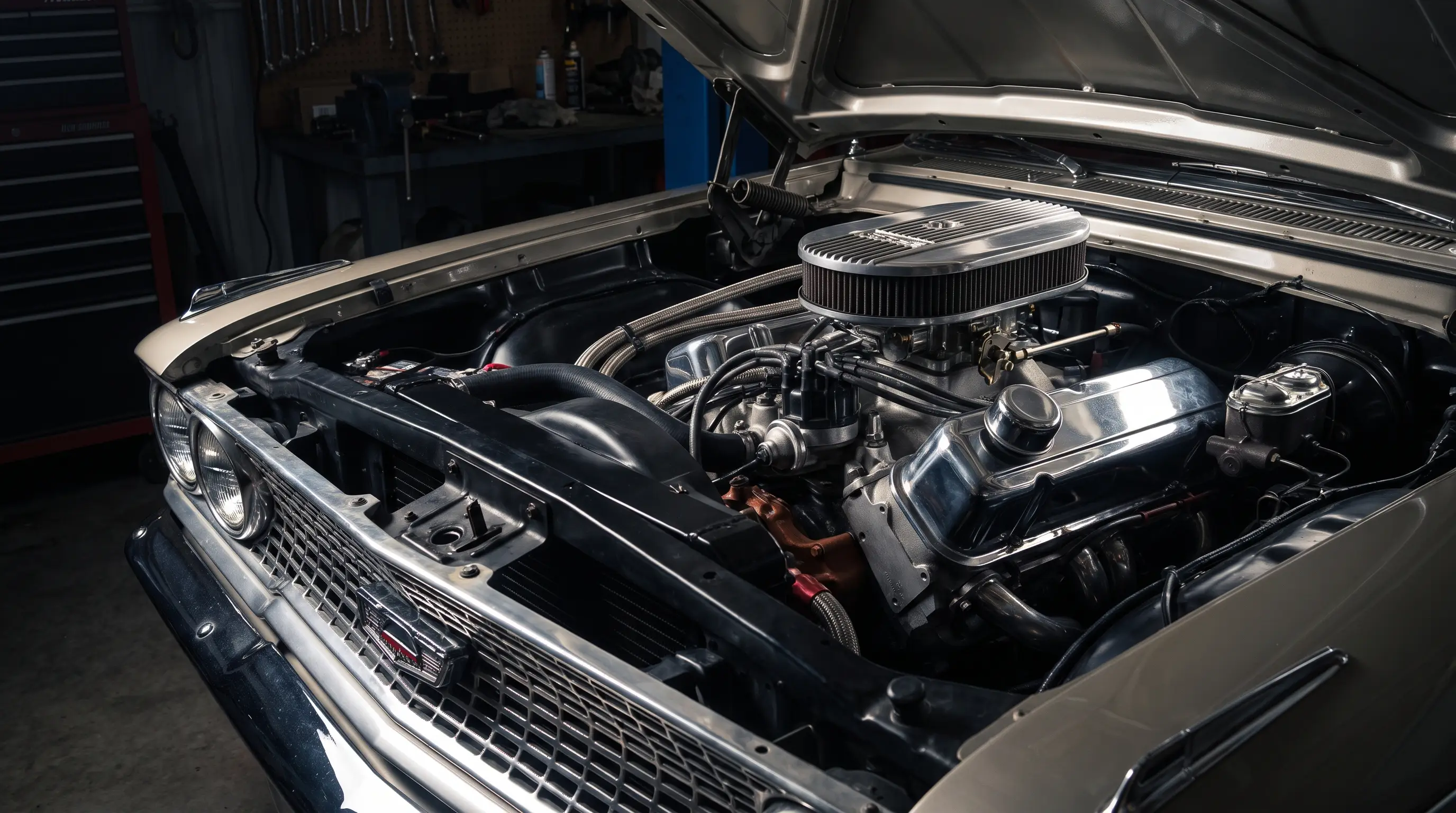
Chevrolet's semi-official withdrawal from factory racing left a gap that Mopar and Ford fought to fill, and the fight got personal fast. Chrysler's max wedge cars were fast in a straight line, and NASCAR's own rule adjustments through the season, tweaking weight and carburetion allowances, were partly a response to trying to keep the competition from becoming a one-brand runaway in either direction. Ford's engineers spent that year chasing every advantage the rulebook allowed, aerodynamic tricks on the roofline, weight trimmed wherever NASCAR permitted it, and engine tuning that squeezed every legal horsepower out of the 427.
The people who lived through it, guys like Ollie, remember it less as an engineering story and more as a loyalty story. Ford dealers in his town put up banners. Local guys who drove Galaxies to work started getting waved at by strangers. A NASCAR championship in 1963 turned into a Main Street event in a way that is hard to explain to somebody who only sees the cars in a museum today.
| Element | 1963 Season Detail |
|---|---|
| Ford racing program | Total Performance, factory-backed |
| Lead team | Holman-Moody, Charlotte NC |
| Key drivers | Fred Lorenzen, Ned Jarrett, Tiny Lund |
| Primary engine | 427 cubic inch FE big block |
| Rival makes | Chrysler/Plymouth max wedge, Pontiac |
"You ask people what won that championship and they say the engine. Ollie always said it was Holman-Moody's fabrication shop. The engine got the credit. The chassis work is what actually finished the races."
- Wayne Coburn
Short tracks counted just as much as the superspeedways
It is tempting to remember 1963 only through its biggest races, Daytona, the World 600 at Charlotte, but the manufacturers championship was built race by race across a full calendar that included plenty of short track dates most fans have forgotten entirely. Ford's Galaxie teams showed up at those smaller events with the same preparation and the same intent to win points, because NASCAR's manufacturers tally did not care whether a win came on a half-mile bullring or a two-and-a-half-mile superspeedway. Consistency across that entire schedule, not just a handful of headline finishes, is what actually built Ford's margin over Chrysler and Chevrolet by the time the season wrapped up in the fall.
Ollie made a point of this every time he told the story. He remembered a short track win somewhere in the Carolinas that never made a national headline but that he swore mattered just as much to the final points tally as anything that happened at Daytona. That kind of grinding, race-after-race consistency does not photograph as well as a superspeedway trophy presentation, but it is genuinely how championships got won in this era of NASCAR.
What it means for Galaxie owners now
A championship season leaves a long tail. Parts that were built or modified for racing homologation in 1963 are now some of the most sought-after pieces in the whole full-size Ford hobby, and documentation tying a specific car to that season, even loosely, adds real weight to its story. Club events still center conversations on 1963 in a way they do not for surrounding years, because that season is when the full-size Ford stopped being just a family car and became a genuine contender. For more on the 1963 ford galaxie, the background on the model year fills in what came before the championship push, and for our complete history the whole arc of the nameplate is there too.
People chasing this era of Ford performance for their own garage should know what they are actually looking at before they buy. There are classic Galaxies on the market right now carrying real 1963 heritage, and a little homework on race history goes a long way toward telling a genuine period piece from a car just wearing the badges.
Ollie sold that parts car eventually, to a younger guy from two towns over who wanted to build a tribute to the 1963 season using whatever original sheet metal he could salvage. He kept the fender with the loose 427 emblem for himself, screwed it to a piece of pegboard in his garage, and told the story to anyone who asked about it, which by his own account was most people who walked past. That is really what a championship season leaves behind sixty years later, not a trophy case, but a hundred small, still-repeated stories like his, scattered across driveways and swap meets, keeping a specific year's history alive one conversation at a time.
Sources and notes
Related Reading
Have a
Ford Galaxie
for Sale?
Reach thousands of serious classic car collectors across the US.
Sell It Here →
Are You a Classic Car Dealer?
List your full inventory and connect with targeted classic car buyers.
Join as a Dealer →

About the author
Wayne Coburn
Longtime Corvette owner, judge and club figure who knows the cars, the records and the people behind them.
Related Listings - Ford Galaxie




Comments
Be the first to comment on this article.