
There is a particular quiet that settles over a car show field when someone parks a well kept 1963 Ford Galaxie next to its 1961 and 1965 siblings. People walk the line slower at the 1963 car. Something about the proportions, the way the roofline sits over the body without a single line fighting another, makes visitors stop talking mid-sentence and just look. That reaction is not nostalgia alone. It is a genuine design achievement, the year Ford's stylists got the full-size Galaxie exactly right.
Car Features
6 min read
The Clean Lines of 1963: Ford's Best Full-Size Look
The 1963 Galaxie traded restless chrome for restraint, and its fastback roofline turned a NASCAR aerodynamic fix into one of the era's most memorable shapes.
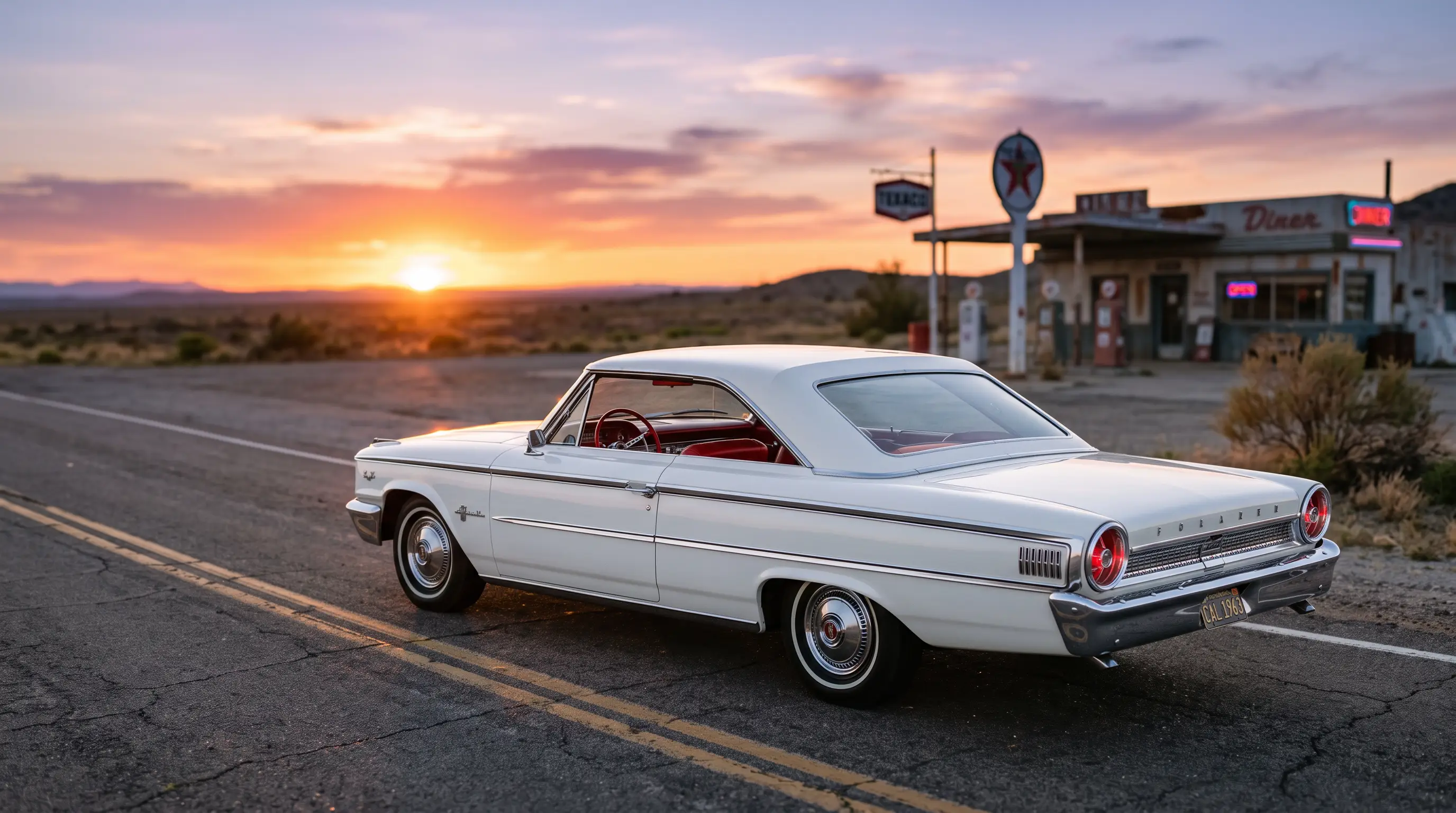
A body that finally settled into itself
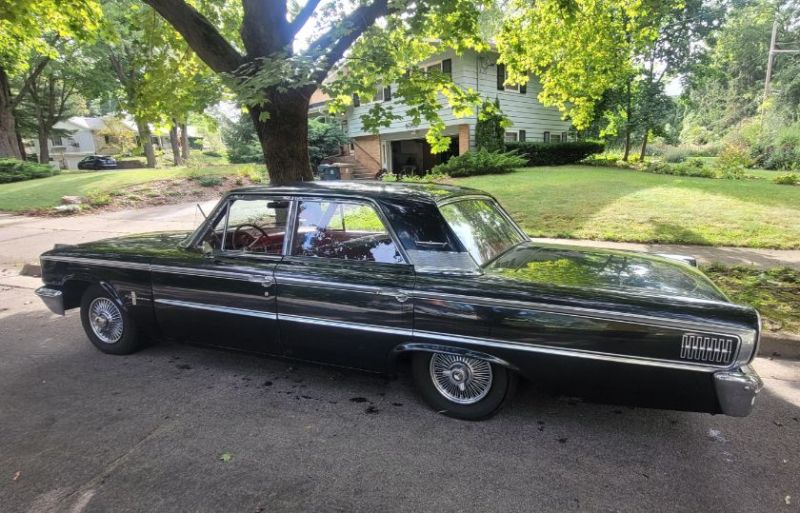
The full-size Ford lineup had spent the previous few years working through some restless styling choices, chasing trends in chrome and tailfin shapes that were already fading elsewhere in the industry by the early 1960s. The 1963 Galaxie stepped back from that restlessness. Its designers pared the ornamentation down to clean, slab-sided panels, letting the car's actual proportions carry the visual weight instead of relying on brightwork to distract from the shape underneath, a discipline that stands out clearly against the busier chrome treatments Detroit had favored only a few seasons earlier. The result reads as confident rather than plain, a car that trusted its own lines enough to leave them mostly alone.
That restraint mattered because the full-size Galaxie was, structurally, a big car, and big cars either look substantial or look bloated depending entirely on how a design team handles the transitions between hood, greenhouse, and rear deck. The 1963 model handled those transitions with a discipline that its immediate predecessors had not quite found, and the effect is a car that looks lean despite its actual dimensions, an illusion good design pulls off and bad design cannot fake.
The fastback roofline that changed the conversation
Partway through the model year, Ford introduced a fastback roofline option, a sweeping rear window and roof treatment developed largely for aerodynamic reasons tied directly to NASCAR competition, where a slipperier shape meant real speed on the superspeedways. What started as a functional answer to a racing problem became one of the most visually striking versions of the 1963 Galaxie, and it is often the variant that draws the longest stares at shows today. The fastback's rear glass flows into the trunk lid in a single continuous sweep, a look that photographs beautifully from a rear three-quarter angle and gives the car a sense of motion even sitting still in a parking lot.
It says something about 1963 as a design year that its most purely function-driven addition turned out to also be its most visually memorable. Form following function is a design cliche for a reason, and the fastback Galaxie is one of the cleaner examples of that idea actually working out in the metal.
Color, trim, and the little details people remember
Ford's color palette for the 1963 Galaxie leaned into rich, saturated period tones, deep reds, blues, and greens that suited the car's clean surfaces far better than a busier design from a few years earlier could have carried, and those factory colors still turn heads at shows today precisely because they were chosen to complement the shape rather than distract from it. Interior trim followed the same instinct toward restraint, with dashboard layouts that favored legibility over ornamentation and seat patterns that complemented rather than competed with the exterior's simplicity. None of these choices individually stands out as revolutionary, but together they reinforce the sense that everyone working on this model year, from the body engineers to the trim designers, was pulling in the same direction toward a unified, confident look.
People who grew up around these cars, or who found one decades later at a swap meet, often describe the same small moment of recognition when they see a well-kept 1963 Galaxie in person for the first time: a sense that the proportions are simply correct in a way that is hard to articulate until you stand next to one. Photographs rarely do the car full justice, since so much of its appeal comes from how the surfaces catch light as you walk around it rather than from any single angle a camera can capture.
"I have watched people who claim no interest in old cars stop walking past a clean 1963 Galaxie fastback. They cannot always say why. The shape just asks for a second look."
- Nora Beckett
How it compared to the competition on the showroom floor
Chevrolet and Chrysler were both pursuing their own visions of full-size restraint that same model year, and the comparison is instructive. Chevrolet's Impala leaned into a slightly softer, more rounded interpretation of clean styling, while Ford's Galaxie kept its surfaces flatter and its edges more defined, a difference that comes across clearly when the two cars sit side by side at a show today. Neither approach was objectively superior, but the Galaxie's sharper, more architectural treatment has aged in a way that many enthusiasts today describe as slightly more timeless, less tied to a specific decade's soft-edged aesthetic preferences.
Buyers cross-shopping full-size cars in 1963 were choosing between these competing visions of what a clean, modern American sedan should look like, and Ford's answer, whatever its sales numbers against Chevrolet that year, has held up remarkably well in the decades since among people who care specifically about how a car looks parked in a driveway rather than how it performed on a spec sheet. That staying power is its own kind of validation, arguably a more honest one than any single year's sales figures could offer.
Why this year still gets singled out
Design opinions age unevenly. Plenty of styling choices that felt fresh in period now read as dated or fussy, tied too specifically to a particular year's trends to hold up on their own. The 1963 Galaxie has avoided that fate largely because its designers chose restraint over trend-chasing, and restraint tends to age better than exuberance. Six decades on, the car still photographs well, still draws attention parked among its contemporaries, and still gets pointed to by enthusiasts as the year Ford's full-size design language reached its clearest expression before the lineup shifted again in the years that followed. Ask a dozen people at a show which model year of the Galaxie they would choose if they could only own one, and 1963 comes up more often than its sales figures alone would predict, which says something about how design reputation and commercial performance are not always the same conversation.
For the wider story of the model year this design belongs to, the whole picture covers the full 1963 Galaxie lineup beyond styling alone, and anyone who has read this far and wants to see that shape in person rather than in old photographs can find a classic Galaxie among current listings.
Sources and notes
Related Reading
Have a
Ford Galaxie
for Sale?
Reach thousands of serious classic car collectors across the US.
Sell It Here →
Are You a Classic Car Dealer?
List your full inventory and connect with targeted classic car buyers.
Join as a Dealer →
#classic car styling
#automotive design history
#ford galaxie
#1963 Ford design
#fastback roofline
#Total Performance era

About the author
Nora Beckett
Automotive features writer and photographer who tells the human stories behind the cars, from show fields to cross-country road trips.
Related Listings - Ford Galaxie




Comments
Be the first to comment on this article.