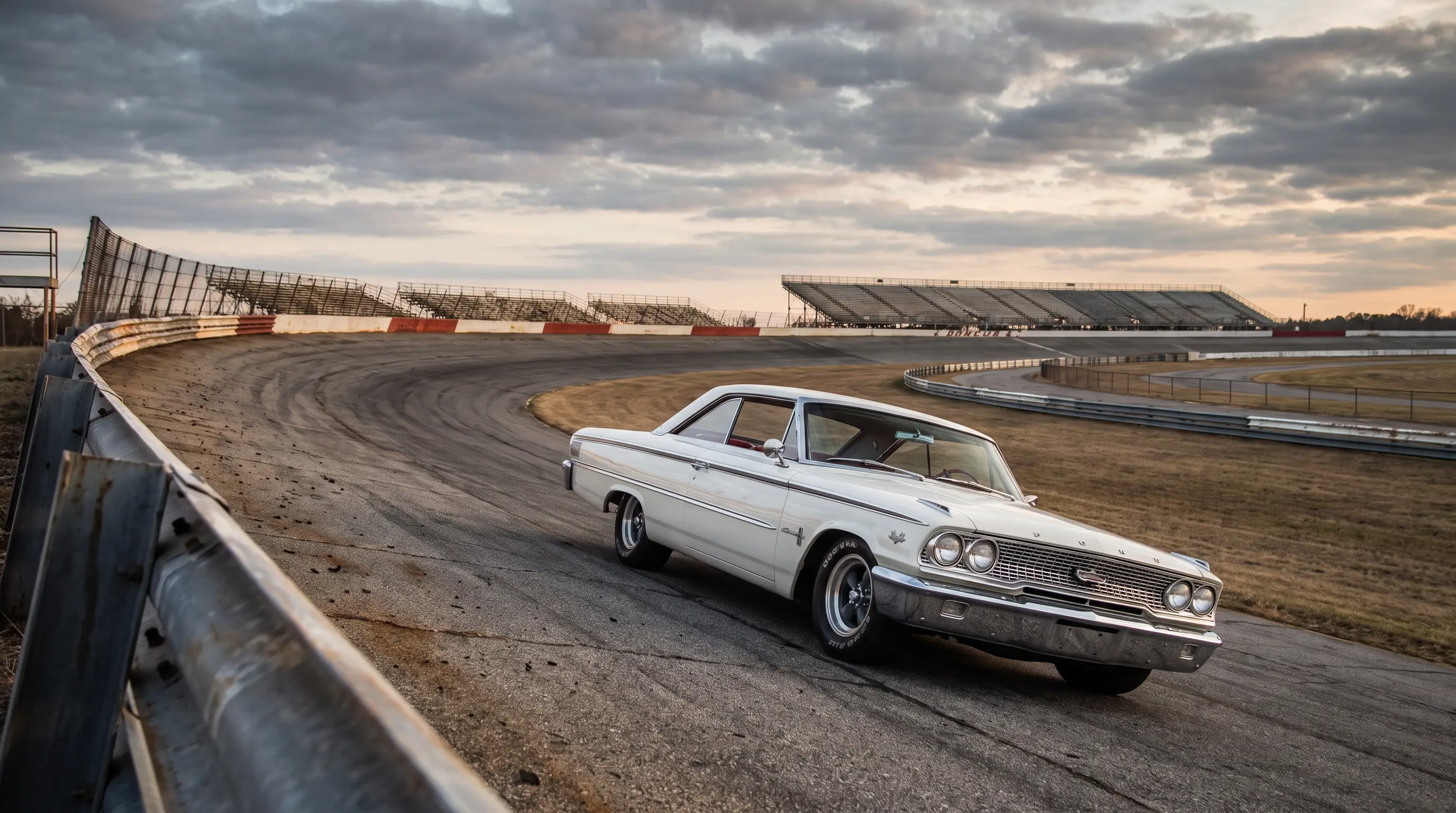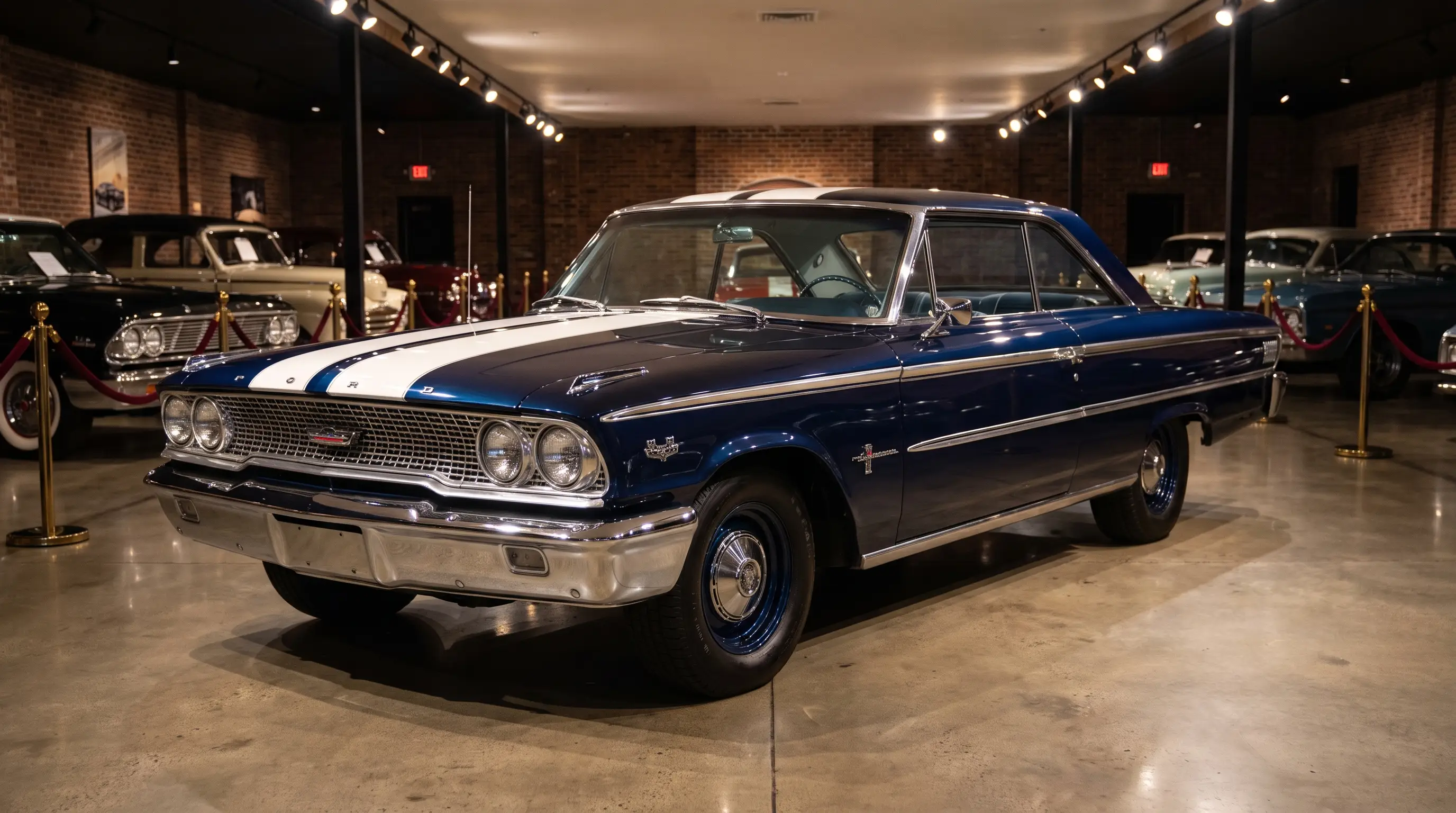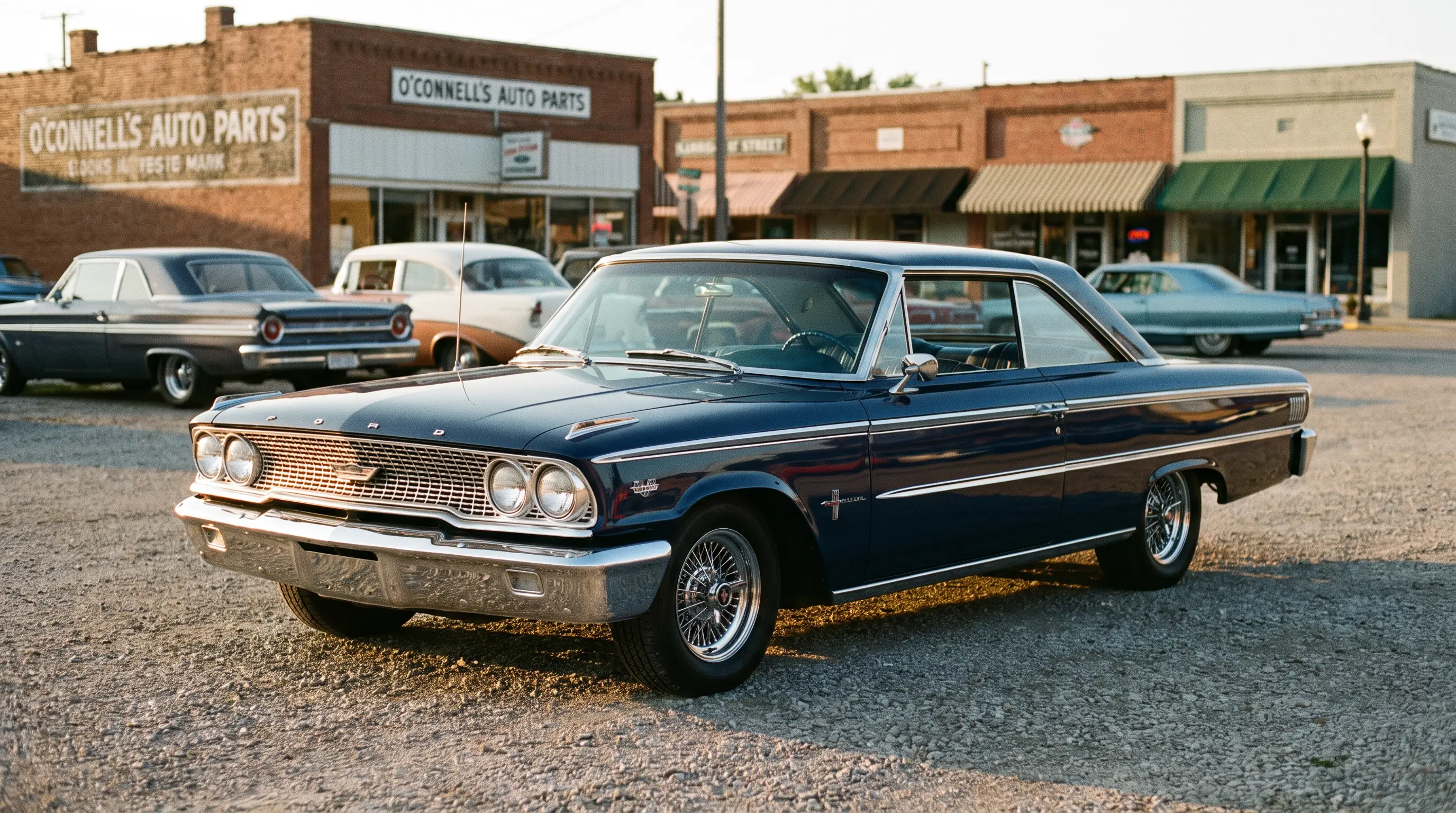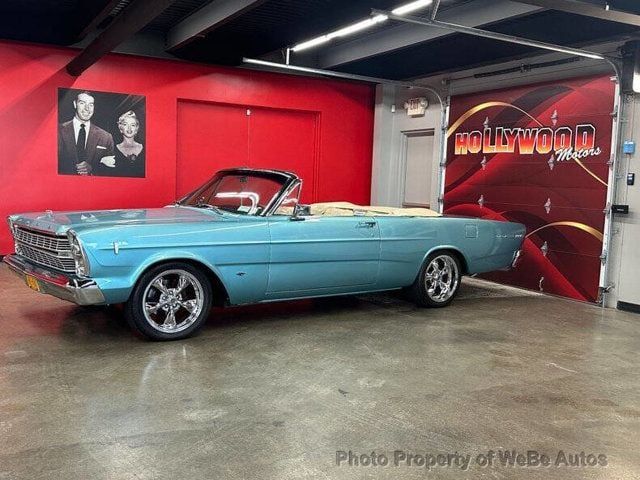
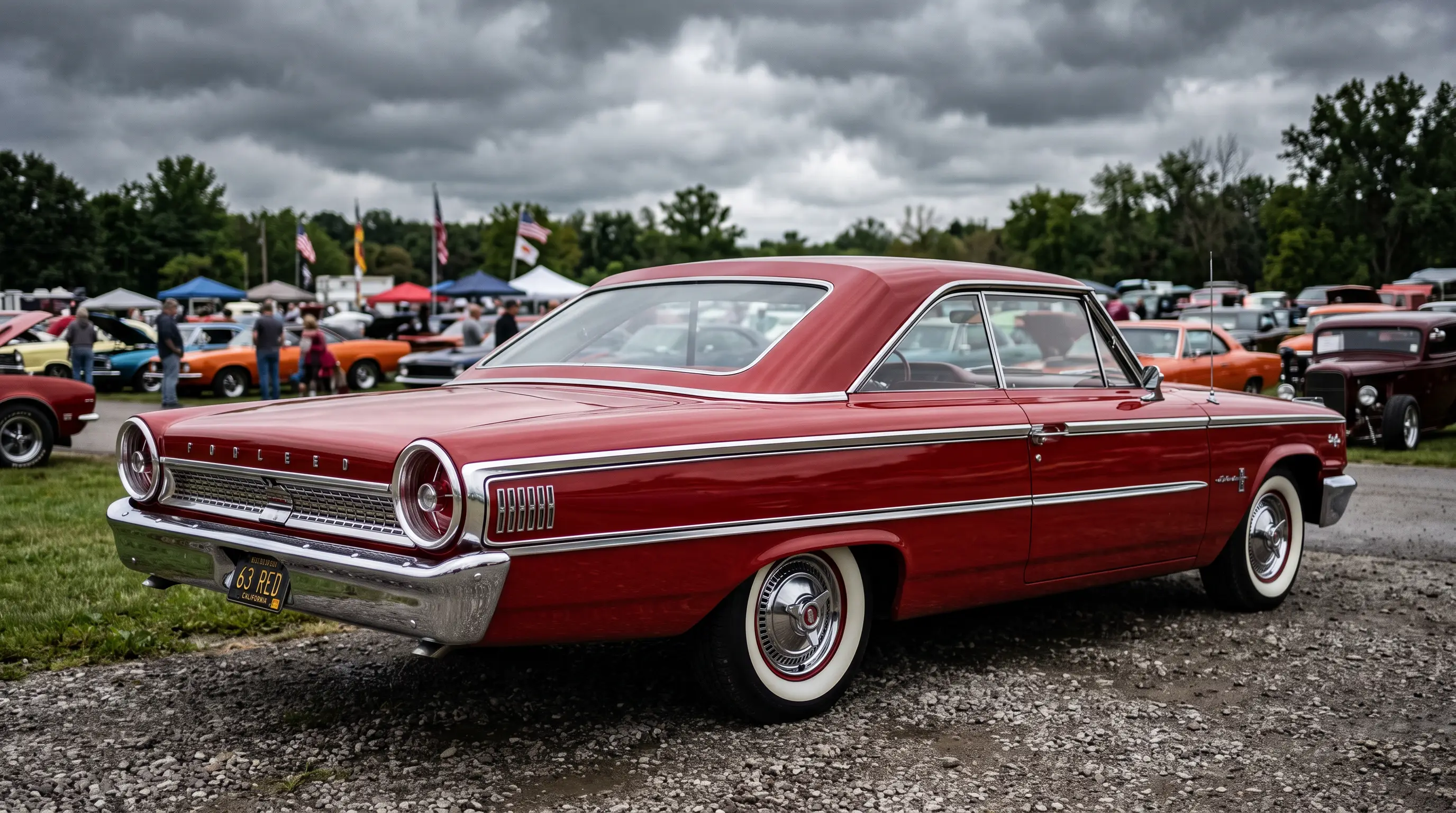
Ask why the ford galaxie 1963 why collectors chase it question actually comes up so often, and the honest appraiser's answer has nothing to do with sentiment. It comes down to a rare combination of documented racing pedigree, genuine model-year scarcity in top trims, and a collector base that has grown steadily educated enough to know the difference between a good story and a provable one. That combination is what actually moves prices, not nostalgia alone.
Scarcity that is real, not marketed
The 1963 model year sits at a genuine inflection point for Ford's full-size performance program, the mid-year transition from the 406 to the 427 engine, the factory-backed NASCAR manufacturers championship push, and the early lightweight drag racing effort that would evolve into the Fairlane Thunderbolt program the following year. That concentration of significant developments inside a single model year did not repeat itself the same way in surrounding years, which means genuinely well-optioned or race-connected 1963 cars are scarcer than a simple production number would suggest. Total production of full-size Fords that year was substantial, but the specific configurations collectors actually chase, factory 427 cars, documented competition history, top trim levels, are a much smaller slice of that total. Ford built roughly 4,978 Galaxies with the 427 that year, split between about 3,857 R-code dual-quad cars and 1,038 Q-code single four-barrel cars, with just 212 of those built to Lightweight drag specification.
Scarcity by itself does not drive collector demand. Plenty of rare cars sit unwanted in the market because nobody cares about the story behind the rarity. The 1963 Galaxie's scarcity is paired with a genuinely compelling historical narrative, which is the combination that actually pulls serious money.
Documentation is the real currency
Every appraisal of a claimed significant 1963 Galaxie starts with the same question: what can actually be proven. Factory build sheets, Marti Report style production data, period competition entries, magazine coverage from the actual season, all of it either supports a car's asking price or exposes a gap between story and substance. Buyers who have been burned once by an undocumented "race car" tend to become extremely disciplined about this the second time around, and that discipline has filtered through the whole collector community over the past couple of decades. A seller who cannot produce paperwork for a claimed competition history should expect serious buyers to discount the asking price accordingly, regardless of how convincing the car looks in photographs.
This is where the market has genuinely matured. Twenty years ago, a good story and a period-correct paint scheme might have been enough to command a premium. Today's buyers, especially the ones spending real money, want the paper trail first and the story second.
The championship connection specifically
Ford's 1963 NASCAR manufacturers championship, built on the Galaxie's back through Holman-Moody's factory-supported program, gives this model year a specific historical hook that surrounding years simply lack. Cars with any traceable connection to that season, whether genuine race cars or well-documented street examples from the same production run, carry a premium tied directly to that championship story. Collectors are not just buying a car. They are buying a documented piece of the year Ford proved its full-size body could win at the highest level of stock car racing, and that story has held up remarkably well over six decades of retelling because the underlying facts are solid.
| Value Driver | Why It Matters |
|---|---|
| Documented race history | Commands the largest premium; requires build sheets and entry records |
| 427 engine, correct configuration | Ties directly to the championship and drag racing narrative |
| Model year scarcity | Genuine concentration of significant developments in one season |
| Ownership chain | Continuous, traceable history reduces buyer risk substantially |
"Everybody wants to talk about horsepower when they ask why a car is valuable. I want to see the paperwork. The engine is the same 427 whether it's in a documented race car or a car somebody dressed up last year. The paper is what makes the difference in price."
- Marcus Feld
How this compares to other muscle car eras
Set against the broader classic muscle car market, the 1963 Galaxie occupies an unusual position. It predates the era most casual buyers think of first when they hear "muscle car," the 1966 through 1970 window dominated by intermediate-size Mopars, GM A-bodies, and Ford's own midsize offerings. That earlier timing means the 1963 Galaxie's collector base skews toward buyers who specifically understand and value full-size performance history rather than the broader muscle car crowd chasing more famous nameplates from later years. This is a narrower audience, but it is also a more informed one, less prone to paying story-driven premiums without demanding the paperwork to back them up.
That narrower, more disciplined buyer base has kept pricing for this model year comparatively rational even as headline muscle car auction results elsewhere have occasionally run ahead of what the underlying history actually supports. An appraiser working in this specific niche spends less time talking buyers down from inflated expectations than colleagues working other, more heavily hyped segments of the classic car market, simply because the people shopping 1963 Galaxies tend to already know the difference between hype and documented fact before they ever call for an appraisal.
The bottom line for buyers
Anyone drawn to this model year should approach it with the same discipline a serious appraiser brings to a valuation, verify the claims, understand what genuine scarcity actually looks like for this specific year, and never let a good story substitute for real documentation. The 1963 Galaxie earns its collector attention honestly, through a rare alignment of engineering transition, championship success, and genuine production scarcity in the configurations that matter, but that does not mean every car wearing the badge deserves the premium price. For the full picture behind this reputation, the full story lays out the model year in complete context, and readers should also take a look at worth a look too for how this history plays out in today's ownership community.
If you are shopping this year seriously, there are shop classic Galaxie listings currently available, and a disciplined, paperwork-first approach will serve you better than chasing the story alone.
The last piece of advice worth repeating from decades of doing this work: a car's value is not fixed the day you buy it. Documentation compounds. A well-researched 1963 Galaxie, with each new piece of verified history added to its file over years of ownership, tends to appreciate faster in the appraisal process than an identical car whose owner never bothered to dig further after the initial purchase. Buying the right car is only the first step. Building its paper trail after you own it is where a serious collector actually earns the premium the market eventually pays. Treat that ongoing research as part of ownership, not a one-time task finished at the closing table, and the car's value will reflect that effort when it eventually comes time to sell.