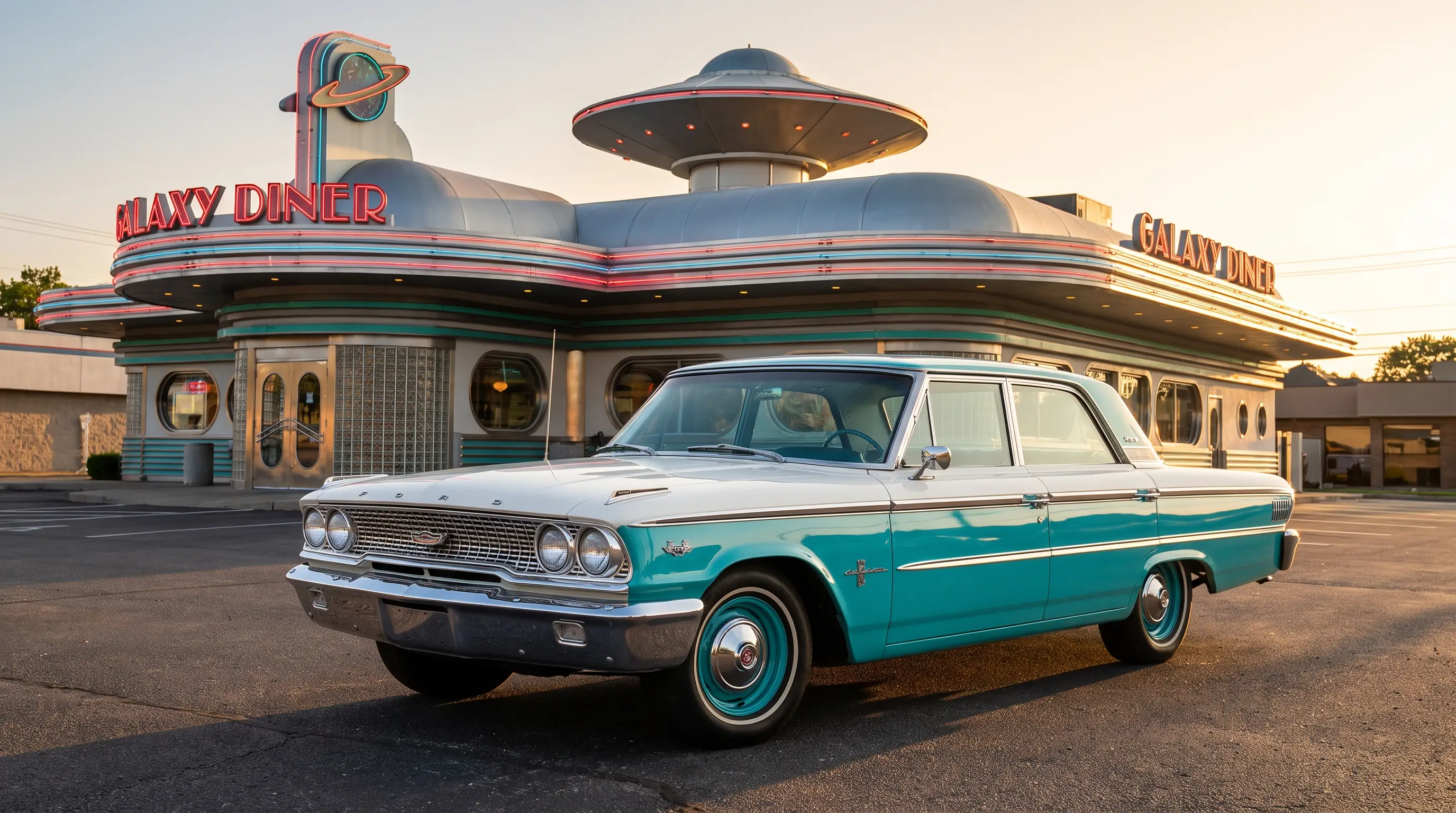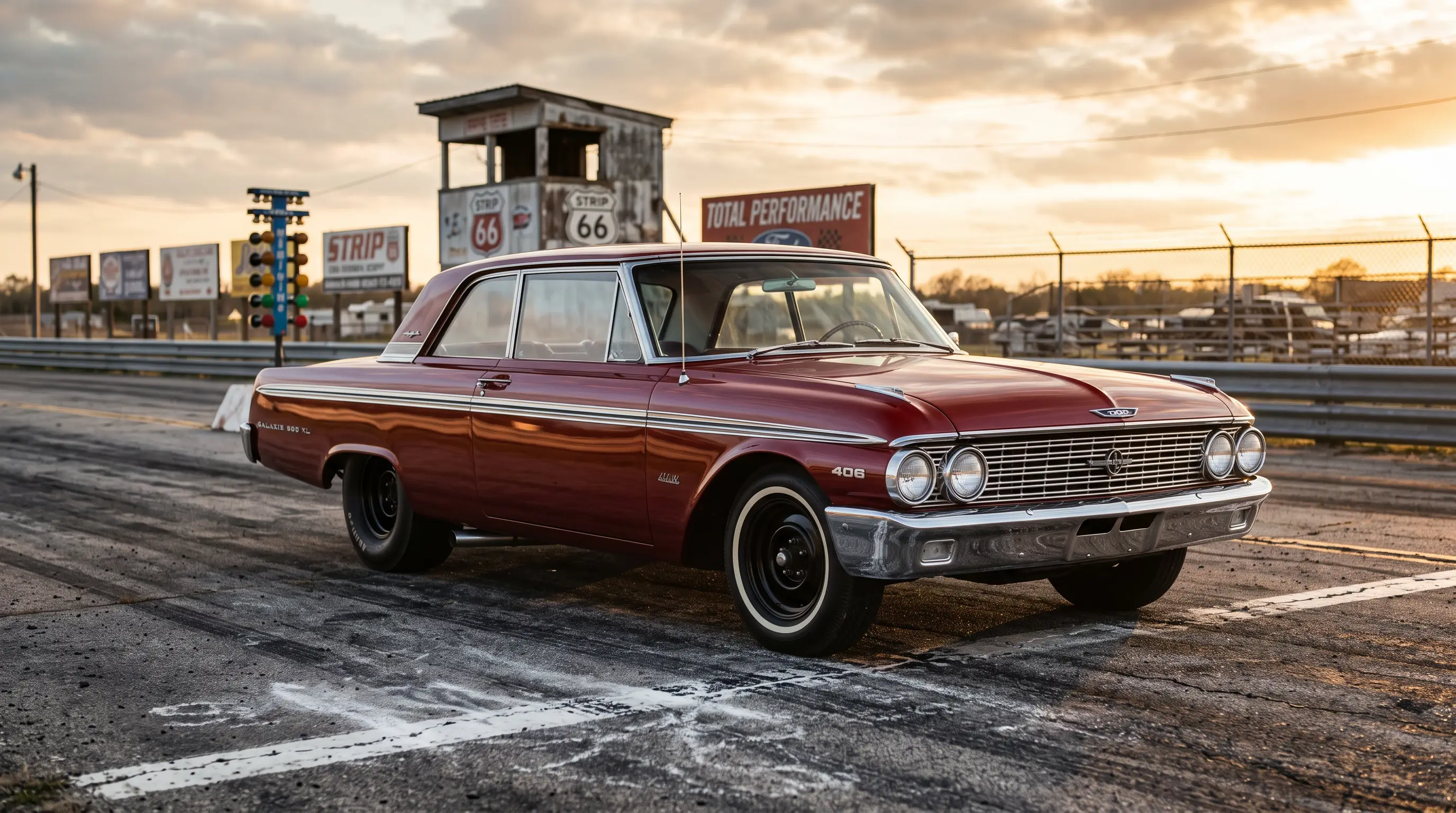
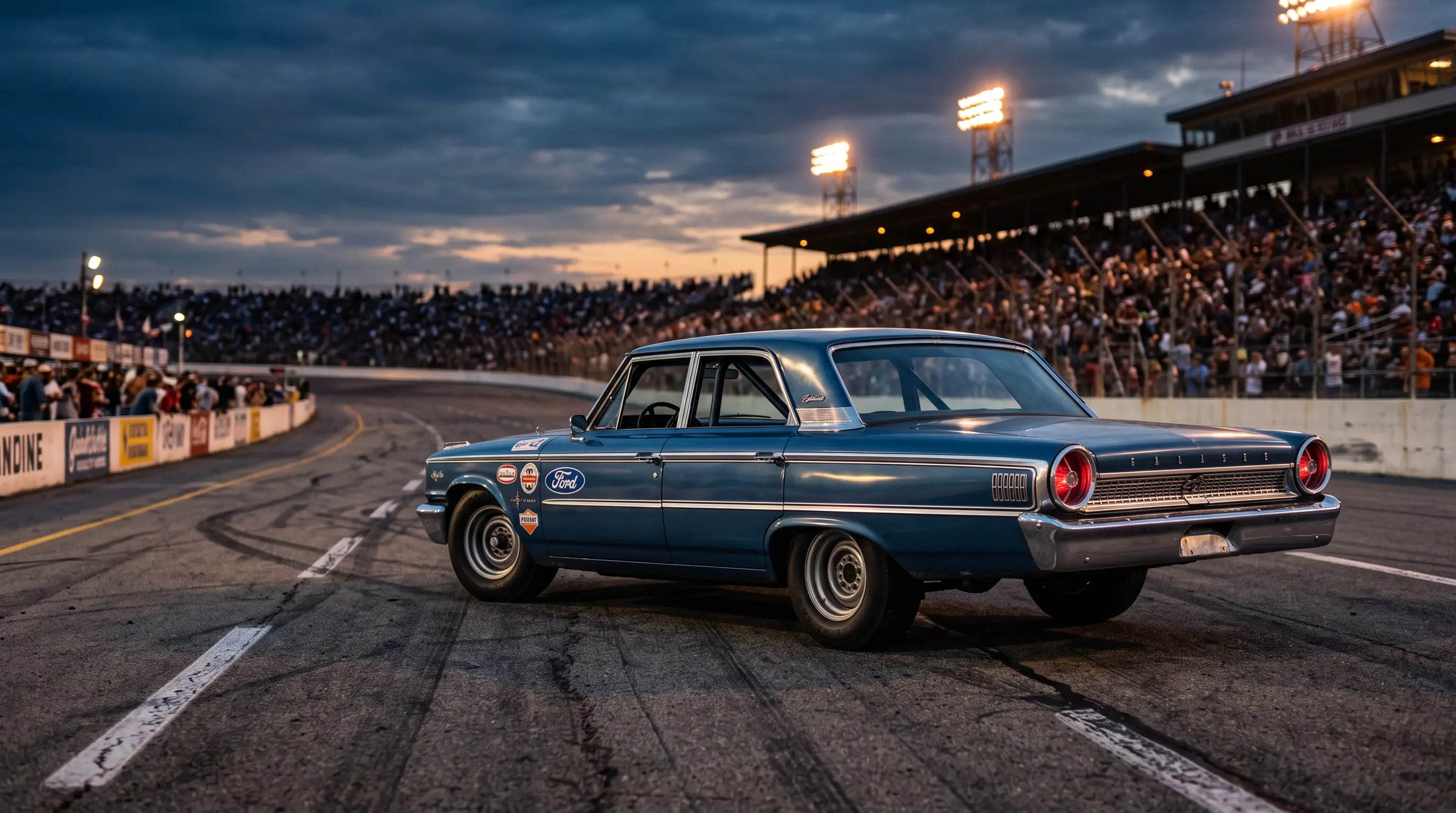
On a Sunday afternoon in February 1963, a journeyman driver named DeWayne "Tiny" Lund climbed into a Ford that was not even supposed to be his and won the Daytona 500. Lund was a big, easygoing man who had been out of a regular ride, hanging around Daytona hoping for work. Days before the race he pulled Marvin Panch from a burning sports car, and a grateful Wood Brothers team handed him the keys to their number 21. That car was a full-size Ford Galaxie, and by the time Lund took the checkered flag it had helped Ford sweep the top five finishing positions. If you want to understand why the Ford Galaxie matters, you start there, on the high banks, with an underdog and a two-ton family car doing something nobody expected of it.
The Galaxie is one of those cars that lived two lives at once. In one life it was the sensible full-size Ford parked in a million American driveways, the car that took kids to church and hauled groceries and looked handsome under a streetlight. In the other life it was a homologation weapon, a NASCAR bruiser, the physical proof behind Ford's "Total Performance" slogan. Most cars pick a lane. The Galaxie ran both at the same time for the better part of a decade, and that contradiction is exactly what makes it interesting sixty years later.
A name borrowed from the Space Age
Ford did not set out to build a legend. For 1959 the company needed a fresh top-of-the-line full-size car, and it arrived wearing a badge that read Galaxie. The spelling was deliberate, that odd "ie" ending giving it a slightly futuristic look on chrome script. This was 1959. The Soviets had put Sputnik overhead in 1957, the country was space-drunk, and every marketing department in Detroit wanted a piece of the stars. Chevrolet had its Impala, named for an antelope, but Ford reached higher and named its flagship after the galaxy itself.
At the start the Galaxie was not quite its own car. It sat atop the Fairlane 500 range, a trim level dressed in the formal roofline borrowed from the Thunderbird, complete with the wide "Thunderbird" style C-pillar that customers clearly loved. Within a year Ford stopped hedging. The Galaxie became a full model line in its own right, and the Fairlane name got demoted down the ladder to the mid-size cars. That quick promotion tells you how fast buyers took to the thing.
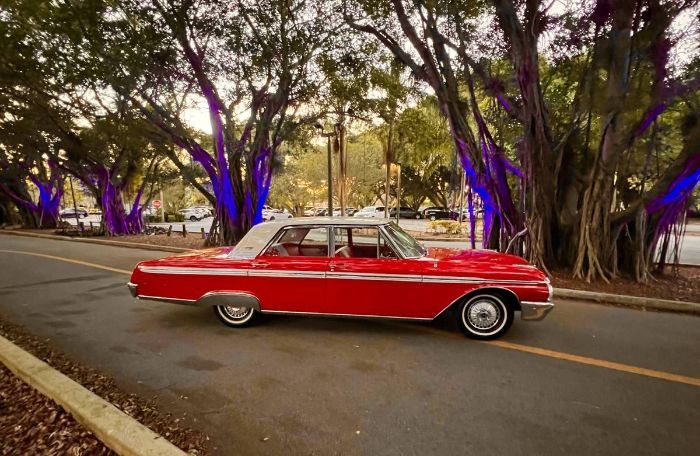
The early cars are more graceful than people remember. The 1960 Galaxie, in particular, is a study in restraint next to the chrome-heavy competition, and the 1960 Starliner hardtop wore one of the cleanest fastback rooflines of the era. These were airy, wide, low-slung cars, and they set the visual template that the Galaxie would refine rather than abandon for the next several years.
It helps to remember the company the Galaxie kept. The full-size field in 1959 was a knife fight. Chevrolet had the wild batwing Impala, Plymouth was pushing its own space-age fins, and every brand promised the moon in its advertising. Ford's answer was to look a little more grown-up than the rest, to trade some of the chrome theatrics for clean glass and long horizontal lines. That maturity paid off at the sales bank, and it is a big reason these early cars have aged more gracefully than some of their flashier rivals. A 1959 or 1960 Galaxie today looks like a car that knew exactly what it was, which is rarer than it sounds for the period.
Total Performance, and a company that meant it
By 1962 Ford was done being cautious. Henry Ford II had grown tired of watching the company project a stodgy image while Chevrolet and Pontiac soaked up the youth market, and the answer was a marketing campaign with real hardware behind it. "Total Performance, Powered by Ford" was not just a slogan painted on a billboard. It was a corporate commitment to win races on Sunday and sell cars on Monday, and the full-size Galaxie was the tip of that spear.
The engines tell the story. Ford's big FE-series V8 kept growing. The 390 cubic-inch V8 arrived, then the 406 for 1962, a rowdy motor available with a single four-barrel or a tri-power setup that made it one of the meaner full-size cars you could order. Then came the 427 for 1963, the engine that turned the Galaxie into a genuine performance car. Named the Thunderbird High Performance and later wearing the Marauder label in some applications, the 427 in dual four-barrel form was advertised at 425 hp, though anyone who raced one will tell you the real number was healthier than the brochure admitted.
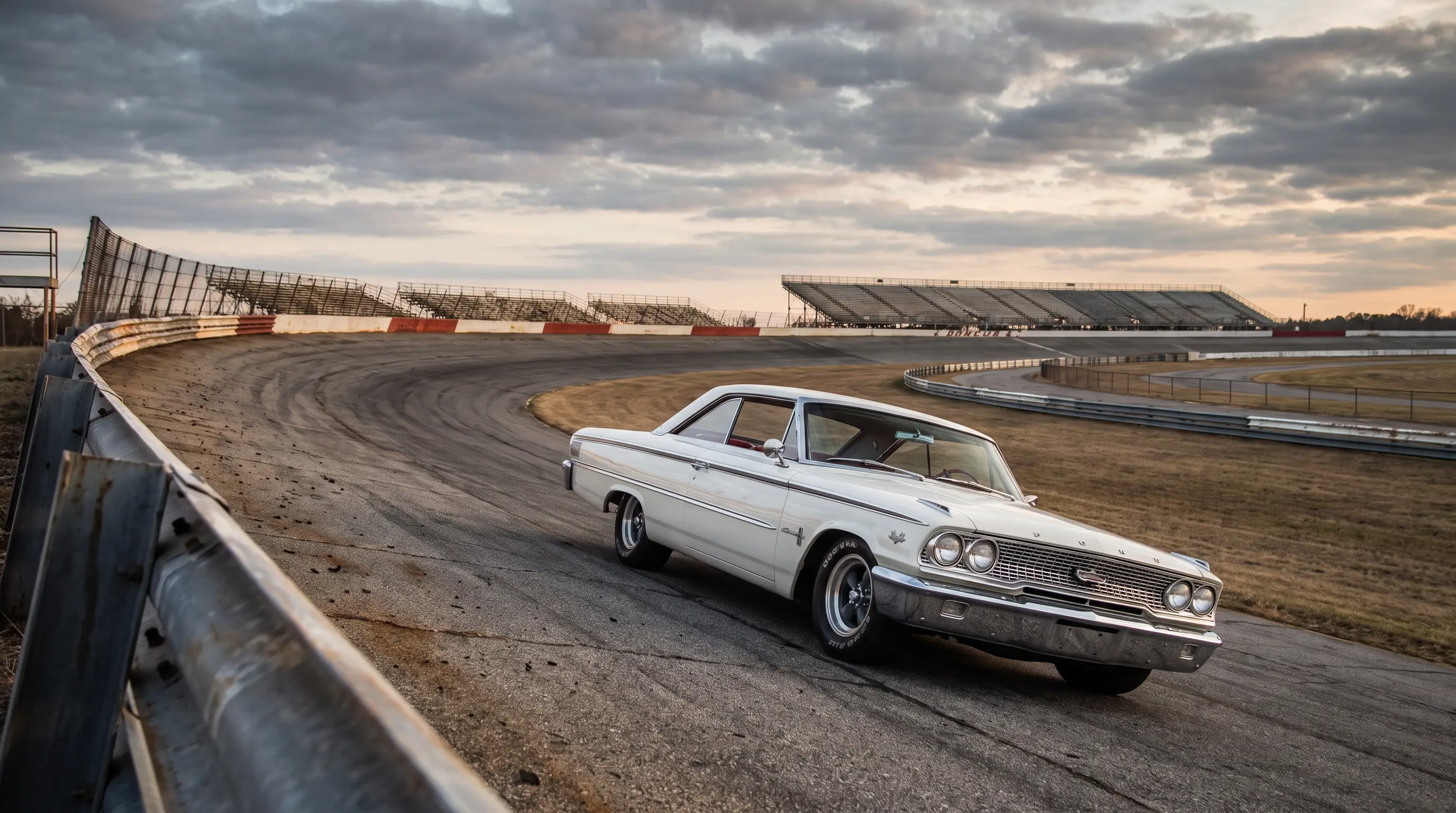
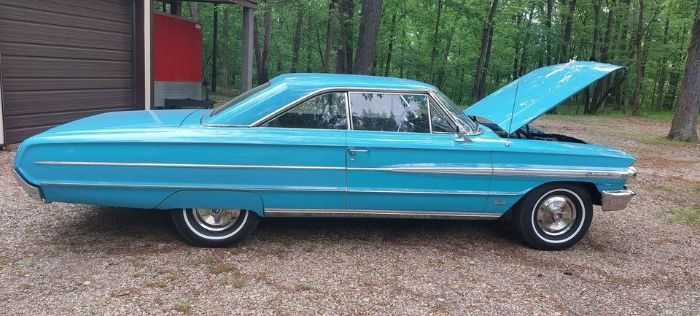
Ford also understood aerodynamics, or at least understood that a formal roofline was killing its cars on the superspeedways. The notchback Galaxie was fast in a straight line but its upright rear window acted like a parachute at 140 miles per hour. So in the middle of the 1963 model year Ford released the Galaxie 500 "Sports Roof," a slippery fastback that the racers immediately loved. Enthusiasts still call it the 1963 and a half, and it is one of the most collectible body styles of the entire run precisely because it was born to go stock car racing.
"The thing people miss about the Total Performance era is that Ford was not faking it. The road cars really did share DNA with the machines on the banking at Daytona, and you could walk into a dealer and order most of that hardware. That link between showroom and speedway is the whole romance of the Galaxie."
- Patrick Walsh
The 427, the lightweights, and a fight for Daytona
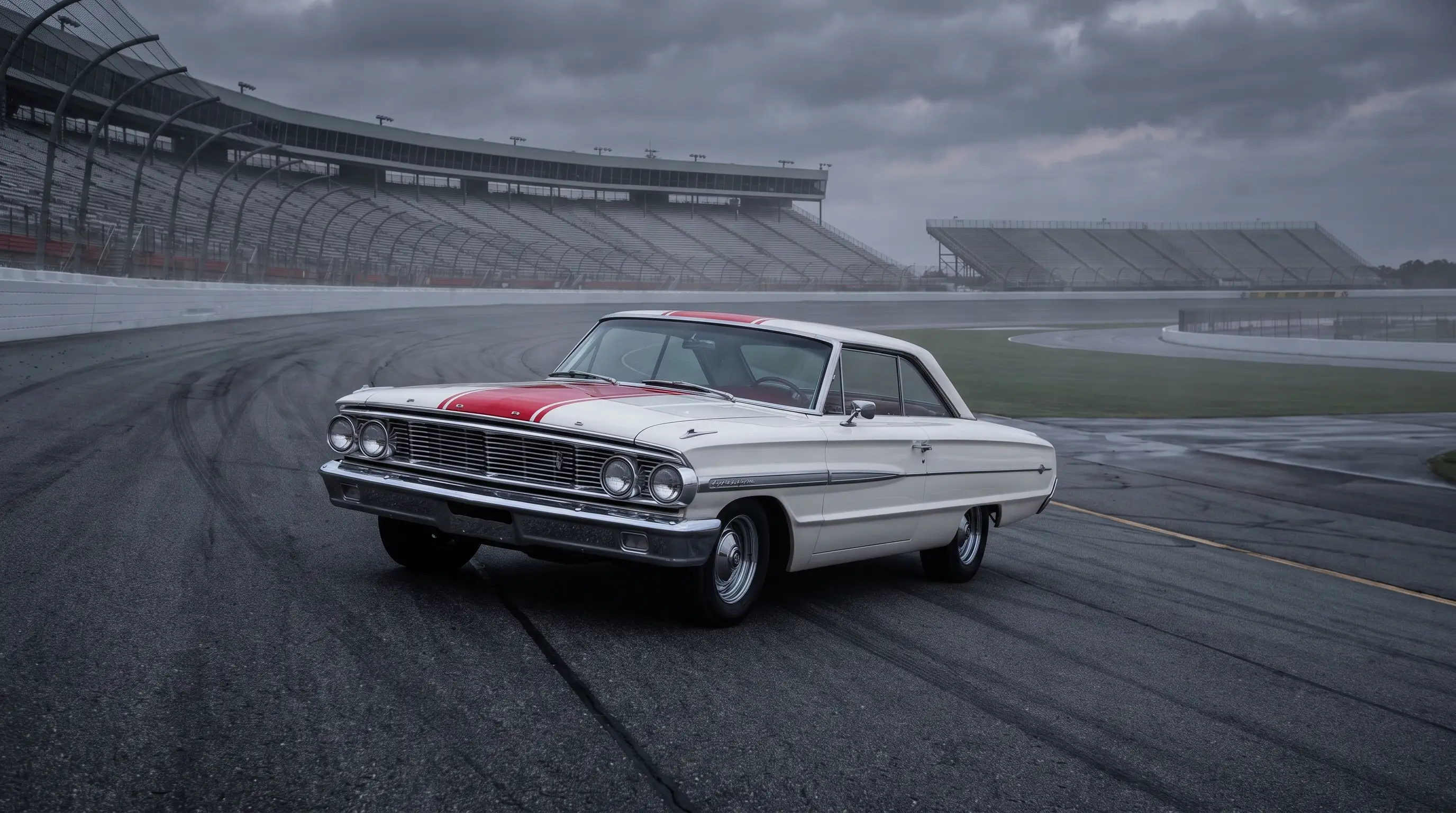
The 427 era is where the Galaxie earns its place in the muscle car story, even though it predates the muscle car label as we usually use it. This was full-size performance, big and heavy and brutal, and it worked. Fred Lorenzen and Ned Jarrett and Marvin Panch became household names driving these cars, and Ford's assault on NASCAR reached a peak in 1963 when Galaxies dominated the season and took that famous Daytona sweep behind Tiny Lund.
Ford did not stop at the standard cars. To go drag racing and to keep the weight down on the track, the factory built a run of lightweight Galaxies in 1963, cars with fiberglass panels, aluminum bumpers, and every ounce of unnecessary trim stripped away. These factory lightweights are among the rarest and most valuable Galaxies in existence, hand-built machines that today trade in a stratosphere far above the ordinary full-size Ford. They are the reason serious collectors take the model seriously at all.
The 427 itself became legend beyond the Galaxie. In 1965 Ford introduced the side-oiler version with a revised oiling system for durability, and that block went on to power the Shelby Cobra and the GT40 that beat Ferrari at Le Mans. When you look at a plain-jane four-door Galaxie sedan, it is easy to forget that its top engine option shared its bloodline with the cars that humbled Enzo Ferrari. That is the kind of story the Galaxie carries quietly.
The racing history is worth dwelling on because it was so lopsided in Ford's favor for a while. Fred Lorenzen became the first stock car driver to win one hundred thousand dollars in a season behind the wheel of these cars, a folk hero out of Elmhurst, Illinois who the crowds called Fearless Freddie. Ned Jarrett won a championship in the Ford camp. On the short tracks and the superspeedways alike, the Galaxie was the car to beat in 1963 and 1964, and that dominance is precisely what Ford wanted the buying public to notice. Every win on Sunday was an advertisement, and Ford cashed those checks in the showroom on Monday. The strategy was cynical in the best way, and it built the performance reputation that Ford still trades on today.
Galaxie 500 and 500 XL: comfort finds a bucket seat
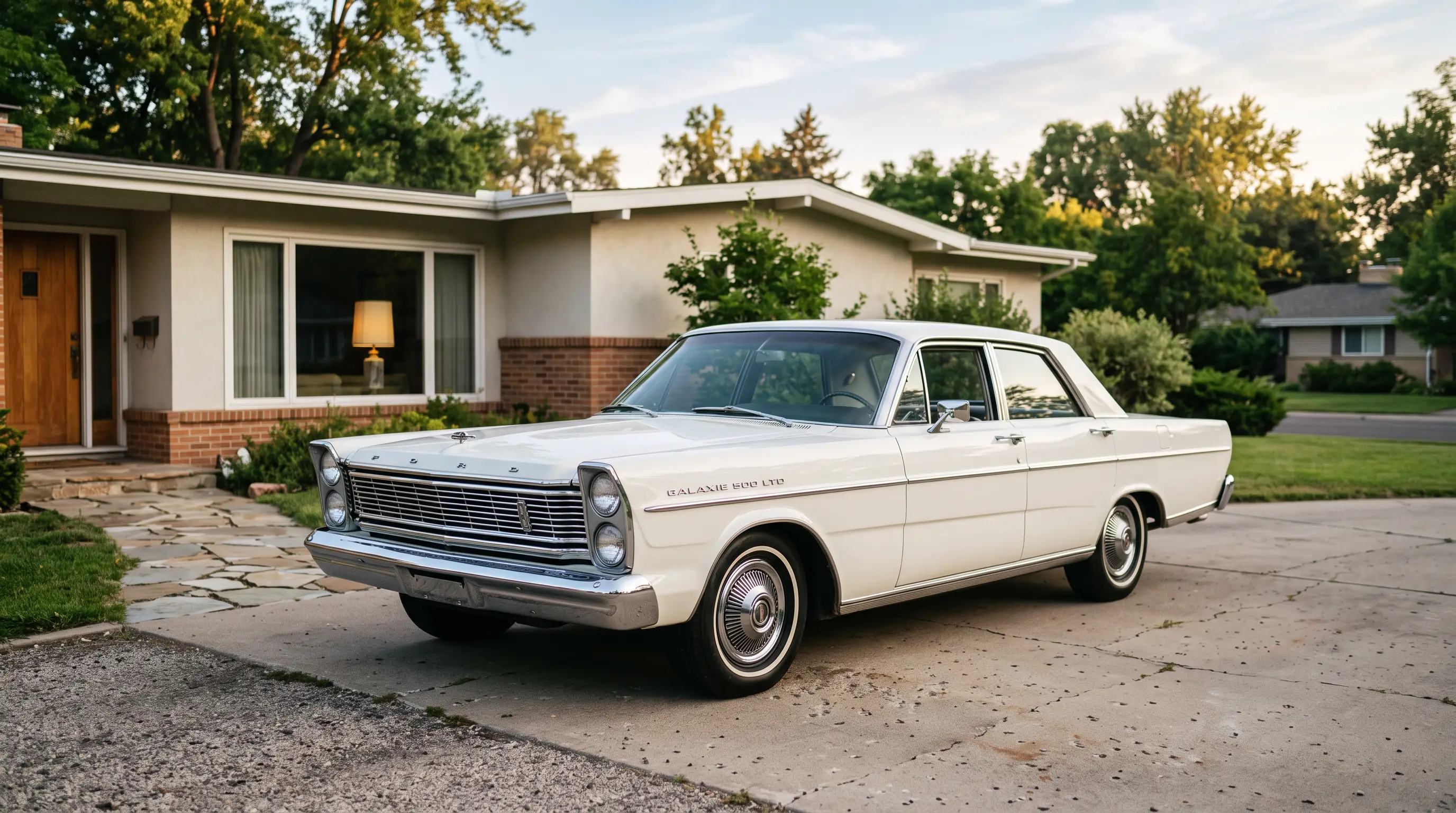
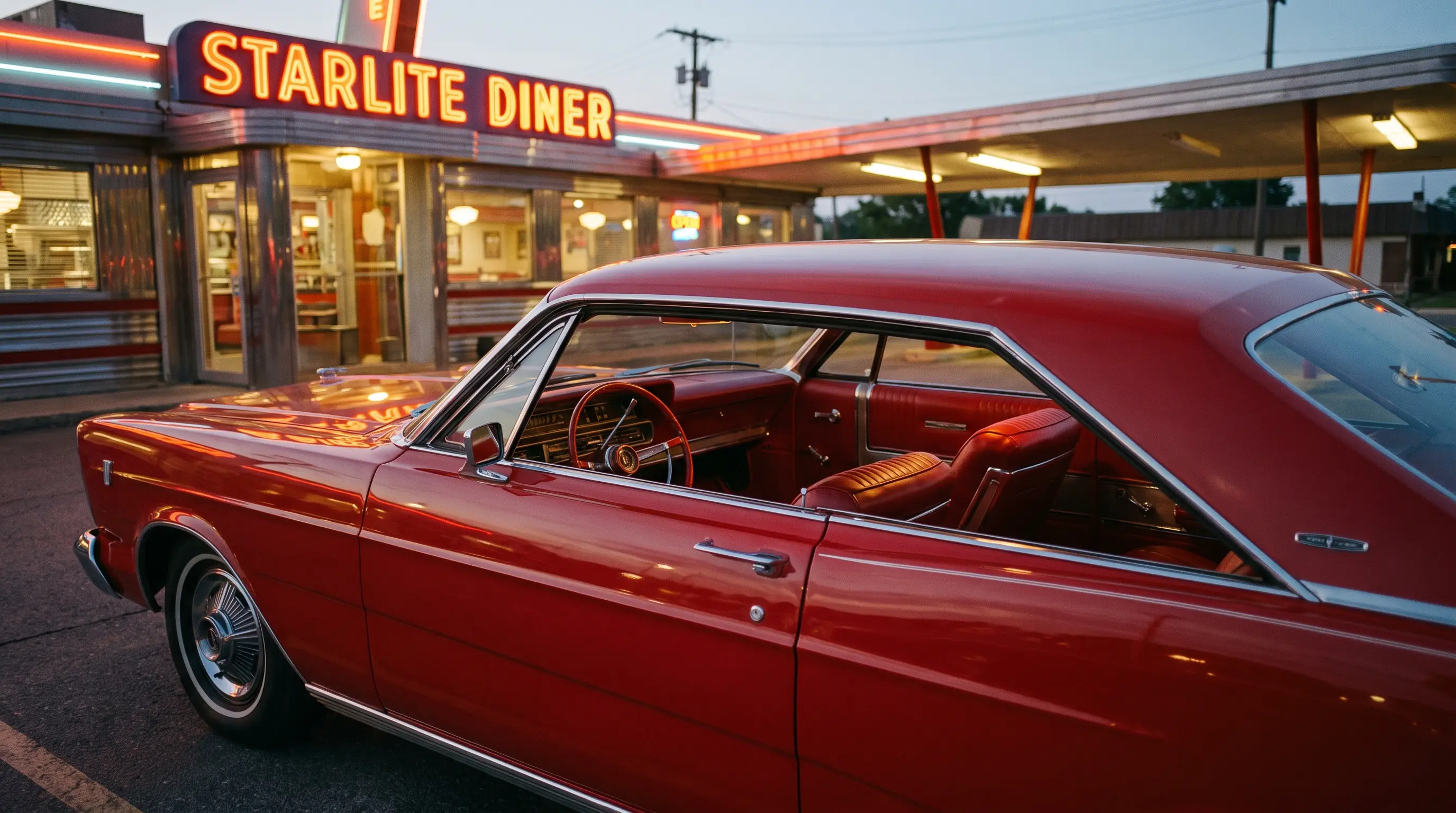
Not every Galaxie buyer wanted to go racing, and Ford knew it. The Galaxie 500 became the volume trim, the well-dressed family hardtop and sedan that most people picture when they hear the name. Above it sat the 500 XL, introduced for 1962, and the XL is where the Galaxie learned to flirt. Bucket seats, a center console, a floor shifter, extra brightwork, and a sportier attitude turned the big Ford into something a young couple might actually want rather than merely need.
This was Detroit reading the room. The personal-luxury and sporty-full-size idea was taking hold across the industry, and the XL let Ford sell performance-flavored style to buyers who never intended to run a quarter mile. You could order an XL with a mild six-cylinder or a six-barrel 427, and both were honest configurations. That breadth is part of why so many Galaxies survive today. The model was never a single thing, so its owner base was never a single kind of person.
The styling through the mid 1960s aged well too. The 1964 cars have crisp, stacked-looking lines, and the 1965 redesign brought a handsome new body with vertically stacked headlights and a more formal, upright presence. By 1965 the full-size Ford rode on a new suspension with coil springs at the rear, and the ride quality took a real step forward. These are comfortable, wide-shouldered cruisers, and a clean 500 XL hardtop from this stretch is one of the more usable classic Fords you can own.
The 7-Litre and the twilight of the big cubes
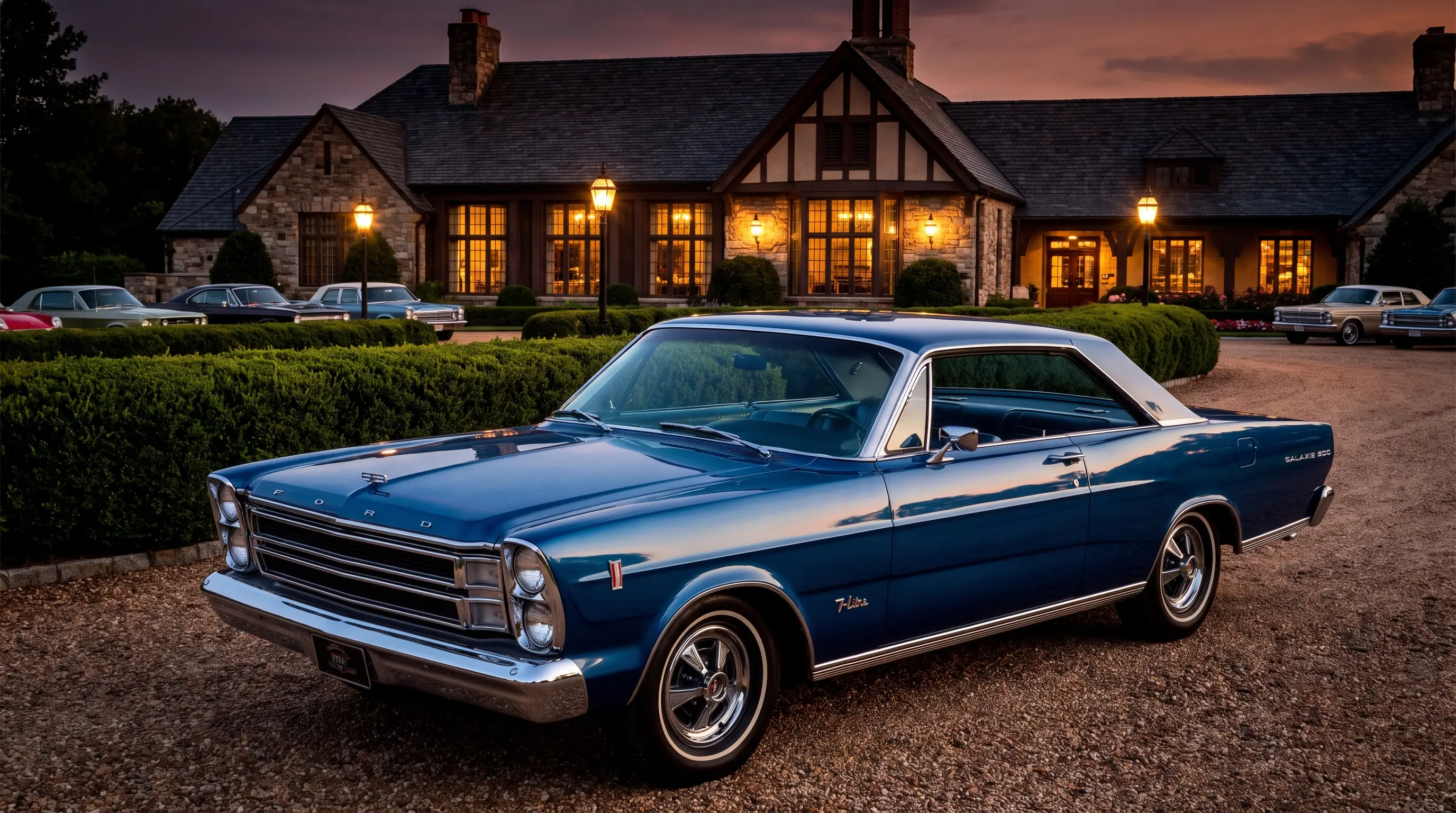
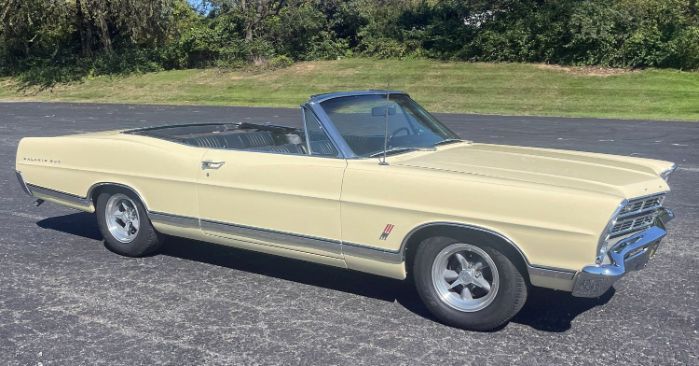
For 1966 Ford gave the flagship a new headline engine and a new name to go with it. The Galaxie 500 7-Litre arrived with a 428 cubic-inch V8, a smoother and more street-friendly big-block than the raucous 427, aimed at buyers who wanted effortless torque rather than raw competition edge. The 7-Litre could be had as a hardtop or a convertible, and it represents the last real gasp of the Galaxie as a performance-minded full-size car.
It is worth pausing on what the 7-Litre was trying to be. By the mid 1960s the muscle car war had moved to the mid-size cars, the GTO and the future Chevelle SS and Ford's own Fairlane. The full-size performance car was becoming a luxury proposition, quick but plush, fast in a dignified way. The 7-Litre is exactly that idea in metal, a big convertible that would embarrass most sports cars at a stoplight while its occupants sat in comfort. Ford only offered it for a short time, which makes surviving examples genuinely uncommon and increasingly sought after.
"A 7-Litre convertible is my favorite kind of Galaxie because it captures a moment that did not last. Ford was still willing to drop a huge engine into its biggest car and call it a performance model. A few years later that whole idea was gone, buried under insurance rates and emissions rules. These cars are a snapshot of the last good years."
- Patrick Walsh
LTD moves upstairs and the Galaxie starts to fade
The seed of the Galaxie's decline was planted at its own peak. In 1965 Ford introduced the LTD as a top-tier trim of the Galaxie 500, and it was a quiet revolution. The LTD sold itself on hush and plush, on being "quieter than a Rolls-Royce" in Ford's cheeky advertising, on wood-grain trim and thick carpet and the idea that an ordinary buyer could own a car that felt expensive. It worked so well that the LTD quickly outgrew the Galaxie name.
Through the late 1960s the pecking order inverted. Where the Galaxie had once been the aspirational badge, now buyers reached past it for the LTD, and the plain Galaxie 500 slid toward being the mid-level trim. The 1969 redesign brought a big, heavy new body and the 429 cubic-inch V8 as the top engine, but the character had changed. These later Galaxies are smooth, quiet, and enormous, closer in spirit to a rolling living room than to Tiny Lund's number 21. They are lovely highway cars, but the racing romance had drained out of the badge.
The end came without much ceremony. The Galaxie 500 name soldiered on into the early 1970s as the LTD took the spotlight, and after the 1974 model year Ford retired the Galaxie name in the United States for good. The full-size Ford lived on, but it wore the LTD badge now. A nameplate that had started life reaching for the stars finished as the trim below the good one, which is a quietly sad way for a legend to bow out.
The Galaxie by the numbers
Across a fifteen-year run the Galaxie wore several faces, and it helps to see the eras laid out side by side. The table below sketches the key chapters of the full-size Ford Galaxie, from its Space Age debut to its long, comfortable twilight.
| Era | Model years | Signature engines | Character |
|---|---|---|---|
| Space Age debut | 1959-1961 | 332, 352 V8s | Airy fastbacks and formal hardtops; Starliner elegance |
| Total Performance peak | 1962-1964 | 406, 427 FE V8s | NASCAR homologation, Sports Roof fastback, factory lightweights |
| Refined big-block | 1965-1966 | 428 (7-Litre) | New body, coil-spring rear, personal-luxury turn |
| Brougham twilight | 1967-1974 | 390, 429 V8s | Bigger and quieter; LTD takes the crown |
Numbers only tell part of it. The Galaxie sold in genuinely large volume through the 1960s, which is both a blessing and a curse for the collector. It means parts and cars still exist and prices stay reasonable for ordinary examples, but it also means the truly special versions, the 427 cars and the lightweights and the 7-Litre convertibles, stand far apart from the crowd of four-door sedans.
Collecting the Galaxie today
Here is the good news for anyone drawn to these cars. The Galaxie remains one of the more accessible ways into 1960s American iron. A clean Galaxie 500 hardtop with a mild V8 is still an attainable classic, a big handsome cruiser that draws a crowd at any local show without demanding supercar money. That accessibility is the model's secret weapon. It welcomes newcomers in a way that a Hemi Charger or a Boss Mustang never will.
The ownership experience helps explain the loyalty. Galaxie people tend to be a friendly, unpretentious bunch, and the club network around the full-size Fords is deep and generous. Parts support is genuinely good for a car of this age, since the FE engines and much of the running gear were shared across millions of Fords, so a running engine or a rebuild kit is rarely more than a phone call away. That practicality matters. A classic you can actually drive and fix is a classic you will keep, and the Galaxie rewards the owner who wants to log real miles rather than trailer a museum piece from show to show.
Value climbs steeply as you move toward the performance and the rarity. The 427-powered cars, especially the 1963 and a half Sports Roof fastbacks, sit at the top of the ordinary market, and the factory lightweights occupy a rarefied tier of their own. The 500 XL convertibles and the 7-Litre cars split the difference, prized for style and scarcity. As with any big American car of the era, condition and documentation drive the price far more than the badge alone, and a matching-numbers car with paperwork will always outrun a mystery-motor project.
If the story of Total Performance and Daytona has you looking, there is a healthy supply out there, and browsing the current listings of a classic Ford Galaxie for sale is the fastest way to learn what your money buys. Sedans and four-doors offer the most car for the least outlay. Hardtops and convertibles command a premium, and anything with a big-block and honest history sits at the top. Buy the best body you can find, because sheet metal and chrome are where the money hides on a car this size.
The Ford Galaxie never had the single defining moment that makes for an easy legend. It was not the first muscle car or the last, not the fastest thing on the street or the most beautiful in the showroom. What it had was range, the ability to be a NASCAR champion and a family hauler and a bucket-seat cruiser and a hushed luxury sedan, sometimes all within the same model year. That breadth is why it stayed in production for fifteen years and why it still turns up at every cruise night in the country. Ask ten Galaxie owners what they love about the car and you will get ten different answers, one chasing the NASCAR history, another the pillowy ride, another simply the way the thing fills a parking space and turns heads. The Galaxie was Ford's everything car, and for one glorious stretch in the early 1960s, everything included winning the Daytona 500.