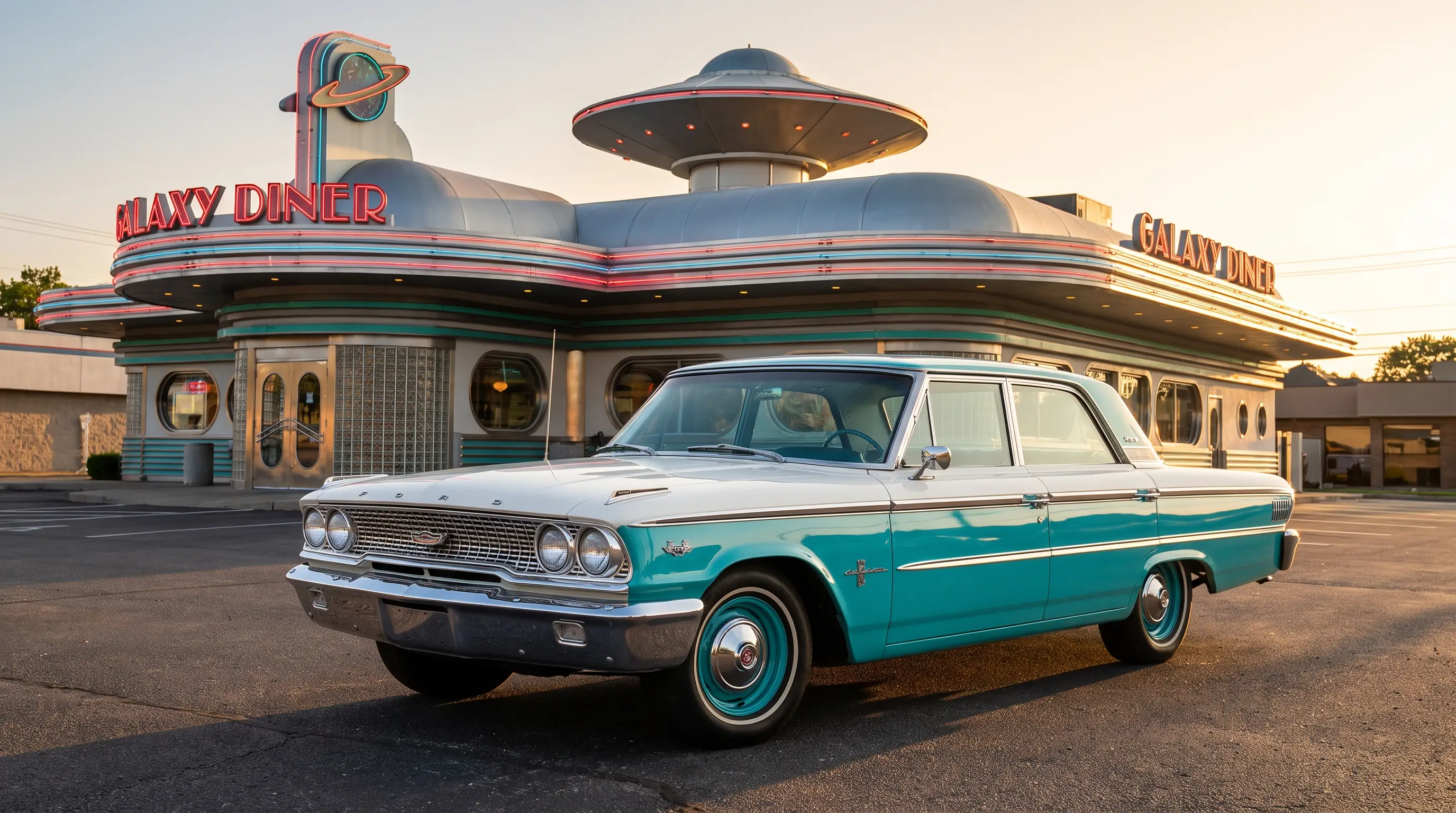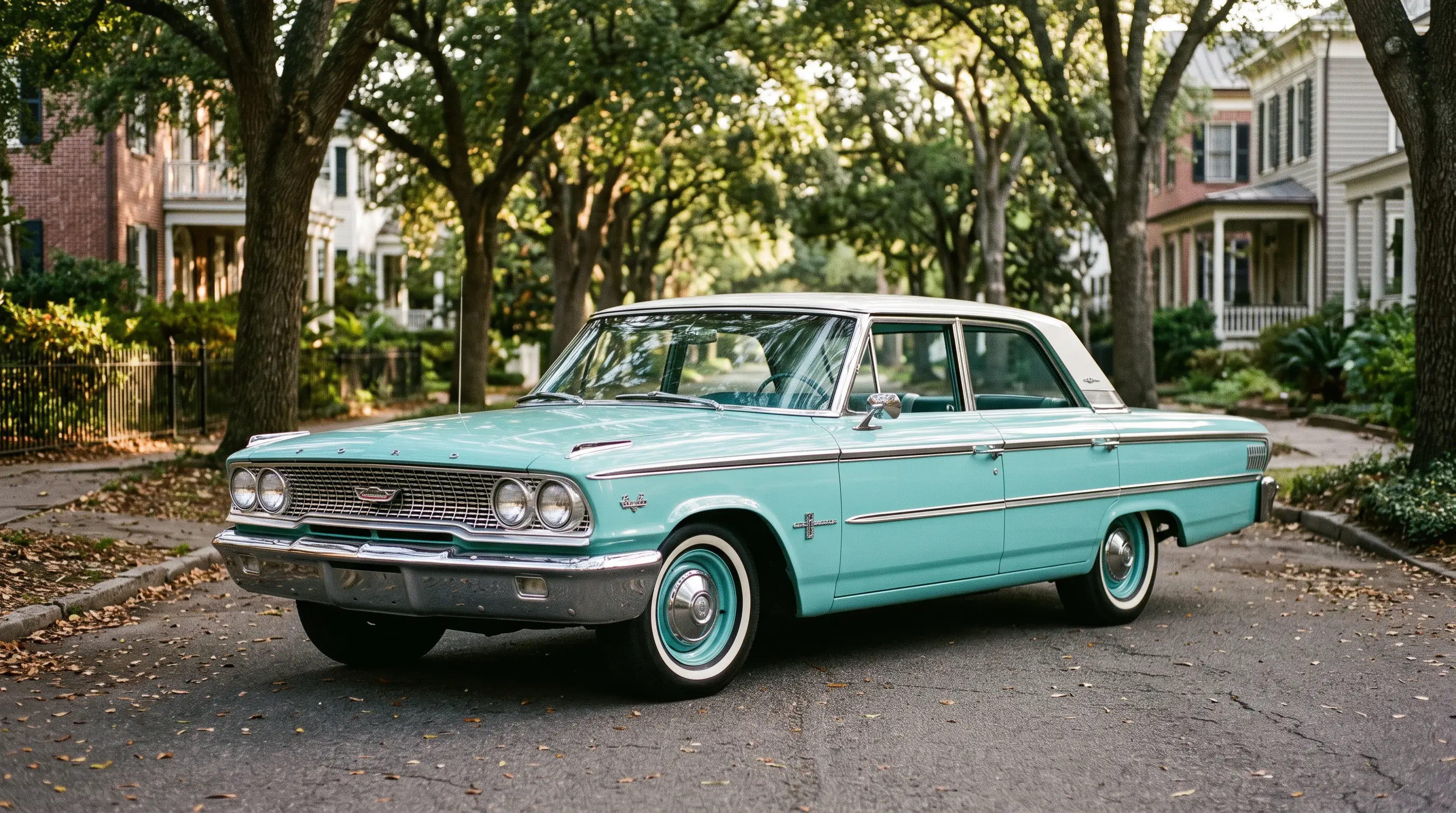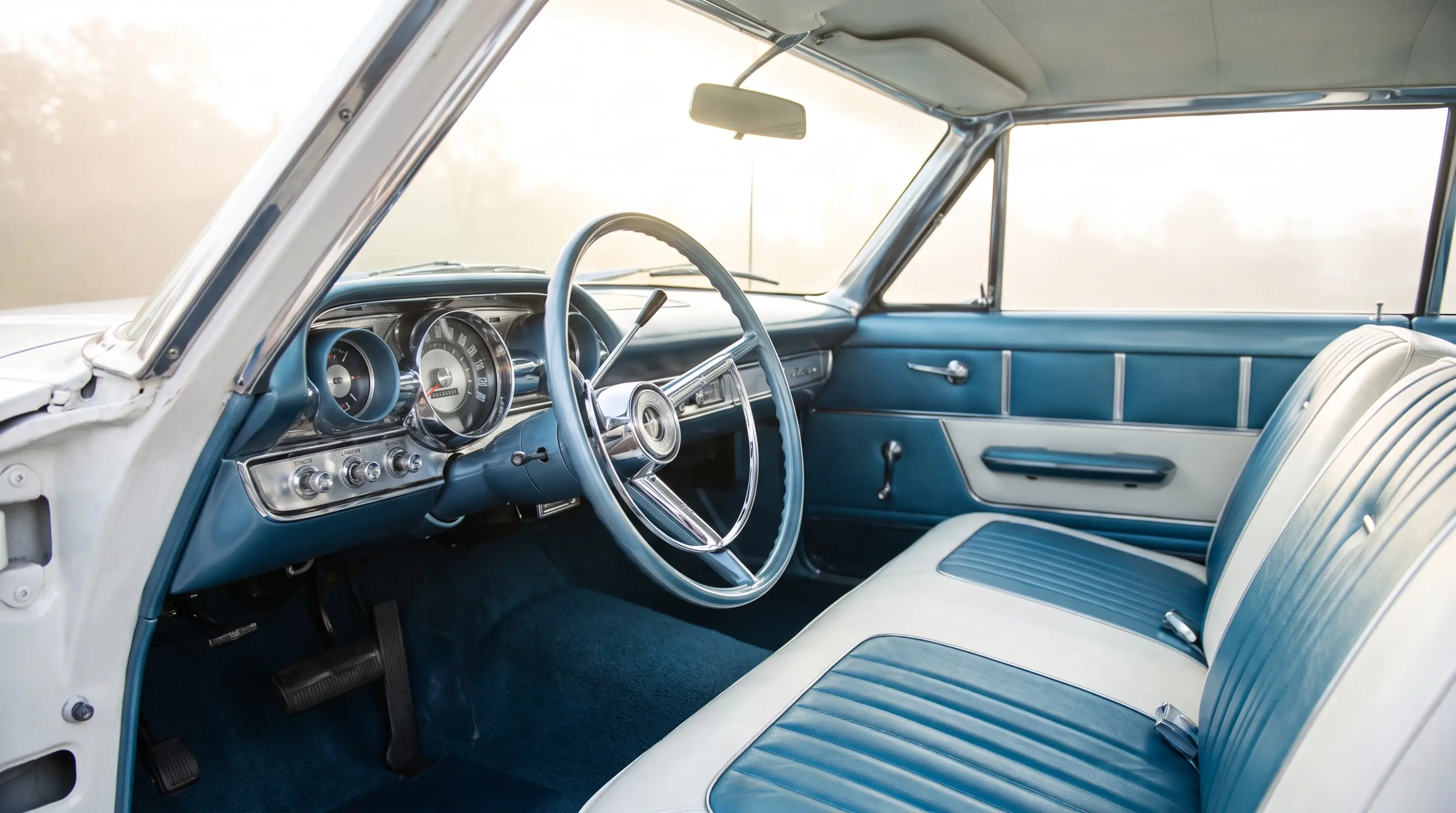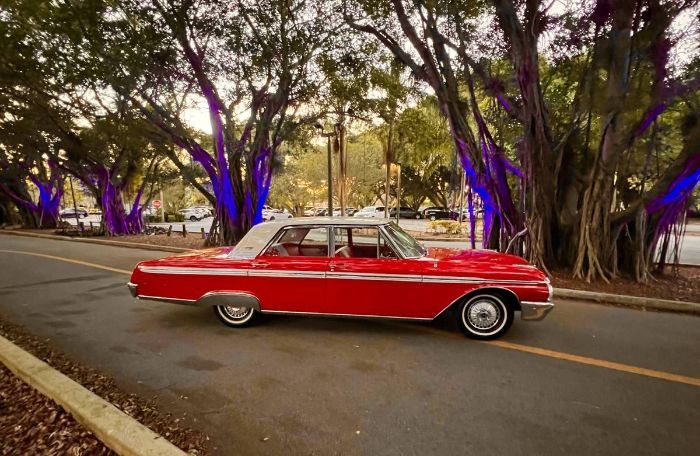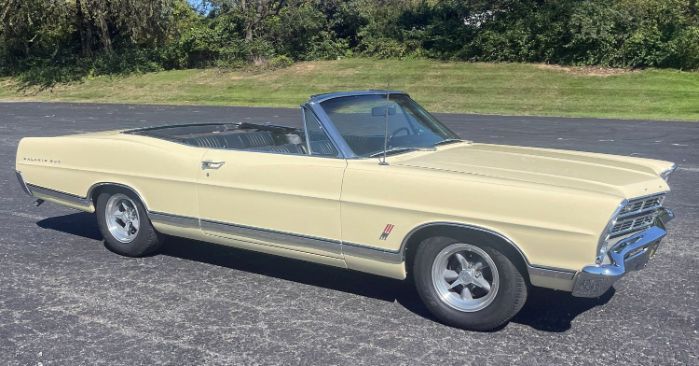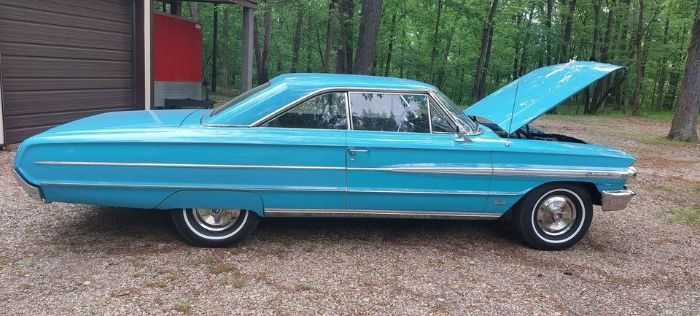
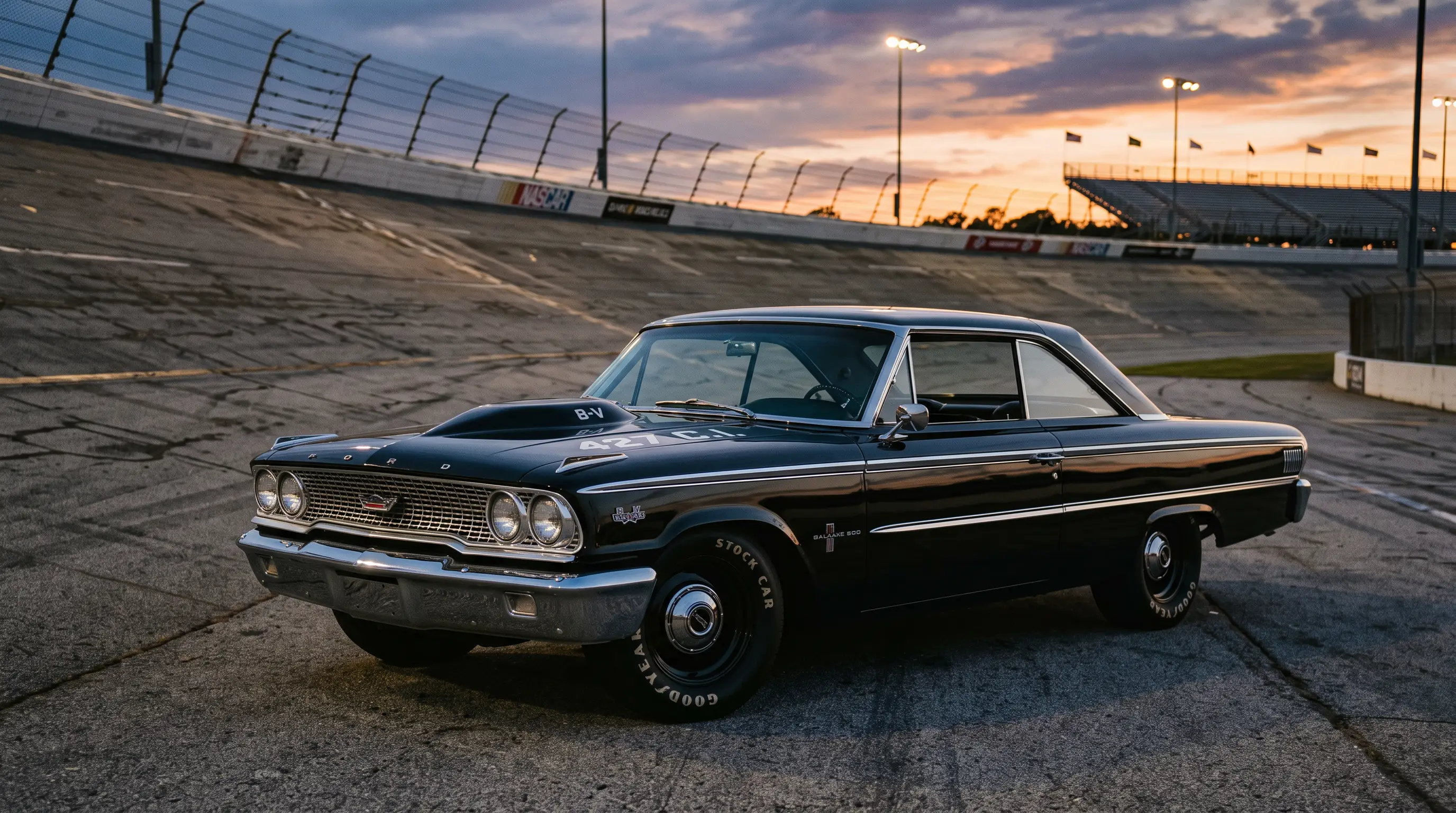
Here is the short version of the ford galaxie 500 fe big block story: Ford put a genuinely serious engine family into a big, heavy family car, and that decision turned an otherwise unremarkable full-size sedan into a legitimate performance machine for a stretch of the 1960s. The FE series was not designed with the Galaxie 500 specifically in mind, but the combination worked well enough that it defined the car's reputation for an entire decade.
What FE actually stood for
FE is short for "Ford-Edsel," the internal designation for the engine family Ford developed in the late 1950s to replace its earlier Y-block V8s with something capable of scaling up in displacement as cars and buyer expectations grew heavier. The FE family started smaller and grew over its production run, eventually reaching displacements that made it one of the more capable big-block families in the American industry through the 1960s. Fitted into the Galaxie 500, the FE gave Ford's full-size flagship a genuine power advantage over competitors still relying on smaller-displacement engines in the same weight class.
Why the combination worked on the track
NASCAR rules through the early-to-mid 1960s effectively required manufacturers to race what they sold, which meant Ford's success on the superspeedway circuit fed directly back into what showed up on Galaxie 500 order sheets. The 427 R-code variant of the FE became the headline engine of that effort, built specifically to satisfy homologation requirements and give Ford's stock car teams a genuinely competitive package against Chrysler's Hemi and Chevrolet's own big-block offerings. That racing pedigree is the reason a Galaxie 500 with the right engine code commands real attention today. It is not marketing. The car actually won races, and the parts on the shelf prove it.
| Engine designation | Role in the lineup | Why it matters today |
|---|---|---|
| Standard FE V8 options | Everyday performance upgrade over base engines | Solid, well-documented, easier to source parts |
| 427 R-code (about 425 hp advertised) | NASCAR homologation special, limited availability | Highest collector interest and value in the lineup |
"Number of race wins is not an opinion. Ford's Total Performance era put the FE in a Galaxie 500, and that engine won on Sunday exactly like the ads said it would."
- Dan Reeves
What the Total Performance era actually changed
Ford's Total Performance marketing push, running through the first half of the 1960s, was not just an advertising slogan bolted onto an otherwise conservative lineup. It reflected a real internal decision to chase performance credibility across drag racing, NASCAR, and road racing simultaneously, and the Galaxie 500 was the vehicle Ford used to prove its NASCAR credentials specifically. Every homologated part that made it into a 427 R-code car existed because Ford needed it on the track first. The Galaxie 500 buyer benefited from that racing program by proxy, getting access to genuinely track-tested engineering in a car that could also carry a family to church on Sunday morning.
How the FE compared to its Detroit rivals
Chrysler had the Hemi. Chevrolet had its own big-block family climbing toward similar displacements through the same stretch of the 1960s. The FE competed directly against both, and it held its own on the strip and the superspeedway well enough that Ford's engineering department kept developing it rather than replacing it wholesale. What separated the FE from some of its rivals was how well it scaled into a genuinely heavy full-size car body without turning the Galaxie 500 into an unbalanced, nose-heavy handful. Chrysler's Hemi-equipped cars earned a reputation for being a handful in everyday driving. The FE-equipped Galaxie 500, by comparison, stayed more usable as a daily car even with serious power under the hood, which is part of why it built such a loyal following among buyers who wanted performance without giving up practicality entirely.
That balance is also why the FE's reputation has aged well compared to some of its rivals. A well-sorted FE big-block Galaxie 500 drives like a car that was engineered as a complete package, not a race engine crammed into a chassis that was never really designed around it. Collectors who have driven both often say as much, and it shows up in how consistently FE-equipped cars get driven at shows and cruise nights rather than trailered in and parked.
Why collectors chase the engine code first
Ask a serious buyer what they are looking for in a 1960s Galaxie 500 and the engine code comes up before body style, before color, before almost anything else. That is a direct result of the FE story. A base six-cylinder Galaxie 500 and a 427 R-code Galaxie 500 share a body shell and not much else in terms of collector interest or value. The number stamped on the engine block tells you which era of Ford performance history the car actually belongs to, and buyers who understand that history know exactly which numbers to look for and which ones simply are not there no matter how good the paint looks. Documentation on FE-equipped cars gets checked harder than nearly anything else in this hobby, because the value gap between a correctly documented engine and an undocumented claim is significant enough that nobody serious skips the paperwork. For more on how this engine fit into the wider Galaxie 500 picture, our ford galaxie 500 retrospective covers the full arc, and the car's interior evolved alongside its engine reputation, a story told in a related story worth reading next. If the FE era has you shopping, Galaxies for sale now is the place to start looking.
The parts and knowledge base still exist
One practical upside of the FE's long production run and racing pedigree is that the parts and knowledge base supporting it never really disappeared the way it has for some smaller, less celebrated engine families from the same decade. Rebuild kits, correct casting numbers, and shops with genuine FE experience are all easier to find today than the equivalent support for a lot of competing big-block families, simply because the FE stayed relevant in racing and enthusiast circles long enough to keep that expertise alive. That matters enormously if you are buying a Galaxie 500 planning to actually drive it rather than display it. An engine family with no support network is a liability no matter how impressive its numbers were fifty years ago. The FE has never had that problem, and it is unlikely to start now. Buyers weighing a Galaxie 500 against a rival from the same era should put parts support right next to horsepower on the list of things that actually matter once the car is sitting in your own garage.