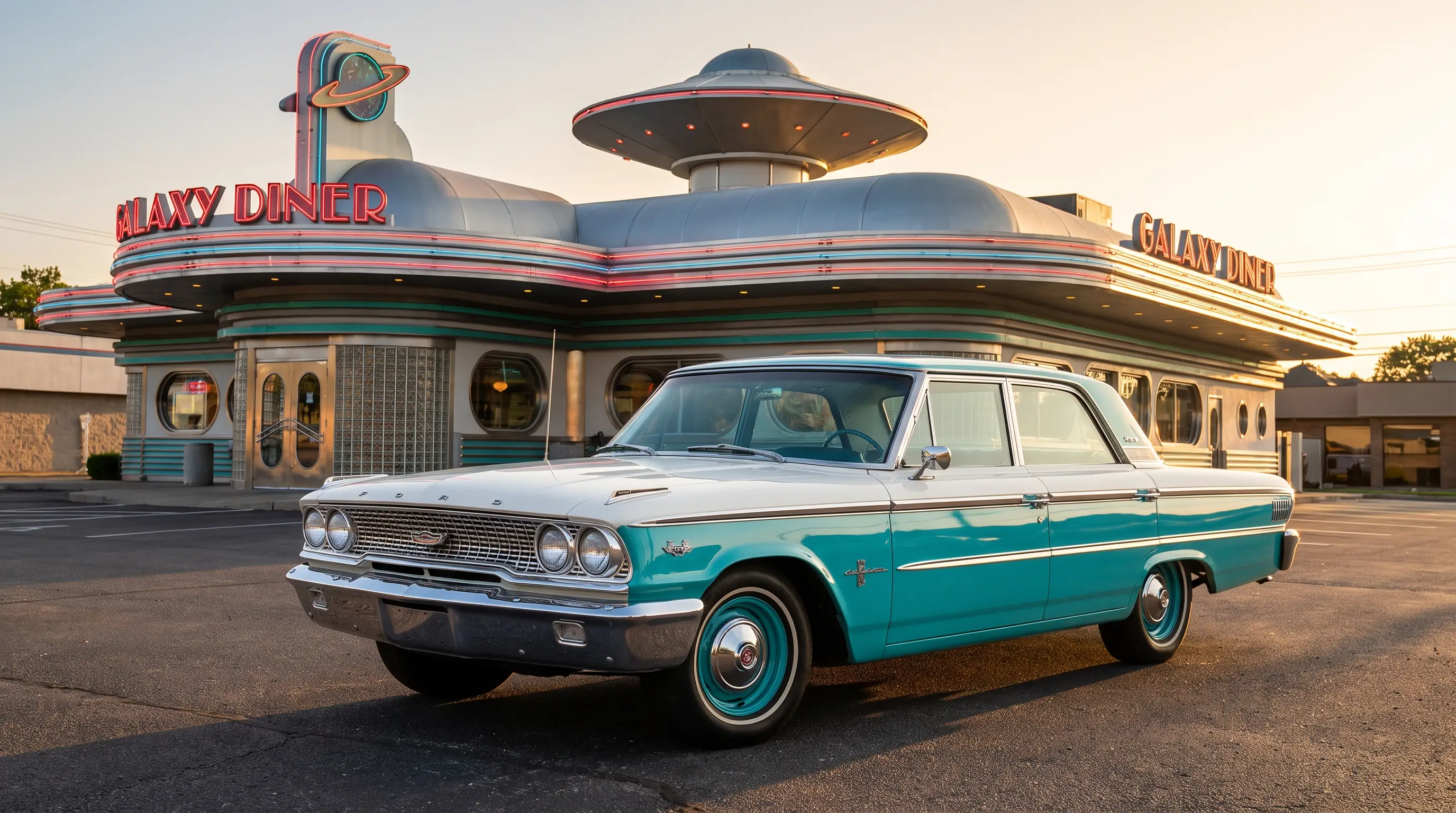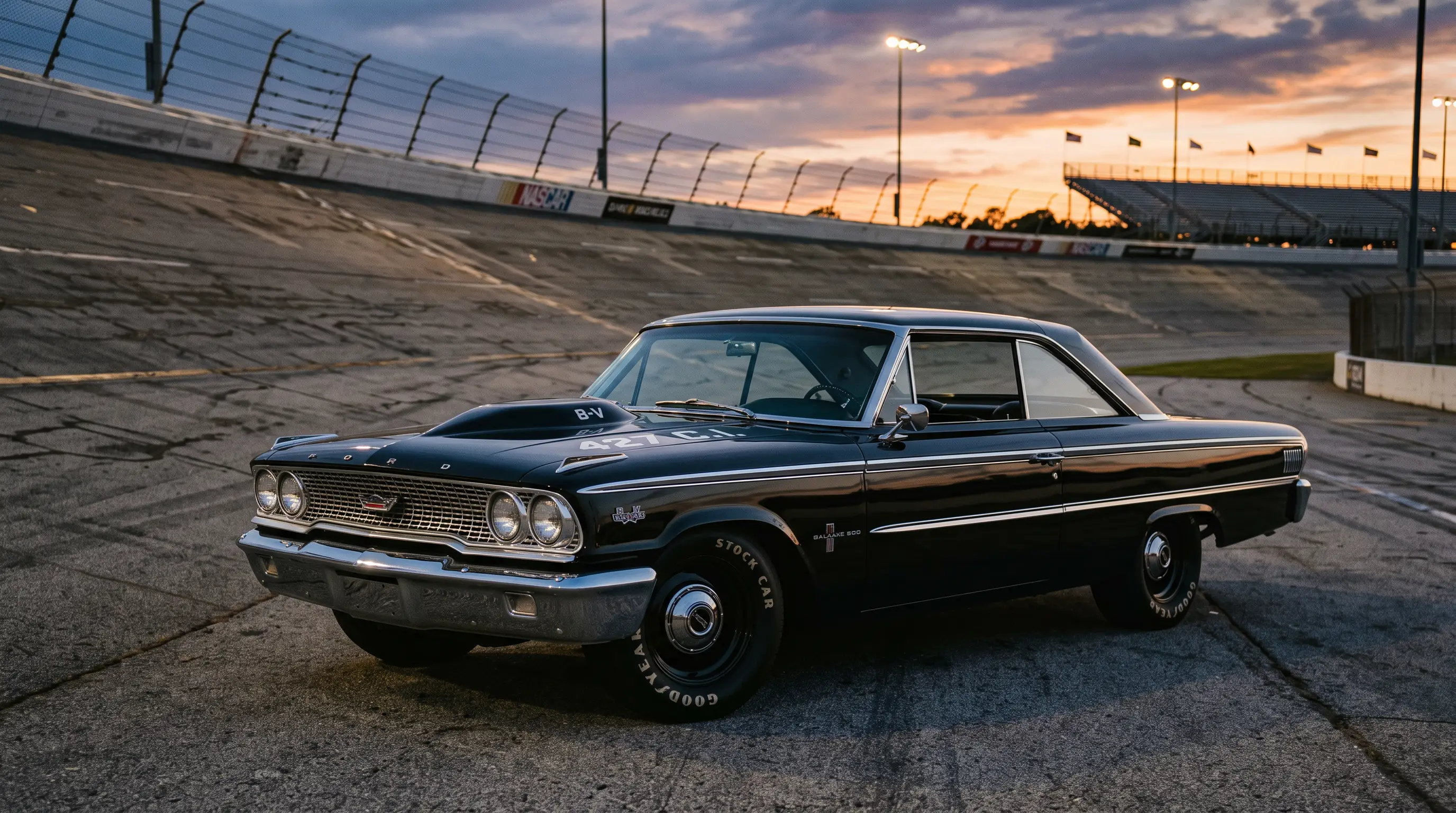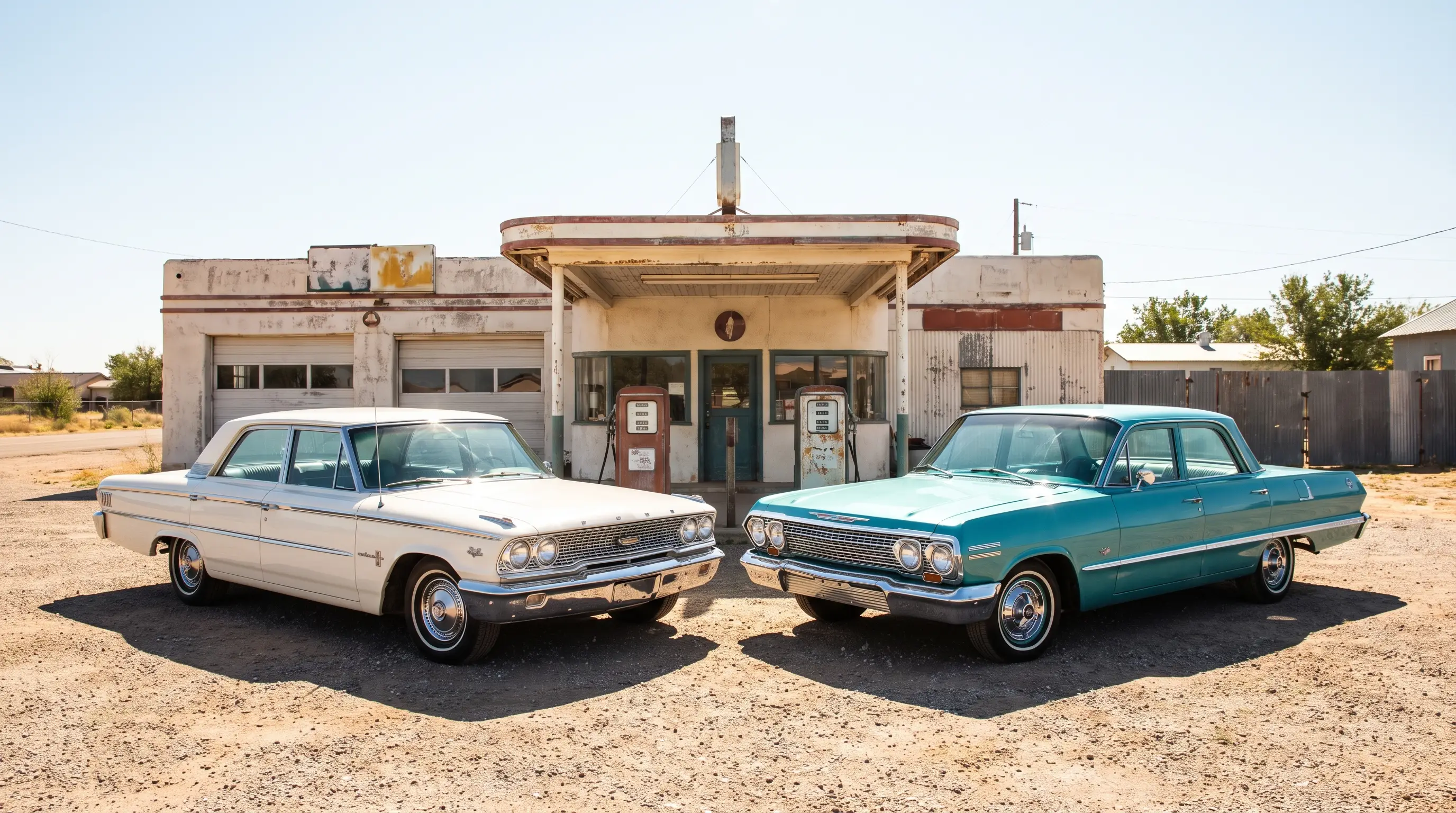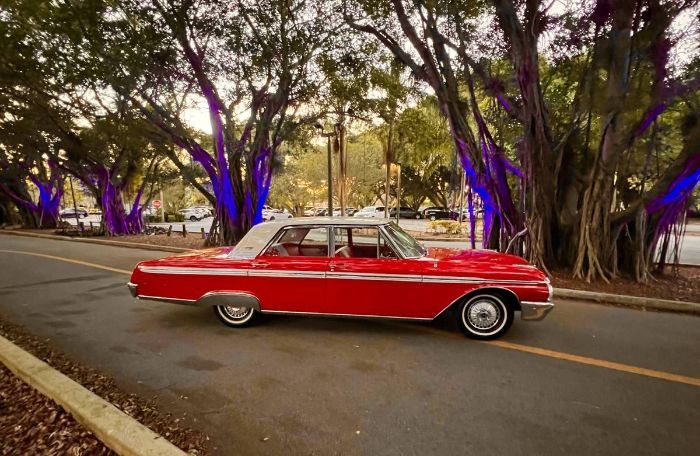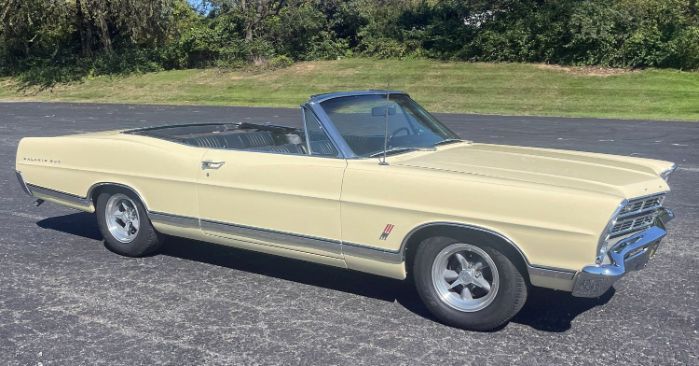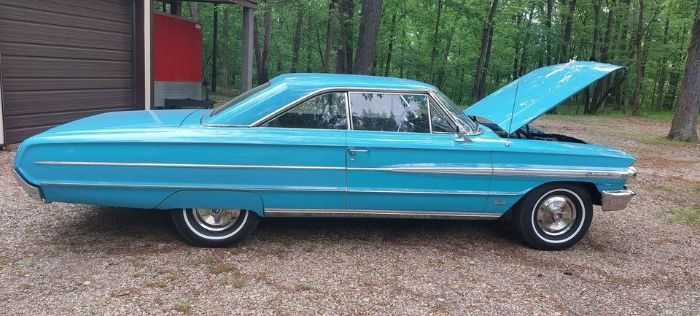
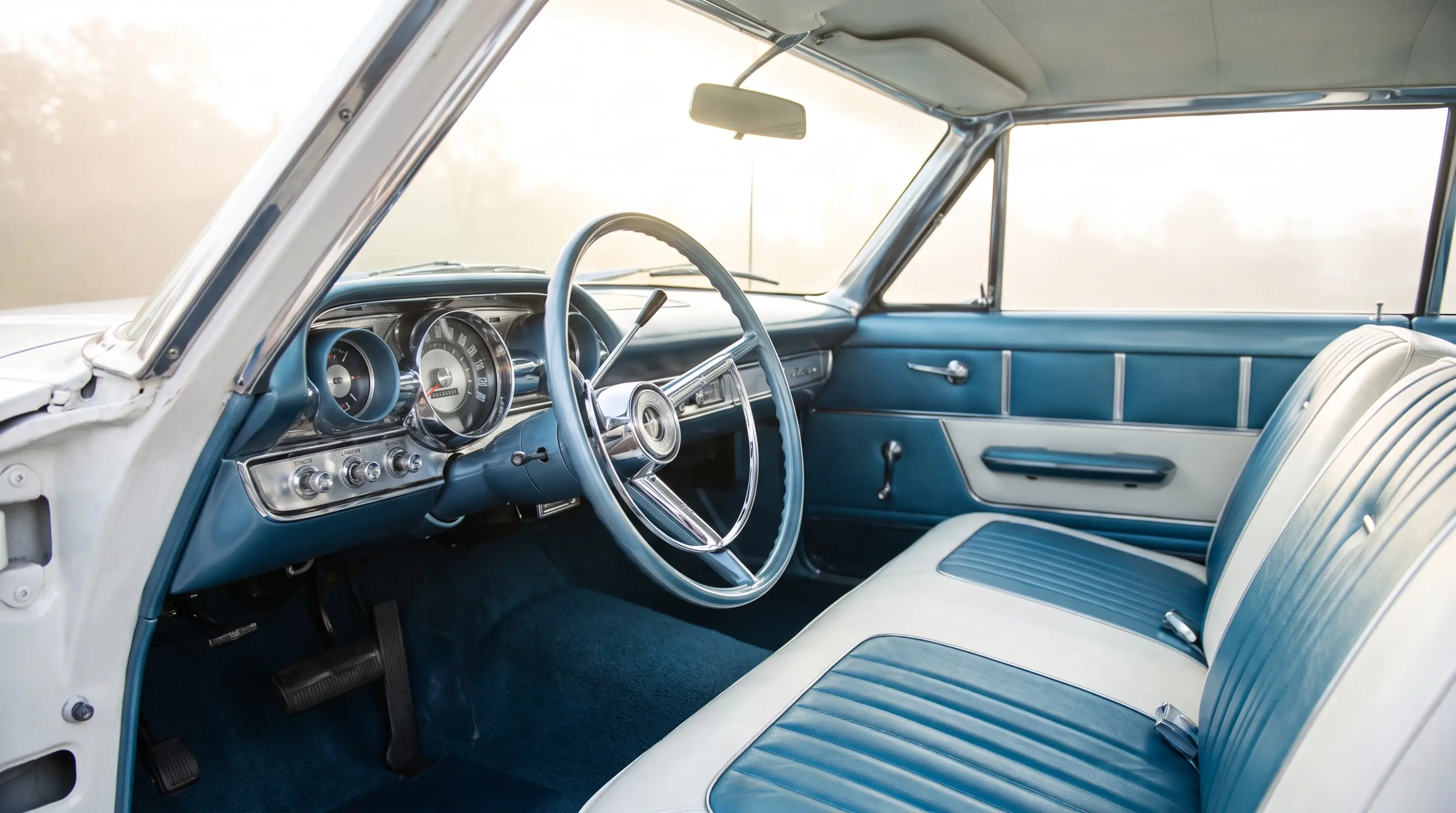
A woman in Ohio still keeps her father's 1963 Galaxie 500 in a garage he built specifically for it, and when she opens the door for visitors, she does not point at the engine first. She points at the seats, the chrome-ringed gauges, the door panels stitched in a pattern nobody makes anymore, and says this is what he actually loved about the car. The ford galaxie 500 interior design heritage rarely gets the attention the engines and racing history soak up, but for a lot of owners, the cabin is the part that still tells the more personal story.
Chrome as a design language, not an afterthought
Detroit's interior designers in the early 1960s treated chrome and brightwork as a full vocabulary, not a decorative garnish sprinkled on at the end. Inside a Galaxie 500, chrome accents ran along the dash, framed the gauge cluster, traced the edges of the door panels, and dressed the steering wheel hub, all coordinated to catch light from multiple angles as the sun moved across a windshield during a drive. That level of coordinated brightwork took real design discipline, because too much chrome in a cabin reads as gaudy rather than luxurious, and Ford's interior teams clearly understood where that line sat for a car positioned as a prestige family flagship rather than a budget commuter.
Vinyl, patterns, and the two-tone instinct
Two-tone interior combinations were not an accident of available materials. They were a deliberate design choice that let Ford differentiate trim levels and appeal to different tastes without redesigning the entire cabin architecture for every option package. A Galaxie 500 buyer in the early 1960s could choose from vinyl and cloth combinations that ranged from conservative single-tone treatments to more adventurous two-tone pairings, each one dressing the same basic bench or bucket seat structure in a completely different personality. That flexibility mattered to buyers who wanted their car to feel personally chosen rather than mass produced, even though, mechanically, most of them were sitting on nearly identical seat frames underneath the fabric.
"People remember how a car felt to sit in far longer than they remember what it made for horsepower. The Galaxie 500's cabin was built to be remembered."
- Nora Beckett
The dashboard as its own small composition
Full-size Fords of this era treated the dashboard less like a functional panel and more like its own composed scene, with the gauge cluster set into a chrome surround, secondary controls arranged for a driver who was expected to reach for them without looking, and enough brightwork trim to make the whole thing feel considered rather than assembled. Depending on the model year and trim, the Galaxie 500's dash carried design cues borrowed from the same jet-age, space-race visual language that gave the car its name in the first place, with gauge shapes and control layouts that leaned futuristic rather than purely utilitarian. Sitting behind the wheel of a well-preserved example today still communicates that intent clearly, decades after the styling trend it was chasing had already moved on to something else.
How the XL package changed the cabin's whole mood
The Galaxie 500 XL package, when it became available, did more to the cabin than simply swap a bench seat for buckets. It shifted the entire interior's intended mood from family-flagship comfort toward something closer to a personal-luxury sports sedan, with a floor console filling the space a bench seat would have occupied and a more driver-focused arrangement to the surrounding trim. Sitting in an XL-equipped car next to a standard bench-seat 500 of the same year is genuinely like sitting in two different cars built around two different ideas of what the interior should communicate to the person behind the wheel. One says "family flagship." The other says "this one is for you specifically," and that distinction shows up in everything from the shift lever design to the way the door panels were stitched around the console's edges.
That shift mattered enough to buyers that XL-equipped interiors have held onto a distinct identity of their own within the Galaxie 500's broader design history, treated by restorers and collectors as a meaningfully different specification rather than a simple option box checked on an order form. Anyone restoring one today needs to treat the console, the seat pattern, and the surrounding trim as a coordinated system rather than a set of interchangeable parts, because the whole point of the XL cabin was that coordination in the first place.
Why the cabin still matters to owners today
Ask a long-time Galaxie 500 owner what actually convinced them to buy their specific car, and the answer is more often about the interior than anybody outside the hobby would guess. An engine can be rebuilt to spec with relative confidence if you have the right documentation. A correctly patterned, correctly colored original interior, or a faithful reproduction of one, is a harder thing to get exactly right, and owners who have managed it tend to treat that cabin as the most personal, most irreplaceable part of the whole car. Fabric houses that still weave period-accurate patterns are fewer than they used to be, and matching an original two-tone combination sometimes takes more patience than sourcing a rebuilt engine ever does. It is the part you touch on every single drive, the part that holds the smell of the vinyl and the specific give of a fifty-year-old seat cushion, the part that turns a restoration project into somebody's actual memory of riding in the back seat as a kid.
For the wider arc of how the Galaxie 500 nameplate developed across engines, body styles, and decades, read the background for the fuller picture. And if a cabin like the one in that Ohio garage has you thinking about finding a Galaxie 500 of your own, find a classic Galaxie is where that search can start.
Cars get remembered for a hundred different reasons, and horsepower gets most of the credit in these conversations more often than it probably deserves. But ask enough owners why they kept a particular Galaxie 500 for decades instead of trading it for something faster or newer, and the answer circles back, again and again, to how the cabin felt. The way the vinyl held up. The specific chrome pattern around a gauge nobody else's car had quite that way. That is not nostalgia talking. That is a design team from sixty years ago having done its job well enough that the feeling never quite wore off, and it is exactly why the woman in that Ohio garage still opens the door for visitors and points at the seats first.