
For about two years in the middle of the 1980s, the next Camaro was going to drive its front wheels. The GM80 Camaro, written GM-80 in most of the period paperwork, was a program to replace the rear-drive F-body Camaro and Firebird with a smaller front-drive pair built from plastic panels on a steel frame, and with no V8 at all. It never reached a showroom. What it did do was push the fourth generation back to 1993 and leave a styling direction that the production car kept. The production side of that decade is covered in the fourth-gen Camaro story. This is the record of the car that came first and did not survive.
Car Features
6 min read
GM80: The Front-Wheel-Drive Camaro That Never Happened
The GM80 Camaro was a front-drive, plastic-bodied F-body with no V8. Here is what it was, why GM cancelled it in 1986 and what it left behind.
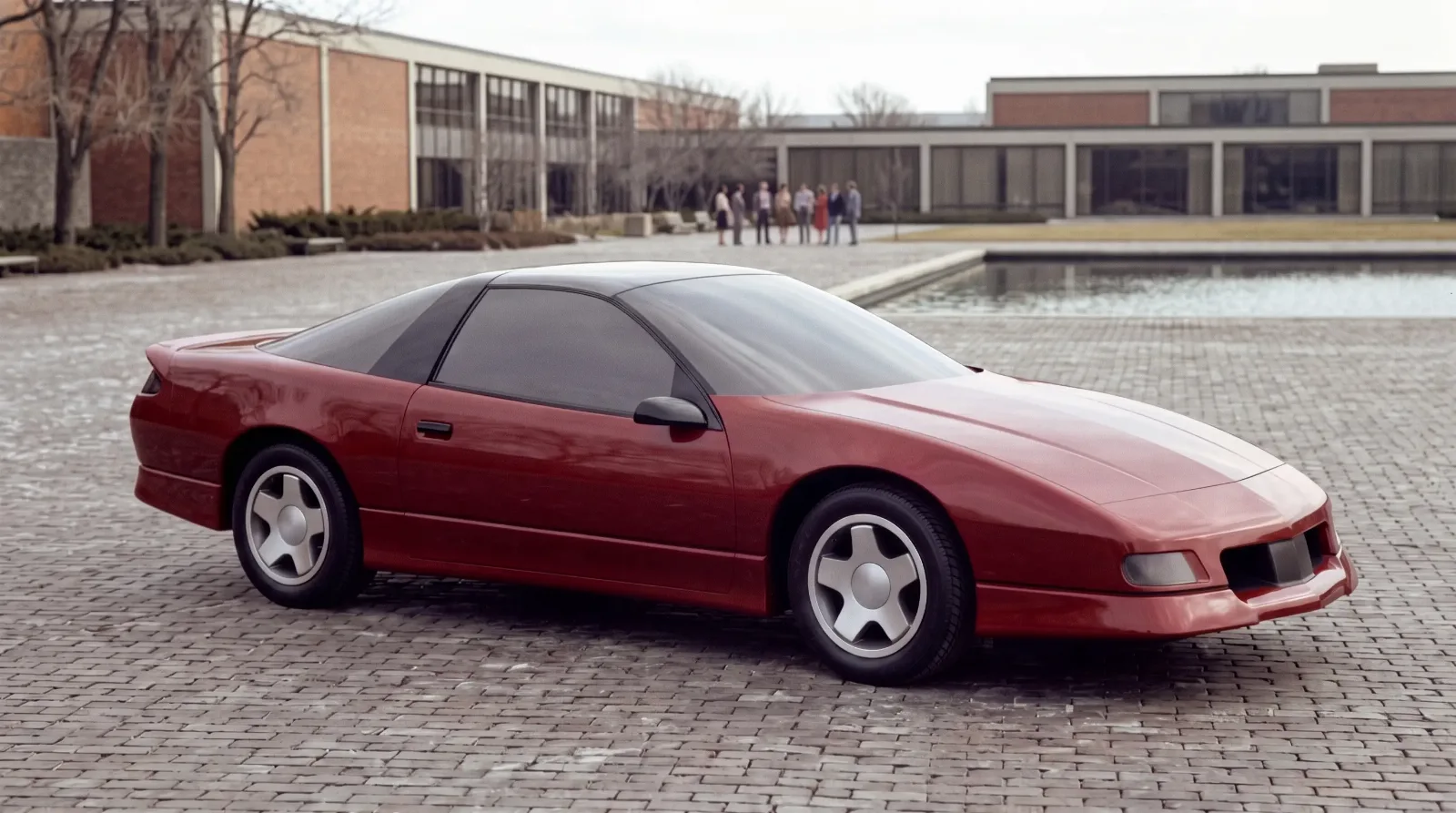
What the GM80 Camaro was supposed to be
GM80 was studied during the development of the fourth-generation car as a front-wheel-drive replacement for both F-bodies. Optional all-wheel drive was also considered. It was not the first time the idea had come up: an earlier front-drive F-body replacement had been looked at and dropped at the end of the 1970s.
The size target tells you how different the car would have been. The planned wheelbase was 96 inches, 5 inches shorter than the F-body it was meant to replace. The volume target was larger still: 350,000 sales a year projected for the Camaro and Firebird twins combined. That figure was not chosen at random. It matched the capacity of the plant that built the Pontiac Fiero, and GM80 was meant to fill it.
The program's chief engineer is recorded as Fred Schaafsma. The launch target is given as 1990 in one account and as the 1989 or 1990 model year in another, so "about 1990" is the fair way to put it.
Four cylinders, a V6 and no V8
This is the part that still surprises people who know the classic Camaro. The GM80 plan had no V8. Two engines were planned. The first was the Quad 4, a dual-overhead-cam four-cylinder rated between 150 and 180 hp, with the 180 hp High Output version the likely choice. The second was a 3.4-liter 24-valve V6, the "Twin Dual Cam," rated at 200 hp and 215 lb-ft.
One correction is worth making here, because it appears in print more than once. Some retellings describe a "3.4-liter Quad 4 V6." There was no such engine. The Quad 4 was a four-cylinder. The 3.4 Twin Dual Cam was a separate V6, and it later appeared in GM's W-body cars rather than the N-body cars sometimes named. The two better-documented histories of the program agree on this, and one source merging two engines into one does not change the record.
One detailed history of the program adds that the V6 made 285 hp in development and was detuned to 200 hp because GM had no front-drive transaxle strong enough to take the full output. That is a single account, and it points at the real constraint: on this car the engine was not the limit. The gearbox was.
Plastic panels on a space frame
GM80 was to be built the way the Fiero was built: molded plastic body panels hung on a steel structural frame, a space frame rather than a conventional stamped body. Engineers also studied aluminum, tubular-steel and all-fiberglass frames. The Fiero connection runs through the whole program, from the construction method to the plant that was supposed to build it.
| Item | GM80 plan | 1993 Camaro as built |
|---|---|---|
| Driven wheels | Front (all-wheel drive studied) | Rear, live axle |
| Wheelbase | 96 in | 101.1 in |
| Top engine | 3.4 Twin Dual Cam V6, 200 hp | LT1 5.7 V8, 275 hp (Z28) |
| Other engine | Quad 4, 150 to 180 hp | 3.4 L32 V6, 160 hp |
| Body | Molded plastic panels on a steel space frame | Composite roof, hatch, doors and spoiler; steel hood and rear quarters |
| Target year | About 1990 | Introduced January 1993 |
Read across the rows and the gap is plain. The production car kept the third-generation floor pan and live rear axle. It did keep composite panels, though in sheet molding compound on selected parts of a conventional body rather than a full plastic skin.
Why GM80 died: weight, crash tests and cost
The timeline is short. In the summer of 1985, suppliers were told the project was "temporarily" on hold. On October 19, 1986, GM chairman Roger B. Smith announced the cancellation in an interview with the Detroit News. The exact date of that interview comes from one source; the broader record agrees that by late 1986 the program was over.
"Read the dates and the record explains itself. A program on hold by the summer of 1985 and cancelled in October 1986 cost the Camaro roughly three model years. The shape survived the detour. Almost nothing else did."
Tom Ramirez
The reasons are consistent across the sources. GM80 missed its weight targets. It failed or did poorly in crash tests. The composite-panel development costs spiraled, so the finished car would have cost much more than planned. A 2023 summary of the program put it in one line: it "failed to meet weight, cost, and safety targets."
The money spent is harder to pin down. The figure most often repeated is "tens of millions of dollars." Another history estimates that full development would have cost $1 billion or more. Those are not contradictory: one is what GM spent before stopping, the other is what it would have taken to finish.
There was a rival making a similar calculation. Ford was weighing a front-drive replacement for its own pony car in the same years. That car was developed on a Mazda platform as the next Mustang, and after the plan leaked in 1987 and Mustang fans objected, it reached showrooms as the 1989 Probe instead.
What the GM80 Camaro left behind
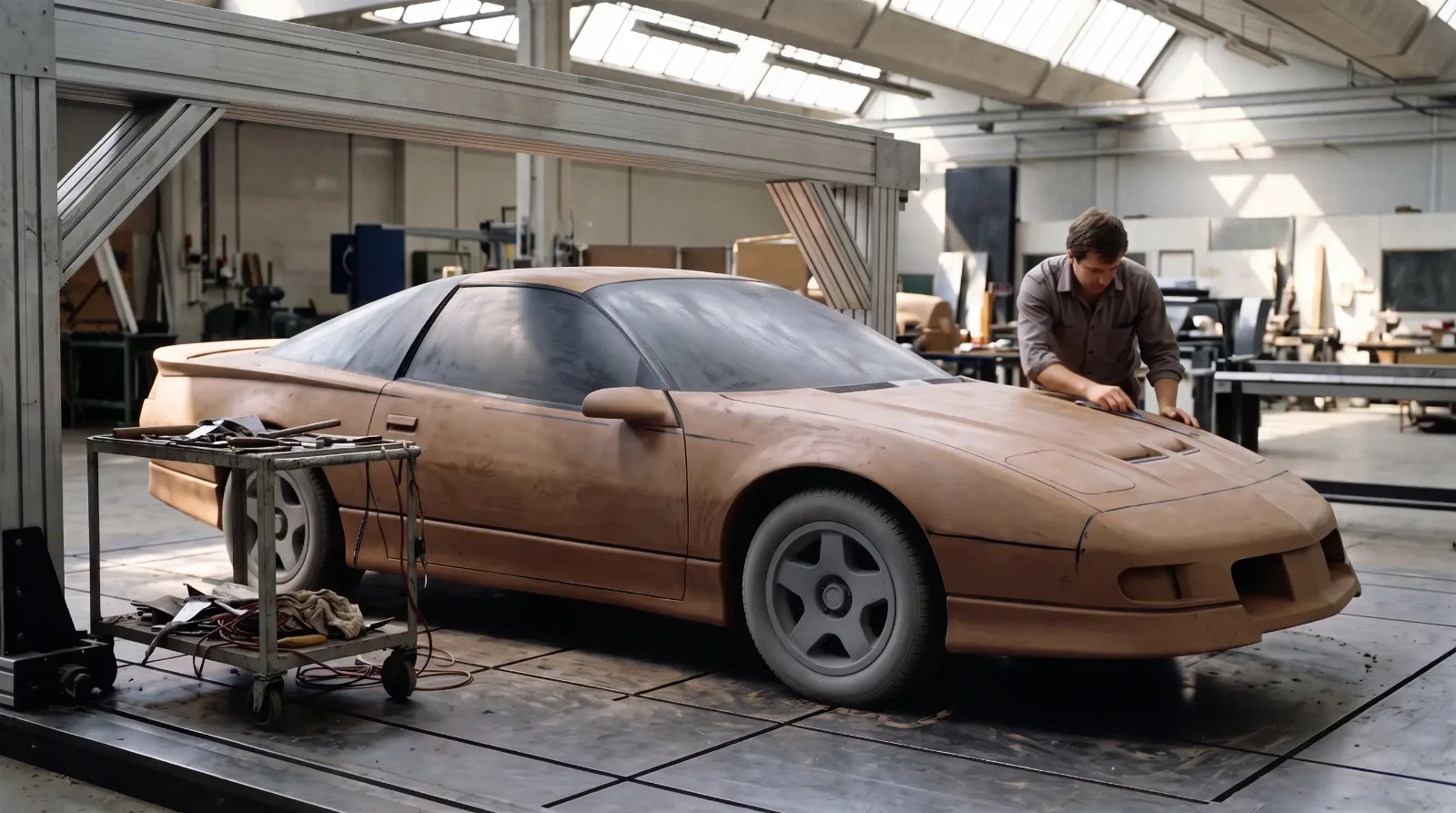
Three things outlived the program. The first is time. GM80 Camaros were slated for about 1990, and the program delayed the third-generation car's replacement to 1993. The third generation therefore ran through the 1992 model year, longer than it otherwise would have.
The second is the Fiero. With GM80 cancelled, the plant designed for 350,000 cars a year had nothing to fill it, and it ran at 11 percent of capacity, about 30,000 units. That shortfall helped end the Fiero.
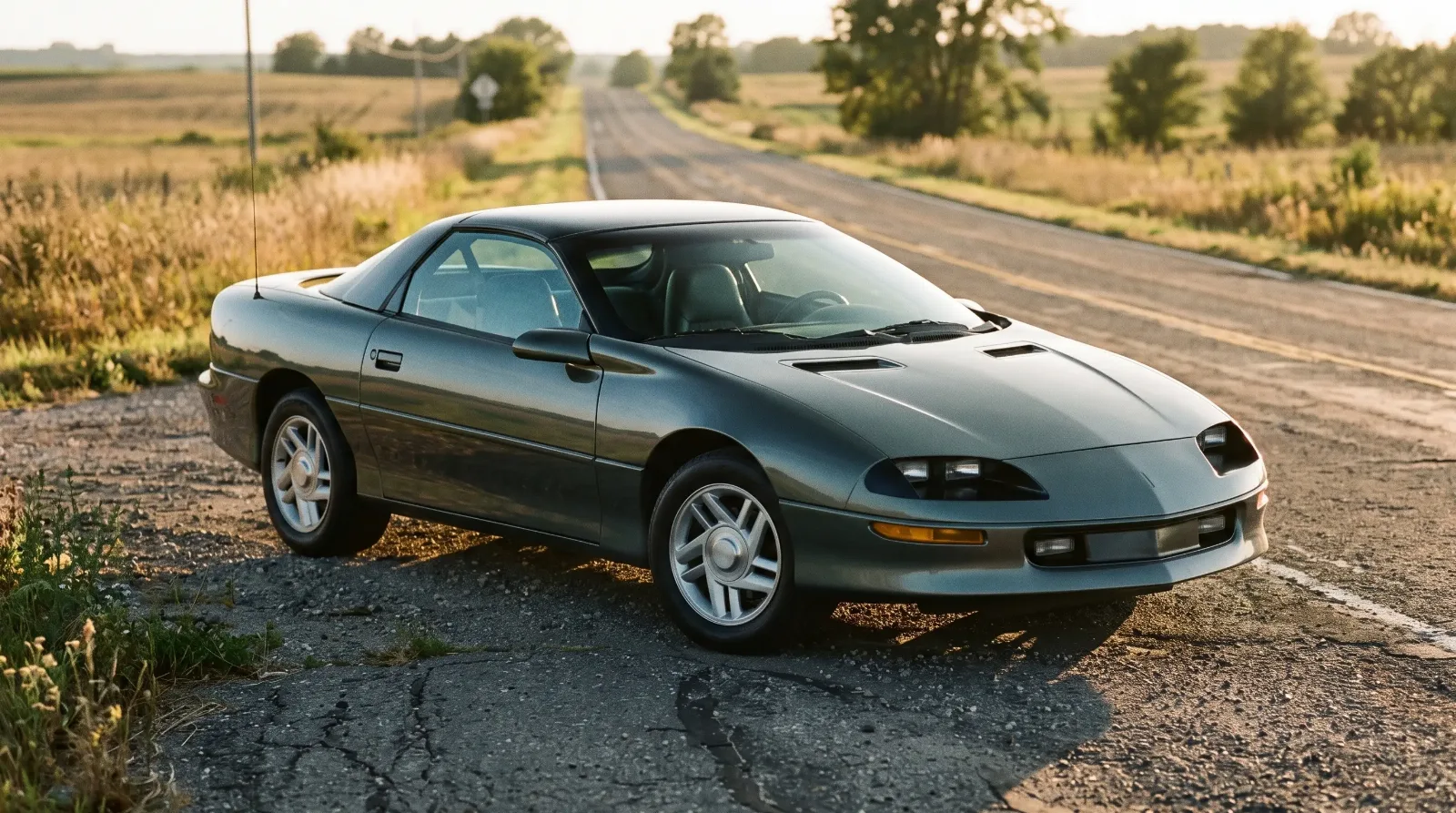
The third is the shape. The GM80 Camaro styling was described as "remarkably similar" to the rear-drive car that went on sale as a 1993 model. The design studios had a direction before the drivetrain question was settled, and when the car went back to rear drive, the look carried over. If you have seen a 1993 Z28, you have seen roughly what GM80 would have looked like from the curb.
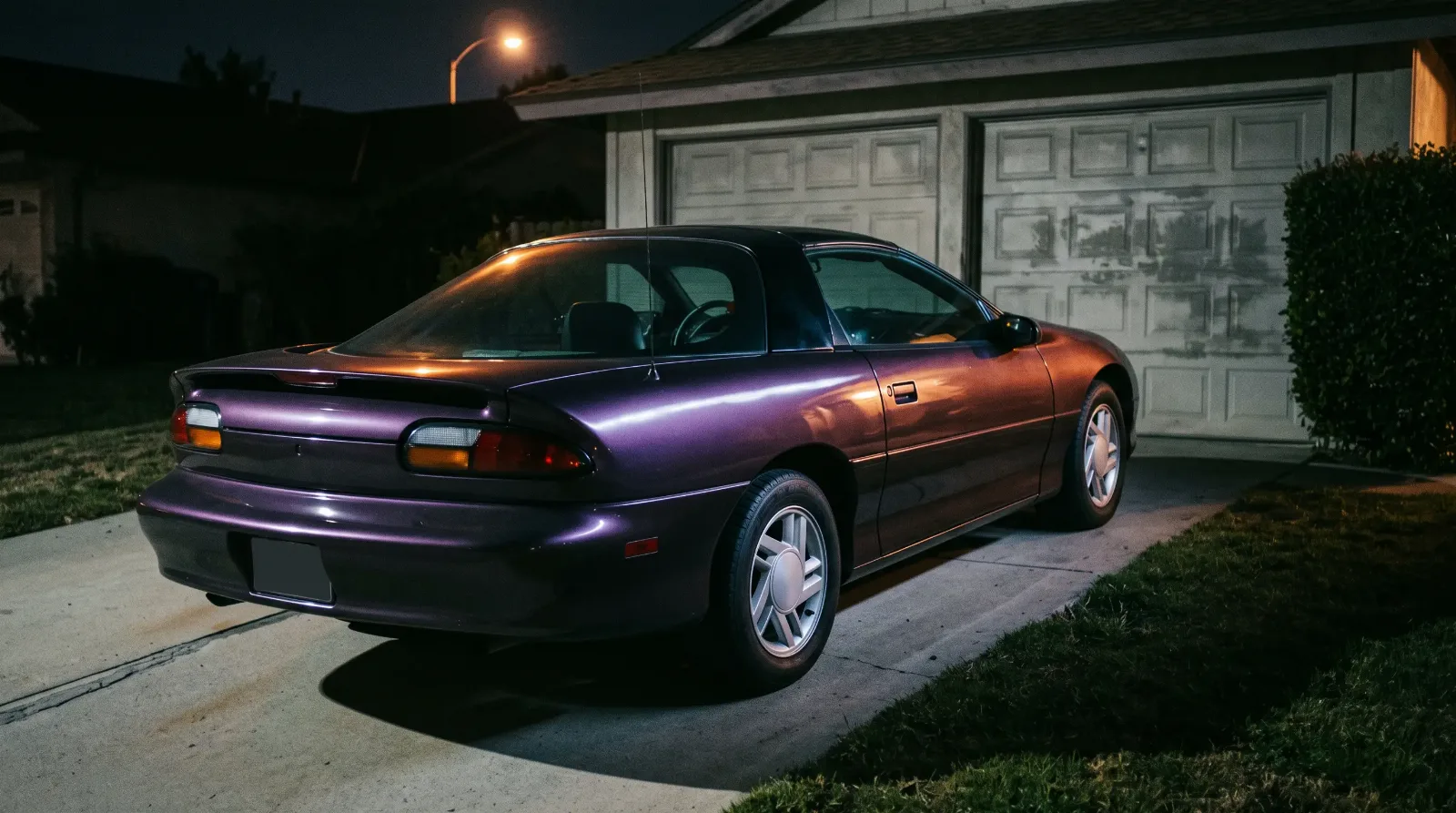
The car that did reach production went back to the formula buyers expected: a V8, rear drive and a live axle, built in Quebec from November 1992. Its 275 hp LT1 made 75 hp more than the best engine GM80 would have offered. That is the clearest measure of what was gained by the cancellation, and it is where the story picks up with the 1993 launch.
Sources and notes
Related Reading
Have a
Chevrolet Camaro
for Sale?
Reach thousands of serious classic car collectors across the US.
Sell It Here →
Are You a Classic Car Dealer?
List your full inventory and connect with targeted classic car buyers.
Join as a Dealer →
#camaro history
#chevrolet camaro
#pontiac firebird
#concept cars
#fourth-generation Camaro
#GM80
#Pontiac Fiero

About the author
Tom Ramirez
Corvette researcher and historian based in Bowling Green, Kentucky. Two decades documenting Corvette production history from original factory records.
Related Listings - Chevrolet Camaro
Comments
Be the first to comment on this article.