
The fourth-generation Camaro started with a result most people still underrate: 275 hp from the 1993 Z28's LT1, which was 30 hp more than the car it replaced and 70 hp more than the 205 hp Mustang GT of the same year. Car and Driver ran one to 60 mph in 5.3 seconds and through the quarter mile in 14.0 seconds. Ten model years later the same basic car made 325 hp in SS form, and Chevrolet stopped building it anyway. Between those two facts sits a decade of good engines, falling sales, one plant in Quebec and a market that moved to trucks. This is that decade, told with the numbers, and it picks up where the third-generation car leaves off in the full Camaro story.
Car Features
10 min read
The Fourth-Generation Camaro Story (1993 to 2002)
The 1993 to 2002 Camaro by the numbers: LT1 and LS1 power, the SLP SS cars, production by year, and why GM ended the run in Quebec in 2002.
What GM kept, and what it threw out
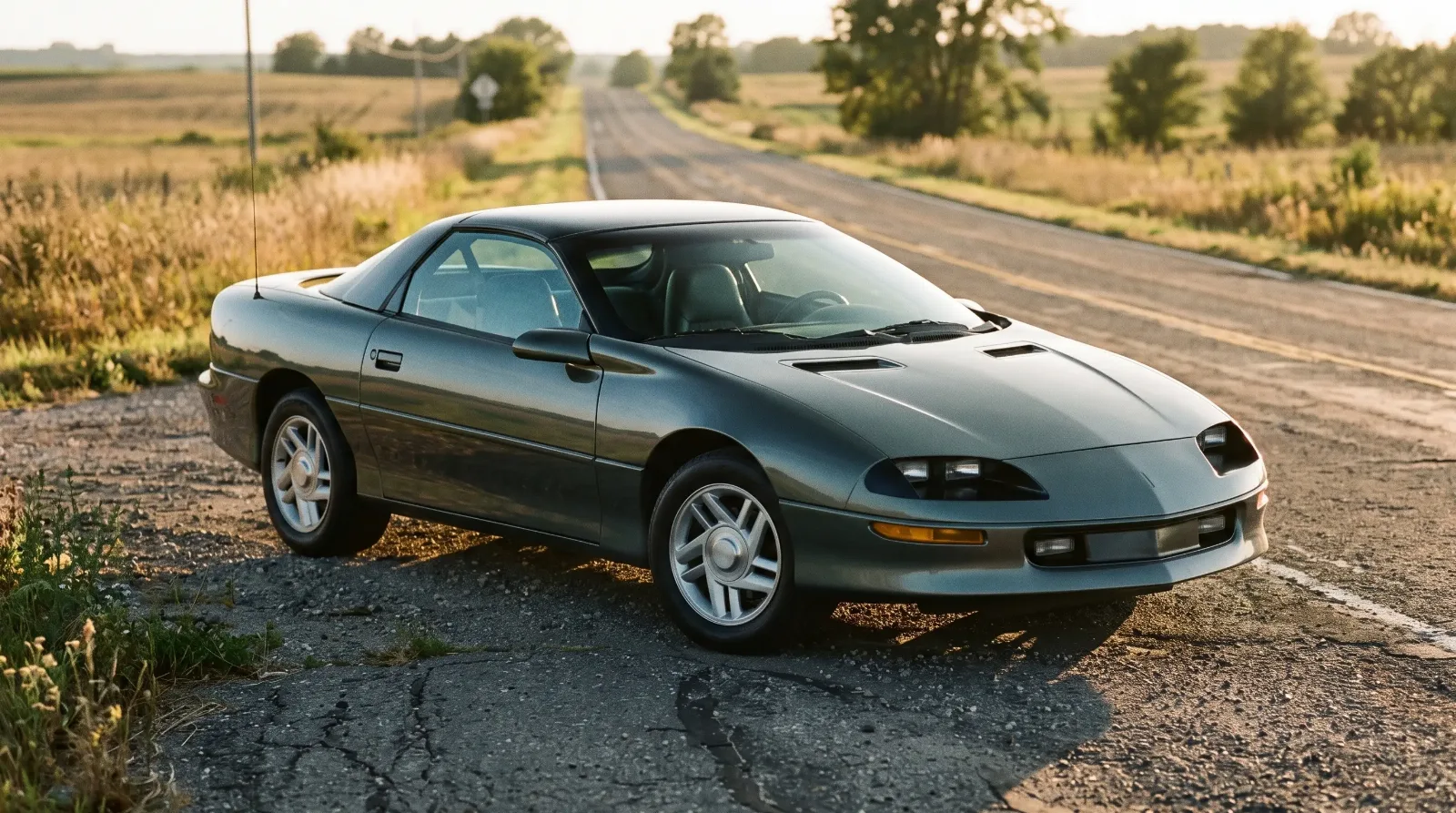
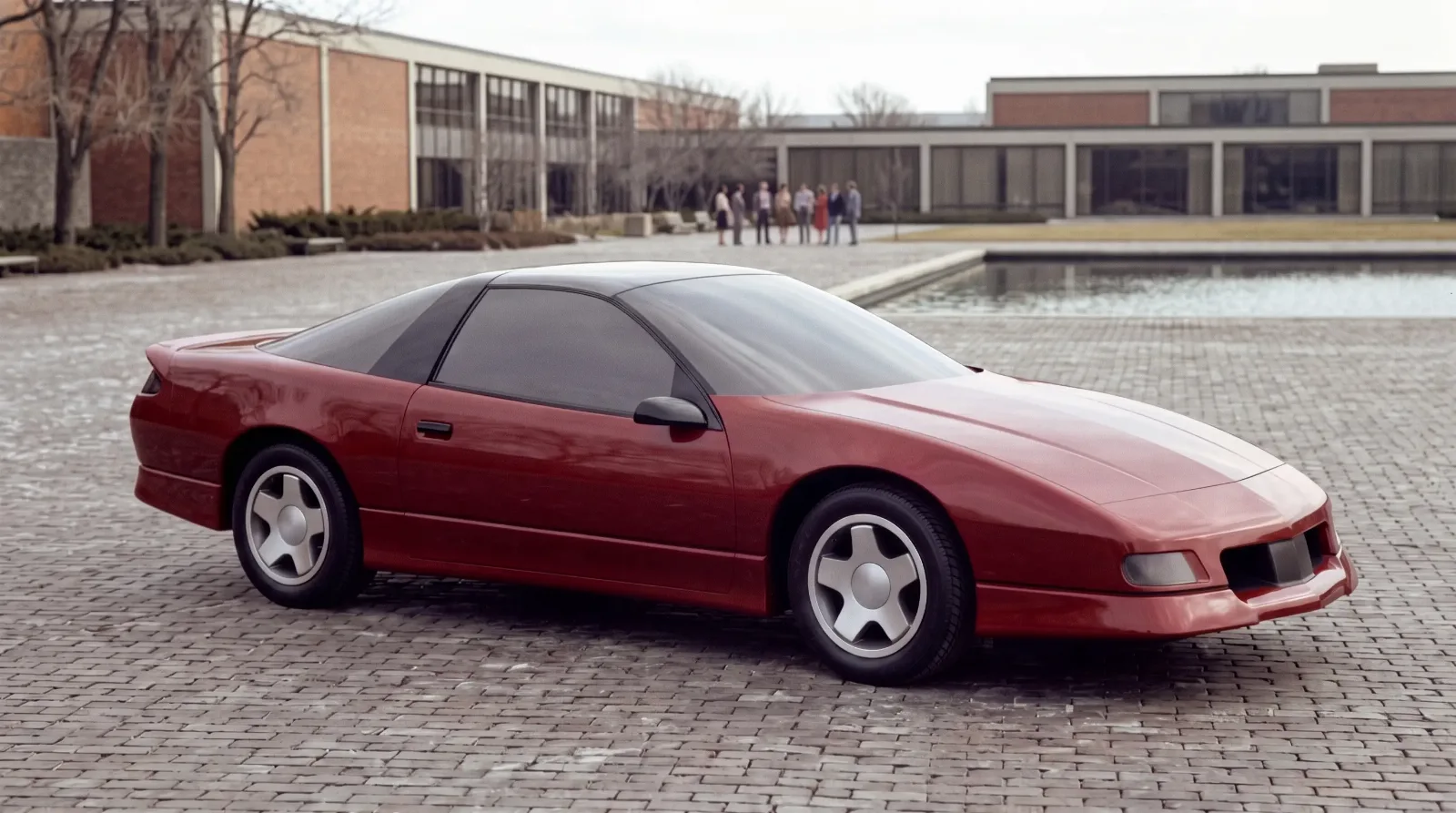
The fourth-generation Camaro almost did not happen as a rear-drive car. In the mid-1980s GM studied a front-wheel-drive replacement for the Camaro and Firebird, the GM-80 program, with all-wheel drive also considered. It missed its weight targets, did poorly in crash tests and ran up composite-panel costs. GM chairman Roger B. Smith announced the cancellation in a Detroit News interview on October 19, 1986. The program had been slated for 1990, so killing it pushed the third-generation replacement back to 1993. One detailed account of the program describes its styling as remarkably similar to the rear-drive car that finally arrived.
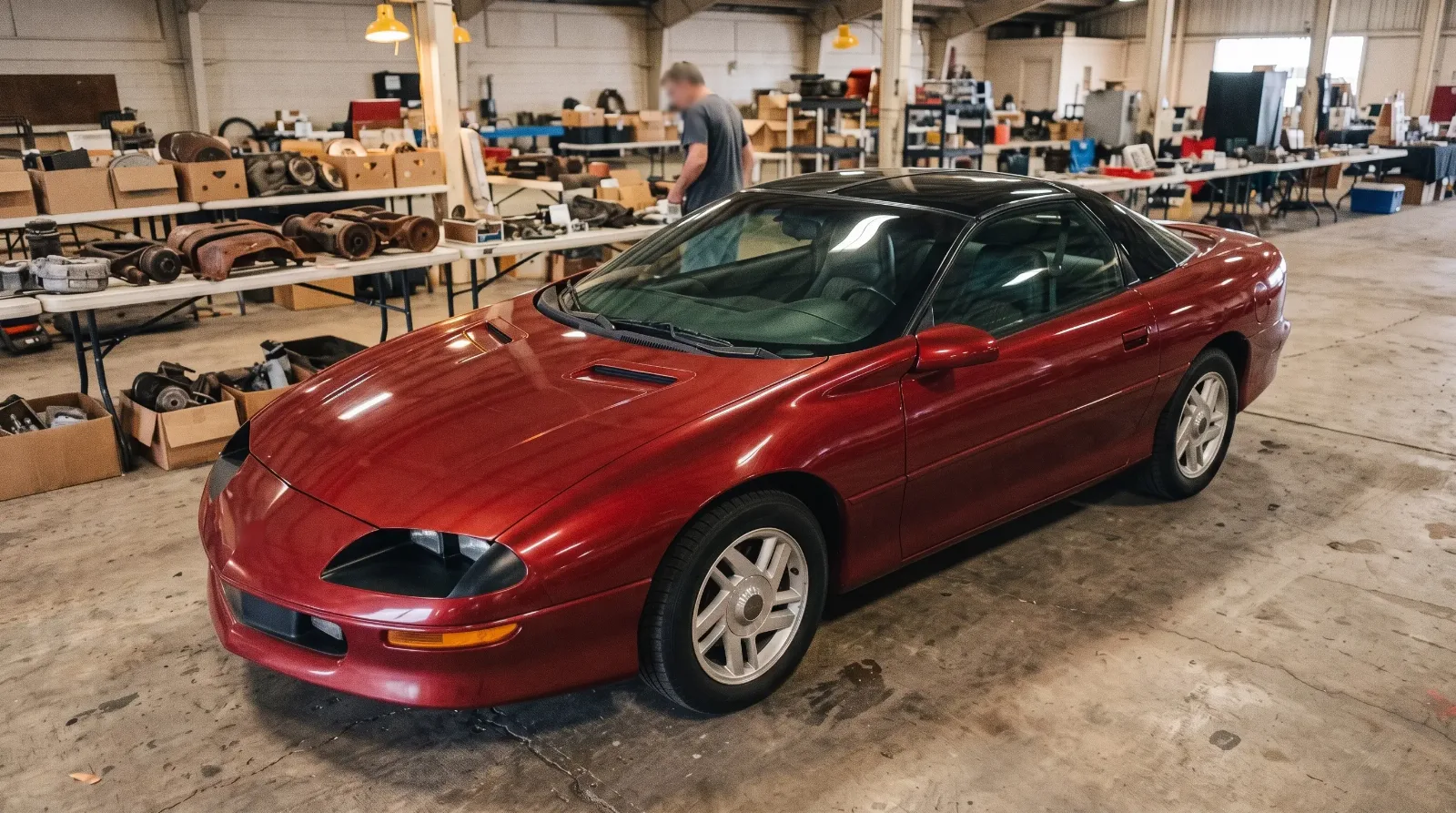
What arrived was a mix of old and new. The new car kept the third-generation floor pan and the live rear axle. Everything bolted to that base changed: short/long-arm front suspension, rack-and-pinion steering, dual airbags and R134a air conditioning. Hagerty puts the new content at about 90 percent. The roof, hatch, doors and spoiler were sheet molding compound, a chopped fiberglass and polyester resin, while the hood and rear quarters stayed steel. The windshield was laid back to 68 degrees, one of the most radical rakes of its day, and the LT1 sat so far back under the cowl that John Heinricy called it "almost a mid-front-engine car."
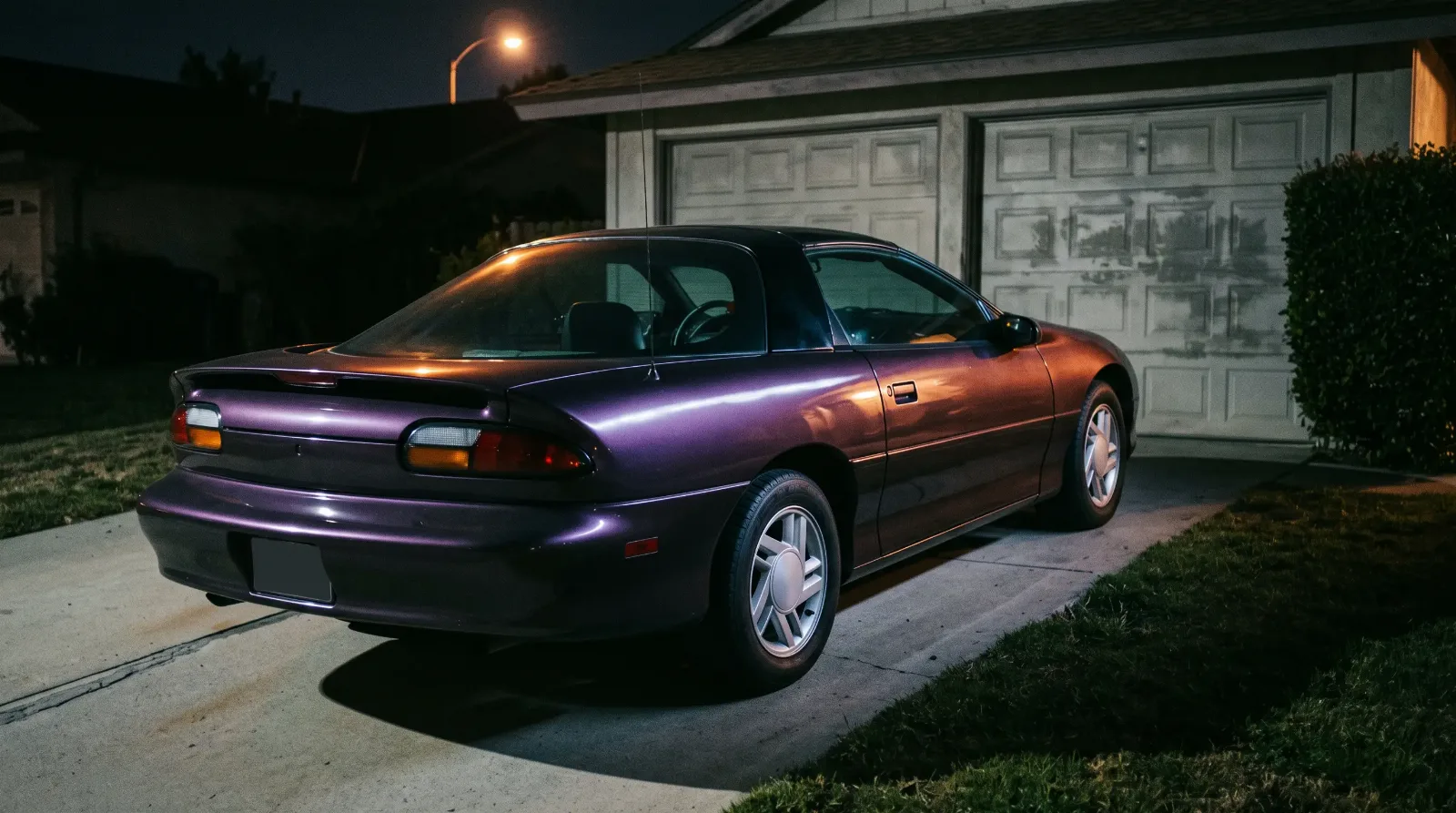
The shape came largely from GM's Advanced Studio in Warren, with John Cafaro leading the studios that designed the Camaro and Chuck Jordan running GM design. The car rode a 101.1-inch wheelbase, measured 193.2 inches long through 1997 and weighed between 2,954 and 3,211 lb depending on model. Production moved out of California, where Van Nuys closed in 1992, to Sainte-Thérèse, Quebec, which built every fourth-generation Camaro from November 1992 to August 27, 2002.
1993 to 1997: the LT1 years
The 1993 lineup was simple. The base car had a 3.4-liter L32 V6 with 160 hp and a five-speed manual. The Z28 had the 5.7-liter LT1 V8, rated 275 hp and 325 lb-ft, first seen in the 1992 Corvette, with a choice of a Borg-Warner T56 six-speed manual or a four-speed 4L60 automatic. The automatic cost $595 and 31,695 buyers took it. Chevrolet built 39,103 Camaros for 1993, all coupes: 21,253 base cars and 17,850 Z28s. A Z28 paced the 1993 Indianapolis 500, the Camaro's fourth pace car after 1967, 1969 and 1982, and the black-over-white replicas cost $995 extra. How many were built is disputed: 633 or 645, depending on the source.
Year two is when volume showed up. For 1994 the convertible returned, the hydraulic 4L60 became the electronic 4L60E, speed density gave way to mass airflow and sequential injection, and the six-speed got the 1st-to-4th skip shift and a 3.42 axle in place of the 3.23. Production jumped to 119,799, and 1995 topped that with 122,738, the peak of the generation. The 1995 Z28 added optional ASR traction control for $450, and the 3800 Series II V6 joined the 3.4 partway through the year.
For 1996 the Z28 went to 285 hp, the 3800 became the standard engine at 200 hp, and OBD-II brought dual catalytic converters. Production then fell by half, to 61,362, helped along by an 18-day strike over outsourcing that idled 81,500 GM workers in March 1996. The LT1's weak points belong in any honest account of these cars: reverse-flow cooling that runs the oil hot, a rear intake manifold seal that leaks, and an Opti-Spark distributor mounted under the water pump, where a coolant leak can finish it off. Every LT1 Camaro from 1993 to 1997 has one.
The SLP cars: catalog numbers and real ones
The fastest fourth-generation cars of the LT1 era came through SLP Engineering of Toms River, New Jersey, which GM called an aftermarket partner company. The 1996 SS got a composite hood with a working scoop and cold-air induction, a new spoiler, 17x9 ZR-1-style wheels, a bigger front anti-roll bar and a console plaque with its production number. Its LT1 was rated 305 hp, 20 hp more than that year's Z28. The option cost $3,999. How many 1996 SS cars were built depends on which Hagerty page you read: 2,257 or 2,410. In 1997, 3,137 buyers paid the same $3,999 for an SS.
The 1997 30th Anniversary package (RPO Z4C) was Arctic White with Hugger Orange stripes and white leather or houndstooth cloth inserts that recalled the 1969 Indy pace car. It cost $575, and 4,533 cars got it, 957 of them with the SS package. The headline number belongs to 108 of them: SLP converted that many SS cars to the 330 hp, 340 lb-ft LT4 from the 1996 Corvette. Of those, 100 were for the US, 6 for Canada and 2 were prototypes. At about $40,000 new, the LT4 SS was the most expensive factory Camaro, and Hagerty has ranked it with the dealer-built 2002 ZL1 at the top of fourth-generation collectibility.
1998 to 2002: the LS1 and the catfish face
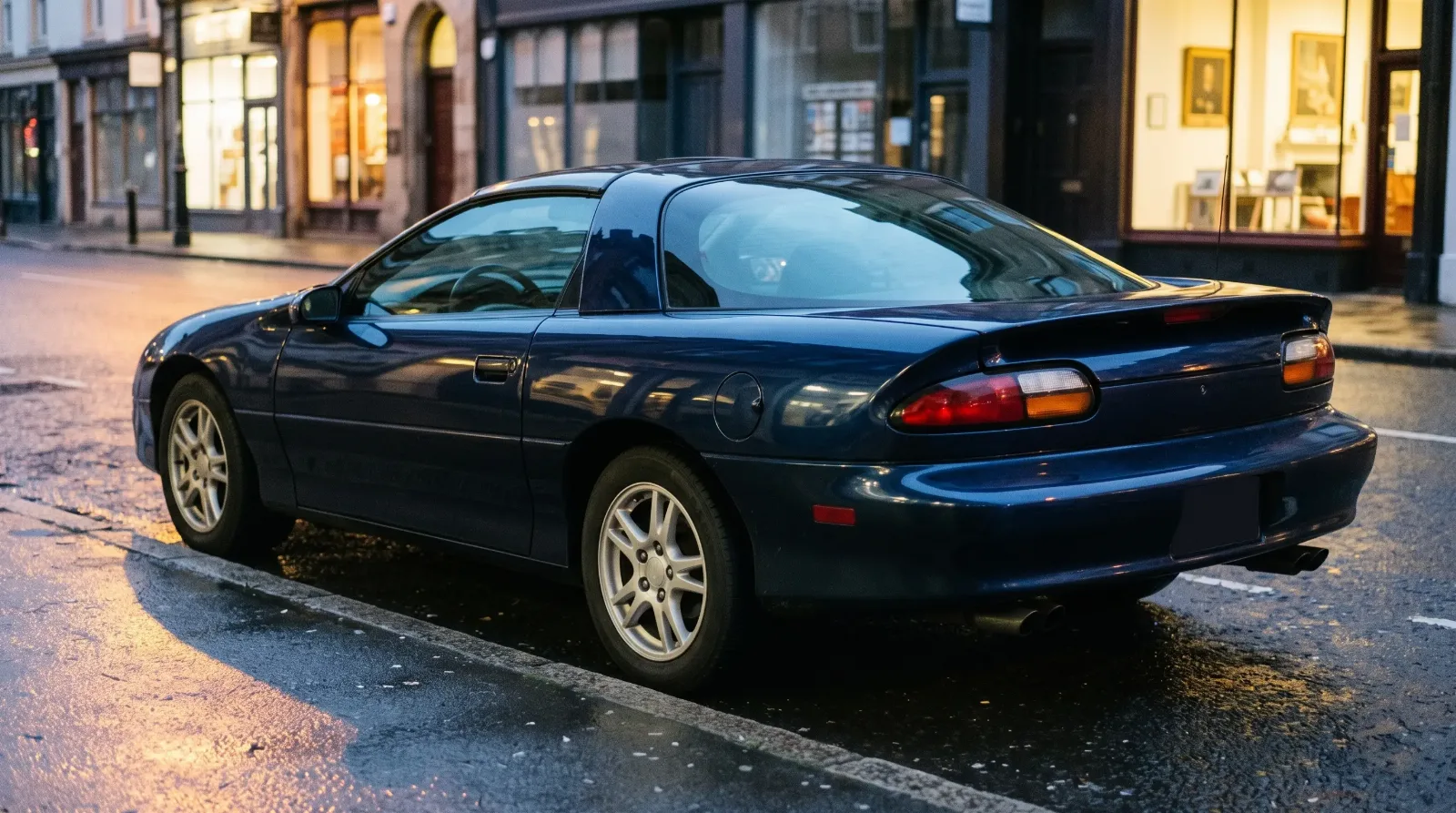
For 1998 the Camaro got a new front clip, later nicknamed the "Catfish," and the all-aluminum 5.7-liter LS1, a year after its debut in the 1997 C5 Corvette. The LS1 weighed about 95 lb less than the iron-block LT1. GM rated it 305 hp at 5,200 rpm and 335 lb-ft at 4,000 rpm in the Z28 and 320 hp in the SS. The SS gain came from SLP's cold-air intake and freer exhaust.
This is where the lore starts. You will read that the LS1 Camaro really made 350 hp at the flywheel and was marketed low so it would not embarrass the Corvette. That claim is not documented. The rated figures are, and Heinricy himself denies the underrating, while conceding that little more than tuning software separated a Camaro LS1 from a Corvette LS1. The measured numbers make the case without help: Car and Driver ran a 1999 SS to 60 mph in 5.3 seconds and to 100 mph in 12.8, with a 160 mph top speed.
"GM rated the LS1 Z28 at 305 hp. The forums say 350. I go with the number GM signed, because 305 real horsepower in a car that never weighed much over 3,200 lb never needed help from a rumor."
Dan Reeves
The later years brought steady small changes. For 1999 the Z28 and SS got a Torsen differential, the steel 15.5-gallon tank gave way to a 16.8-gallon plastic one, and Hugger Orange came back on the color chart. For 2001 the V8s got the LS6 intake manifold and a revised camshaft, lifting the Z28 to 310 hp and the SS to 325 hp. SS production climbed from 3,025 in 1998 to 11,191 in 2002, even as the rest of the line shrank. The 2002 35th Anniversary package, again RPO Z4C, was SS-only, in Bright Rally Red with silver heritage stripes.
Fourth-generation Camaro production, year by year
The yearly totals below are Hagerty's set unless noted. Sources agree on most years and split badly on 1997 and 1998, so those two are shown as ranges rather than a false single figure.
| Model year | Camaros built | Strongest V8 rating | Key change |
|---|---|---|---|
| 1993 | 39,103 (coupes only) | Z28 LT1, 275 hp | New generation; Indy pace car |
| 1994 | 119,799 | Z28 LT1, 275 hp | Convertible returns; 4L60E, sequential injection |
| 1995 | 122,738 | Z28 LT1, 275 hp | Generation peak; traction control optional |
| 1996 | 61,362 | SS LT1, 305 hp | SLP SS; Z28 to 285 hp; OBD-II |
| 1997 | 54,972 or 60,202 | LT4 SS, 330 hp (108 cars) | 30th Anniversary; A/C standard |
| 1998 | about 47,000 to 54,000 | SS LS1, 320 hp | LS1 and new front clip |
| 1999 | 42,098 | SS LS1, 320 hp | Torsen differential; larger plastic tank |
| 2000 | 45,461 | SS LS1, 320 hp | New 16-inch 10-spoke wheels |
| 2001 | 29,009 | SS LS1, 325 hp | LS6 intake; lowest year of the run |
| 2002 | 41,776 | SS LS1, 325 hp | 35th Anniversary SS; last year |
Add it up and the generation comes to more than 600,000 cars. The shape of the curve matters more than the total: two big years in 1994 and 1995, then a step down to roughly half, and never a recovery.
Why the numbers fell and the plant closed
GM gave its reasons when it announced, in late September 2001, that 2002 would be the last model year for the Camaro and Firebird. The "regular sport" segment had fallen 53 percent from 1990 to 2000, largely because buyers moved to trucks, and the industry had too much capacity. Sainte-Thérèse had been set up for two shifts of Camaros and Firebirds and was down to one by 1996. Scott Settlemire, a product manager in the late 1990s, put it bluntly: "that's when you lose stupid amounts of money."
The people closest to the car tell a less tidy story. Heinricy's verdict was short: "I blame marketing." Settlemire has said the car became profitable again in its final years because more buyers chose V8s. Neither changed the outcome. Production for 2001 stopped early to prepare the 35th Anniversary cars and ended at 29,009, the lowest of the run, and final-year output was less than a third of the Mustang's. A new head-impact standard taking effect September 1, 2002 would also have required heavy padding around the windshield opening. How Ford's side of the rivalry played out is covered in the 1990s pony war with the Mustang.
What the numbers say about buying one now
The market has already sorted these cars. Base V6 cars are still cheap: Hagerty's October 2026 guide puts a #3 condition 1993 base coupe at roughly $3,567 to $4,600 and a 2002 base convertible at roughly $8,967 to $10,833. At the other end, Hagerty has called the 1996 to 2002 SS the best collectibility bet among the regular-production cars and said any SLP car is significant and desirable. The LT4 SS and the 2002 ZL1 sit above everything else.
Mechanically, the split is clear. Hagerty calls the LS1 cars "far superior" to the LT1 cars, and the Opti-Spark and cooling issues covered above are reason enough to agree. On any V8 manual car, check the T56's hydraulic clutch, which is slow to release and hard on the synchros and the 10-bolt rear. Inside, look for split dashboards, sagging headliners and visors, leaking T-tops and broken plastic switches. The V6 cars carry their own record of leaking intake manifolds and head problems, though the Y87 performance package (limited slip, four-wheel discs, quicker steering) makes a better V6 to own. For the restoration side of the job, see our guide to keeping one of these cars alive.
The Camaro returned in 2010 as a fifth-generation car, but the 1993 to 2002 cars remain the last of the classic run. Browse fourth-generation Camaros for sale and let the numbers above do the sorting.
Sources and notes
- Chevrolet Camaro, fourth generation: engines, packages and production (Wikipedia)
- Fourth-gen F-body values and what to check (Hagerty)
- Is the fourth-gen Camaro collectible? (Hagerty, 2018)
- The GM-80 program: the F-body that almost went front-wheel drive (Curbside Classic)
- Camaro and Firebird on hiatus after the 2002 model year (Automotive Fleet)
- Ford Mustang, third generation: the 1993 GT re-rated to 205 hp (Wikipedia)
Related Reading

Article
The Classic Chevrolet Camaro Story
Article
The IROC-Z Camaro Story (1985 to 1990)
Article
Restoring a classic Camaro: the real-world guide
Article
GM80: The Front-Wheel-Drive Camaro That Never Happened
Article
The 1993 Camaro: A New Body Built in Quebec
Article
Designing the 1993 Camaro: Composite Panels and a Long Windshield
External
/chevrolet/camaro/fourth-generation
Have a
Chevrolet Camaro
for Sale?
Reach thousands of serious classic car collectors across the US.
Sell It Here →
Are You a Classic Car Dealer?
List your full inventory and connect with targeted classic car buyers.
Join as a Dealer →
#camaro z28
#camaro ss
#chevrolet camaro
#ls1
#lt1
#Camaro buying guide
#fourth-generation Camaro
#SLP Engineering

About the author
Dan Reeves
Performance engine builder from North Carolina's motorsports corridor, focused on swaps, forced induction and making real, repeatable power.
Related Listings - Chevrolet Camaro
Comments
Be the first to comment on this article.