
On August 27, 1992, a red Z28 coupe rolled off the line at Van Nuys, California, and the third-generation Camaro was finished. By November the next one was being built across the continent, in a plant in the Montreal suburbs, and when the 1993 Camaro Z28 reached the public in January 1993 it belonged to the first Camaro generation built entirely in Canada. A new body, a new home and a new V8 arrived together. The fourth generation ran through 2002, and the full story covers all ten years. This is about its first year: where it was built, what was new, and how many people bought one.
Car Features
6 min read
The 1993 Camaro: A New Body Built in Quebec
How Camaro production moved from Van Nuys to Sainte-Thérèse, Quebec, what was new for 1993, and the first-year production, prices and colors.
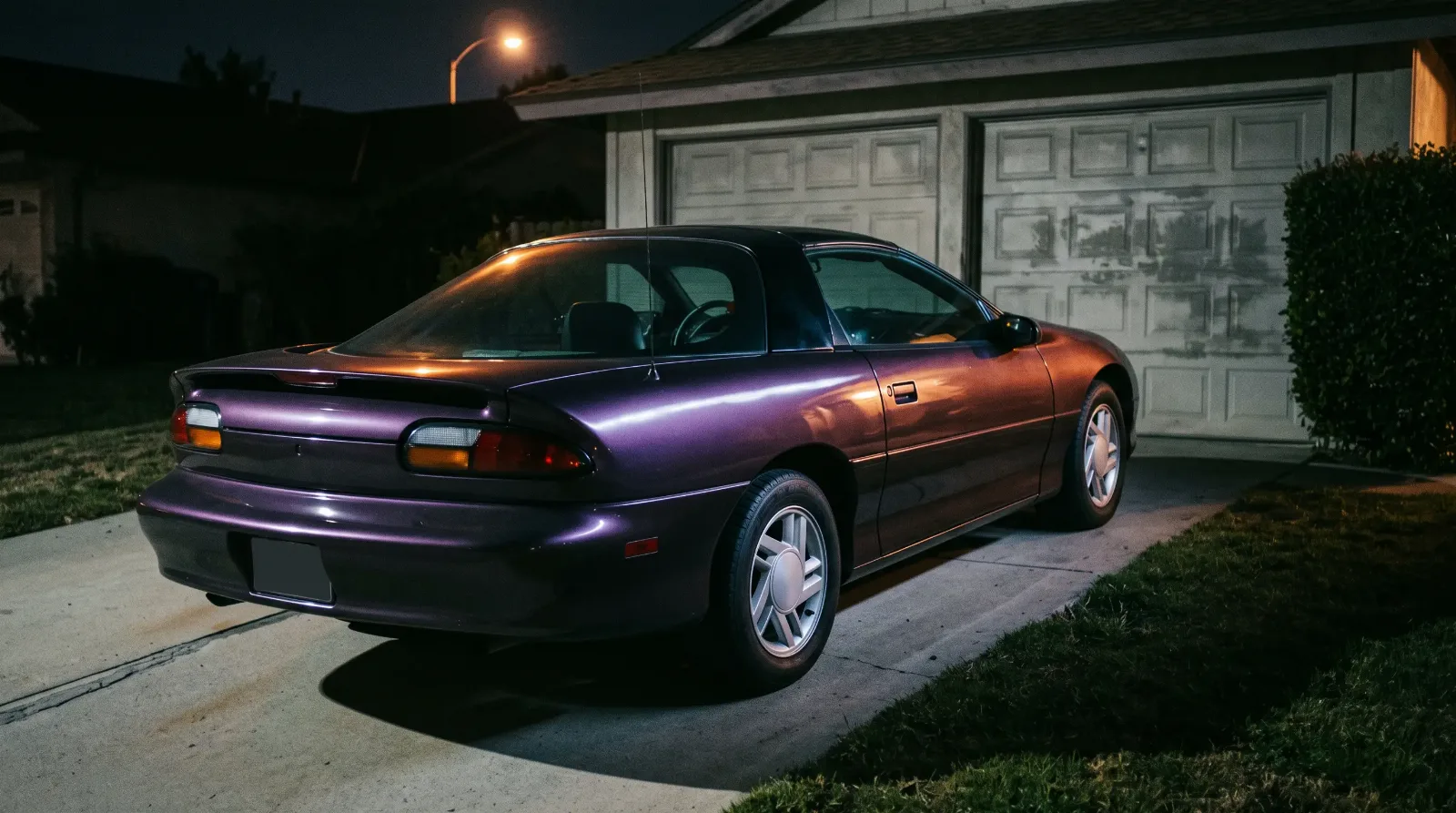
From Van Nuys to Sainte-Thérèse
Van Nuys had been the Camaro's home for years. Norwood, Ohio, had shared the work until its last car, a red IROC-Z, left the line in August 1987; from 1988 every Camaro came from the San Fernando Valley. Then Van Nuys closed in 1992, when Camaro and Firebird production moved to Sainte-Thérèse, Quebec, a move linked to air-quality remediation at the California site. The Van Nuys plant was razed in 1993.
So the 1992 Camaro was the last US-built Camaro of the classic era. That fact does not change how the car drives, but it changes how people talked about it. A Camaro built only in Canada was new territory for the badge, and for a decade every fourth-generation Camaro and Firebird came from one place.
The plant in the Montreal suburbs
Sainte-Thérèse Assembly was a GM of Canada plant that opened in the mid-1960s. Before the F-body arrived it had built a long and very ordinary list of cars: Impala, Vega, Monza, Cutlass, Grand Prix, Celebrity and Cutlass Ciera. The Camaro was the most exciting thing ever to come down its line, and it built Camaros and Firebirds there for model years 1993 through 2002.
There is a naming wrinkle that still confuses buyers reading old paperwork. The plant was called Sainte-Thérèse, but its address, 2500 boulevard De la Grande-Allée, sits in Boisbriand, so some references call it the Boisbriand plant. It is the same building.
The plant was set up for two shifts of Camaro and Firebird. By 1996 it was down to one, and Scott Settlemire, the Camaro's product manager in the late 1990s, was blunt about what that meant: "that's when you lose stupid amounts of money." It was still on one shift in 2001. That later struggle belongs to a different chapter. In late 1992, with production starting in November, the place was building the most modern Camaro anyone had seen.
What was new about the 1993 Camaro Z28
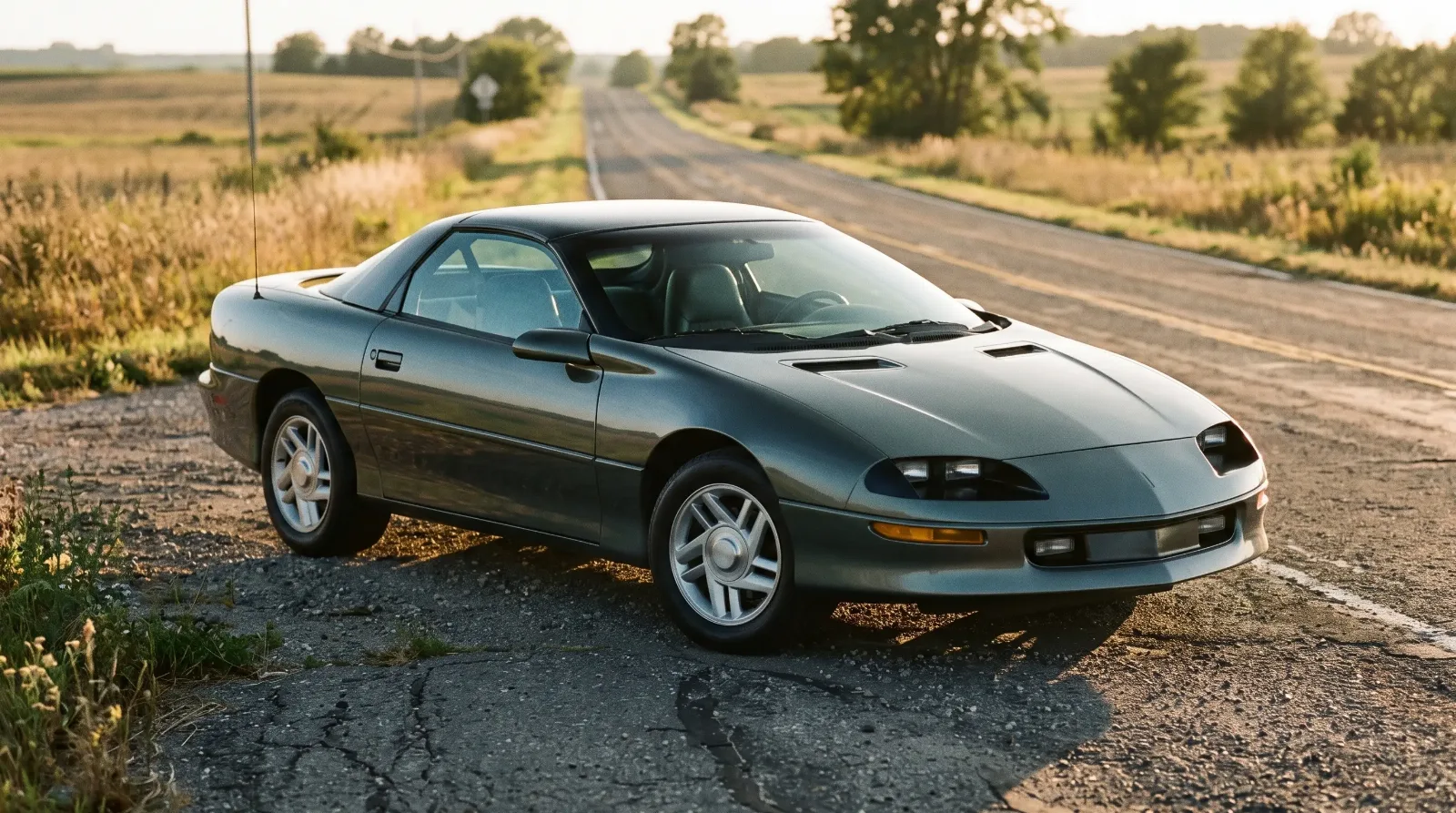
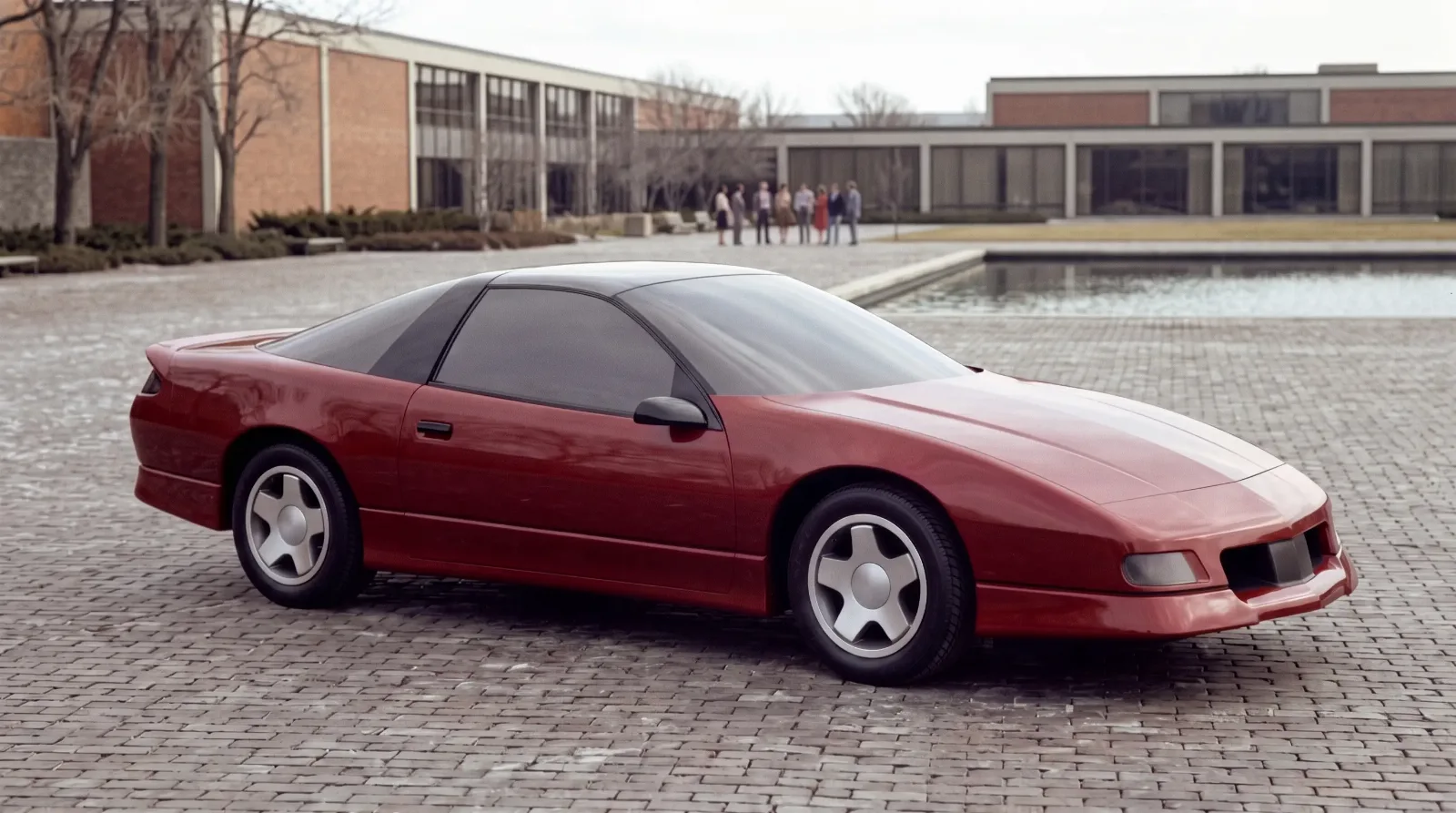
Nearly all of it. One estimate puts the new content at about 90 percent. Chevrolet kept the third-generation floor pan and the live rear axle, and replaced nearly everything a driver could touch or feel. There was a new short and long arm front suspension, rack-and-pinion steering, dual airbags and R134a air conditioning. The new body is its own subject, from the steeply raked glass to the composite panels, and it is covered under the fourth-gen design.
Under the hood of the Z28 sat the LT1 5.7 V8, the engine introduced in the 1992 Corvette, rated at 275 hp and 325 lb-ft. That was 30 hp more than the outgoing Camaro's best engine and 70 hp more than the 205 hp 1993 Mustang GT. The base car used the 3.4-liter L32 V6, rated at 160 hp, with a five-speed manual standard.
Z28 buyers chose between the Borg-Warner T56 six-speed manual and the four-speed 4L60 automatic, a $595 option. Sources still disagree on which one counted as standard on the Z28, but the buyers settled the practical question: 31,695 cars across the 1993 line were ordered with the automatic. Car and Driver ran a 1993 Z28 to 60 mph in 5.3 seconds and through the quarter mile in 14.0 seconds.
"Picture a Camaro buyer in the spring of 1993. The last one they knew was a ten-year-old shape with a 245 hp ceiling. Now there was a car with six gears, 275 hp and a nose that looked like it came from the future, and it was built in Quebec. People argued about that last part for a while. Then they drove it."
Patrick Walsh
The first model year by the numbers
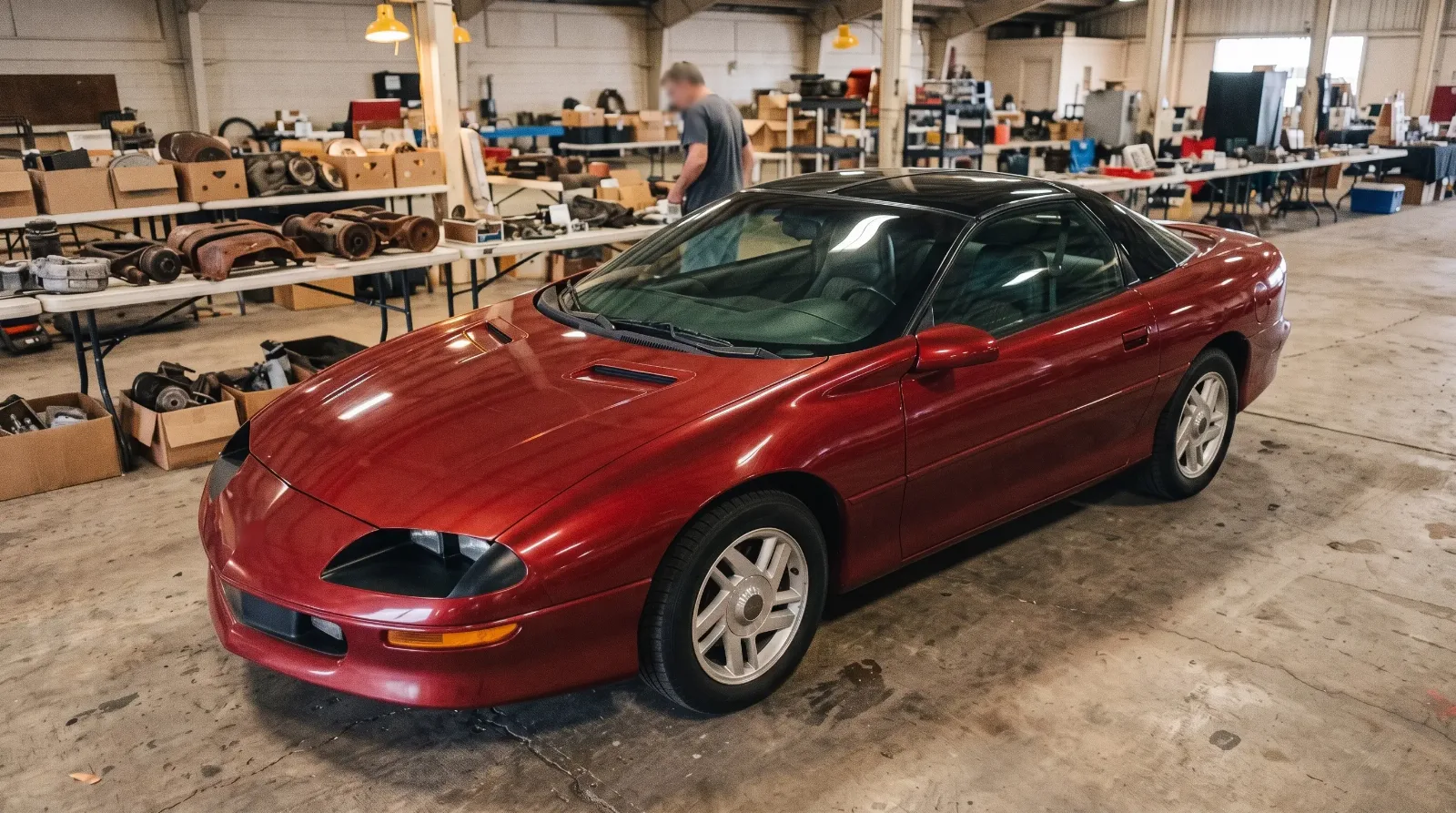
The 1993 run was short: production did not start until November 1992. Chevrolet built 39,103 Camaros for the model year, all of them coupes; the convertible did not return until 1994. Of that total, 21,253 were base cars and 17,850 were Z28s. Only 3,340 were ordered with T-tops.
| 1993 Camaro | Figure |
|---|---|
| Total production | 39,103 (coupes only) |
| Base coupes / Z28s | 21,253 / 17,850 |
| Base price / Z28 price | $13,399 / $16,799 |
| Bright Red | 11,136 |
| Black | 9,655 |
| Medium Patriot Red | 6,903 |
| Purple Pearl | 4,920 |
| Dark Green-Grey | 4,350 |
| Arctic White | 1,506 |
| Black/White Pace Car | 633 |
| 1LE track package | 19 cars ($330, no A/C allowed) |
| B4C police package | 135 cars |
Seven colors, and every Z28 roof was black regardless of the body color. Bright Red outsold everything else. Arctic White was the rarest regular color by a wide margin, and only the black and white pace car finish was scarcer. One price caveat: another listing gives the Z28 at $17,269, a figure that may include destination.
The two smallest lines in that table are the interesting ones for collectors. Nineteen buyers ticked the 1LE box in 1993, a $330 option that did not allow air conditioning. The B4C Special Service package, Z28 mechanicals in a base body for police use, found 135 takers.
How to spot a first-year car
The 1993 Camaro has a handful of details that changed the next year, and they are the easiest way to confirm a car is what it claims to be. For 1994 the electronic 4L60E replaced the hydraulic automatic, mass airflow replaced speed density, and the six-speed rear axle ratio went from 3.23 to 3.42.
Ten years later the same plant built the last car of the generation, closed the next day, and the site was sold in 2004 and redeveloped. The first-year cars are the ones that carry the whole beginning of that story, the move north, the new V8 and a short first season. If you want one, look for yellow gauges and paperwork that matches, and start with the 1993 Camaros for sale.
Sources and notes
- Hagerty: Fourth-gen Camaro, 1993 to 2002, the one that died first
- Hagerty valuation: 1993 Chevrolet Camaro (production, prices, colors, options)
- Hagerty: Fourth-gen F-body values (Car and Driver test figures)
- Automotive Fleet: Camaro/Firebird on hiatus after 2002 model year
- Wikipedia: Sainte-Thérèse Assembly (plant history and products)
- Wikipedia: Chevrolet Camaro (fourth generation)
Related Reading
Have a
Chevrolet Camaro
for Sale?
Reach thousands of serious classic car collectors across the US.
Sell It Here →
Are You a Classic Car Dealer?
List your full inventory and connect with targeted classic car buyers.
Join as a Dealer →
#camaro z28
#chevrolet camaro
#lt1
#Camaro buying guide
#fourth-generation Camaro
#1993 Camaro
#Sainte-Thérèse Assembly

About the author
Patrick Walsh
Automotive journalist covering classic car shows, events, and the enthusiast community across North America.
Related Listings - Chevrolet Camaro
Comments
Be the first to comment on this article.