
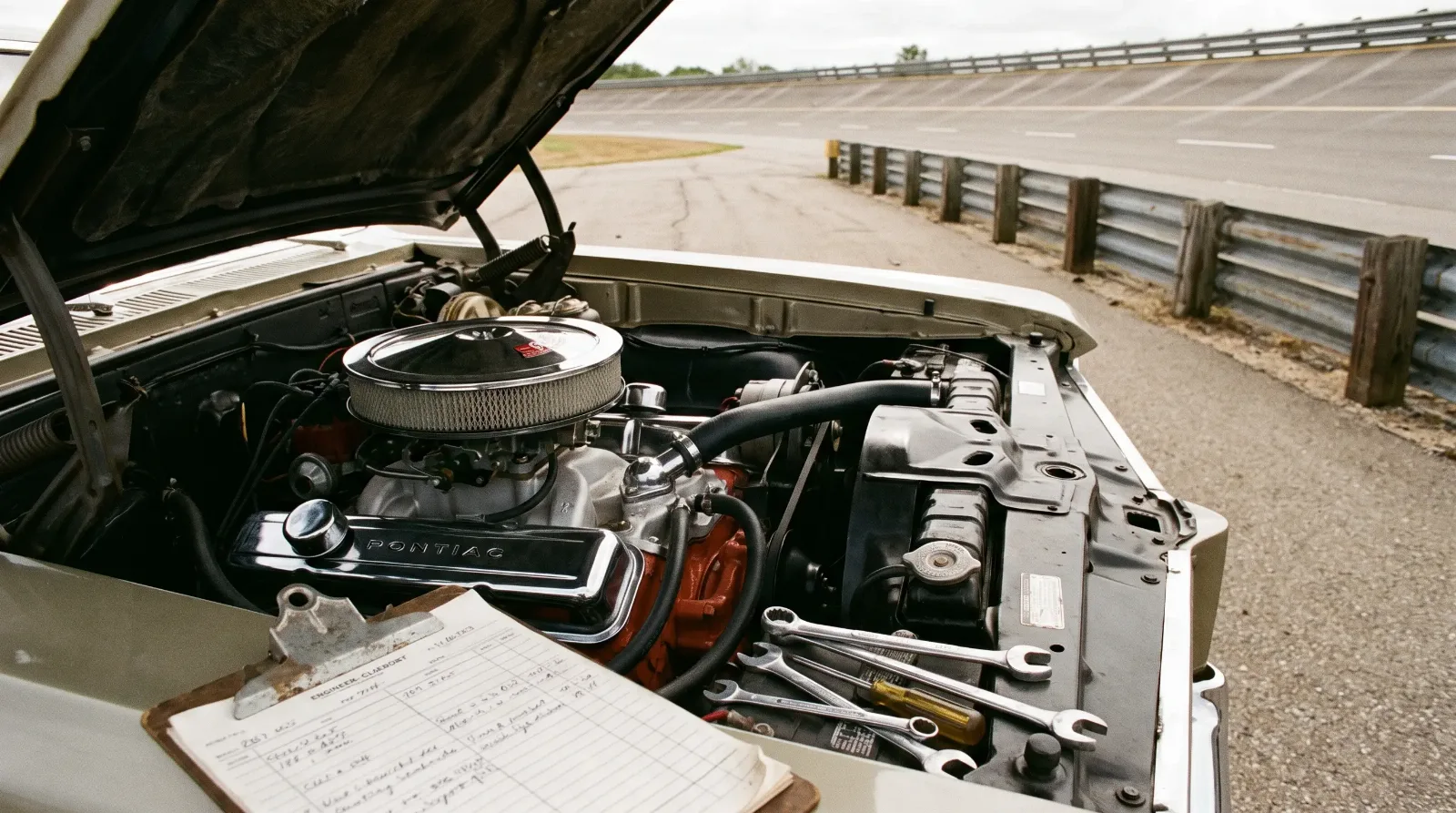
John DeLorean's name gets attached to the GTO more than any other, and there is good reason for that: he was Pontiac's general manager and he took the political risk of putting the option into production. But the engineering work that made the car possible came from two men who rarely get their names in the headline: Bill Collins and Russ Gee. The primary sources, internal Pontiac documents and interviews conducted with both men later in their careers, credit them with the actual mechanical problem-solving that turned an idea into a buildable option package.
Car Features
7 min read
Bill Collins and Russ Gee: The Engineers Behind the Goat
DeLorean had the authority to greenlight the GTO. Bill Collins and Russ Gee had the engineering that made the risk survivable.
Who they were inside Pontiac
Bill Collins worked as an engineer on Pontiac's mid-size car programs and had direct knowledge of what the Tempest platform could and could not handle structurally. Russ Gee worked alongside him in a similar engineering capacity, focused on drivetrain and chassis matters. Neither man held DeLorean's rank, and neither had DeLorean's authority to greenlight a new option line on his own signature. What they had was the technical knowledge of exactly how to fit a 389 cubic inch V8, borrowed from Pontiac's full-size car line, into the Tempest-based LeMans without the car falling apart under it.
The engine-swap problem
General Motors had an internal policy limiting the engine displacement allowed in its intermediate-sized cars, a rule meant to keep Chevrolet's compacts and Pontiac's own Tempest from stepping on the toes of full-size performance models. Getting a 389 into a Tempest-based car meant working around that ceiling without triggering a corporate review that would likely kill the project before it reached dealers. Collins and Gee are generally credited with identifying the loophole: since the GTO was structured as an option package on an existing model rather than a new model in its own right, it did not automatically trigger the same review process a standalone new car would.
That distinction, between a new model and an option on an existing one, is the same one covered in more detail in the first GTO story, which lays out how DeLorean and his team used the option-package structure to their advantage.
Making the chassis work
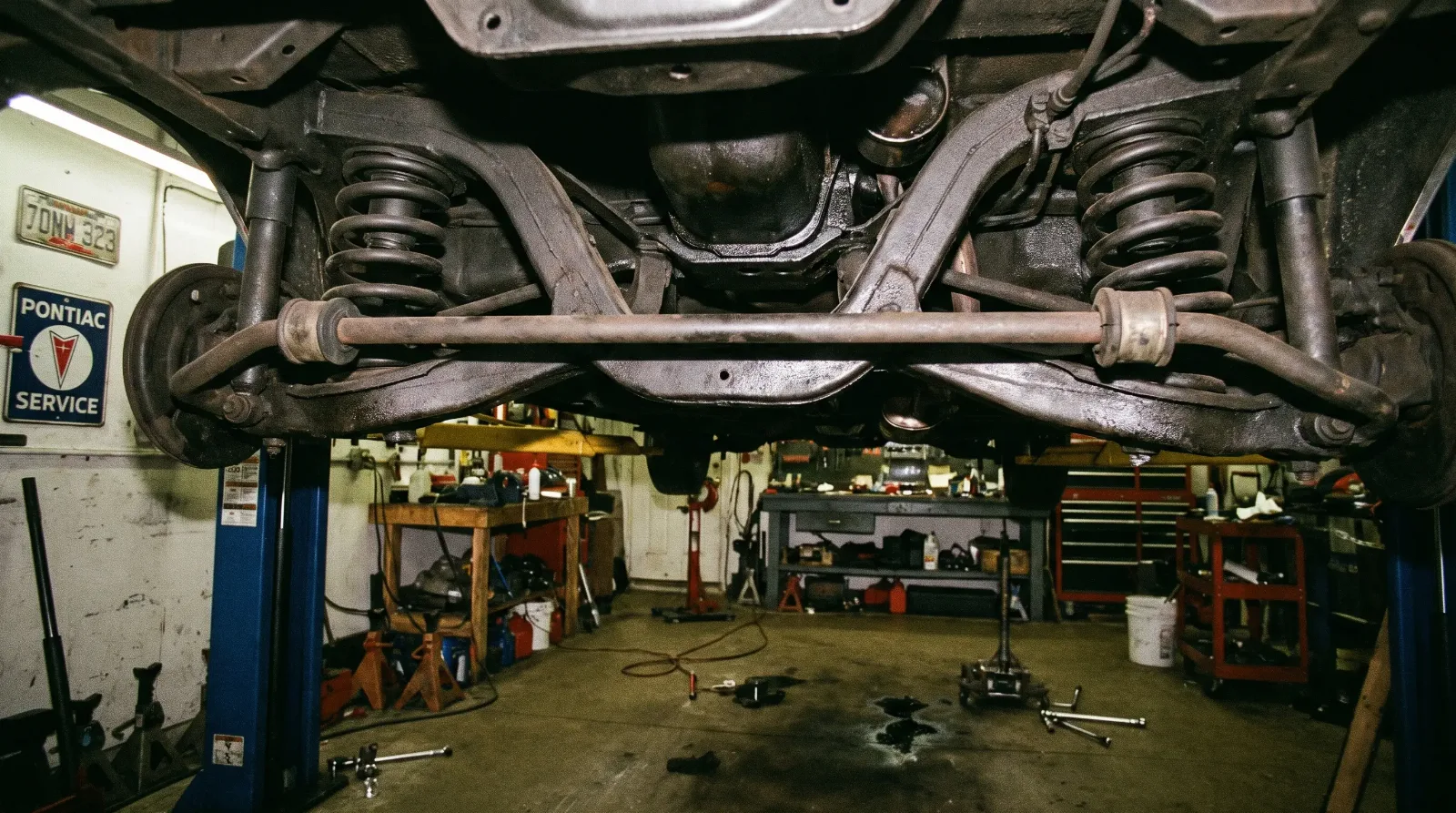
Dropping a bigger, heavier engine into a car never designed for it is not simply a matter of bolting it to the existing motor mounts. The front suspension, brakes, and drivetrain components all needed reinforcement or revision to handle the added weight and power without compromising handling or safety. Collins and Gee's engineering work included the heavier-duty springs, the larger front sway bar, and the driveline changes needed to put the power down without the car feeling like a mismatched parts-bin experiment. Pontiac's factory service documentation from the period lists these changes as part of the GTO option code, not as separate line items, which is part of why their contribution is easy to overlook if you are only reading sales brochures rather than engineering records.
| RPO 382 component | What it changed |
|---|---|
| Engine | 389 cu in V8, borrowed from full-size Catalina/Bonneville line |
| Front springs | Heavy-duty rate, revised to handle added front weight |
| Front sway bar | Larger diameter than standard Tempest/LeMans bar |
| Motor mounts | Reinforced to handle V8 torque the chassis was not originally engineered around |
| Transmission | Floor-shifted three-speed manual standard, four-speed and automatic optional |
Testing and validating those changes fell largely to Collins and Gee's own team, working with a compressed timeline since the whole program moved from concept to dealer lots in well under a year. There was no separate GTO development budget in the way a standalone new model would have received, which meant durability testing, chassis tuning, and brake validation had to happen inside the existing Tempest program's resources rather than as a dedicated effort. That constraint shaped some of their decisions: reusing existing suspension components wherever possible rather than engineering entirely new parts kept both the cost and the paperwork trail low enough to move quickly through Pontiac's internal approval process.
Why the credit split matters
There is a persistent tendency in muscle car folklore to hand the entire GTO story to a single visionary executive, and DeLorean's own later fame as a businessman and public figure fed that tendency. The historical record, drawn from Pontiac's internal engineering files and later interviews with the people actually doing the work, points to a more accurate picture: DeLorean provided the authority and the willingness to take the risk, while Collins and Gee provided the technical path that made the risk survivable. Both pieces were necessary. Neither one alone gets the car built.
"The paperwork tells a different story than the magazine articles do. DeLorean gets the credit because he had the title and the profile, but the option code, the suspension specs, the actual engineering that let a 389 live in a Tempest chassis, that traces back to Collins and Gee's bench work."
Tom Ramirez
Where their work shows up on a real car
If you are inspecting an original 1964 GTO today, the parts that trace directly to Collins and Gee's engineering are the heavy-duty front springs, the larger sway bar, and the reinforced motor mounts specified under RPO 382. These are not glamorous parts. They rarely appear in advertising from the period, which focused on the engine and the styling. But they are the parts that determine whether the car actually handles the power it was built around, and matching them against factory specification is one of the more reliable ways to confirm a car's option history beyond the badges.
What their careers looked like after 1964
Neither Collins nor Gee stayed in the background for the rest of their careers. Bill Collins went on to work closely with DeLorean for years afterward, eventually following him into the DMC-12 sports car venture in the late 1970s, a project that carried its own very different set of engineering challenges and outcomes. Russ Gee's later career stayed closer to mainstream Pontiac product development, continuing to work on chassis and performance engineering for the division through the muscle car era's peak years.
That divergence matters for how the historical record ended up shaped. Collins's later association with DeLorean, and DeLorean's own fame and eventual notoriety, kept Collins's name somewhat more visible to historians digging back through GTO origin stories. Gee's steadier, less headline-grabbing career path meant his contribution got mentioned less often outside of Pontiac's own internal documentation, even though the engineering work the two of them did together on the original GTO chassis was, by most accounts, a genuinely shared effort.
It is worth noting how differently the two men's names have aged in enthusiast circles as a result. Collins shows up regularly in DeLorean-focused retrospectives, usually as a supporting character in someone else's story. Gee shows up almost exclusively in deep Pontiac-specific histories written by people who went looking for him on purpose, the RPO documentation trail rather than the magazine profile trail. Neither treatment reflects the actual balance of engineering work the two of them did on the GTO chassis, which by the internal record was close to an even split between chassis and driveline responsibilities.
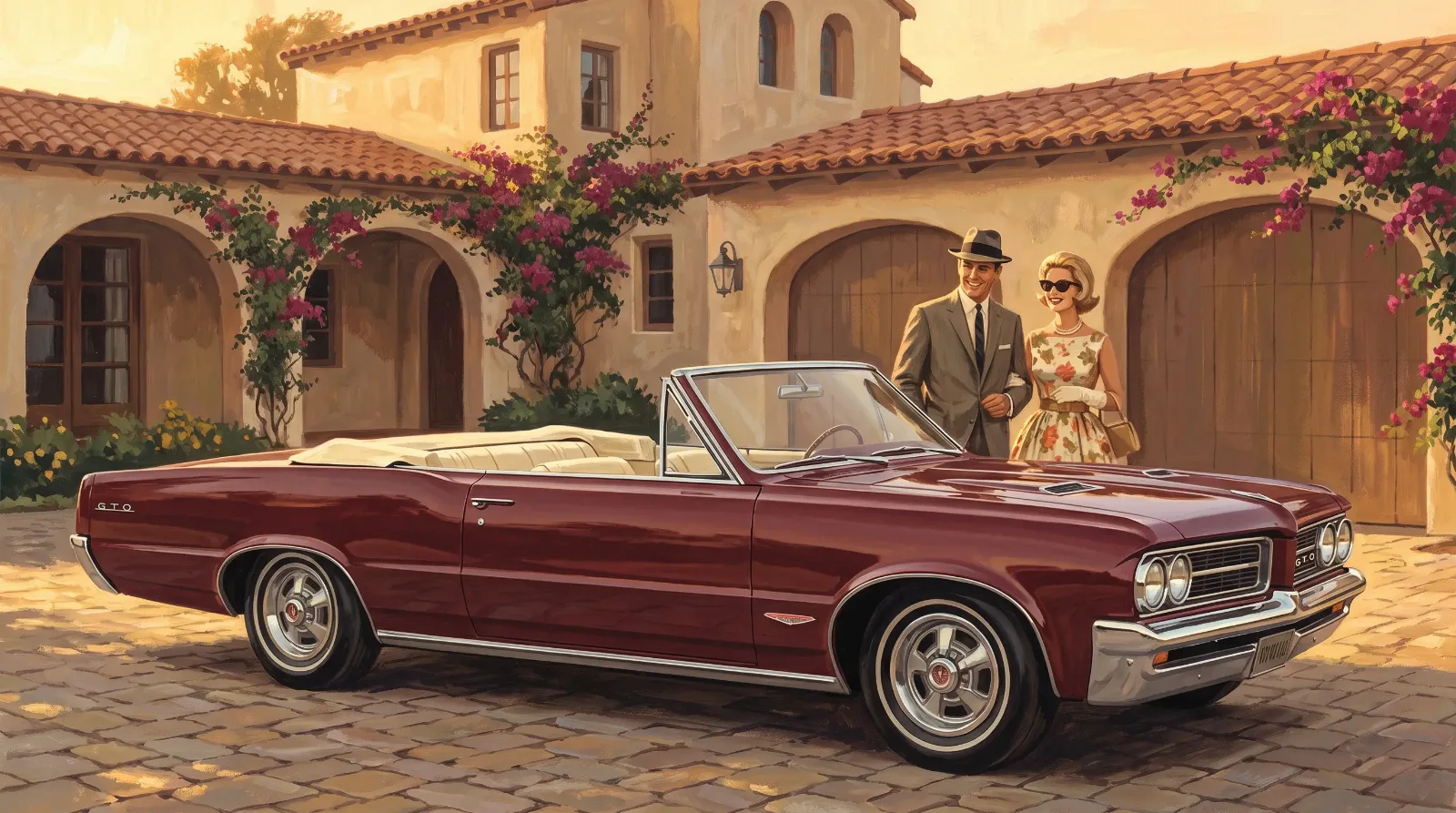
The visual side of the GTO's launch, the advertising that sold the public on a car built around this engineering work before most of them had ever seen one in person, is its own story worth understanding; read on for how Pontiac's brochure artists shaped the car's image before the engineering ever reached most driveways.
Sources and notes
Related Reading
Have a
Pontiac GTO
for Sale?
Reach thousands of serious classic car collectors across the US.
Sell It Here →
Are You a Classic Car Dealer?
List your full inventory and connect with targeted classic car buyers.
Join as a Dealer →

About the author
Tom Ramirez
Corvette researcher and historian based in Bowling Green, Kentucky. Two decades documenting Corvette production history from original factory records.
Related Listings - Pontiac GTO
Comments
Be the first to comment on this article.