
You want to know how good a shifter has to be before guys start talking about it like it's a piece of the engine, not just a lever bolted to the transmission? That's what happened with Hurst and Pontiac in the sixties, and I've been driving cars with those shifters since before most of the guys at today's shows were born, so let me tell you how that partnership actually worked, not the marketing version.
Car Features
7 min read
Hurst and Pontiac: The Shifter Partnership That Defined the Era
The Hurst shifter wasn't badge engineering. It was a genuine mechanical partnership that changed how a GTO actually shifted.
How two Michigan companies ended up in the same car
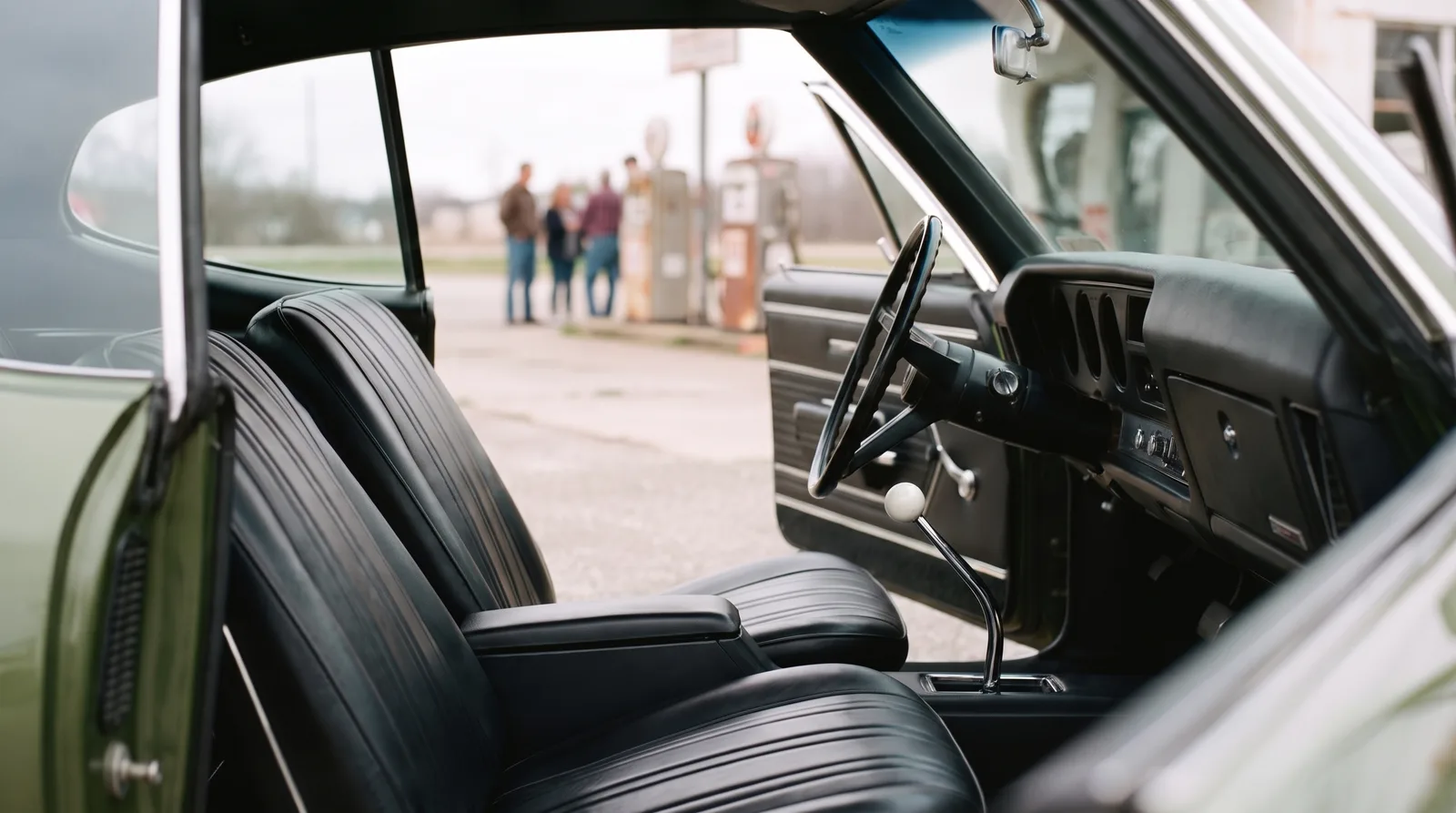
Hurst Performance built its reputation on aftermarket shifters that felt tighter, more direct, and more mechanically honest than what most factory linkages offered through the early sixties. Pontiac, chasing every performance edge it could find as the GTO and the broader muscle car segment heated up, recognized that a factory-installed Hurst shifter wasn't just a functional upgrade. It was a credibility statement to a buyer who already knew the aftermarket brand's reputation from magazines and from what serious racers were bolting into their own cars. By the time the 1968-69 GTO came around, the 1968-69 GTO carried a Hurst-branded shifter as standard equipment on every manual-transmission car, a factory arrangement that dated back to the mid-sixties GTOs, and that badge on the shift knob meant something specific to a buyer who cross-shopped against Chevelles and Mustangs running their own factory or aftermarket linkages.
I remember guys at the drive-in arguing about whose shifter felt better, and half the time the answer came down to whether it said Hurst on it or not. That's not just brand loyalty talking. The Hurst linkage genuinely felt different under your hand, shorter throws, more positive engagement between gears, less of that vague, rubbery feeling you got out of a lot of factory setups from other manufacturers that hadn't bothered to source out the job to somebody who actually specialized in it.
What made the Hurst linkage mechanically different
The Hurst shifter used a different linkage geometry than Pontiac's own in-house designs, engineered specifically to reduce slop and shorten throw distance between gears. For a GTO buyer running a four-speed manual, that mattered every time they grabbed second gear coming out of a corner or banged through the gears at a stoplight. It's the kind of improvement that's hard to quantify on a spec sheet but obvious the second you drive a car equipped with one back to back against a car without it.
Pontiac didn't just slap a Hurst name badge on their existing linkage either. The actual mechanical hardware, the shift lever, the linkage rods, the detent mechanism, came from Hurst's own engineering, adapted to bolt into Pontiac's transmission tunnel and work with Pontiac's specific manual transmissions. That's a real partnership, not a marketing license, and it's part of why these shifters still command real interest from restorers and collectors chasing correct, period components today.
| Detail | Standard Pontiac linkage | Hurst-equipped linkage |
|---|---|---|
| Shift throw | Longer, more travel between gears | Shortened, more direct |
| Feel | Softer engagement | Positive, mechanical engagement |
| Branding | Pontiac-only badging | Hurst name visible on shifter and often the knob |
| Availability | N/A, Hurst linkage was standard on manual cars | Standard on manual GTOs; Hurst's Dual-Gate shifter was a separate factory option for automatics |
Why this partnership meant something bigger than one car
Hurst's relationship with Pontiac wasn't limited to shifters alone. The company's broader involvement with the performance car industry through the sixties, from special editions built in partnership with manufacturers to performance parts sold through dealer networks, made Hurst one of the few aftermarket names that carried genuine credibility when it showed up on a factory build sheet. That crossover between aftermarket racing credibility and factory production is part of what made the muscle car era feel different from what came before it. Manufacturers weren't just building fast cars in isolation anymore. They were partnering with the companies racers already trusted and putting that trust to work on the showroom floor.
For a GTO buyer in 1968 or 1969 ordering a four-speed, that Hurst linkage came standard, but plenty of automatic buyers still checked the box for Hurst's Dual-Gate shifter, and that choice was as much a statement of intent as it was a functional one. You were telling the guy at the dealership, and everybody who ever rode in your passenger seat afterward, that you cared enough about how the car actually drove to seek out a shift linkage most casual buyers wouldn't have noticed or cared about.
What to check if you're buying a car with one today
Every manual-transmission 1968-69 GTO left the factory with a Hurst shifter, so the real question when you're looking at one today isn't whether it has one, it's whether the linkage in the car is the correct factory piece. The shift knob itself is easy to swap and not proof of anything by itself. Look at the linkage rods and the mounting hardware under the console, since a genuine factory Hurst setup uses specific brackets and rod configurations that differ from a generic aftermarket Hurst shifter somebody bolted on later at a swap meet. A lot of guys over the decades have replaced a tired original linkage with a later aftermarket Hurst unit bought separately, which is a fine functional upgrade but isn't the same thing as the correct period piece, and it shouldn't be represented or priced as one. Automatic cars are a different check entirely: if the seller claims the Hurst Dual-Gate shifter, that really was a separate factory option and worth confirming against the build sheet.
The other thing I always tell people to check is condition of the linkage bushings and the detent plate, because a worn-out Hurst linkage feels sloppy in a way that undersells what the design is actually capable of. A tired shifter with worn bushings can feel almost as vague as a cheap standard linkage, and a lot of buyers walk away from a test drive unimpressed with a car that just needs thirty dollars of bushings and a half hour of work to feel the way it's supposed to feel. Don't judge the linkage design by a worn-out example. Judge it by one that's been maintained, or budget the small cost to bring a tired one back to spec before you form an opinion.
That same era of youth-focused marketing that pushed Pontiac to partner with a company like Hurst is worth understanding on its own terms too, because the shifter wasn't sold to buyers in isolation. It was part of a bigger pitch aimed at a specific generation of car buyer, and read on covers how that marketing gamble played out for Pontiac during these same model years.
"Everybody had an opinion about that shifter before they'd even driven the car. That's the kind of reputation you don't buy with an advertising budget. You earn it one satisfied racer at a time, and Hurst had earned it long before Pontiac ever put their name on a GTO order form."
Gary Nowak
I've owned a few GTOs over the years with that Hurst linkage in them, and I'll tell you honestly, it's one of those details that doesn't show up in a photograph but shows up every single time you drive the car. Some partnerships between a manufacturer and an outside company are just badge engineering. This one wasn't, and anybody who's rowed through the gears on one of these knows the difference.
Sources and notes
Related Reading

About the author
Gary Nowak
Lifelong Midwest rodder who has been building and driving traditional pre-war hot rods since the 1970s.
Related Listings - Pontiac GTO
More in Car Features

Comments
Be the first to comment on this article.