
The magazine ad shows a young man, tall, athletic, leaning against the fender of a GTO with the kind of easy confidence that advertising art directors spend careers trying to manufacture. He isn't a mechanic. He isn't a businessman in a suit standing proudly beside his new sedan the way car ads had looked for decades before this one. He's a basketball player, or reads like one, and Pontiac put him there on purpose, because by 1968 the company had made a decision that would have seemed reckless to an automotive marketer just a few years earlier: sell the car to the person who would actually drive it hardest, not to his father.
Car Features
7 min read
The Basketball-Player Ad and Pontiac's Youth-Culture Gamble
Pontiac's 1968 GTO advertising sold a feeling more than a car, and the gamble behind that choice still says something about the era.
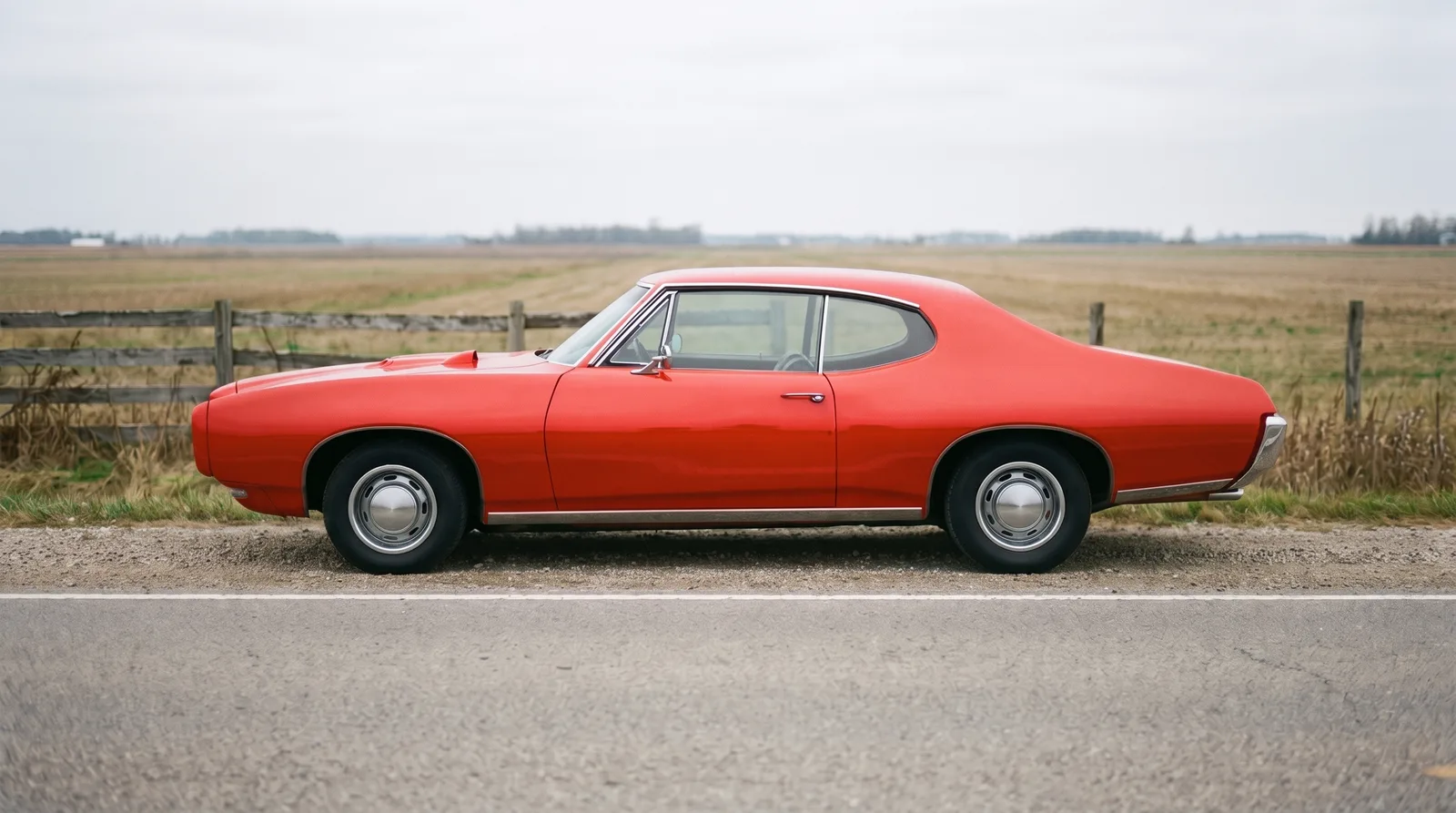
A gamble dressed up as confidence
Pontiac's advertising in the mid-to-late sixties had already been reshaping itself around a younger buyer, the GTO itself born partly from John DeLorean's recognition that Pontiac's staid, older-buyer image needed a jolt if the division wanted to survive the coming decade. But there's a difference between building a fast car and betting an entire ad campaign on cultural imagery that has nothing to do with horsepower or torque figures. The basketball-player ad, and others like it from the same period, sold lifestyle and identity more than they sold the machine underneath it. A young reader flipping through a magazine wasn't meant to absorb the compression ratio. He was meant to see someone who looked like the kind of person he wanted to be, standing next to a car he could imagine himself owning.
That's a genuine gamble, dressed up in confident art direction. Automotive advertising through the fifties and into the early sixties had largely spoken to a buyer already established, someone providing for a family, someone whose car choice reflected steady, respectable taste. Pontiac's youth-culture pivot assumed a completely different reader: someone without a mortgage, without kids in the back seat, someone whose disposable income and personal identity were still being formed and who wanted a car that said something about who he was becoming rather than who he already was.
Why athletes, specifically
The choice to use an athletic, basketball-coded figure rather than a musician, an actor, or an anonymous "average" young man wasn't accidental. Athletics carried a specific cultural currency by the late sixties, an association with discipline, physical confidence, and a kind of clean-cut aspirational cool that avoided the more polarizing associations some countercultural imagery of the same period would have carried. Pontiac wanted the rebellious energy of youth culture without the parts of it that might alienate a car-buying parent still co-signing the loan for a lot of these purchases. The basketball player split that difference elegantly: energetic and modern, but not threatening to an older generation's sense of what a respectable young man looked like.
I've talked to people who remember seeing these ads as teenagers in 1968, flipping through a magazine at a barber shop or a friend's house, and the detail that comes up again and again isn't the car's specifications. It's the feeling. One man told me he didn't remember a single number from the ad, not the horsepower, not the price, but he remembered exactly how it made him feel looking at it, like the GTO belonged to a version of his life he hadn't lived yet but suddenly wanted.
The bigger bet behind one photograph
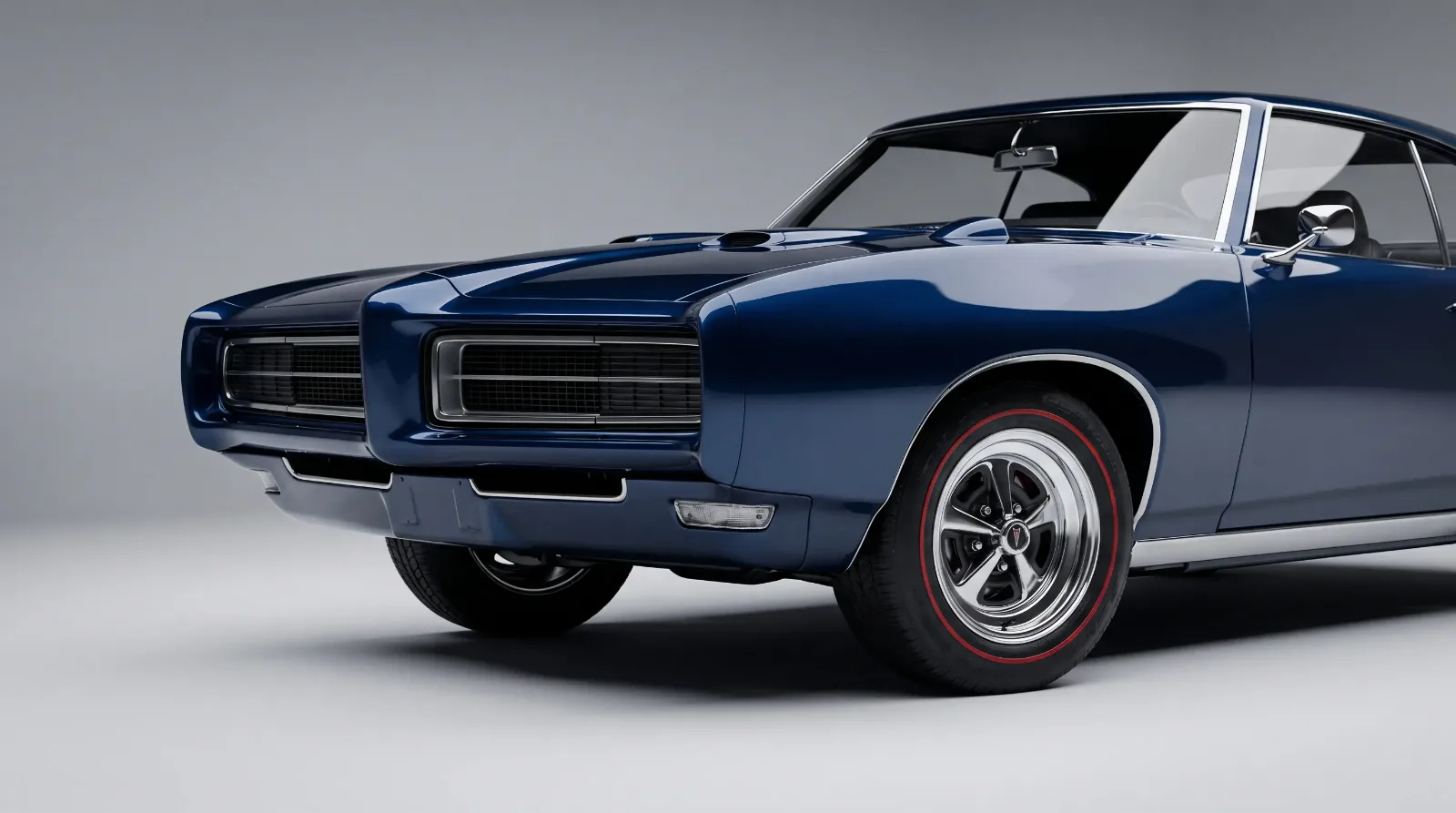
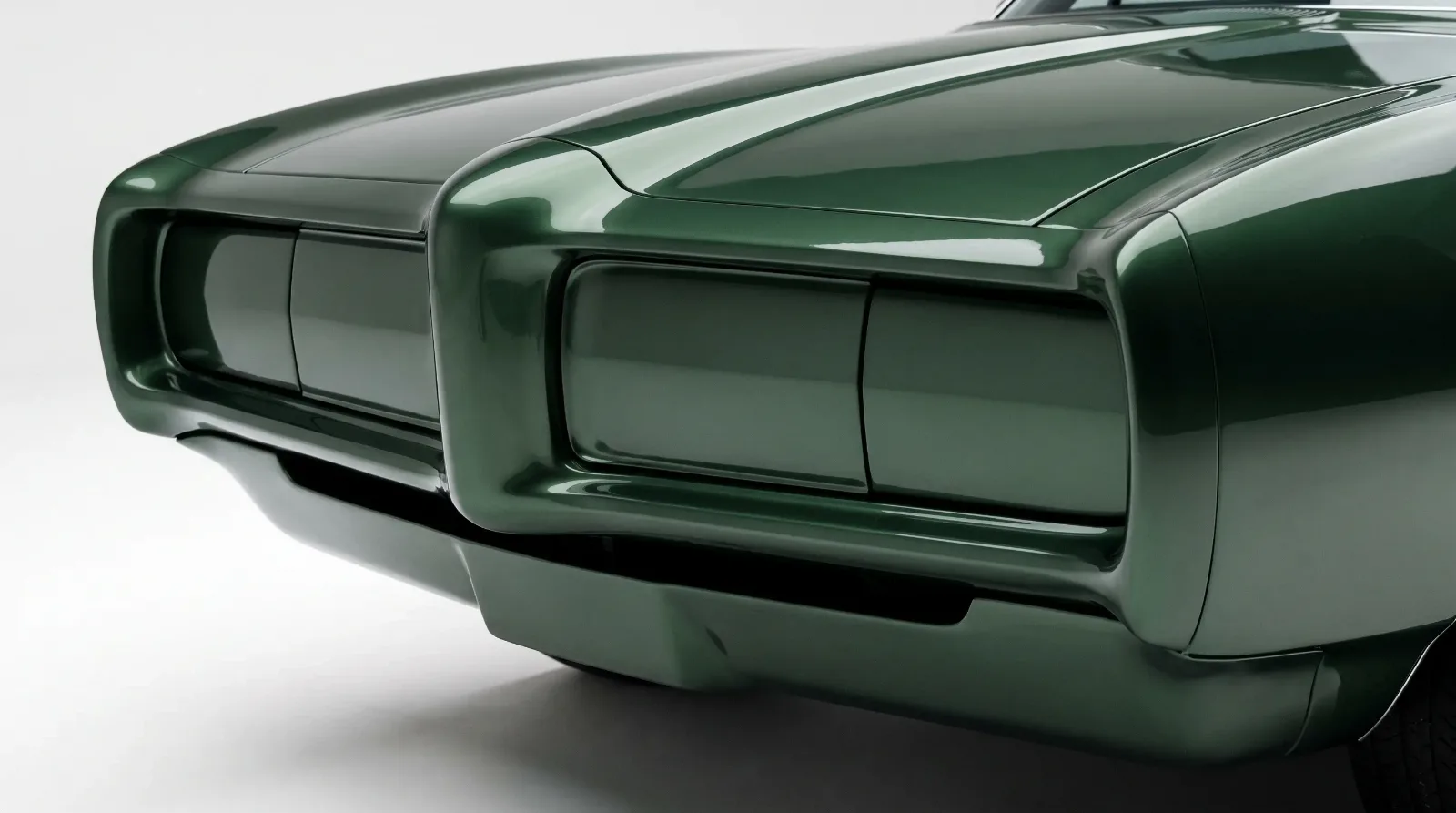
This campaign sat inside a much larger strategic bet Pontiac was making across the entire GTO line during the hidden-headlight GTOs generation, where the Endura nose itself was as much a styling risk as the advertising was a marketing risk. Both decisions shared the same underlying logic: Pontiac believed the future of the brand depended on winning over buyers who hadn't grown up loyal to any particular make, buyers whose taste was still forming and who could be won with genuine boldness rather than tradition. That's a harder pitch than it sounds, because it required the company to abandon some of the visual and cultural language that had worked for its older, more established customer base.
The car in the photograph had its own story to tell
Look closely at that ad, past the young man leaning against the fender, and the car itself is doing quiet cultural work too. The Endura nose, still new in 1968, photographed differently than a chrome bumper would have. It caught light without the harsh glare of polished metal, sat flush and organic against the fender line in a way that made the whole front end read as sculpted rather than assembled. Art directors shooting these campaigns understood that the material itself communicated something modern, something forward-looking, even to a reader who couldn't have named why the car in front of them looked different from the GTOs their older cousins or fathers might have owned a few years earlier. For anyone curious about that material choice on its own terms, read on covers where Endura came from and why Pontiac committed to it so early.
That pairing wasn't a coincidence. A styling department willing to gamble on a new bumper material and a marketing department willing to gamble on unconventional advertising imagery were both operating from the same underlying philosophy inside Pontiac at the time: the old rules about what a respectable American car looked like, and who it was sold to, no longer applied if the company wanted to keep growing. The car and the advertising around it were two expressions of a single, coordinated bet on a changing customer base.
The gamble worked, at least for a while. The GTO became genuinely aspirational to a generation of buyers who might otherwise have looked at Ford or at imports for their first serious performance car purchase. But cultural marketing ages differently than mechanical engineering does. A well-built Endura bumper still functions exactly as intended decades later. An advertising campaign built around a specific cultural moment becomes a historical artifact, interesting precisely because it captures an anxiety and an optimism that belonged to one narrow slice of time, one where a car company believed a photograph of a young man's confidence could sell a machine as effectively as a spec sheet ever could.
"She told me she kept a folded page from that magazine in her wallet for two years before she ever sat behind the wheel of the car in it. Some advertising sells a product. That kind sells a version of yourself you haven't met yet."
Nora Beckett
Looking at that ad today, decades removed from the cultural moment that produced it, what stands out isn't the styling of the car at all. It's how clearly Pontiac understood, in that specific year, exactly who they were trying to become, and how much they were willing to risk on a single photograph to get there.
Sources and notes
Related Reading

About the author
Nora Beckett
Automotive features writer and photographer who tells the human stories behind the cars, from show fields to cross-country road trips.
Related Listings - Pontiac GTO



Comments
Be the first to comment on this article.