
A #2 car with a thin paper trail isn't a #2 car when the check clears. It's a #3 with a good story, and nowhere does that matter more than with the 1969 Charger Daytona, a car whose exact production count still gets argued at swap meets and auction previews because the factory paperwork and the surviving-car counts don't line up as neatly as buyers want them to.
Car Features
6 min read
How Many Charger Daytonas Were Built
Roughly 503 Charger Daytonas left the factory in 1969. Fewer than that survive, and that gap is where value gets decided.
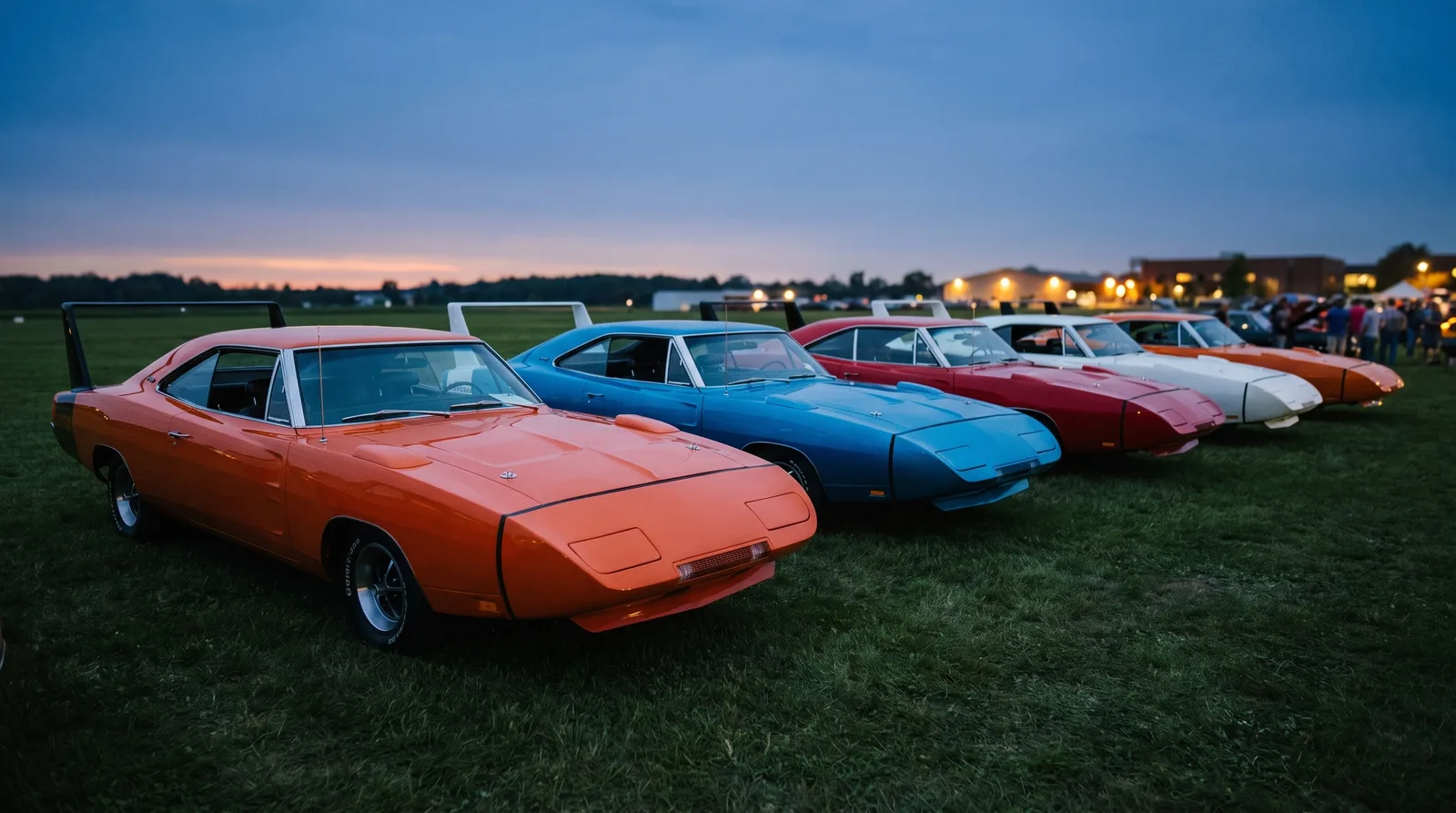
The commonly cited figure is that Dodge built 503 Charger Daytonas for the 1969 model year, a number tied directly to NASCAR's homologation requirement of the era. That rule demanded a minimum production run, generally understood at around 500 units, before a body configuration could be legalized for competition. Dodge built just enough to clear that bar and no more.
The 500-unit rule shaped everything about the car
NASCAR's homologation standard existed to stop manufacturers from building one-off aero specials purely for racing. If a manufacturer wanted to run a nose cone and rear wing on Sunday, it had to sell a real production version to real customers. Dodge treated the requirement as a floor, not a target. There was no business case for building thousands of a car this specialized, this expensive to produce, and this strange looking to a 1969 buyer used to a standard Charger's cleaner lines.
Production records from Chrysler point to 503 as the figure nearly every researcher lands on, and it is the number quoted by owner registries and the marque histories alike. The figure sticks precisely because the total is under a thousand cars worldwide, where every single unit matters and any discrepancy gets chased down rather than shrugged off.
Engine mix inside that production run
The Hemi cars are the ones that dominate headlines, but at 70 units out of 503 they were always the minority build within an already scarce car. The other 433 Daytonas left the factory with the 440 Magnum, a combination that was more affordable to option and easier to live with day to day. Buyers paying the Hemi premium in 1969 were a small subset even within a run this small, which is part of why authenticated Hemi Daytonas carry such a steep premium over their 440 siblings today.
Color and trim distribution adds another layer. Certain exterior colors show up disproportionately in surviving-car registries, not because Dodge built more of them, but because some colors and combinations simply had better survival rates through decades of neglect, resale, and the occasional barn discovery. That skew makes raw color-count claims unreliable unless they're tied to a documented factory build sheet.
| Metric | Approximate figure | Note |
|---|---|---|
| Total 1969 Daytona production | 503 units | Tied to NASCAR homologation minimum |
| 426 Hemi cars | 70 units | Minority of total run |
| 440 Magnum cars | 433 units | The only other factory engine; no factory Six Pack |
| Estimated surviving cars today | A few hundred | Attrition from racing, rust, and modification |
Why survivor counts are lower than production counts
Not every Daytona built in 1969 is still around, and that matters as much as the original production figure when you're trying to value or authenticate one today. A meaningful number were used as intended, as fast cars, and got wrecked, raced, or simply worn out through the 1970s when a used aero Charger was just a used muscle car nobody was paying collector prices for. Some were parted out. Some rusted away in climates that were not kind to unibody construction.
What that means practically is that the population of Daytonas available to the collector market today is meaningfully smaller than 503, and every surviving example carries a documented or undocumented history that directly affects its value. That's why the Charger Daytona story and the production numbers behind it can't really be separated. The rarity isn't abstract. It's the reason a genuine, documented car commands the kind of money it does.
"A #2 car with a thin paper trail isn't a #2 car when the check clears. It's a #3 with a good story, and the appraisal has to say so. With a car this scarce, the paperwork is worth more than the paint."
Marcus Feld
What the paperwork actually looked like at the time
A Chrysler broadcast sheet from 1969 was a working document, not an archival one. It rode inside the car during assembly, telling line workers which options, colors, and driveline combinations to install, and it was never designed to survive fifty years as a collector's authentication tool. Some sheets got tossed once the car left the plant. Others stayed with the vehicle through a chain of owners who had no idea the paper in the glovebox would eventually be worth arguing over.
That casual attitude toward documentation in period is exactly why today's production figures carry an asterisk. Nobody at Chrysler in 1969 was thinking about a Daytona registry that would matter in 2026. They were thinking about clearing a homologation requirement and moving on to the next model year, which is a very different set of priorities than the ones collectors bring to this car now.
Why the numbers still get disputed
Chrysler's record-keeping from the period was not built with future collectors in mind. Build sheets were internal production documents, not marketing materials, and some records were lost, incomplete, or contradicted by other sources within Chrysler's own archives. Add in decades of cars being bought, sold, restored, and sometimes recreated from parts, and you get a market where the "official" production number is treated as a strong estimate rather than an audited fact.
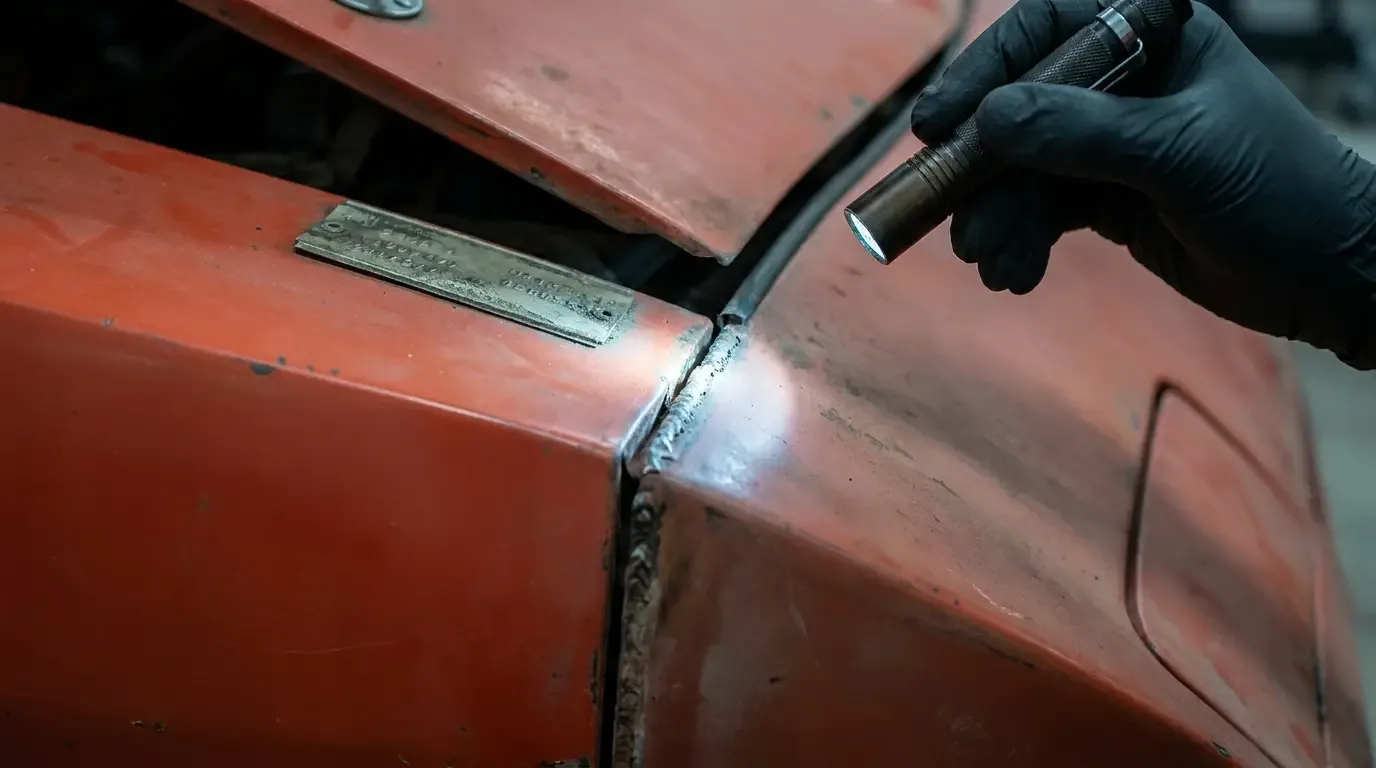
Registries maintained by dedicated Daytona and Superbird owner groups have done more to pin down real numbers than the factory paperwork ever did, cross-referencing VINs, broadcast sheets, and known ownership chains. Even with that work, researchers occasionally find a car that doesn't fit cleanly into the accepted count, which is exactly why serious buyers verify a specific VIN rather than leaning on a general production figure. If you want to dig into how that verification actually works on an individual car, read more here for a breakdown of what separates a documented Daytona from a clone.
The takeaway for anyone shopping this segment is straightforward. The production number tells you how rare the model is in theory. It does not tell you whether the specific car in front of you is one of those genuine units, and that distinction is where real money gets made or lost.
Sources and notes
- Dodge Charger Daytona - Wikipedia - confirmed 503 total built and 70 with the 426 Hemi.
- autoevolution - Numbers-matching 1-of-503 Daytona - confirmed the 503 figure and the Hemi/440 split.
- Ultimate Muscle Car - 1969 Daytona engine options - confirmed only the 440 Magnum and 426 Hemi were factory engines; the 440 Six Pack was not offered.
- American Muscle Car Museum - 1969 Daytona - corroborated the 70 Hemi / 433 440 Magnum breakdown.
- Classic Industries - The Mopar Wing Cars - confirmed the homologation minimum tied to the 503-car run.
Related Reading
Have a
Dodge Charger
for Sale?
Reach thousands of serious classic car collectors across the US.
Sell It Here →
Are You a Classic Car Dealer?
List your full inventory and connect with targeted classic car buyers.
Join as a Dealer →
#homologation
#muscle car values
#1969 dodge charger
#Mopar rarity
#Charger Daytona production
#Hemi Daytona

About the author
Marcus Feld
Accredited collector-car appraiser who reads the market through hammer prices, condition tiers and risk.
Related Listings - Dodge Charger
Comments
Be the first to comment on this article.