Everybody at the club had a theory until somebody pulled the paperwork, and just like that the bench-racing was over. That's how it goes every time a "new" Charger Daytona surfaces at a swap meet or a regional show, somebody swears it's the real thing, somebody else swears the nose cone looks wrong, and the argument only ends when a VIN gets run and a fender tag gets read properly.
With values on genuine 1969 Dodge Charger Daytona cars sitting well into six and seven figures, the incentive to build a convincing clone or reproduction has never gone away. Some of these cars are honest tribute builds, sold as such. Others get passed off as original, and that's where a buyer needs to know exactly what to check before money changes hands.
Start with the VIN, not the paint
Every genuine Charger Daytona carries a VIN that identifies it as the specific Daytona body style, not a standard Charger that's had a nose cone and wing bolted on later. The VIN's model code should reflect the Daytona designation directly, and it needs to match the fender tag, the trim tag, and any factory broadcast sheet or build sheet that survives with the car. If the VIN reads as a standard Charger R/T or base Charger, no amount of correct-looking bodywork changes what the car actually is.
Cross-referencing the VIN against known Daytona registries maintained by dedicated owner clubs is one of the most reliable steps available to a buyer today. These registries have spent decades tracking known cars, ownership chains, and even chassis that were lost, wrecked, or believed destroyed. A VIN that doesn't appear anywhere in that record, on a car being sold as a genuine Daytona, is a reason to slow down, not necessarily proof of fraud, but a flag worth chasing.
The nose cone and wing tell their own story
Reproduction nose cones and wings have existed for decades, made to a high enough standard that visual inspection alone often isn't enough. What separates a real factory piece is the mounting hardware, the fitment tolerances at the fender seams, and in many cases the material composition of the fiberglass itself, which differs subtly between factory-produced pieces and aftermarket reproductions.
A car wearing a correct-looking nose cone on a chassis that was never actually built as a Daytona is still not a Daytona, no matter how good the fiberglass work is. This is the single most common way tribute cars get misrepresented, intentionally or otherwise, as the genuine article. The body modification can be flawless. The underlying VIN and factory documentation cannot be faked as convincingly, which is why serious buyers always work backward from the paperwork rather than forward from the bodywork.
| Check point | What to verify | Red flag |
|---|---|---|
| VIN | Matches Daytona-specific model code | VIN reads as standard Charger |
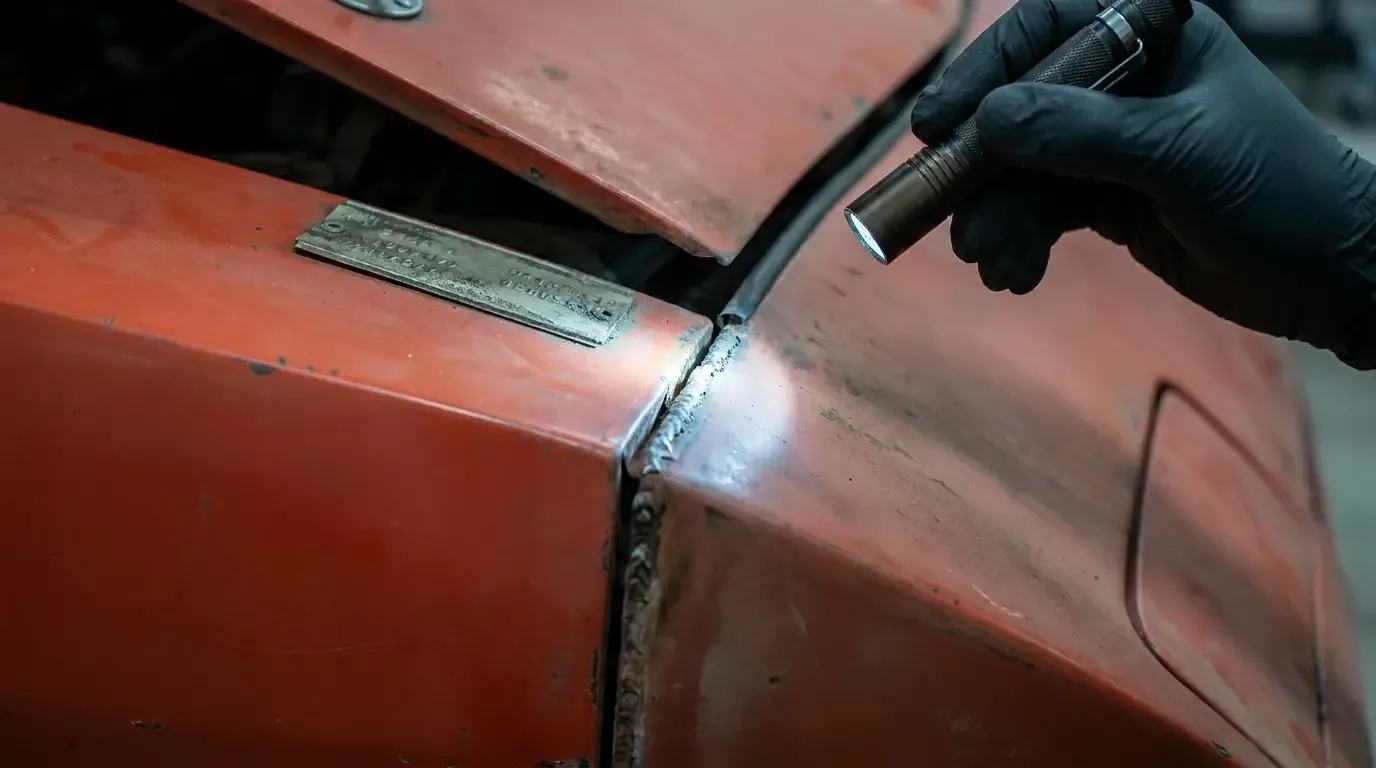
| Fender tag / trim tag | Sales codes align with aero package | Tag shows signs of being re-stamped or swapped |
| Broadcast sheet | Present or documented in prior sale records | No documentation, seller can't explain gap |
| Registry match | VIN appears in an established Daytona/Superbird registry | No record found, no explanation offered |
Documentation gaps are common, but they need explaining
Not every genuine Daytona has a complete paper trail. Cars get sold privately for decades, broadcast sheets get lost in a move, and a legitimate car can absolutely show up with incomplete records. That's normal for a car this old. What matters is whether the seller can explain the gap with a coherent ownership history, or whether the gaps conveniently line up with exactly the points where verification would be easiest to fail.
A seller who welcomes a third-party inspection, encourages a VIN check against public registries, and produces whatever documentation does exist is behaving the way an honest seller of a genuine car behaves. A seller who gets defensive about a VIN check, or who has an explanation ready for every single gap that happens to be unverifiable, deserves more scrutiny, not less.
"The build record matters. Not because it tells you everything, but because it's the factory's own account of what left the line, and that account is very hard to fake convincingly across every single document at once."
— Tom Ramirez
Engine and driveline numbers matching adds another layer
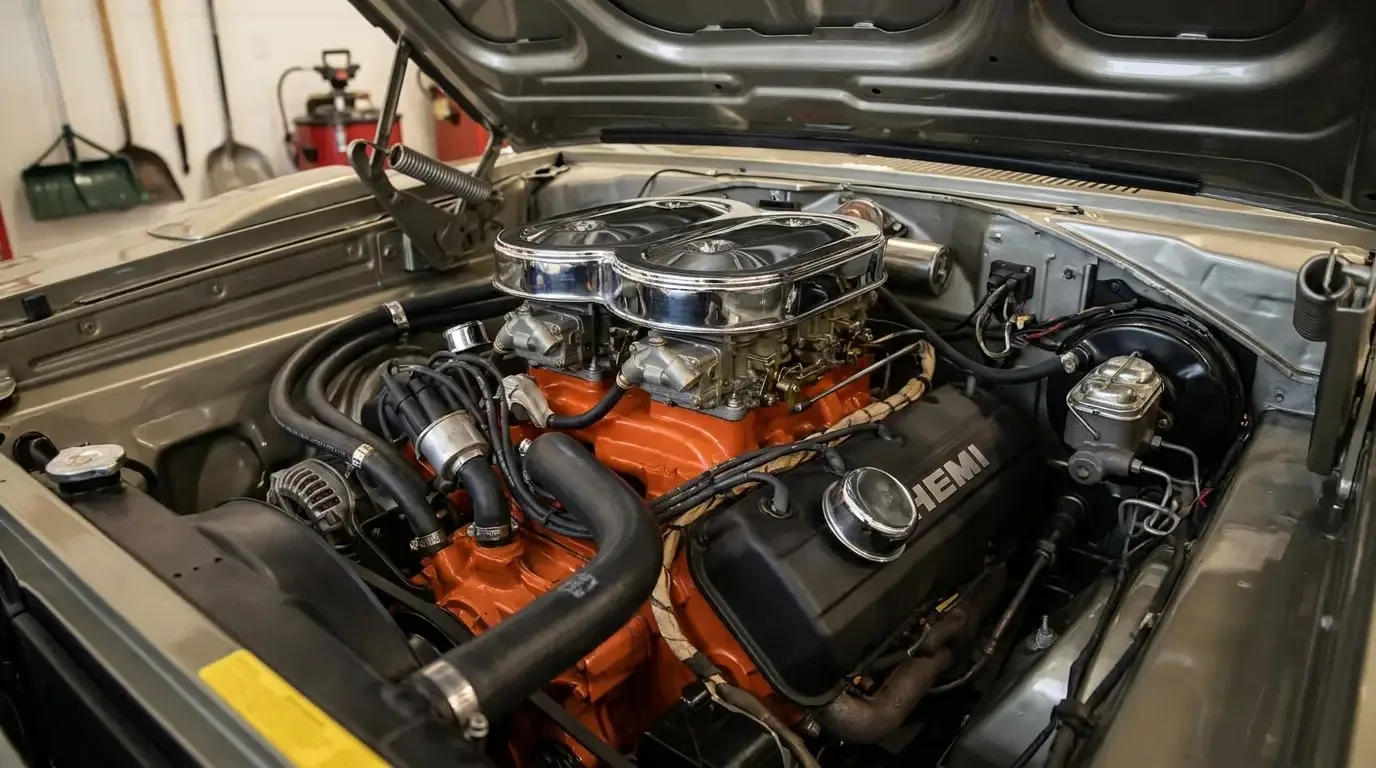
Beyond confirming the car itself is a genuine Daytona body, buyers chasing top dollar want the engine block casting numbers, transmission, and rear end to match factory records for that specific VIN. A genuine Daytona chassis with a replacement engine is still a real Daytona, but it's worth meaningfully less than a numbers-matching example, and the gap between those two outcomes is exactly the kind of detail covered in the Charger Daytona Engines story, which walks through how to read casting and stamping codes on these specific engines.
None of this verification work is exotic. It's the same due diligence any six-figure purchase deserves, just applied to a car instead of a house or a business, and it takes the same patience. Rushing a VIN check because a seller is pressuring for a quick decision is exactly how buyers end up owning an expensive tribute car instead of the genuine article they thought they were paying for. For the complete history of how these cars came to be this valuable, and for buyers ready to start looking at classic Dodge Chargers for sale, the rule stays the same either way: verify before you fall in love with the shape.
Sources and notes
- Dodge Charger Daytona - Wikipedia - confirmed the Daytona-specific body designation and the 503-car / 70-Hemi figures behind authentication.
- autoevolution - Numbers-matching 1-of-503 Daytona - example of how VIN, fender tag and broadcast sheet establish a documented car.
- Classic Industries - The Mopar Wing Cars - confirmed Creative Industries did the conversion, relevant to original vs. reproduction nose cones.
- RPM Productions - Daytona nose cone reproduction - confirmed original nose cones were 18-gauge sheet steel, the reference point for spotting reproductions.
- Hagerty - Dodge Daytona vs. Plymouth Superbird - background on why genuine cars command a premium over clones.