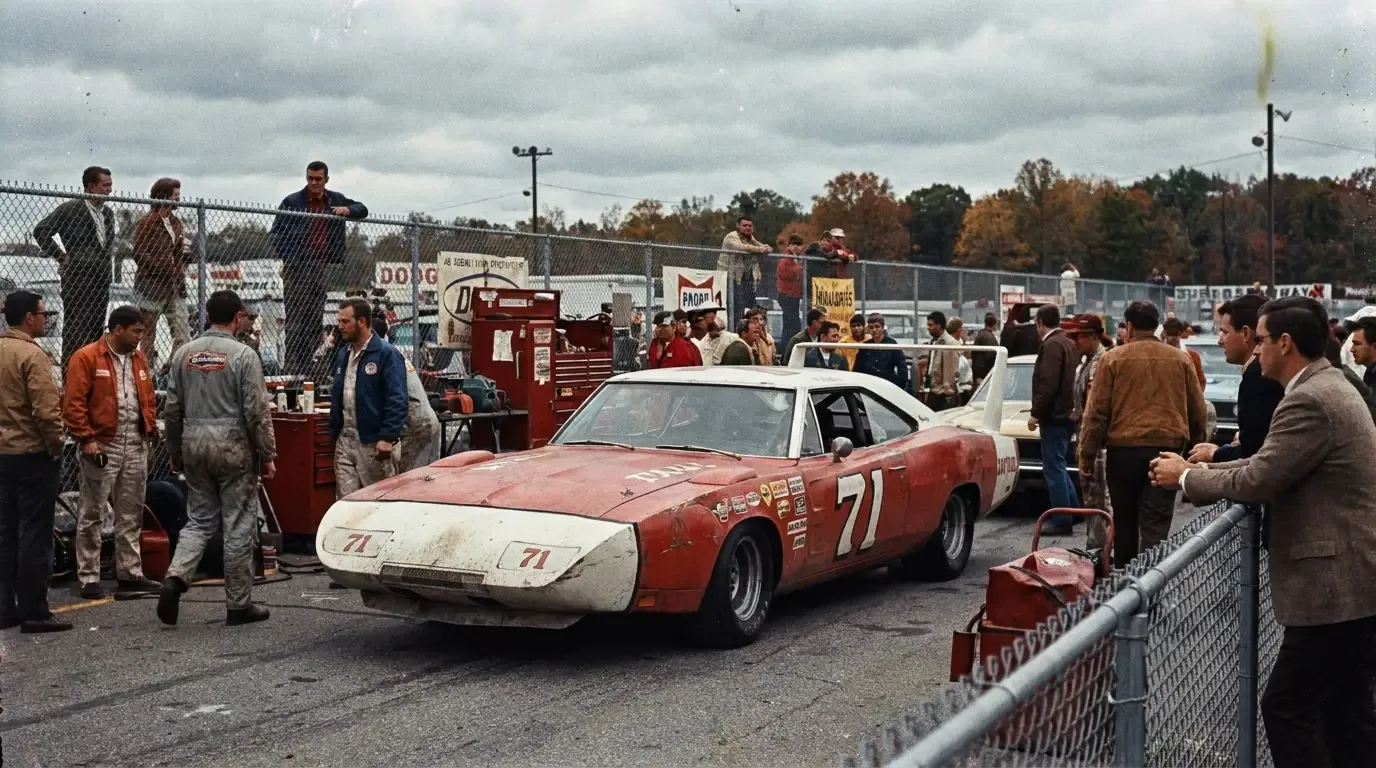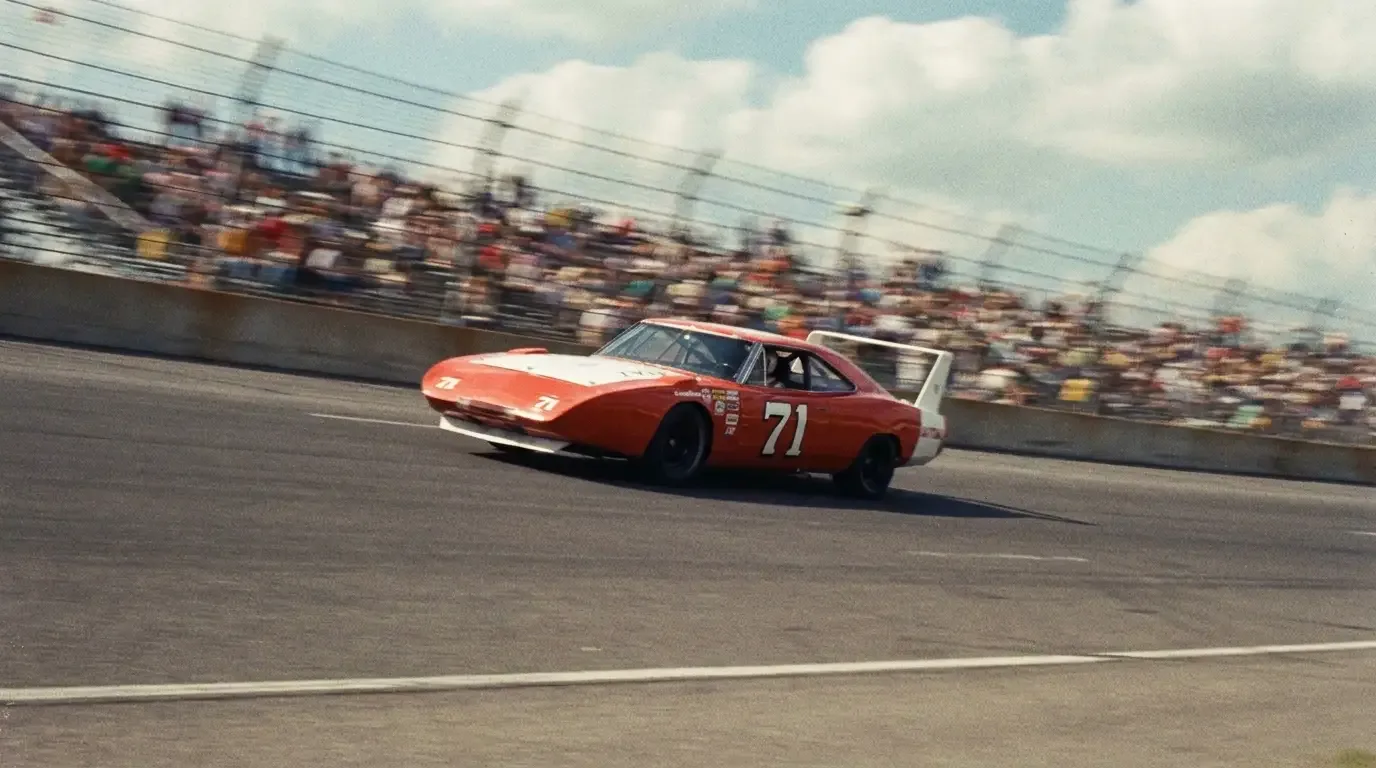
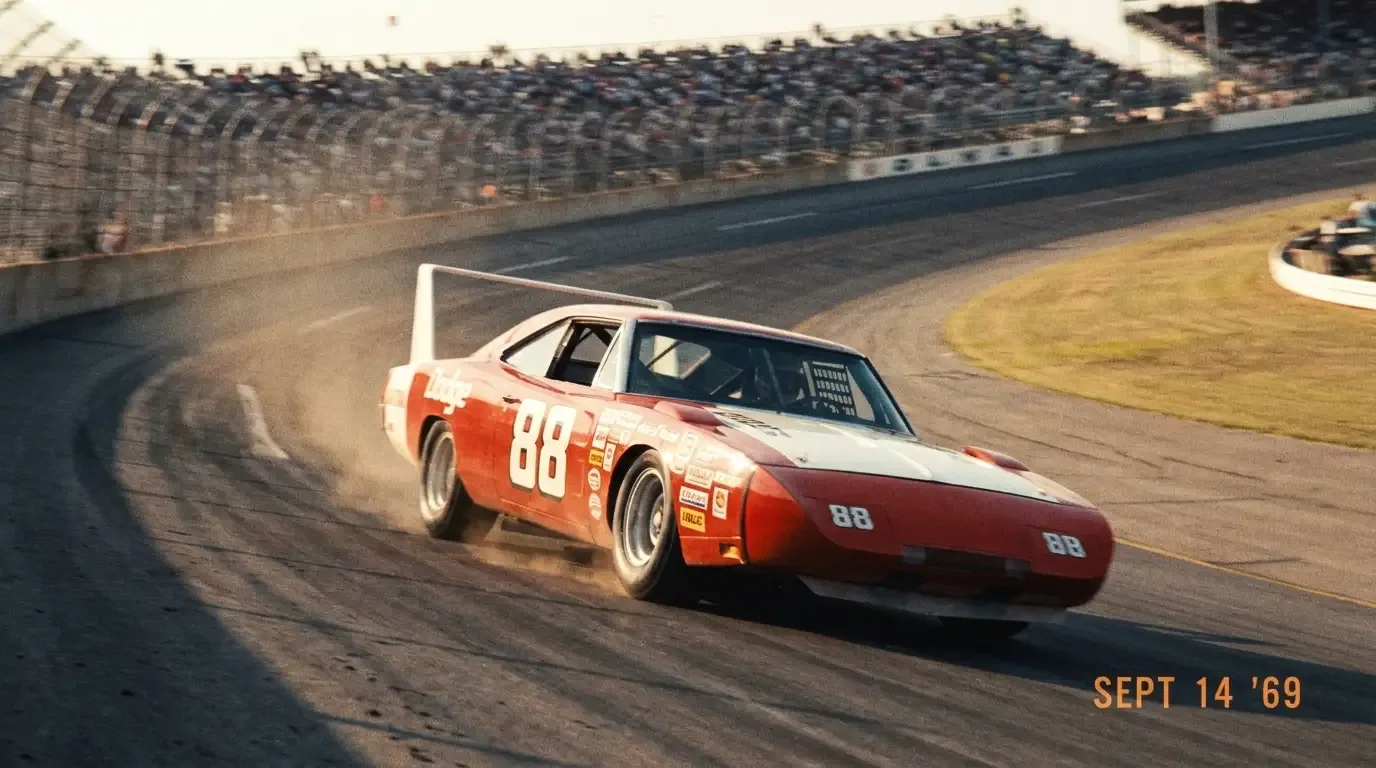
Charlie Glotzbach came off the fourth turn at Talladega in September 1969 with the speedometer reading a number nobody in stock car racing had seen before, and the front of his car looked like nothing that had ever left a Dodge dealership. There was an eighteen-inch steel nose cone where the grille used to be, and a wing on the back tall enough that a grown man could walk under it without ducking. People at the track laughed when they first saw it. They stopped laughing when the timing lights lit up.
That car was the 1969 Dodge Charger Daytona, and it exists because Dodge got tired of losing. The standard Charger was one of the best-looking cars Detroit built in the 1960s, but on a high banked superspeedway its handsome recessed grille and tunneled back window acted like a parachute and a hand brake. Ford and Mercury had figured out aerodynamics first, and they were beating Chrysler badly. The Daytona was the answer, and the story of how it came together is one of the strangest chapters in American racing.
Why the standard Charger could not win at speed
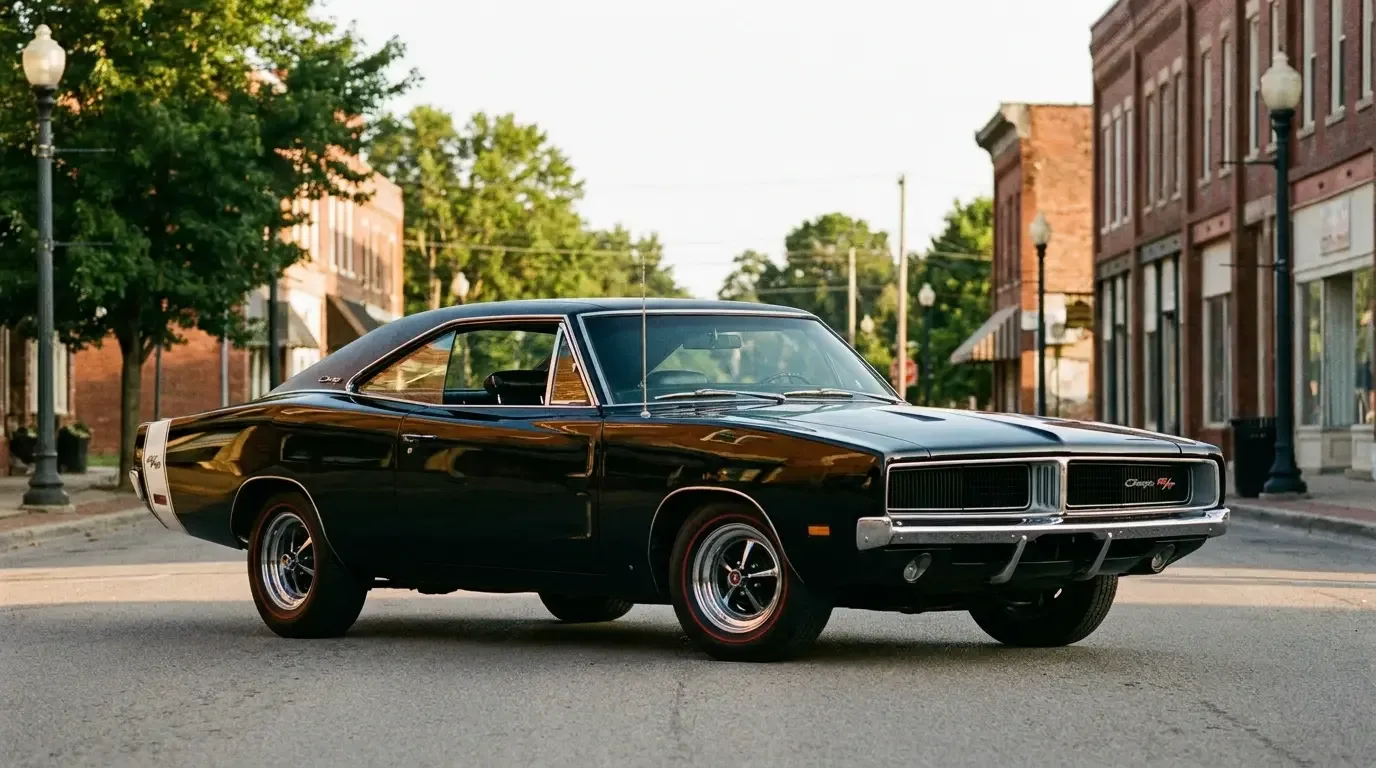
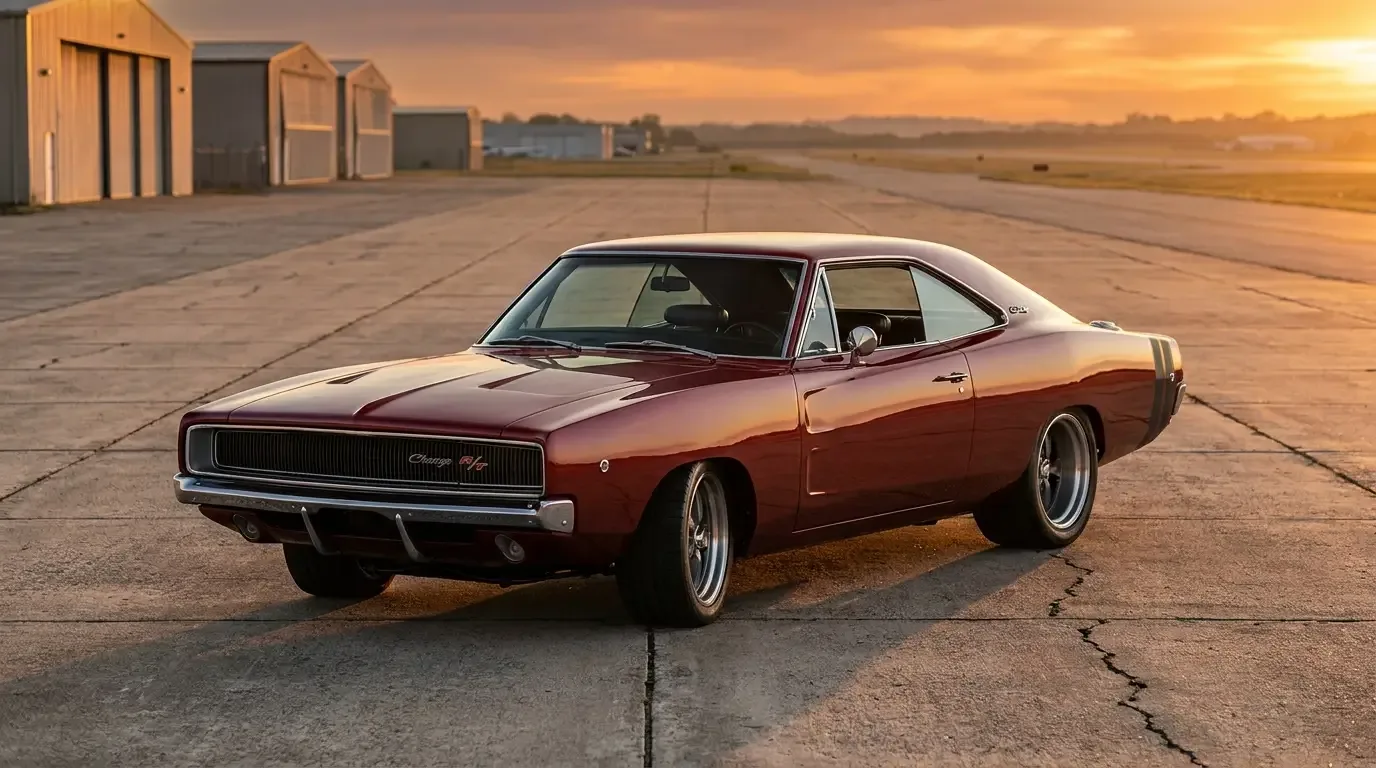
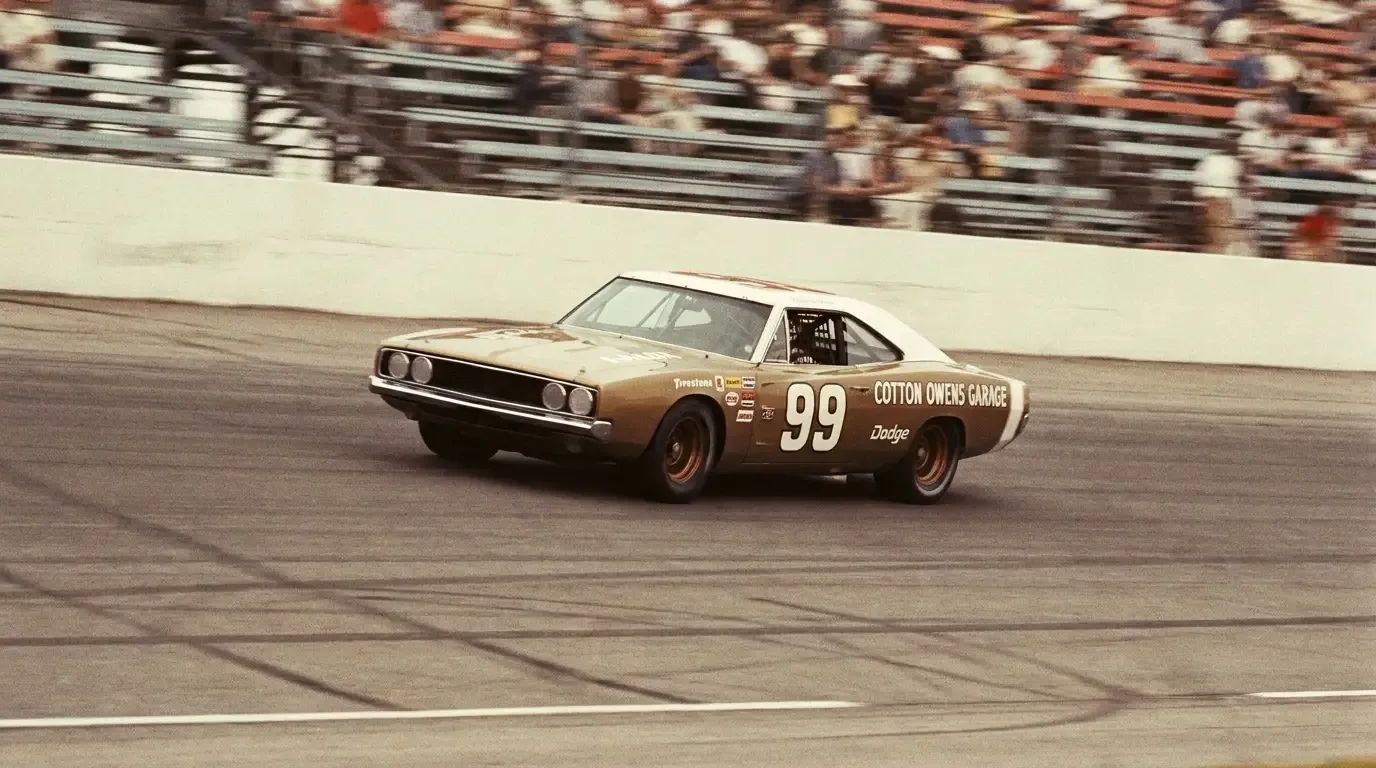
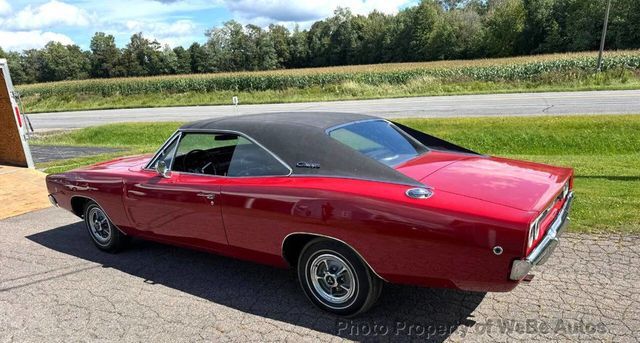
The regular 1968 and 1969 Charger looked fast standing still. That was part of the problem. The deeply recessed grille scooped air and lifted the front end, and the flying buttress roofline with its recessed rear glass created a low pressure pocket that dragged the tail down and made the car wander above 175 mph. On the short tracks it did not matter much. On the new breed of superspeedways being built in the South, it mattered enormously.
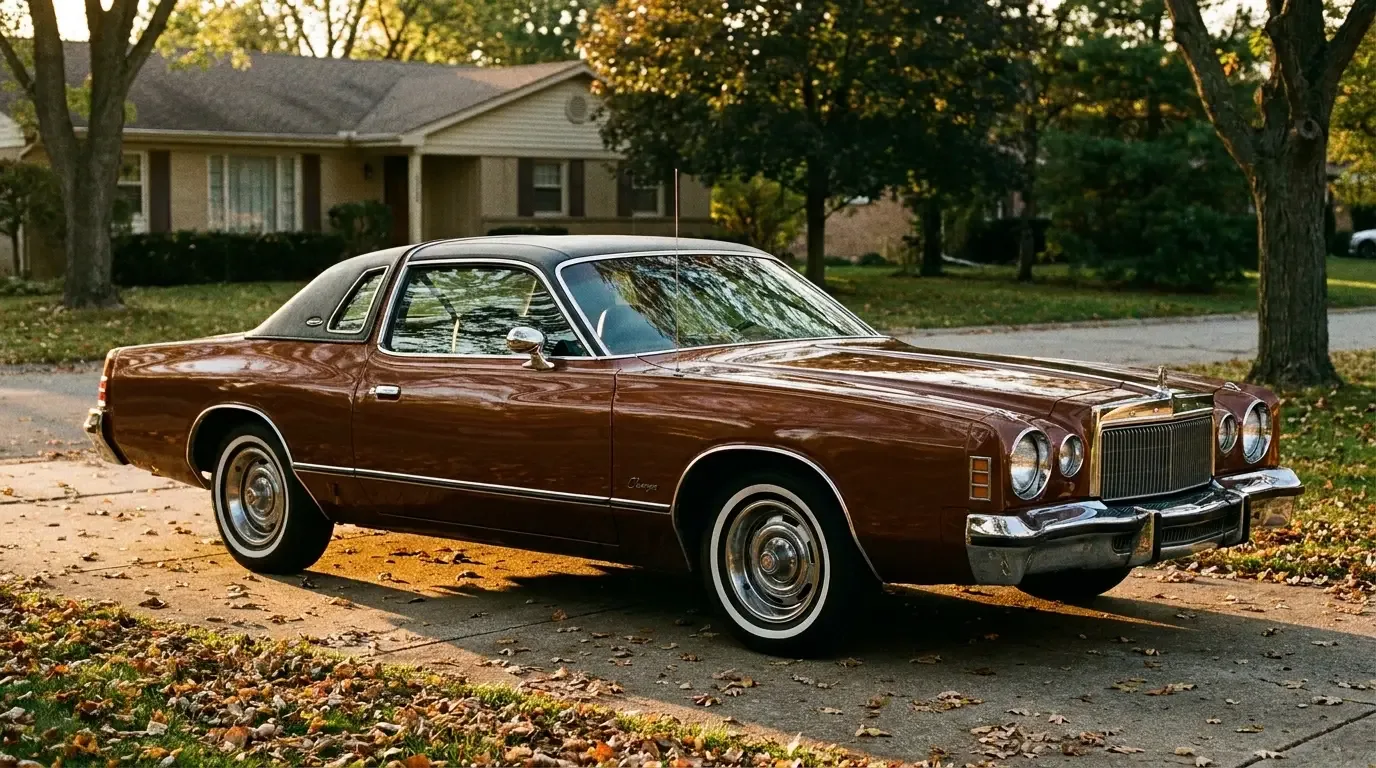
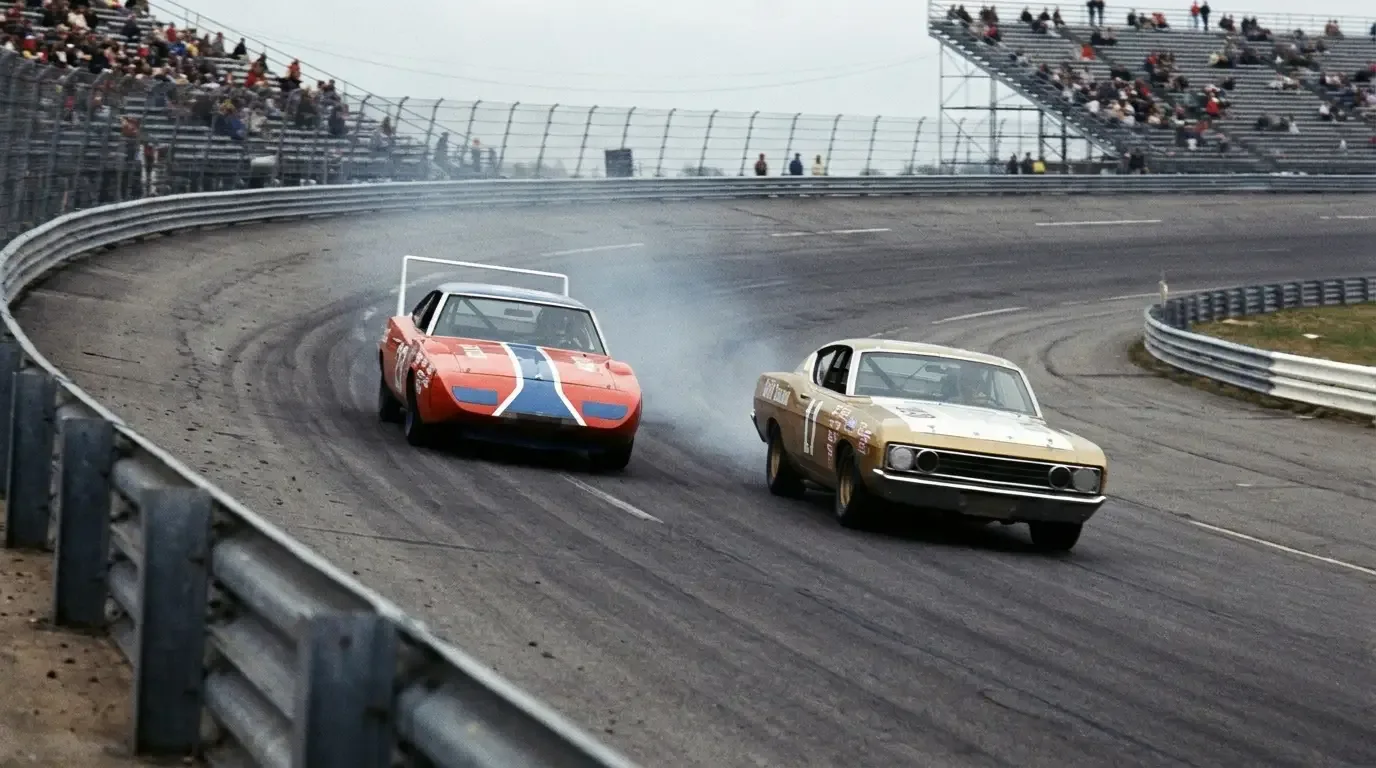
Dodge first tried a quick fix called the Charger 500, which flush mounted the grille and the rear window to clean up the airflow. It helped, but it was not enough. Ford's fastback Torino Talladega and the Mercury Cyclone Spoiler II were still faster, and Richard Petty had famously left Plymouth for Ford that season partly because Chrysler had nothing that could keep up. If you want the wider context of how these cars fit into the model's history, the Charger guide on Classic Cars Arena walks through the whole B-body run.
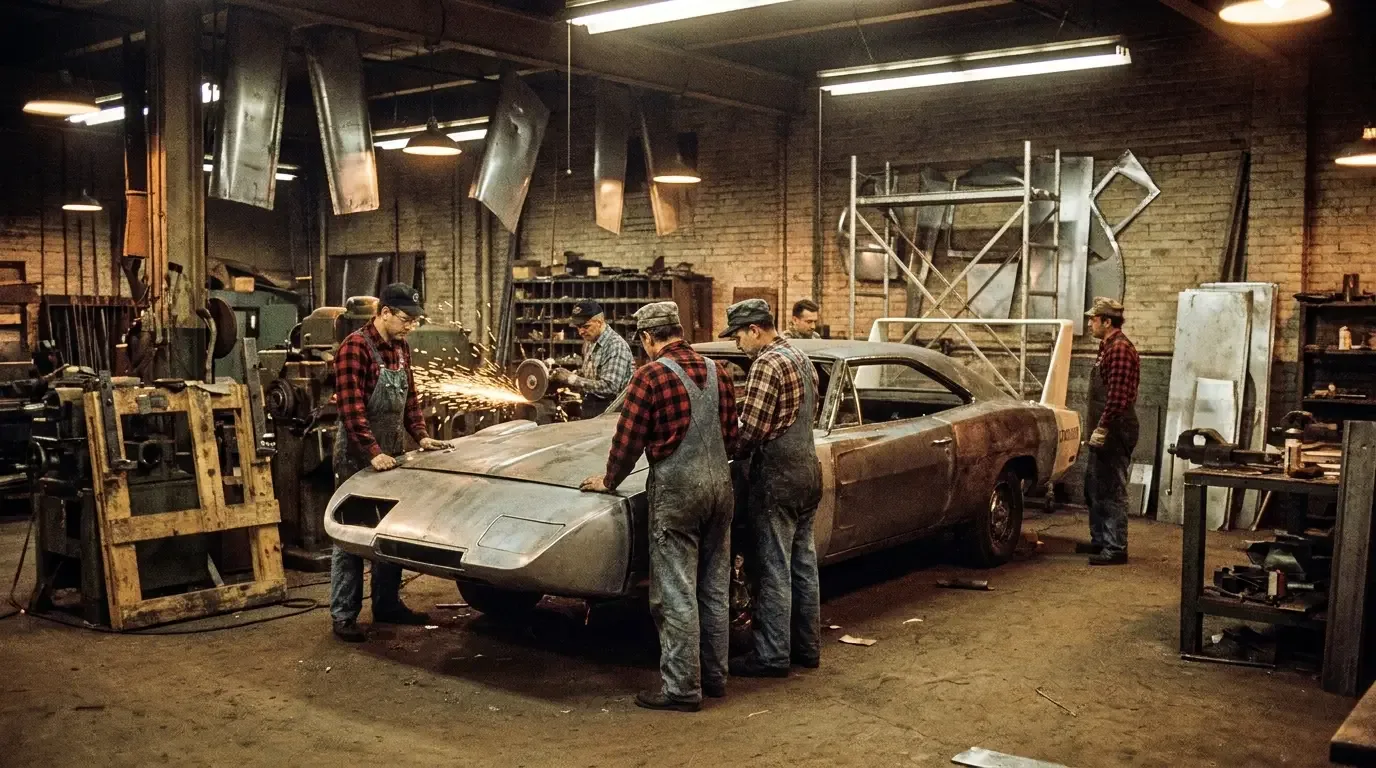
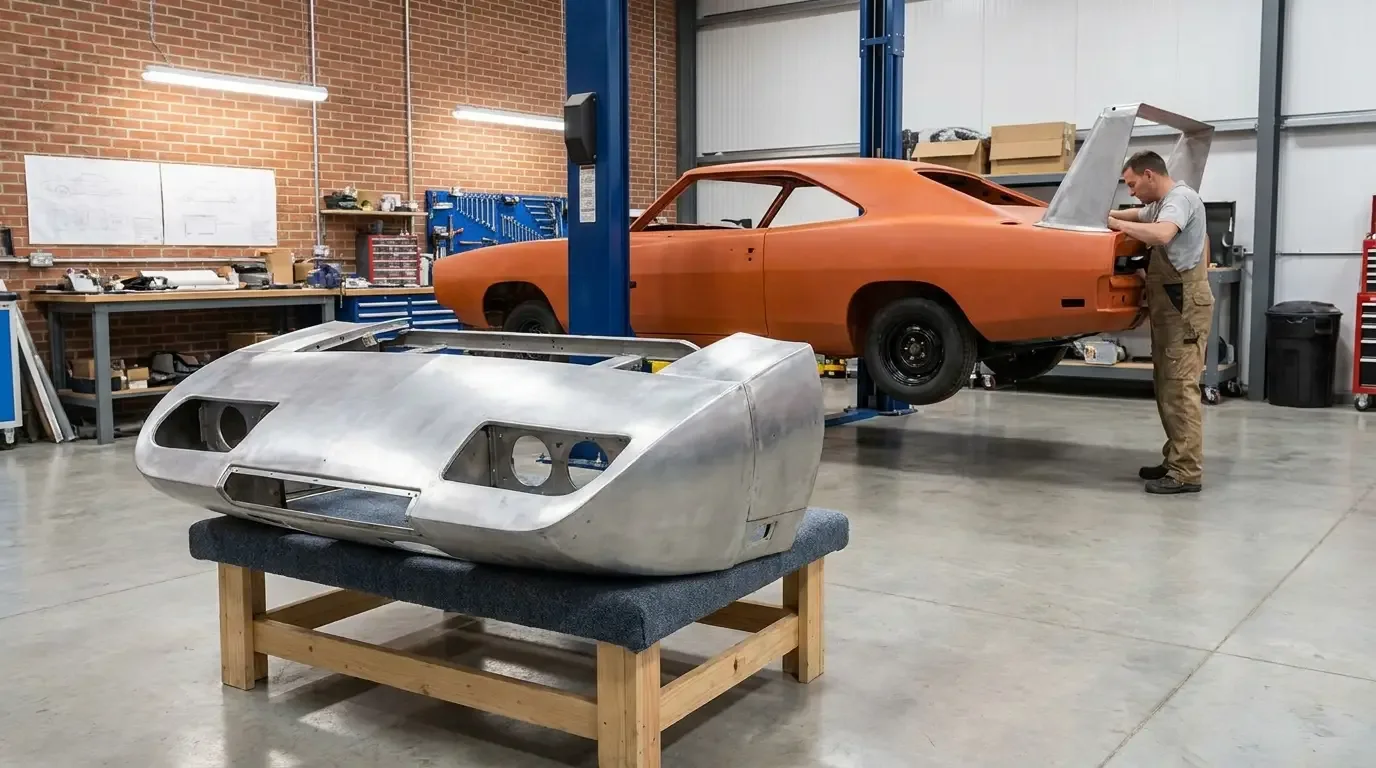
So Chrysler went to the people who actually understood air. Engineers borrowed thinking from the aerospace and defense side of the business, ran models in a wind tunnel, and came back with two additions that looked absurd and worked brilliantly: a pointed nose cone and a towering rear wing.
The nose cone and the wing that everyone remembers
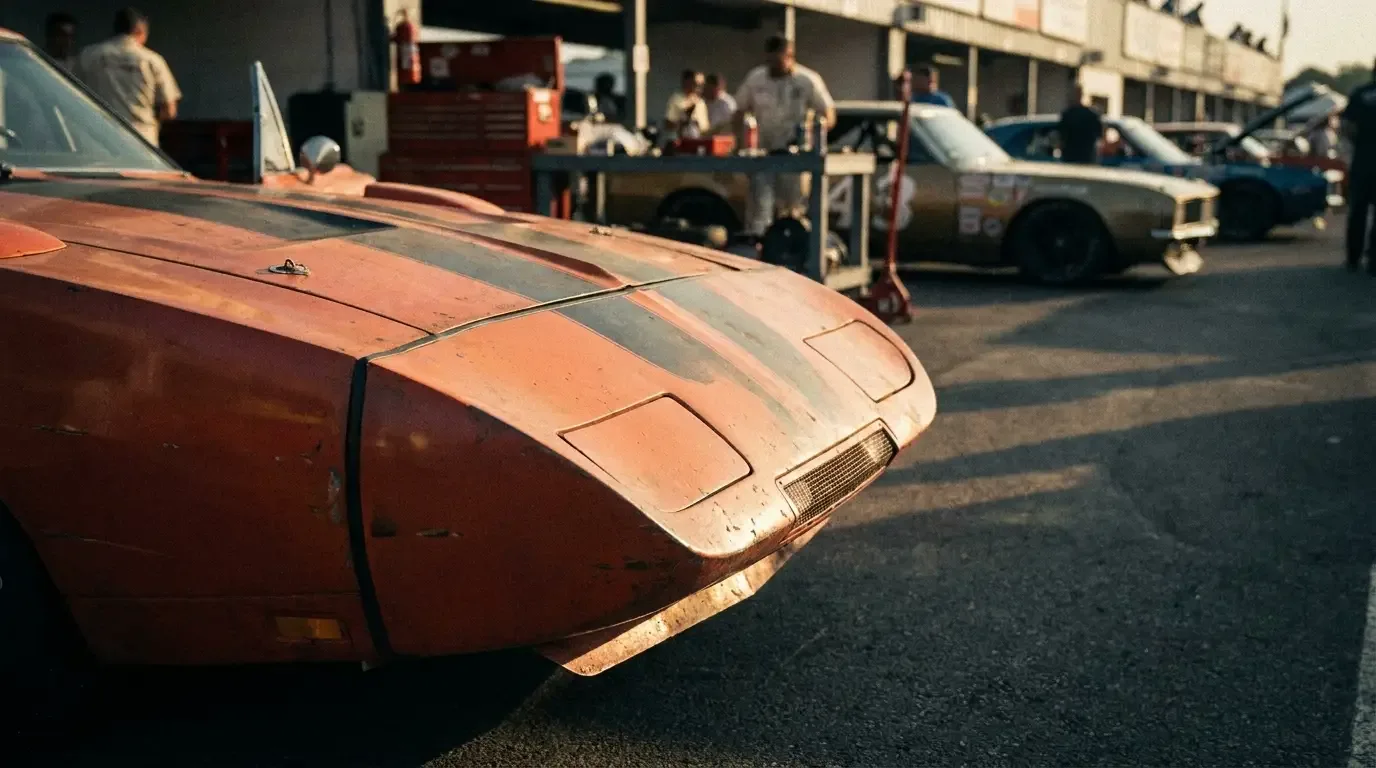
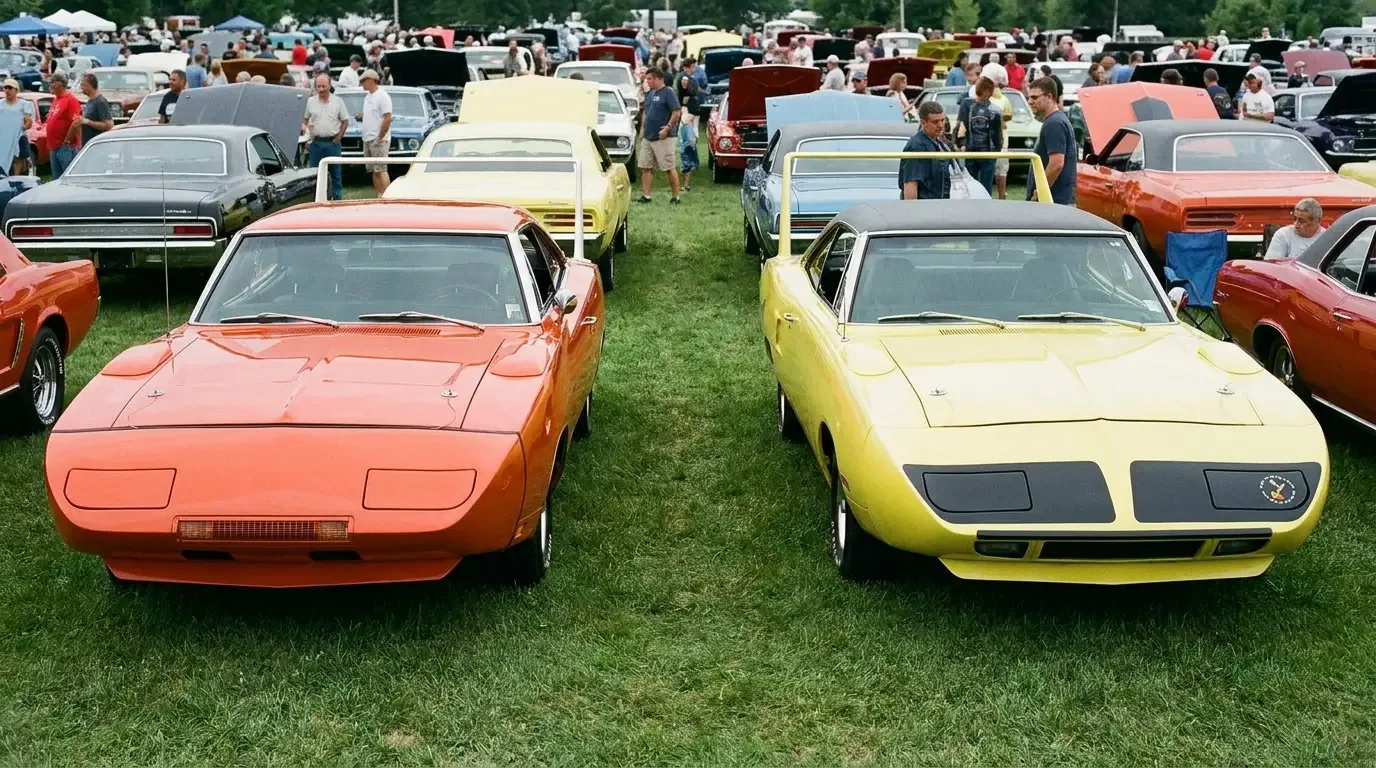
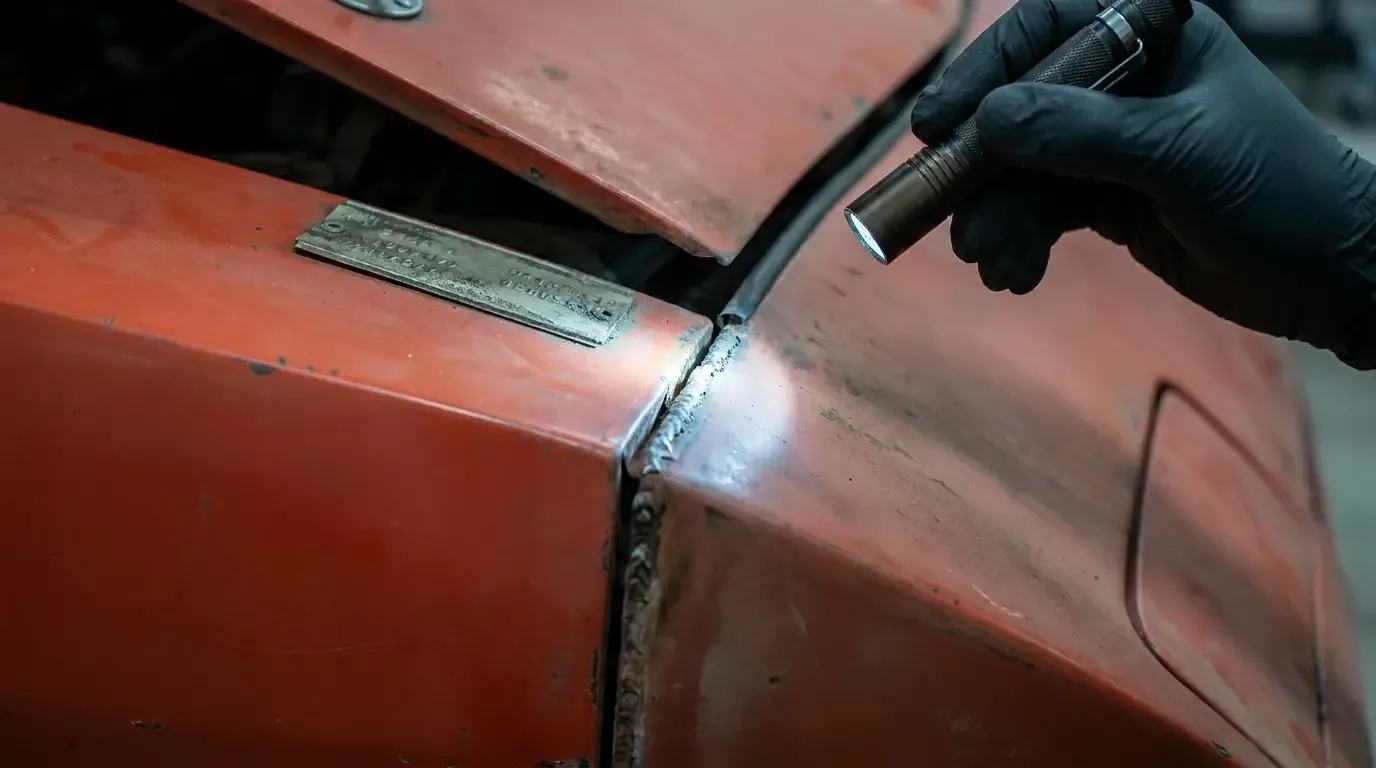
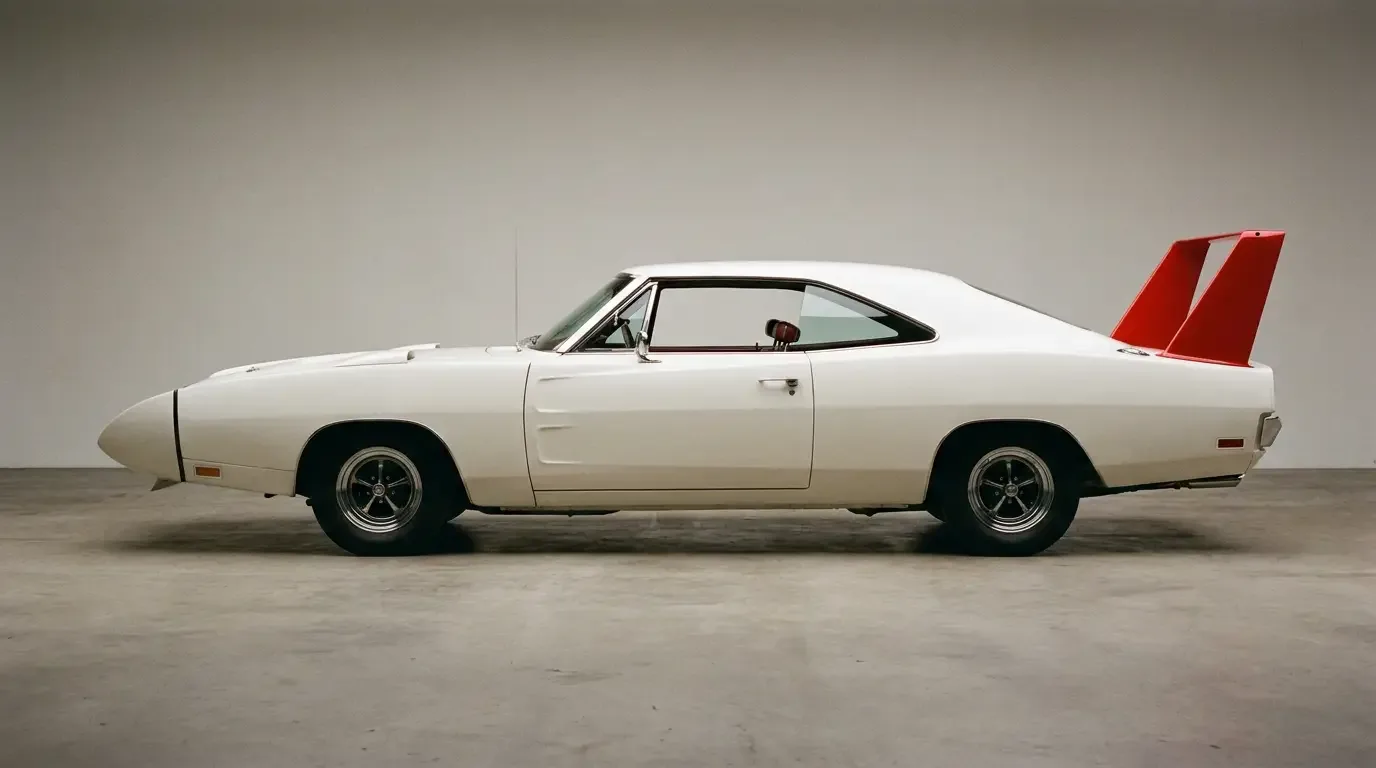
The nose was the easy part to understand. That long tapered cone, roughly eighteen inches of sheet metal grafted onto the front, turned the blunt Charger face into something that could knife through the air instead of shoving it aside. Pop up headlights hid inside so the shape stayed clean. It cut drag and, just as important, it reduced the front end lift that made the standard car so nervous at speed.
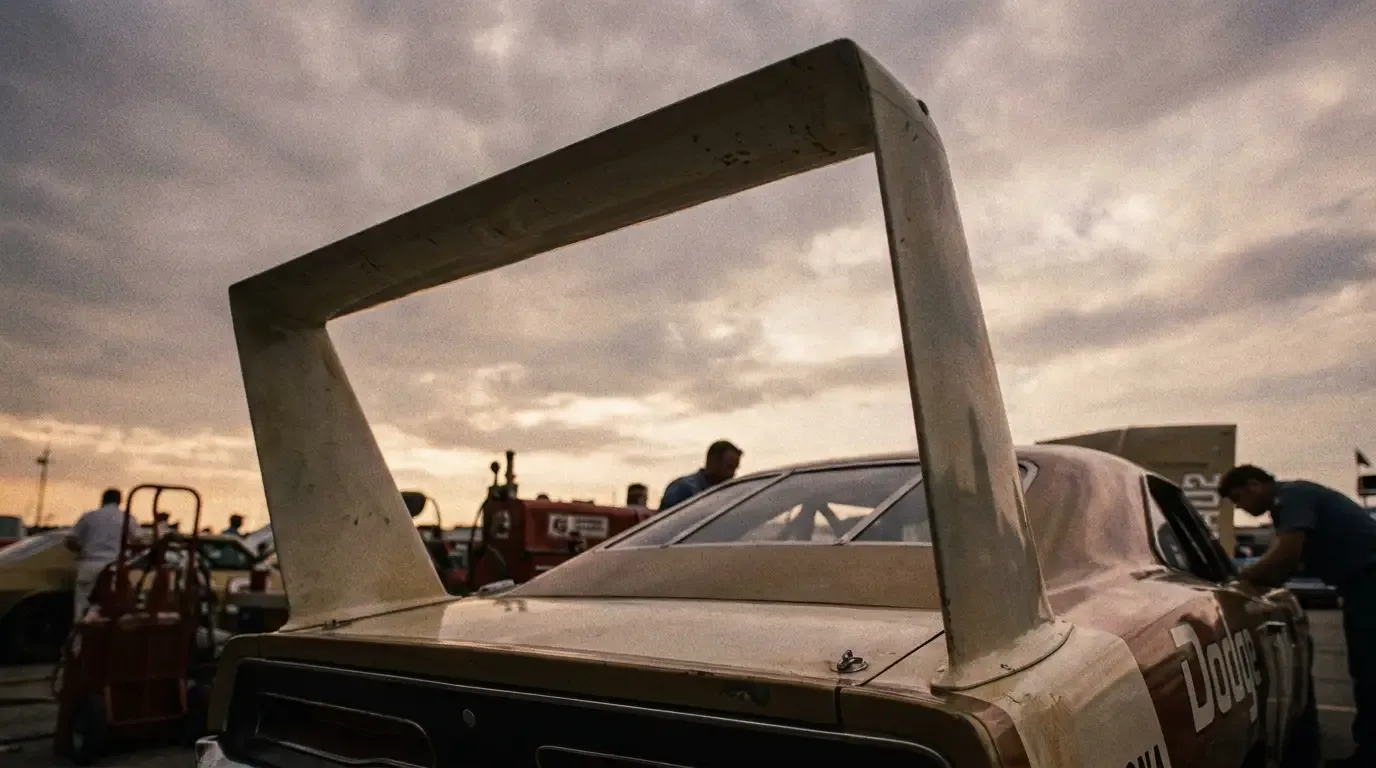
The wing is the part people argue about to this day. The common story is that it stood so tall, around twenty three inches, purely so the trunk could still open underneath it. There is truth in that, but the height was also doing real aerodynamic work. Up in the clean air above the roofline, away from the turbulence coming off the body, the wing could generate steady downforce to plant the rear tires. The uprights were canted and the wing angle was adjustable, and the whole assembly kept the back of the car glued down through the banking. It looked like a joke. It was engineering.
Homologation and the numbers Dodge had to build
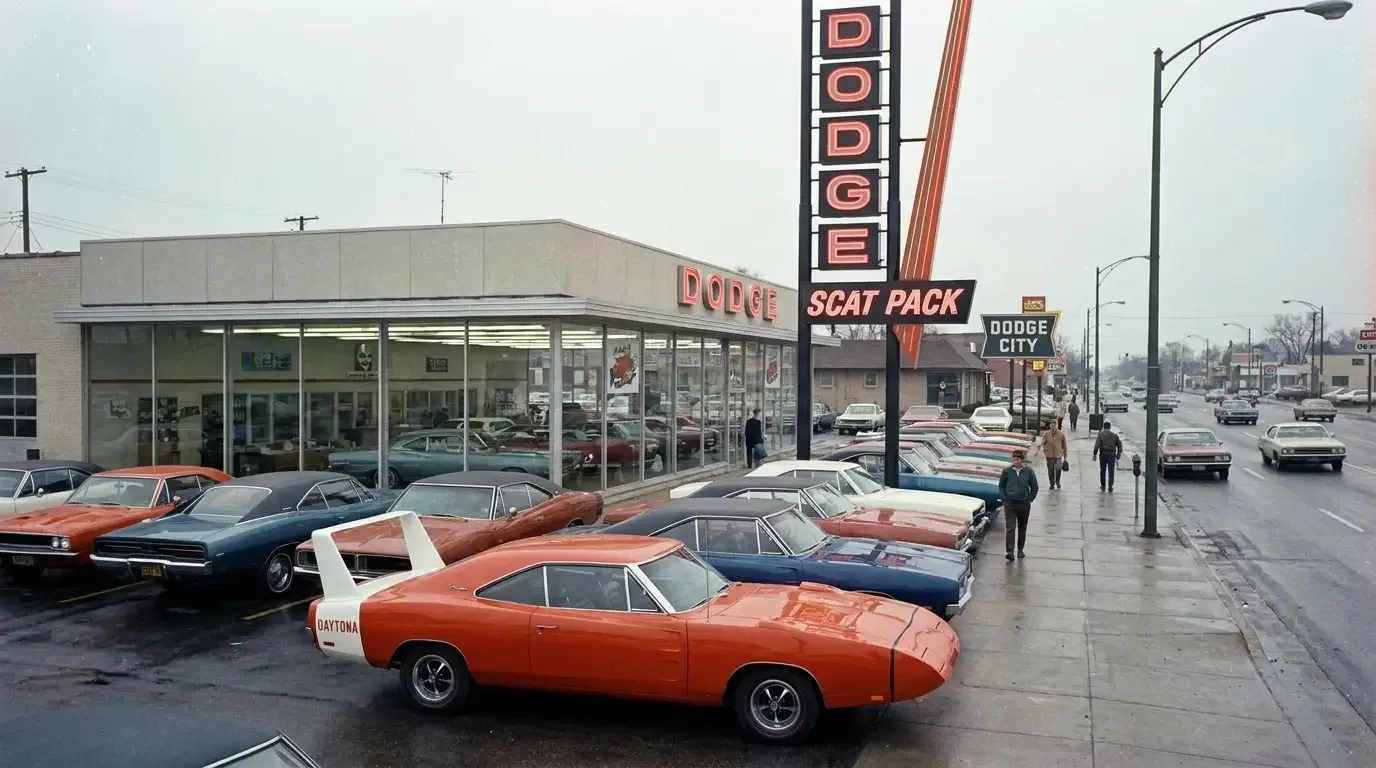
None of this would have been allowed to race if Dodge had only built a handful. NASCAR's rules required that a car be a production model, so the manufacturer had to build a minimum number for public sale before the racing version was legal. For 1969 that homologation figure meant Dodge produced roughly 503 street Daytonas, sent to dealers and sold to whoever was brave enough to park one in a suburban driveway.
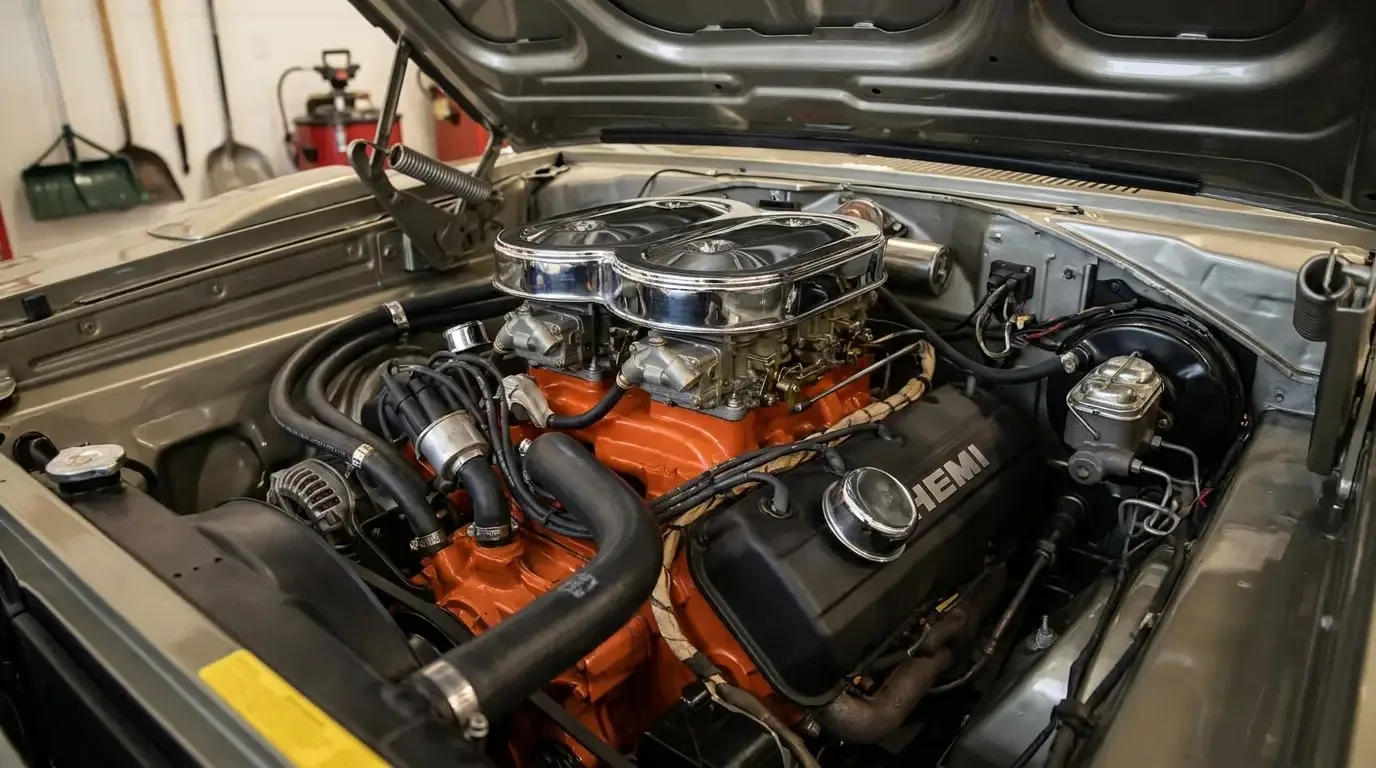
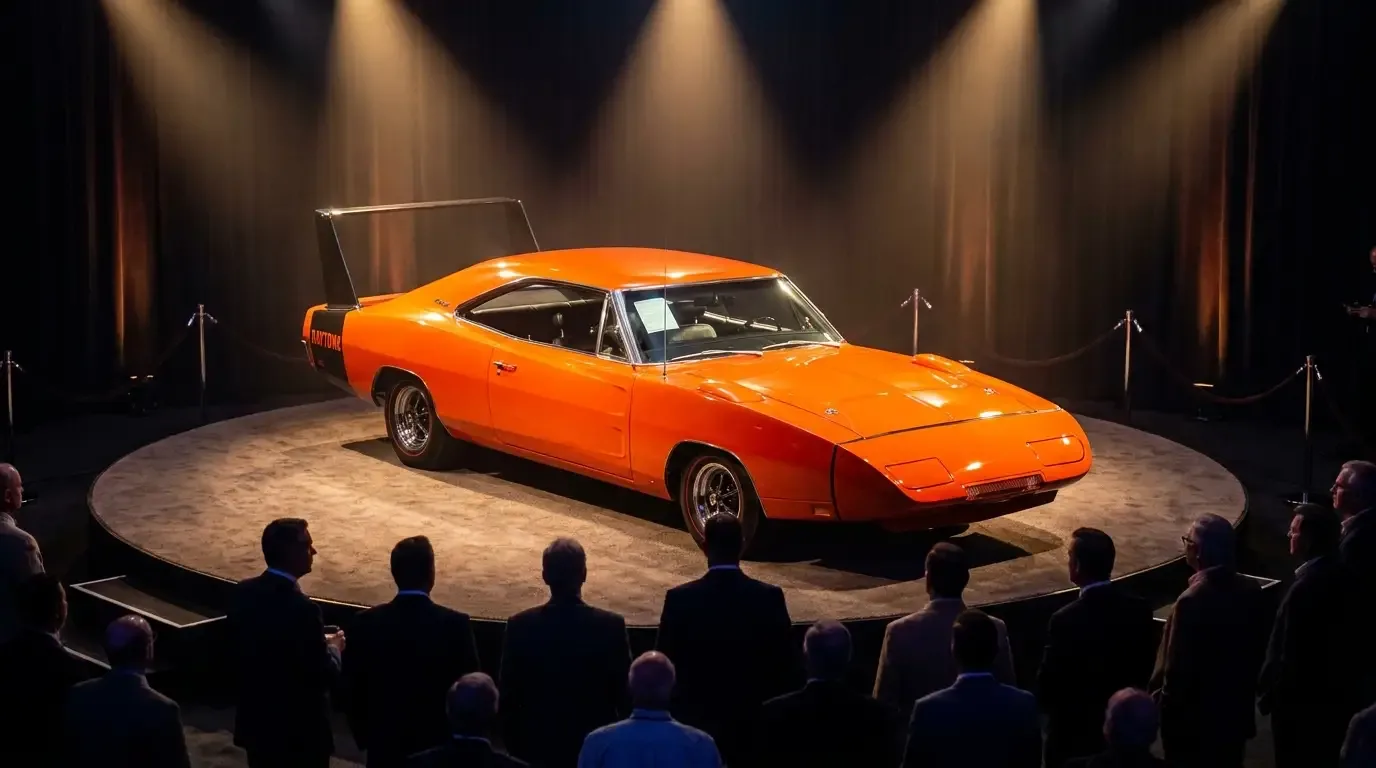
Those street cars are the ones that survive today, and they are the reason collectors care. Underneath the wild bodywork they were still Chargers, sharing the same platform and drivetrains as the cars covered in the Charger R/T story. Buyers could get the 440 Magnum as the standard engine, making 375 gross hp, or step up to the legendary 426 Hemi, rated at 425 gross hp, in a much smaller number of cars (just 70 of the Daytonas got the Hemi). The Hemi Daytonas are the crown jewels now, when one crosses an auction block it stops the room.
| Spec | 1969 Charger Daytona (street) |
|---|---|
| Body style | 2-door hardtop, aero nose + rear wing |
| Standard engine | 440 Magnum V8, 375 gross hp |
| Optional engine | 426 Hemi V8, 425 gross hp |
| Transmission | 4-speed manual or TorqueFlite automatic |
| Nose cone | ~18 in extended aero front |
| Rear wing height | ~23 in above decklid |
| Approx. production | ~503 street cars (70 with Hemi) |
| Top speed (race trim) | 200.447 mph, Talladega (Baker, 1970) |
Two hundred miles an hour at Talladega
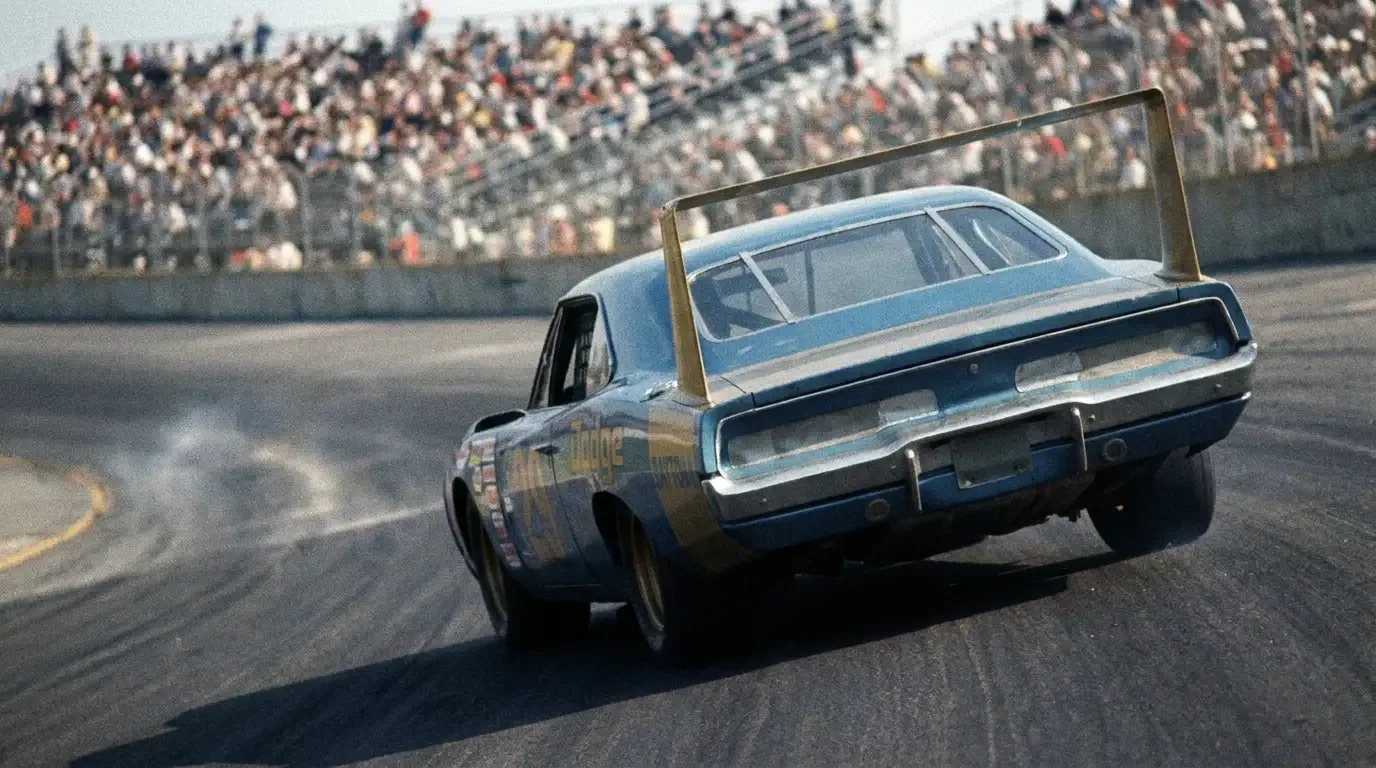
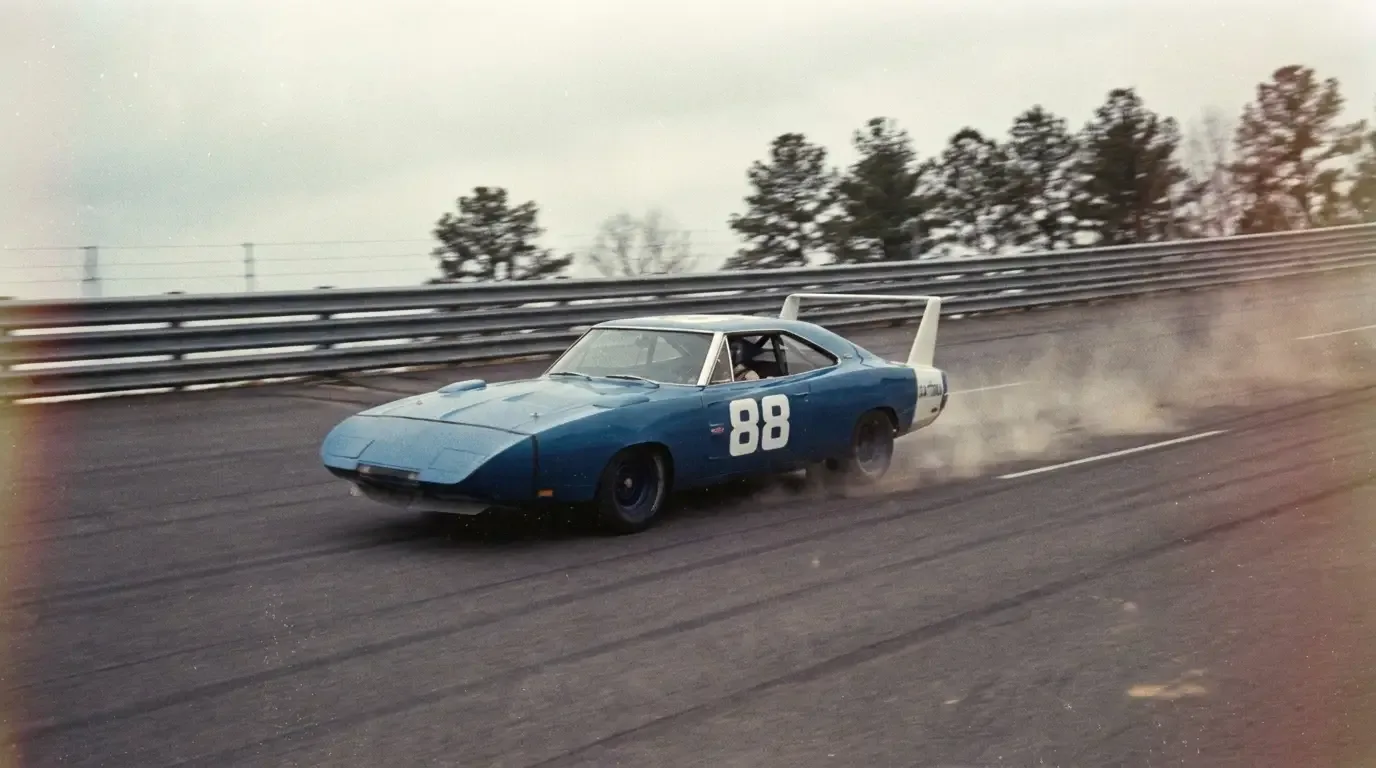
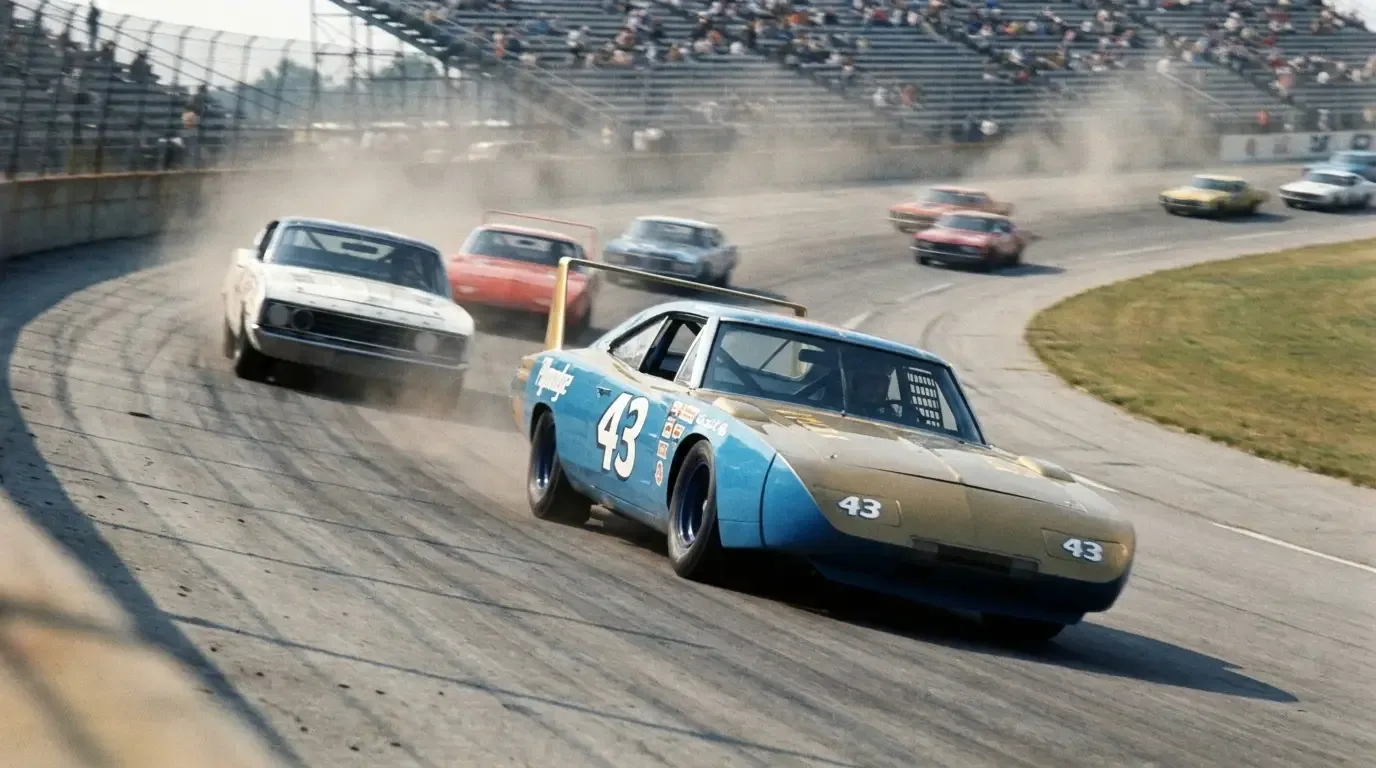
The Daytona debuted at the inaugural race at the new Alabama International Motor Speedway, the track we now call Talladega, in September 1969. It was the fastest closed course in the world, and the winged Dodge was built for exactly this kind of place. Buddy Baker would go on to become the first driver to officially break 200 mph on a closed course in a Charger Daytona in March 1970, a barrier that had seemed like science fiction only a few years earlier.
Think about what that meant. A car you could technically buy from a Dodge dealer shared its shape with a machine running two hundred miles an hour, faster than most people had ever traveled by any means. The Aero Wars, the arms race between Dodge, Plymouth, Ford, and Mercury to build the slipperiest possible stock car, had produced something genuinely new. Plymouth soon answered with its own version, the 1970 Superbird, built to lure Richard Petty back home. The two winged cars are cousins, born of the same fight.
"I met a man at Talladega who had watched the first race there as a teenager. He told me he could still hear it. Not the engines, he said, the wind. Those winged cars made a sound going down the backstretch that he had never heard before or since, and he was almost eighty when he told me."
— Patrick Walsh
The rule change that ended it all
The winged cars were too good, and being too good is dangerous in racing. Speeds were climbing past what the tires and the tracks were really built to handle, and the sanctioning body decided the aero cars had turned into a problem. For the 1971 season NASCAR effectively legislated them out of existence. The rule did not ban the shape outright, it did something more clever and more fatal: it restricted the special aero cars to much smaller engines, around 305 cubic inches, while the conventional cars could keep their big blocks.
That killed the winged Dodge and Plymouth as competitive race cars overnight. Nobody was going to run a 305 against a 426 and expect to win. The Aero Wars were over almost as fast as they had started, and the cars that had defined them, the Daytona and the Superbird, went from cutting edge to obsolete in a single winter. They had raced hard for barely two seasons.
Why the Daytona matters now
The short racing life is exactly why the Charger Daytona became a legend. It was a car built for one narrow purpose, to win on superspeedways, and it did that job so well that the rulebook had to be rewritten to stop it. That is a rare thing for any machine to achieve. When the rules changed, the Daytona did not fade slowly. It was retired at its peak, which is how legends are made.
Today an original Hemi Daytona sits among the most valuable American cars of the muscle era, and even the 440 street cars command serious money. They are checked, documented, and fussed over the way few Detroit products ever are, because so few exist and every one of them carries the story of that brief, loud, ridiculous fight for speed. If the winged cars are too rich for your garage, you can still browse classic Chargers and find the standard B-body that started it all, the handsome coupe the engineers had to reshape before it could fly.
Charlie Glotzbach's competitors stopped laughing in the fall of 1969. More than fifty years later, nobody is laughing at the Charger Daytona. They are just trying to find one.
Sources and notes
- Dodge Charger Daytona - Wikipedia - production of roughly 503 street cars, 18-inch nose cone and 23-inch rear wing, and the 1969 Talladega debut.
- This Day in Automotive History - Buddy Baker's 200.447 mph run at Talladega on March 24, 1970, the first over 200 mph on a closed course.
- Autoevolution - 503 Daytonas built, with 70 fitted with the 426 Hemi and the rest with the 440 Magnum.
- OnAllCylinders - 440 Magnum and 426 Hemi engine ratings and the aero-package history shared with the Superbird.
- NASCAR engines - Wikipedia - the 1971 rule limiting the aero cars to 305 cubic inches that ended the winged-car era.
- HowStuffWorks: 1969 Charger 500 and Daytona - the Charger 500 stopgap and the wind-tunnel origins of the nose and wing.