
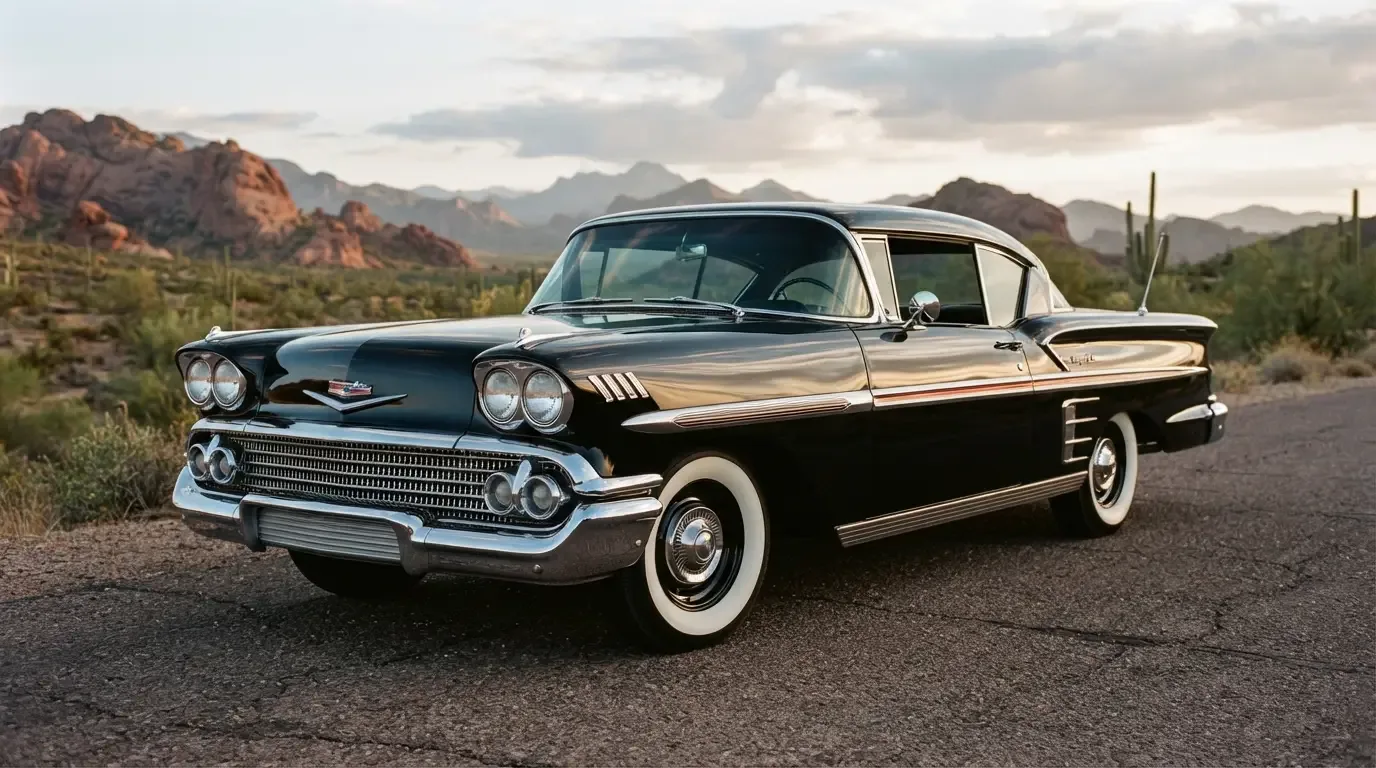
1958 Impala styling did not creep up on buyers gradually. It arrived all at once, the way an entire decade's aesthetic sometimes lands in a single model year, and it borrowed openly from the same jet-age and space-race imagery that was showing up in furniture, architecture, and appliance design across the country. Quad headlights, a lower and wider stance, and a rear end built around triple taillights on each side gave the Impala a look that had no direct precedent in Chevrolet's own catalog, and that newness was exactly the point.
Car Features
7 min read
The Jet-Age Styling of the 1958 Impala
1958 Impala styling combined quad headlights, a lower X-frame stance, and a triple-taillight rear treatment that became one of Chevrolet's most enduring design signatures.
A body built for the styling, not the other way around
General Motors had decided, corporation-wide, that 1958 would be the year every division adopted quad headlights and a noticeably lower profile, and Chevrolet's stylists had a new X-frame chassis to work with that let them drop the body several inches without compromising structural integrity. That combination gave the design team room to chase a longer, lower silhouette than the 1957 cars had allowed, and the Impala, as the new halo trim, got the most dramatic application of that new freedom. Where the standard Bel Air carried the same basic proportions with restrained trim, the Impala's stylists pushed further with brightwork, a distinct grille texture, and a rear treatment nobody else at Chevrolet was using that year.
The result reads, sixty-plus years later, as one of the cleanest expressions of American full-size design from the period. It avoided the excess some competitors leaned into while still delivering the visual drama that a flagship model needed to justify its price premium over a standard Bel Air.
The triple taillights that became a signature
Nothing about the 1958 Impala's styling has proven more durable than its rear-end treatment. Each side carried three round taillights set into a wide, sculpted rear bumper, a departure from the single lamp used on the standard Bel Air, and it gave the car an instantly identifiable signature from behind. That triple-lamp motif would return, in various forms, across Impala generations well into the 1960s, making the 1958 debut car the origin point for a design cue that outlasted the specific body it was introduced on.
It is worth pausing on how deliberate that choice was. Taillights are a small detail on paper, but they are also one of the few styling elements a driver behind you actually studies at length, and Chevrolet's stylists understood that a distinctive rear view sells a car in traffic just as effectively as a distinctive front end sells it in a showroom. The 1958 Impala's rear treatment did exactly that job, and it did it well enough to become a recurring signature rather than a one-year experiment.
Interior and cabin styling followed the same logic
Inside, the 1958 Impala carried the same jet-age vocabulary the exterior used, with a dashboard built around banks of gauges set into a wide, symmetrical instrument panel and enough brightwork to signal the car's position at the top of the Chevrolet range. Upholstery patterns leaned into geometric shapes and metallic threads that echoed contemporary furniture and appliance design of the same period, and the overall effect was meant to feel modern in a way that a plainer Bel Air interior did not attempt. Chevrolet's designers clearly understood that a halo car needs to look the part from every angle a buyer might experience it, not just from the curb.
Color and trim choices reinforced the message
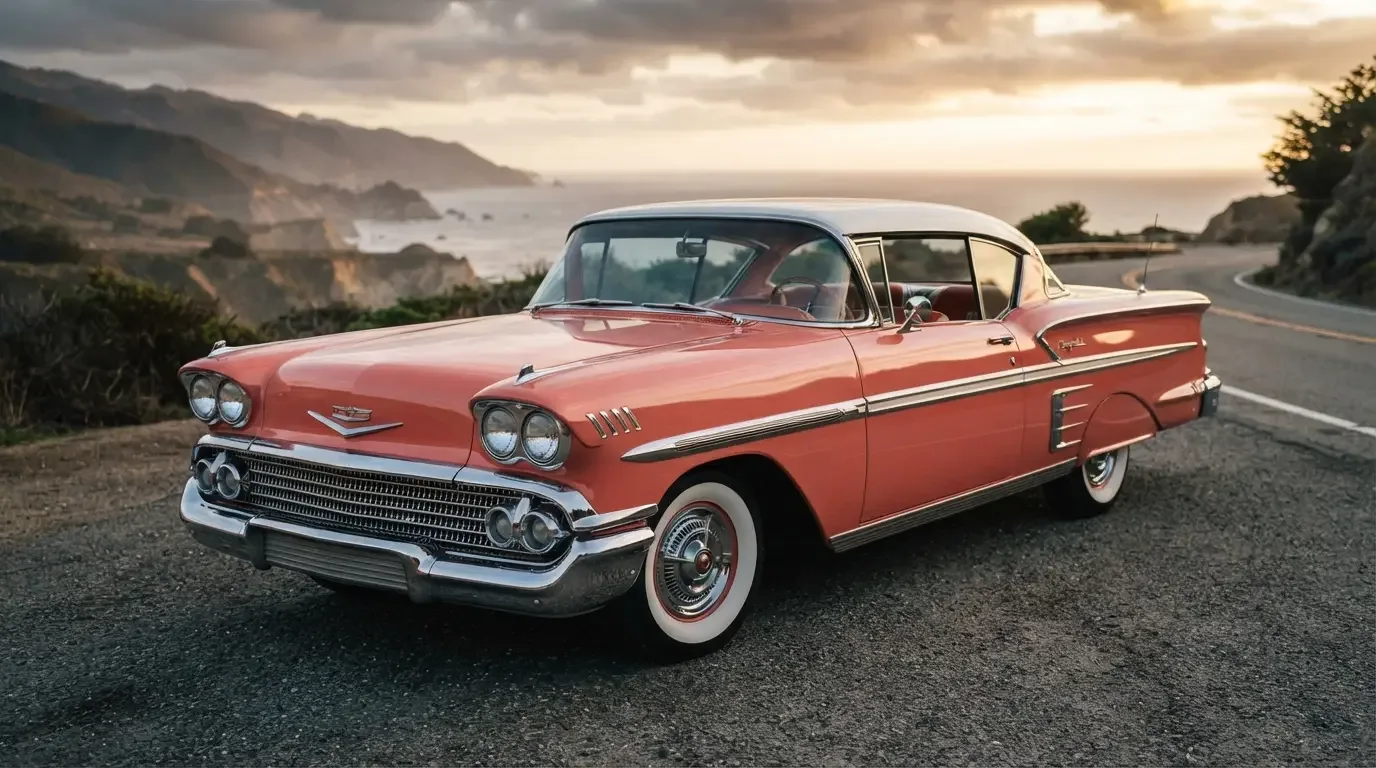
Chevrolet offered the 1958 Impala in a wide range of two-tone paint combinations, and the styling department clearly intended buyers to use color to reinforce the car's status rather than treat it as an afterthought. Two-tone schemes typically split the roof from the body in a way that emphasized the lower, wider profile the new chassis allowed, drawing the eye along the car's length rather than breaking it up. Anodized aluminum trim panels along the rear quarters, unique to the Impala rather than shared with lesser Bel Air trims, added another layer of visual separation between the halo car and the models it was built alongside.
None of these choices were accidental. Every trim decision on the 1958 Impala, from the grille texture down to the specific placement of badging, was made with the explicit goal of letting a buyer, or more importantly a bystander on the street, identify the car's status at a glance. That kind of deliberate visual hierarchy is easy to take for granted today, but it required real coordination between Chevrolet's design studio and its marketing department to execute consistently across a car built from an existing body shell.
How the styling fit the broader 1958 lineup
Seen next to the standard Bel Air, the Impala's styling differences were substantial enough that a casual observer could identify the trim level from a distance, which is exactly what a halo model needs to accomplish. The grille insert, the additional brightwork along the beltline, and the unique rear treatment gave the Impala a visual identity distinct enough to justify its position, and that distinctiveness is part of why the model survived its debut year as a Bel Air sub-series and grew into its own full lineup by 1959. Readers who want the fuller context behind the trim's launch should read the background on how Chevrolet built the case for promoting Impala at all.
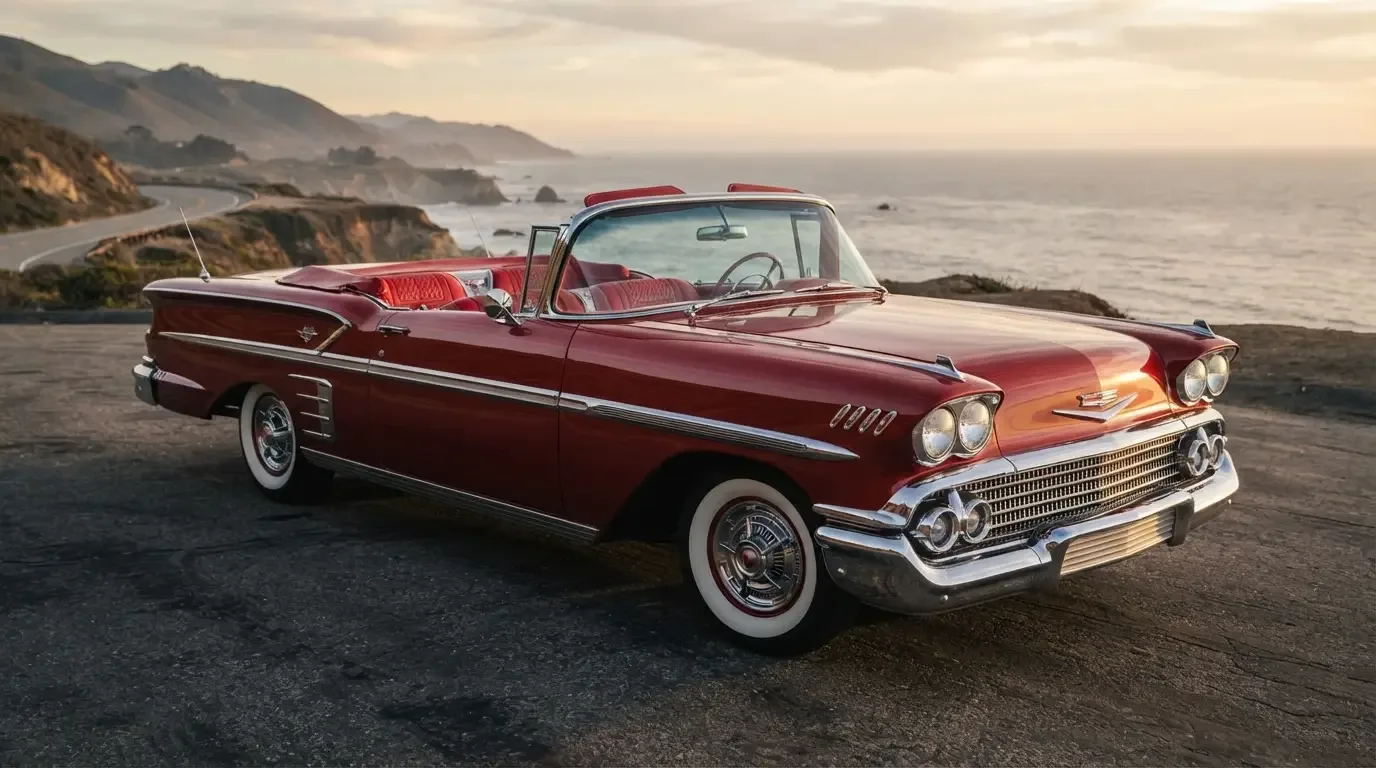
Body styles played into the styling story as well. The Sport Coupe's hardtop roofline let the design breathe in a way a pillared sedan could not, and the Convertible pushed the same lines even further by removing the roof entirely. Anyone curious about how those two body styles diverged in execution should find it worth a look too, since the styling choices covered here play out differently once you compare the hardtop against the open car.
"You can trace a straight line from the 1958 Impala's taillights to cars Chevrolet built a decade later. Not many one-year designs leave that kind of fingerprint."
- Tom Ramirez
Why the design still holds up
Restraint is the word that separates the 1958 Impala's styling from some of its more baroque competitors of the same period. Chevrolet's designers used quad headlights, extra brightwork, and the triple taillights to signal status without piling on fins or ornamentation for its own sake, and that balance is a large part of why the car reads as clean and confident rather than dated when it shows up at a concours field today. It is a design built around a handful of strong ideas rather than a long list of small ones, and that kind of clarity tends to age well regardless of the decade it came from.
For anyone who wants to see how those styling ideas translate into the current market, it is worth comparing original, well-preserved examples to see how closely dealers and private sellers have kept the original trim intact. You can shop classic Impala listings and judge the styling for yourself, sixty-plus years after Chevrolet first put it on the road.
Sources and notes
- Wikipedia: Chevrolet Impala
- Hagerty Media: Cars With Quad Headlights Before They Were In Vogue
- Curbside Classic: 1957 Cars With Alternate Quad and Single Headlight Front Ends
- autoevolution: 1958 Chevrolet Bel Air Impala Sport Coupe
- Old Ride: 1958 Chevrolet Impala
- Classic.com: 1958 Chevrolet Impala Market
Related Reading
Have a
Chevrolet Impala
for Sale?
Reach thousands of serious classic car collectors across the US.
Sell It Here →
Are You a Classic Car Dealer?
List your full inventory and connect with targeted classic car buyers.
Join as a Dealer →

About the author
Tom Ramirez
Corvette researcher and historian based in Bowling Green, Kentucky. Two decades documenting Corvette production history from original factory records.
Related Listings - Chevrolet Impala
Comments
Be the first to comment on this article.