
1958 Impala body styles came down to exactly two choices, and that narrowness is itself part of the story. Chevrolet's new halo trim launched only as a Sport Coupe hardtop and a Convertible, both built on the Bel Air's two-door shell rather than as an entirely separate body. There was no sedan, no wagon, and no post-style coupe wearing the Impala name that year. Anyone assembling a full picture of the model's debut has to start from that restriction, because it shaped everything from production numbers to how collectors think about the cars today.
Car Features
7 min read
1958 Impala Body Styles: Sport Coupe and Convertible
The 1958 Impala launched in exactly two body styles, the Sport Coupe hardtop and the Convertible, a deliberate restriction that still shapes how collectors value the cars today.
Why Chevrolet limited the Impala to two bodies
The decision to launch Impala as a two-body sub-series rather than a full lineup was deliberate. Chevrolet wanted a halo trim aimed squarely at the two body styles most associated with personal, image-driven buying decisions, the pillarless hardtop coupe and the convertible, rather than diluting the new name across family-oriented sedans and wagons where price sensitivity mattered more than styling. That focus let the design and marketing teams concentrate their effort, and it meant every Impala built in 1958 was, by definition, one of the sportier body configurations in Chevrolet's full-size range.
It also meant the Impala name carried real exclusivity in its debut year. A buyer who wanted the Impala look on a four-door sedan simply could not have one in 1958, a restriction Chevrolet lifted the following year when Impala expanded into a complete lineup with the same body styles as any other full-size Chevrolet.
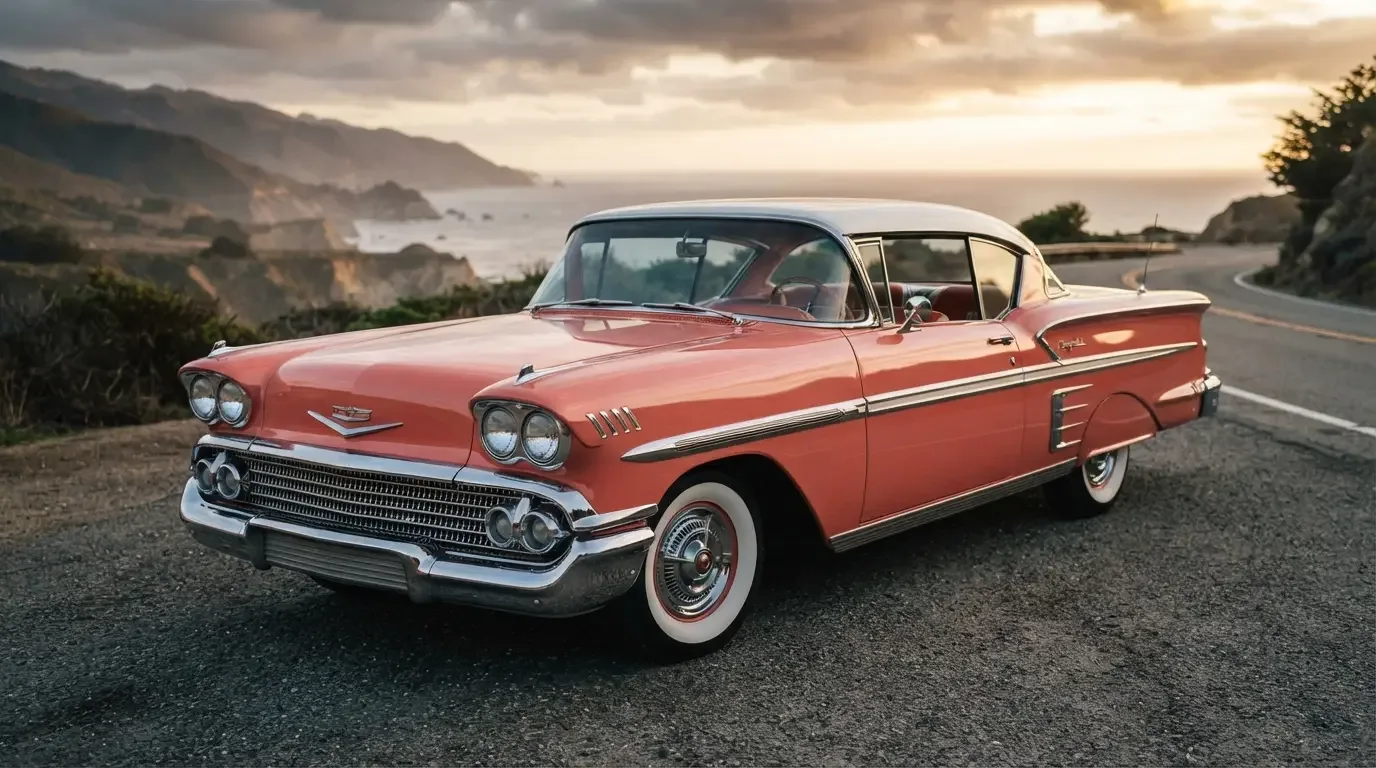
The Sport Coupe
The Sport Coupe was the pillarless two-door hardtop, and it represented the styling department's cleanest expression of the new lower, wider 1958 body. Without a B-pillar interrupting the greenhouse, the Sport Coupe's side glass could be lowered completely, giving the car an open, uninterrupted profile that showcased the new sheet metal without a roof structure competing for attention. This body style also carried the bulk of Impala production for the year, since a hardtop coupe was a more practical everyday choice than a convertible for most buyers while still delivering the sportier image the Impala name promised.
Buyers ordering a Sport Coupe could specify any of the available engines, from the base 235 inline six through the 283 small-block to the new 348 W-series big-block, and the combination of hardtop styling with the optional Tri-Power 348 made for a genuinely quick car by the standards of full-size passenger vehicles that year.
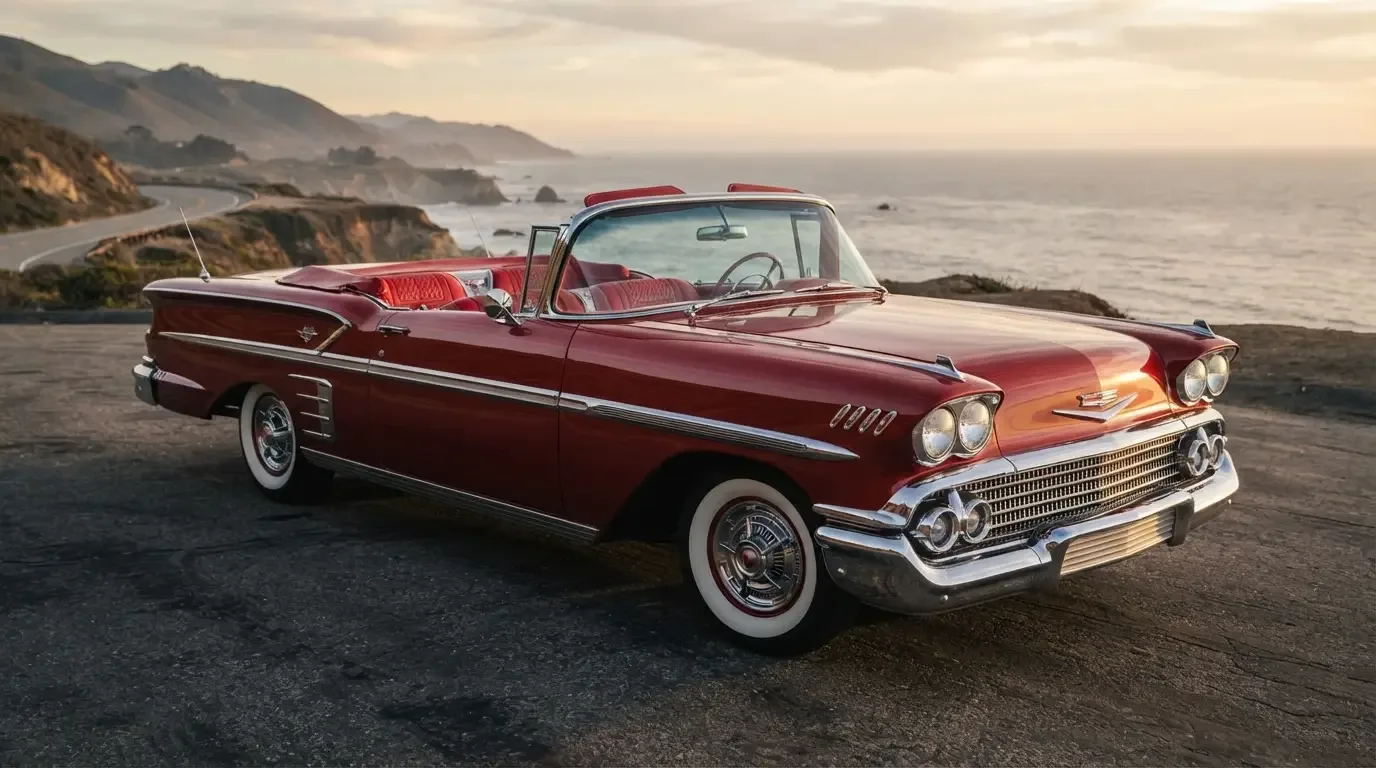
The Convertible
The Convertible pushed the same design further by removing the roof structure entirely, and it commanded a meaningful price premium over the Sport Coupe as a result. Fewer were built, which is typical of convertibles across almost every era and manufacturer, since the body style demanded additional structural reinforcement to compensate for the missing roof and added real cost to manufacture. That lower production number is a major reason surviving 1958 Impala Convertibles carry a stronger premium among collectors today than Sport Coupes in comparable condition.
Beyond rarity, the Convertible also let buyers experience the interior styling and the car's proportions without a roofline interrupting the view, which made it the purest expression of the year's design language even if it was not the volume seller.
| Body Style | Roof Type | Relative Production Volume |
|---|---|---|
| Sport Coupe | Pillarless two-door hardtop | Higher, the volume body style |
| Convertible | Folding soft top, no fixed roof | Lower, the premium body style |
Interior trim followed the same split
The Sport Coupe and Convertible did not just differ in roofline. Chevrolet trimmed the two body styles with slightly different priorities in mind. The Convertible's interior used more weather-resistant materials in areas exposed to the elements when the top was down, and its seating was designed with the open-air experience in mind, from seat height to how the door panels handled water intrusion around the window seals. The Sport Coupe, by contrast, could commit fully to a fixed-roof cabin, with a formal headliner and a quieter interior environment that let Chevrolet lean harder into the plush, image-driven upholstery patterns that defined the Impala's upscale positioning.
Both body styles shared the same dashboard, the same gauge cluster, and the same general trim level, since Chevrolet was not interested in creating two different interior experiences under one nameplate. The differences that did exist were practical responses to the demands of an open car versus a closed one, not a deliberate attempt to make one body style feel more special than the other from behind the wheel.
What the body style split means for collectors now
Anyone researching a 1958 Impala purchase needs to think about body style before almost anything else, because it affects price, rarity, and even how the car is judged at a show. Sport Coupes are more plentiful and generally more affordable, which makes them a reasonable entry point for a first-time buyer of the model. Convertibles command a real premium tied directly to their lower production numbers and the added complexity of restoring a car without a fixed roof structure. Neither body style is more or less authentic to the Impala's launch story, since Chevrolet built both from day one, but they occupy different tiers of the current market.
For the fuller context of why Chevrolet chose to launch with only these two bodies, it helps to look at more on the 1958 impala and the decisions that shaped the car's debut. And because the Impala name itself grew out of Chevrolet's broader full-size lineup, it is worth tracing where this started before deciding which body style fits your own collecting goals.
"Two body styles sounds like a limitation until you realize it forced Chevrolet to make both of them count. There was no filler variant hiding in the 1958 Impala lineup."
- Sarah Whitfield
Pricing gaps buyers actually encounter
Walk through any auction result covering the 1958 Impala and the body style gap shows up consistently. A Convertible in comparable condition to a Sport Coupe, with similar options and similar documentation, tends to sell for meaningfully more, and that gap widens further for cars equipped with the optional 348 engine in either body style. Part of that premium reflects genuine scarcity, since fewer Convertibles left the factory than Sport Coupes, and part of it reflects the simple fact that open cars have always drawn stronger interest from collectors regardless of make or model year. Buyers shopping strictly on budget will find more Sport Coupes to choose from, and more variation in condition and originality within that body style, which can make the search itself take longer even though the entry price is lower.
Restoration costs also diverge between the two body styles in ways that are easy to underestimate before you own the car. A Convertible's folding top mechanism, weatherstripping, and the additional structural reinforcement built into the body all add complexity and cost that a Sport Coupe simply does not carry. Anyone budgeting for a full restoration rather than buying a car that is already sorted should factor that difference in before committing to a Convertible on the assumption that it is simply a Sport Coupe with the roof removed.
Shopping by body style today
Because the Sport Coupe and Convertible attract different types of buyers, and command different prices, it makes sense to decide which body style fits your budget and intended use before you start looking seriously. A Sport Coupe suits a driver-focused restoration, while a Convertible tends to attract buyers thinking about long-term investment value as much as weekend use. Either way, comparing classic Impalas on the market against the production and rarity context here will make the body style decision a much easier one to make with confidence.
Sources and notes
Related Reading
Have a
Chevrolet Impala
for Sale?
Reach thousands of serious classic car collectors across the US.
Sell It Here →
Are You a Classic Car Dealer?
List your full inventory and connect with targeted classic car buyers.
Join as a Dealer →

About the author
Sarah Whitfield
Third-generation classic car collector specializing in pre-war American and European coachbuilt automobiles. Researcher and concours enthusiast.
Related Listings - Chevrolet Impala
Comments
Be the first to comment on this article.