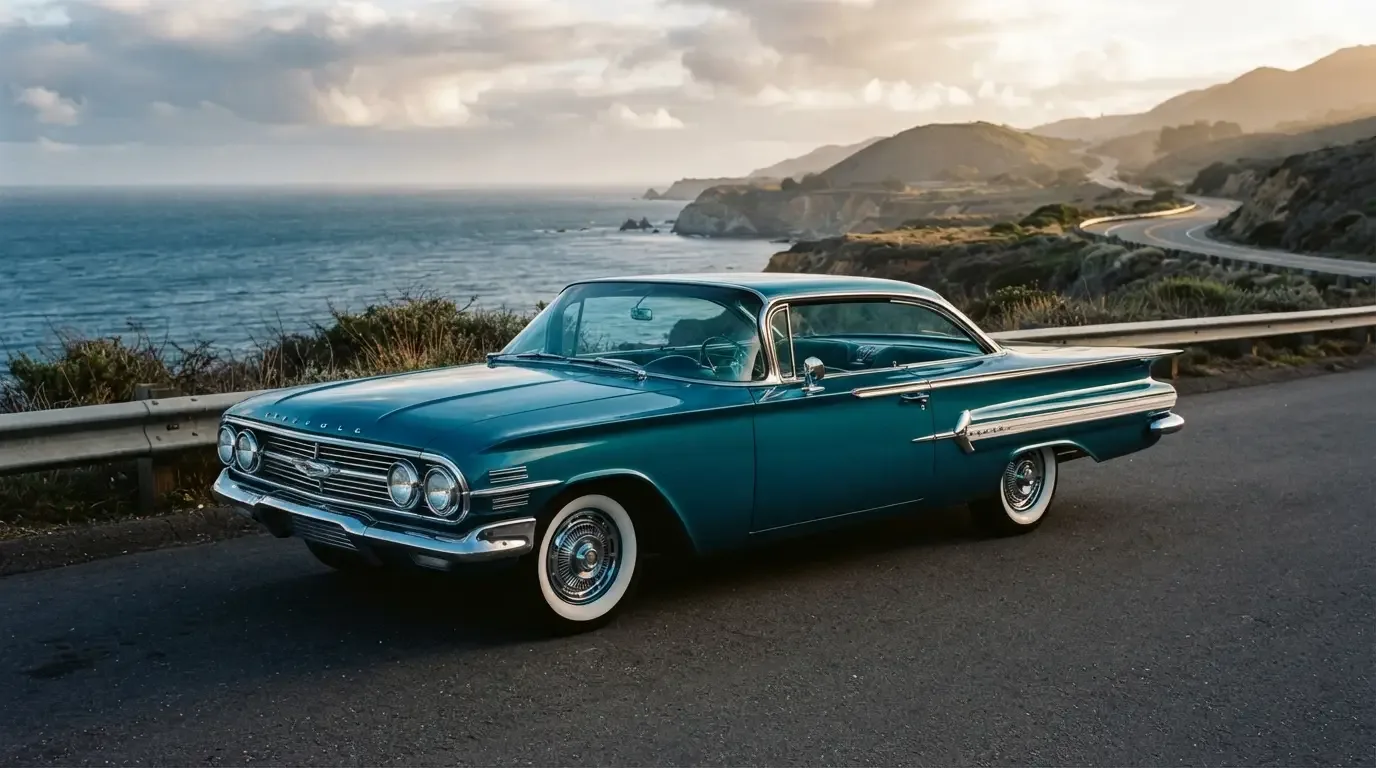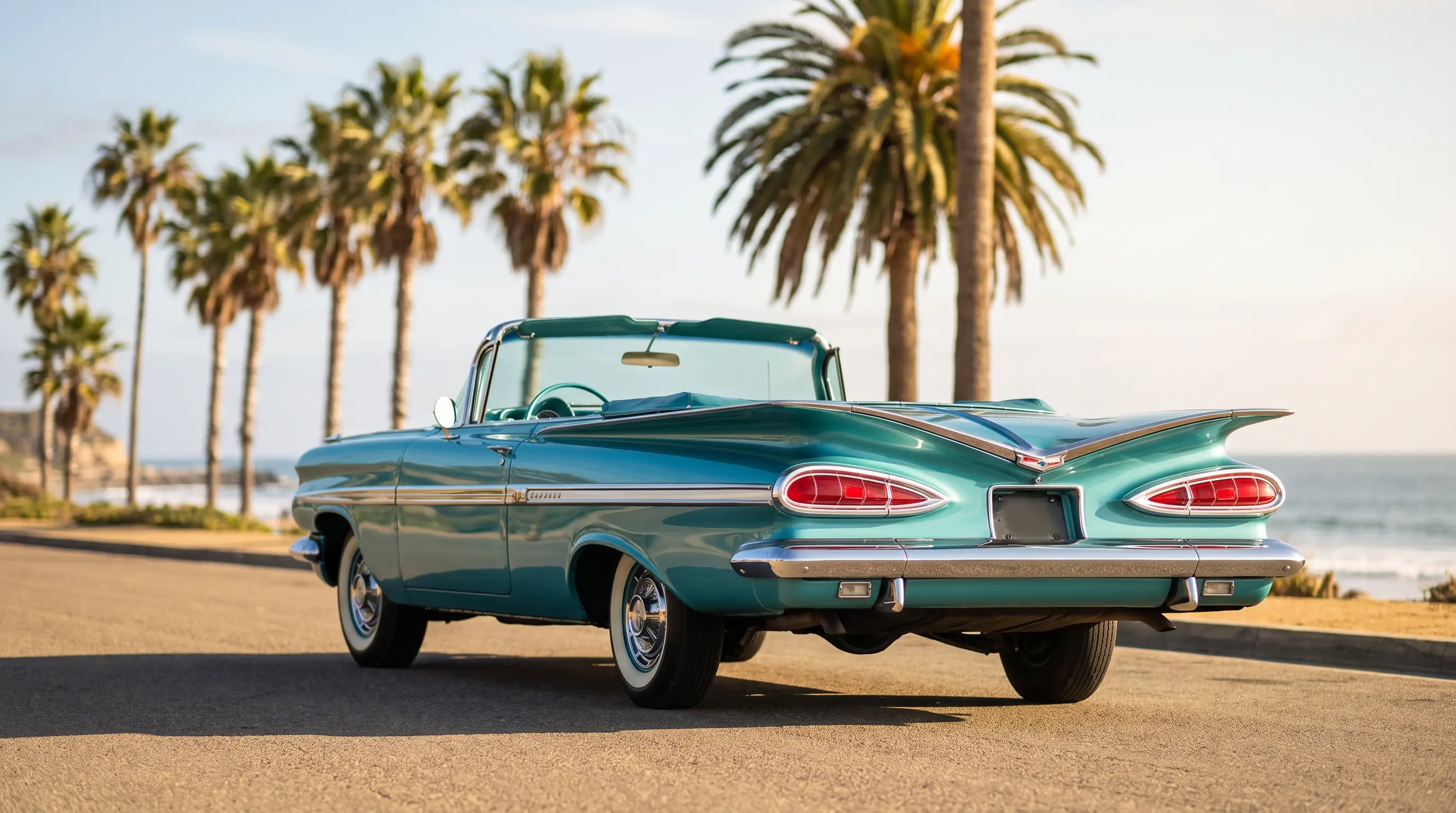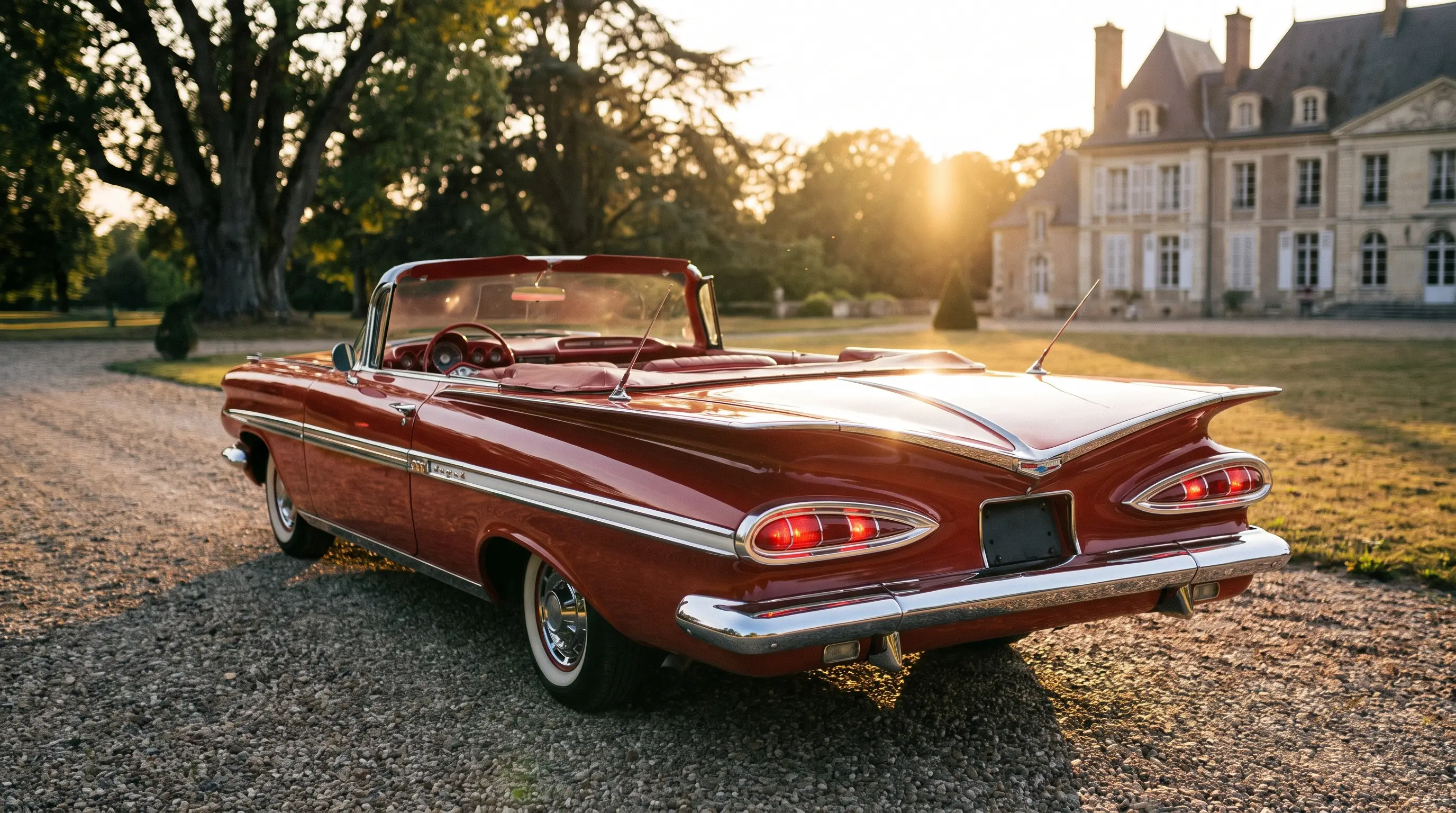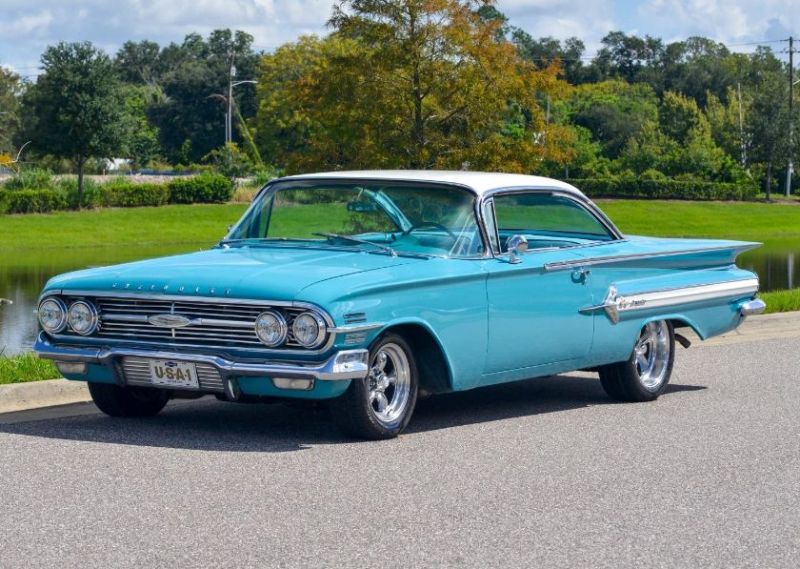
Here is the short version. The 1959 Impala engines ranged from a base inline six that most buyers skipped to a 348 cubic inch V8 with triple carburetion that made the car genuinely quick for its size. Most people who bought one paid extra for a V8. That is not opinion, that is what the order sheets from the period show, and it is the first thing worth knowing before anyone starts arguing about which engine is the "real" Impala engine.
The base six nobody bragged about
Standard equipment on the 1959 Impala was a 235 cubic inch inline six, sold under Chevrolet's "Hi-Thrift" branding, rated at 135 horsepower. It was the same basic engine family Chevrolet had used across its full-size lineup for years, reliable, cheap to service, and almost entirely absent from the cars that show up at car shows six decades later. Nobody restores a numbers-matching six-cylinder Impala to flex on Instagram. That tells you something about how the market has always valued this engine relative to the V8 options sitting next to it on the same order form.
The 283: the sensible V8
Above the six sat the 283 cubic inch V8, offered in multiple states of tune depending on carburetion, spanning from 185 horsepower with a two-barrel carburetor up to 230 horsepower with a four-barrel setup, with a rare fuel-injected version available at up to 250 horsepower for buyers willing to pay for it. This is the engine most buyers who wanted a V8 without paying for the top option actually drove home. It is not the number people quote at car shows, but it is the number that moved the most metal off dealer lots.
The 348: where the bragging rights lived
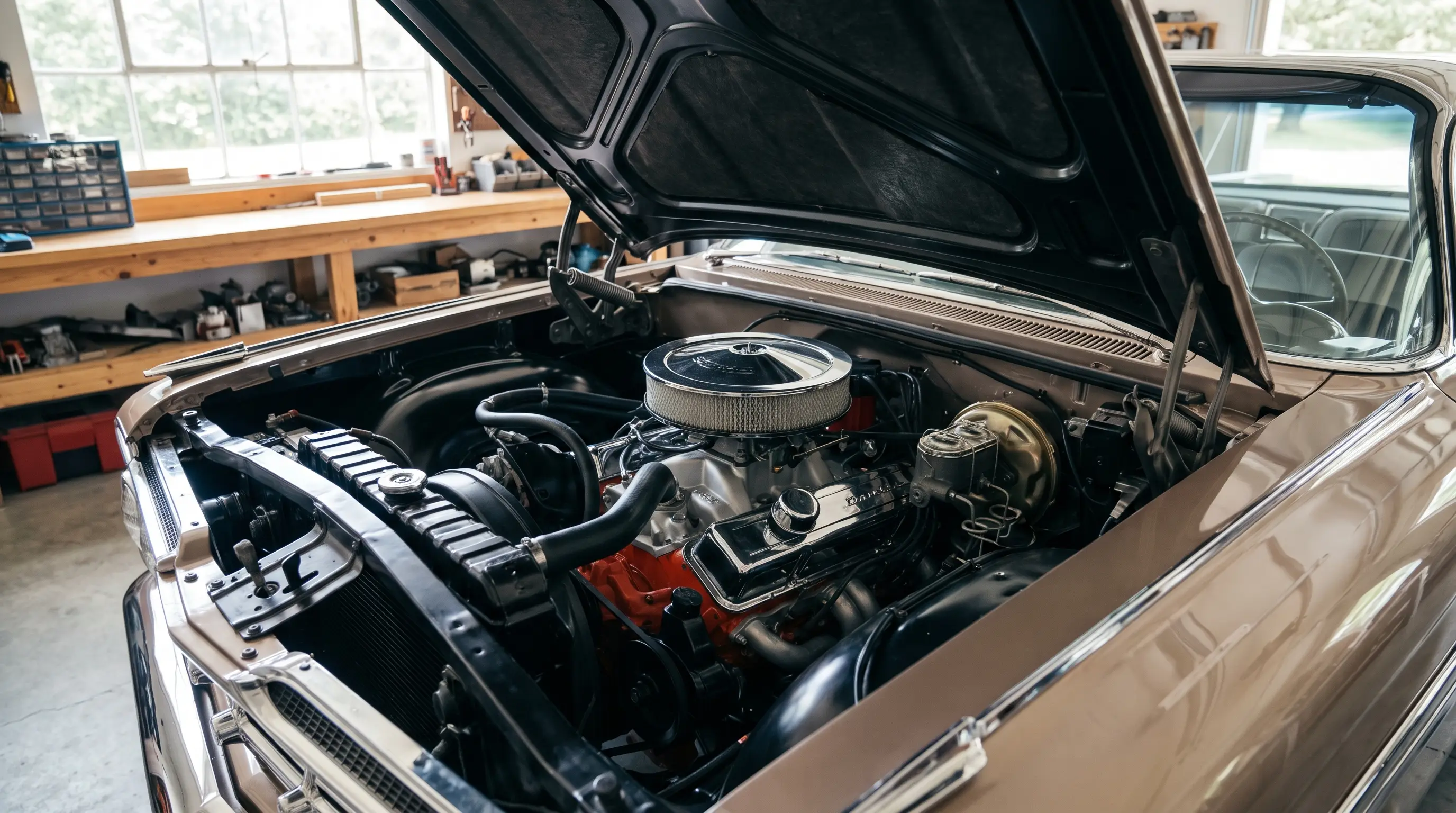
The big news for 1959 was the 348 cubic inch "Turbo-Thrust" V8, Chevrolet's first big-block, offered across a spread of tunes from 250 horsepower with a single four-barrel carburetor up to 315 horsepower with the triple two-barrel carburetor setup nicknamed Tri-Power at 11.0:1 compression, with a late-1959 335 horsepower version at higher compression also catalogued. That is the number that gets repeated at every swap meet conversation about this car, and it deserves the attention. A full-size passenger car pushing past 300 factory horsepower in 1959 was not common, and Chevrolet marketed the 348 hard specifically because it gave the Impala a performance story the six and the 283 could not match.
| Engine | Displacement | Approx. horsepower | Carburetion |
|---|---|---|---|
| Hi-Thrift I6 | 235 cu in | 135 hp | Single 2-bbl |
| Turbo-Fire V8 | 283 cu in | 185 to 230 hp | 2-bbl or 4-bbl |
| Turbo-Thrust V8 | 348 cu in | 250 to 280 hp | 4-bbl or 3x 2-bbl |
| Super Turbo-Thrust V8 | 348 cu in | 300 to 335 hp | Tri-Power (3x 2-bbl), high compression |
1960: mostly the same story, mild changes
Engine choices for 1960 tracked the 1959 lineup closely, with the same basic six and 283 and 348 V8 family carried forward with minor tuning revisions rather than a wholesale replacement. If you want the full mechanical picture across both years, our 1959 impala retrospective lays out how the drivetrain lineup held together while the sheet metal around it changed twice in two years.
Transmissions and rear gearing, briefly
A three-speed manual came standard behind every 1959 and 1960 Impala engine, with an available Powerglide two-speed automatic across the range and an overdrive option offered on the six and smaller V8 configurations. Buyers who ordered the 348 Tri-Power tended to pair it with the automatic more often than not, since the car was marketed as much for comfortable performance as outright drag strip credentials. Rear axle ratios varied by engine and options package, with numerically higher gearing typically paired to the six-cylinder cars for reasonable acceleration and lower, more relaxed ratios common on cars ordered with the bigger V8s for highway cruising.
None of this changes the basic hierarchy. The engine under the hood tells you almost everything about how a given car was originally optioned and who likely ordered it, and the transmission and gearing choices tend to follow the same logic: buyers chasing performance clustered around the 348, buyers chasing value clustered around the six and the base 283.
What the numbers actually mean for a buyer
None of this is restoration advice. It is a buying reality check. A 348 Tri-Power car will always be worth more than an identical body style with a six or a base 283, and that gap has only widened as more buyers chase documented performance options. If you are shopping on budget rather than bragging rights, a well-kept 283 car will drive perfectly well for normal use and cost considerably less to acquire and maintain. Do not let anyone tell you the six-cylinder cars are not real Impalas. They are simply the ones nobody bothered to keep in top condition, which is a market fact, not a mechanical one.
For a related story on how engine choice played out in one specific body style, convertible buyers of the period tended to skew toward the V8 options more heavily than sedan buyers did, which tracks with who was spending the extra money on the flashiest body style in the first place.
"People want to tell you the 348 Tri-Power is the only engine worth having in a 1959 Impala. The sales figures do not agree. Most of these cars left the factory with a 283 or even the six. The big engine is the one everyone remembers because it is the one worth remembering, not because it is the one that was actually common."
- Dan Reeves
How to read an engine code before you buy
Confirming what actually sits under the hood of a 1959 or 1960 Impala matters more than trusting a seller's description, since engine swaps over sixty-plus years of ownership are common and not always disclosed. Casting numbers on the block, along with the original build sheet or dealer invoice where available, are the most reliable way to confirm whether a car still carries its factory-original engine or has picked up a later replacement somewhere along the way. A 348 Tri-Power badge on the fender means nothing on its own if the engine underneath does not match the casting and carburetor configuration that badge implies.
This matters most at the top of the price range. A six-cylinder car with a 348 dropped in later is still a good, usable car, but it is not the same thing as a numbers-matching original, and the price difference between the two can be enormous. None of this is a reason to avoid a car with a non-original engine. It is simply information a buyer deserves before agreeing on a price, since the engine badge and the actual hardware do not always agree.
If any of this has you thinking about buying one, there are Impalas for sale now across every engine option covered here, and knowing the real spread between six-cylinder, 283, and 348 cars will save you from overpaying for an engine that was never rare in the first place, or underpaying for one that genuinely is.