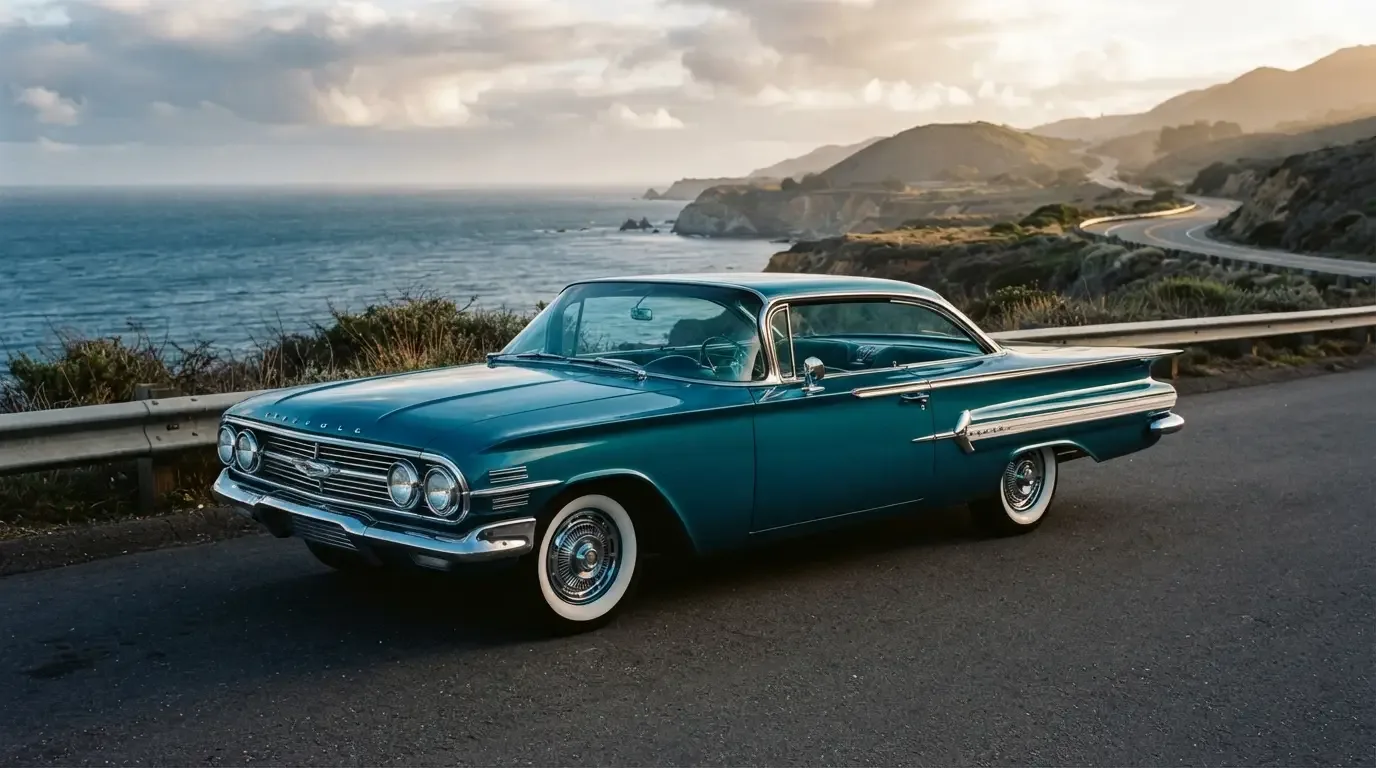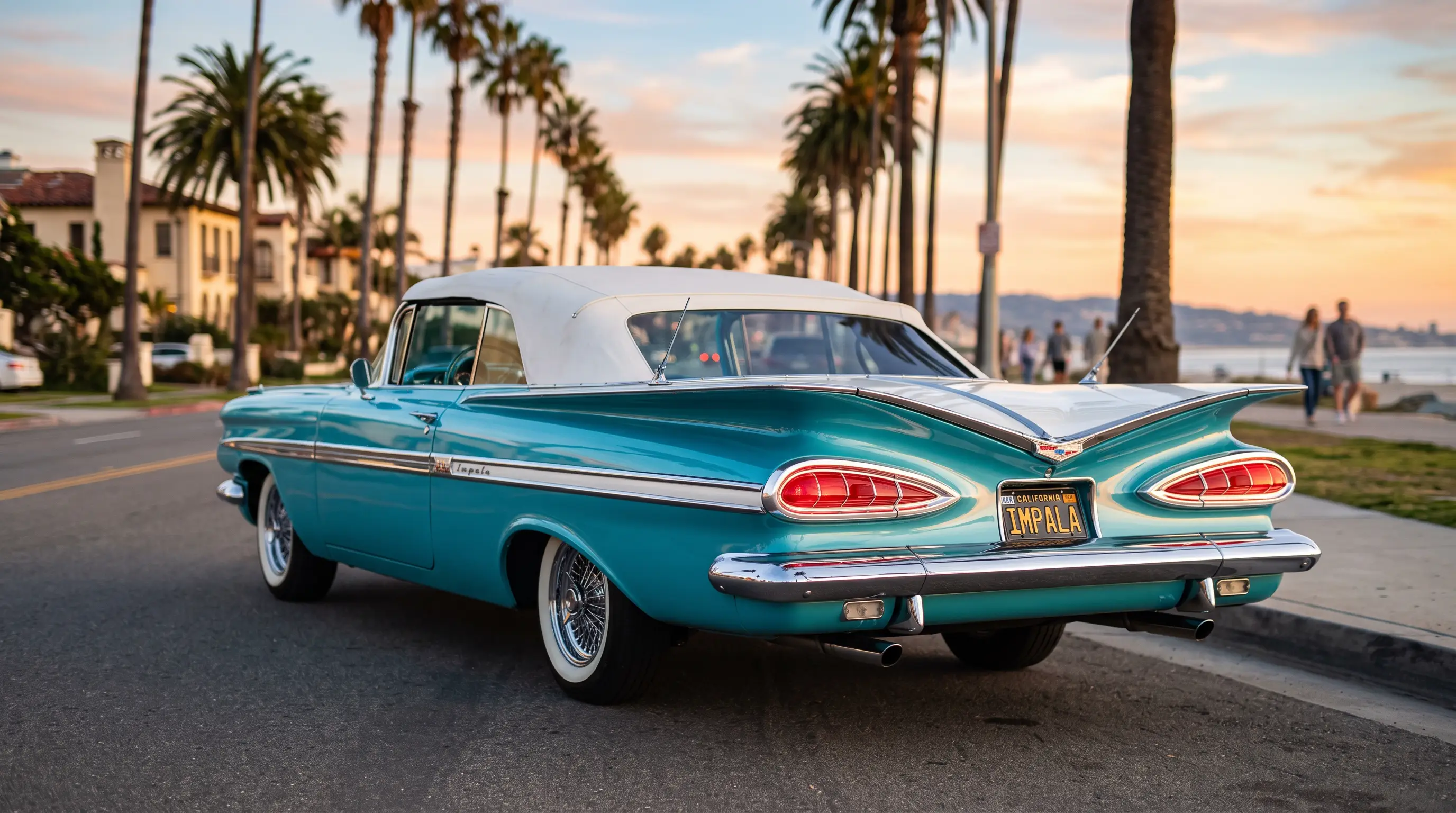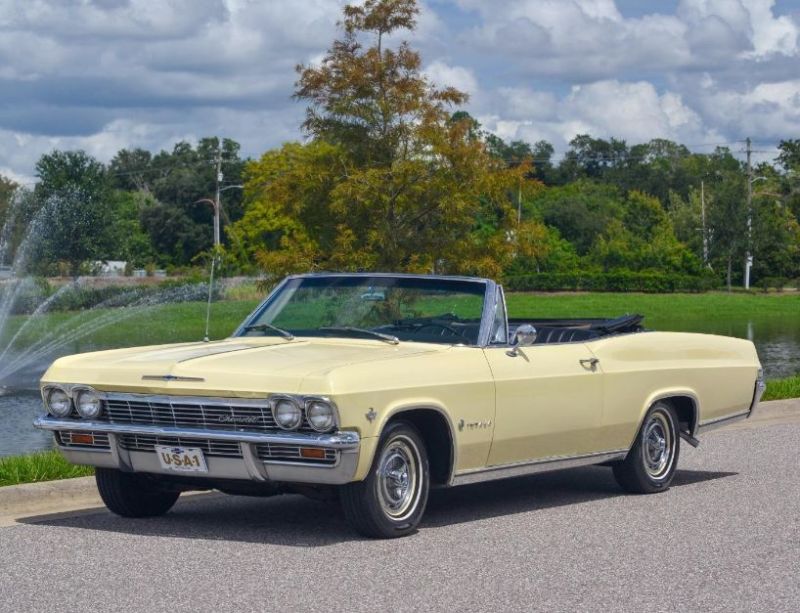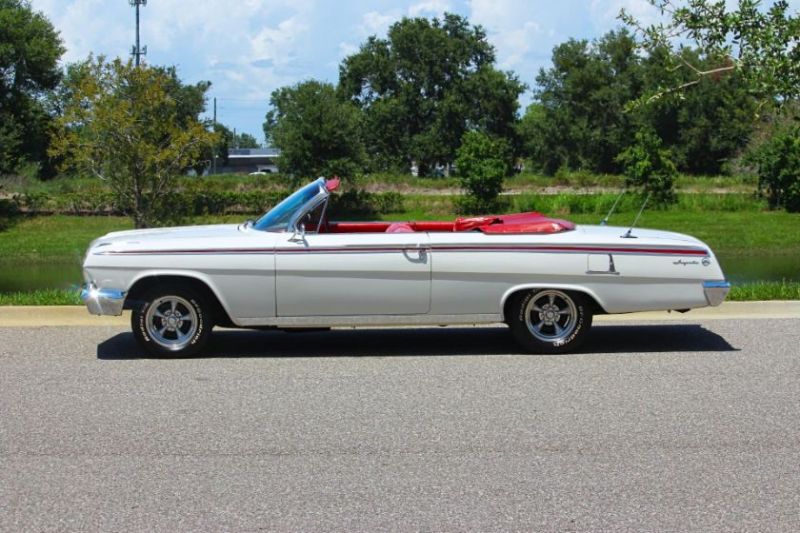
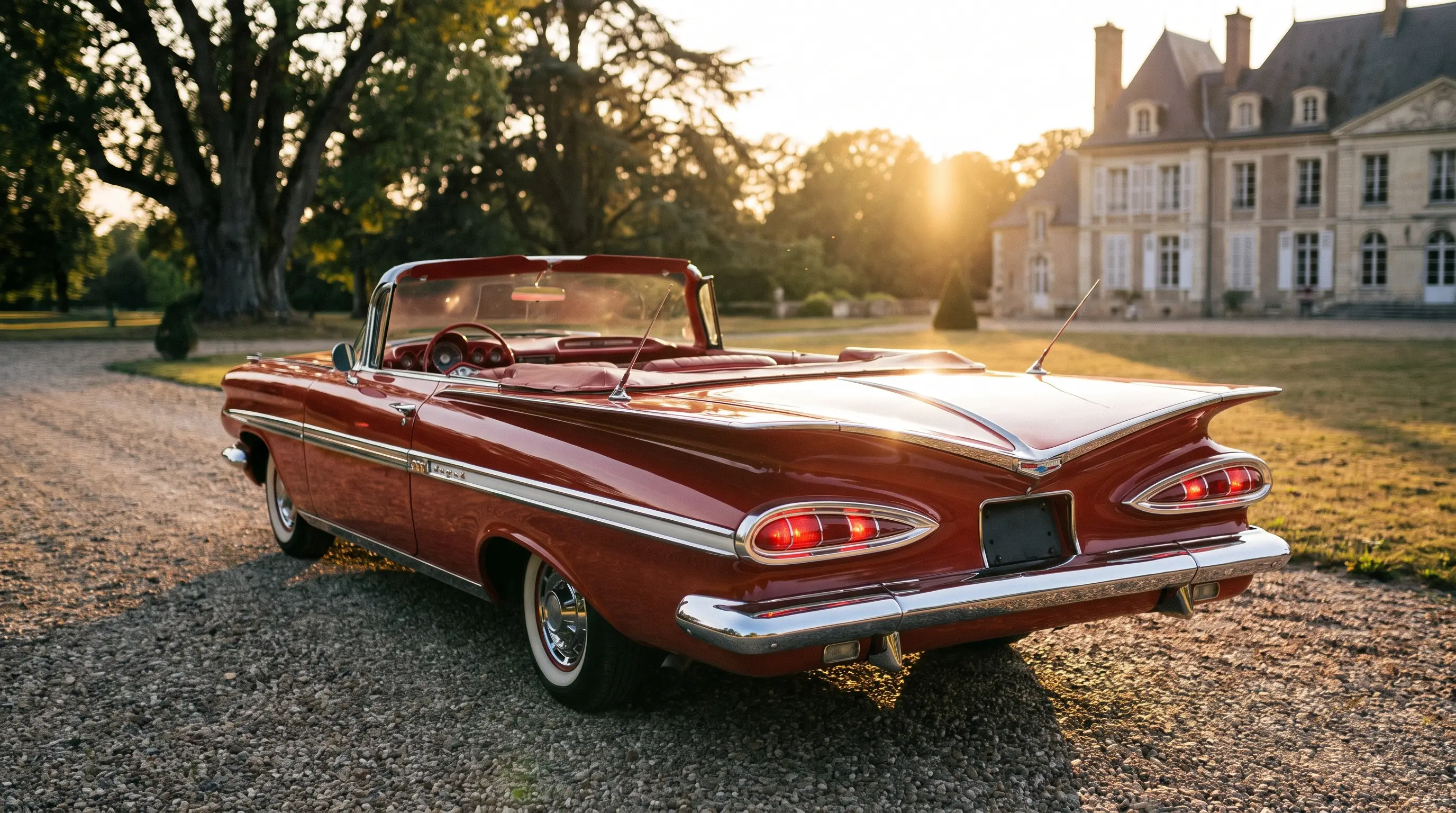
The 1959 Impala convertible sat at the very top of Chevrolet's full-size lineup that year, both in price and in the amount of attention Chevrolet's marketing department gave it. It was the halo body style of a series that had only just been promoted from a trim level to its own standalone lineup, and it carried that new status with a wide, low stance, dramatic two-tone paint options, and a power top that was still enough of a novelty to be worth advertising on its own.
The most expensive way into an Impala
Of the four body styles Chevrolet offered under the Impala name for 1959, the convertible carried the highest base price, reflecting both the additional engineering needed to build a structurally sound open car and the status the body style carried with buyers. Convertibles required reinforced frame rails and rocker structure to compensate for the lost rigidity of a fixed roof, adding cost that Chevrolet passed directly to the buyer. That price premium, combined with lower demand than the more practical hardtop and sedan body styles, meant convertibles were built in noticeably smaller numbers than any other 1959 Impala body style.
What made the top special
The power-operated soft top was a genuine selling point in 1959, at a time when manually operated tops were still common on lower-priced convertibles across the industry. Chevrolet's brochures leaned hard into the ease of raising and lowering the top at the touch of a switch, positioning the Impala convertible as a car for buyers who wanted the open-air experience without the physical effort that had defined convertible ownership a decade earlier. Interior trim on convertibles tended to run richer than on other body styles as well, with wider color choices and additional brightwork that reinforced the car's position at the top of the lineup.
Two-tone drama, top down or up
Because the convertible had no fixed roof to carry a contrasting color, its two-tone treatment was concentrated on the body sides and the interior, with the character line running the length of the car often serving as the paint break. With the top down, the full effect of the interior color and upholstery pattern became part of the car's visual presentation in a way that hardtop models never achieved, which is part of why period advertising photographed convertibles with the top lowered far more often than raised.
Why it commands the highest prices today
That same low production run is exactly why the 1959 Impala convertible commands the strongest prices among collectors today. Fewer cars were built, fewer have survived complete decades of use and weather exposure to the fabric top and its supporting mechanism, and the body style's visual drama has never gone out of fashion with buyers chasing a statement car rather than a daily driver. A convertible in solid, documented condition will consistently outsell an equivalent hardtop from the same model year, engine, and trim level.
You can read the background on the broader 1959 and 1960 model years if you want context for how the convertible fit into Chevrolet's overall strategy that year, since the body style's premium positioning only makes sense next to the rest of the lineup it was competing against for the same buyer's attention.
"A hardtop tells you what Chevrolet thought most people wanted. A convertible tells you what Chevrolet thought people would pay extra to be seen in. Those are two different questions, and the convertible always answers the second one louder."
- Sarah Whitfield
Engine and options pairing on convertible orders
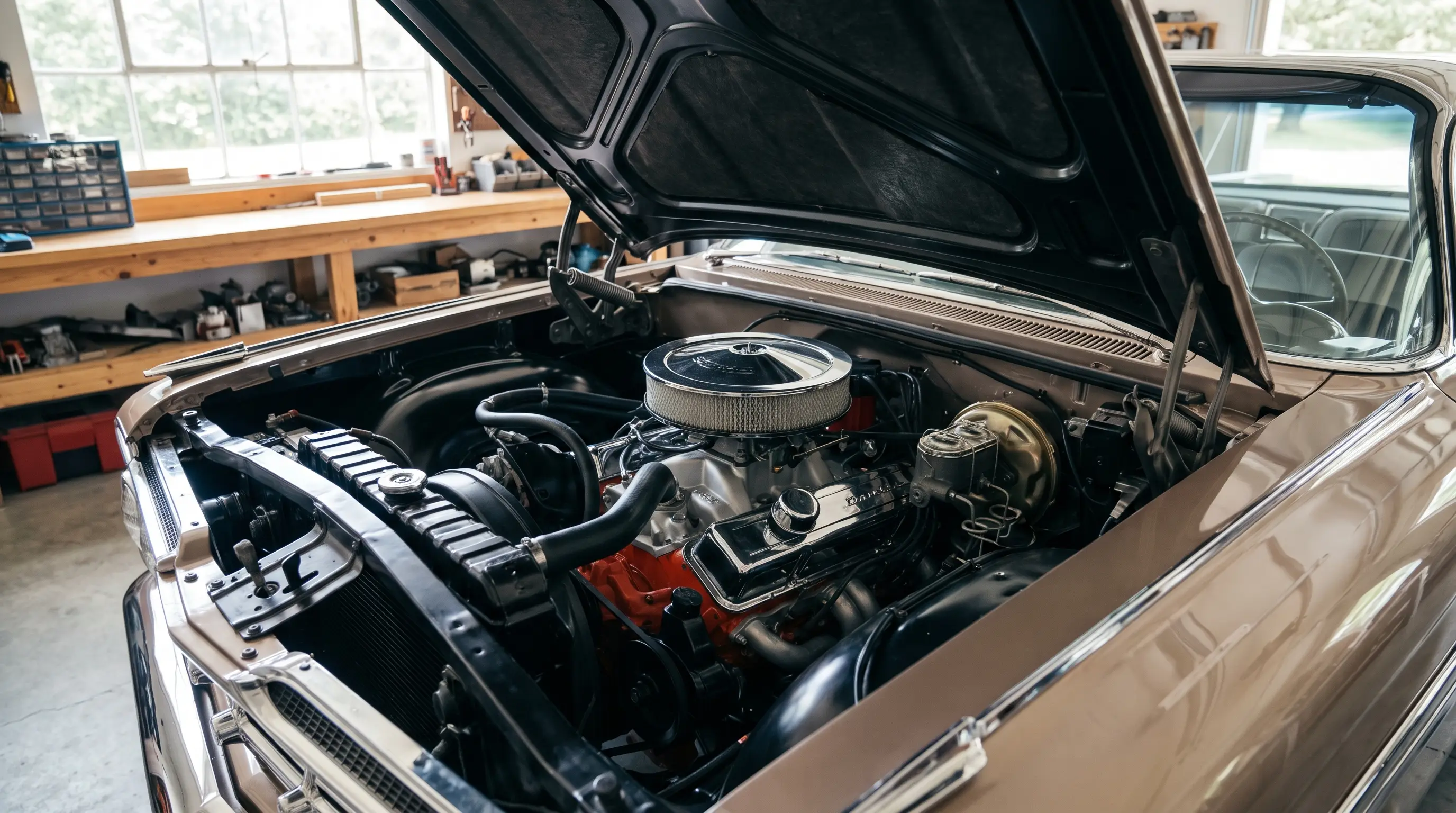
Convertible buyers in 1959 tended to order further up the options sheet than sedan or coupe buyers did, pairing the body style with the more powerful V8 choices more often than the base six-cylinder engine. That pattern makes sense given who was spending the extra money on the priciest body style in the first place: a buyer willing to pay a premium for the convertible top was usually also willing to pay for the stronger engine to match. Power steering, power brakes, and the power top itself were frequently ordered together as a package, reinforcing the convertible's role as the fully loaded halo of the lineup rather than a stripped-down fun car.
This tendency toward heavier optioning is part of why a well-documented original convertible can command such a strong premium today. A car that left the factory with the bigger V8, power accessories, and the top all working in period-correct combination represents a more complete example of what Chevrolet was selling at the top of the range, rather than a base car dressed up after the fact.
How the convertible compares against its 1960 successor
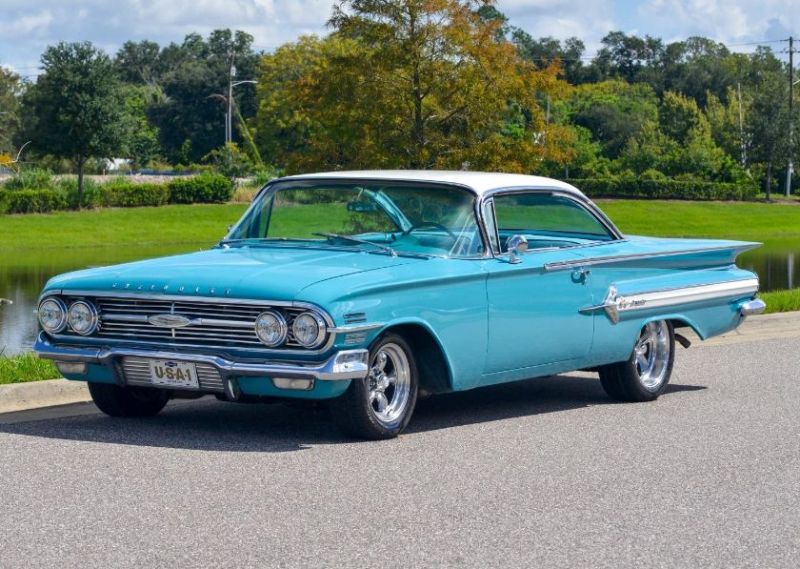
Chevrolet carried the convertible forward into 1960 largely unchanged in concept, though it wore the flattened rear fin and new triple taillight rather than the 1959 body's more dramatic lines. Buyers cross-shopping the two years today often find the 1960 convertible slightly less sought after than the 1959, since the earlier car's more extreme styling reads as the purer expression of the era to most collectors, even though the two years share nearly identical mechanical underpinnings and a very similar ownership experience day to day. That preference is more about taste than any objective difference in build quality or reliability between the two years.
Both years remain far less common than the hardtop and sedan body styles produced alongside them, which keeps demand for either year's convertible strong relative to supply. A buyer who simply wants the open-top experience without paying the steepest premium for the single most desirable year might find a 1960 convertible a genuinely reasonable alternative to hunting for a 1959.
What to check before buying
Convertible-specific concerns go beyond what a hardtop buyer needs to worry about. Frame and rocker rust is more consequential on a car engineered without a fixed roof for extra rigidity, and the top mechanism itself, including the power operation, should be tested through a full cycle rather than taken on faith. Reproduction top material and boot covers are widely available, so an older top is not automatically a dealbreaker, but a seized or partially functioning power mechanism is worth pricing into any offer.
Beyond the mechanical checks, ask specifically about the fabric or vinyl top material itself, since original tops rarely survive fifty-plus years without at least one replacement, and a fresh, well-fitted top says more about how carefully a car has been maintained than almost any other single detail on a convertible. Seams, rear window clarity if it uses a plastic insert, and how evenly the fabric sits across the frame bows are all worth a close look before you commit. If a 1959 convertible has caught your eye, take the time to find a classic Impala with clean, documented frame work before falling for the color combination alone.