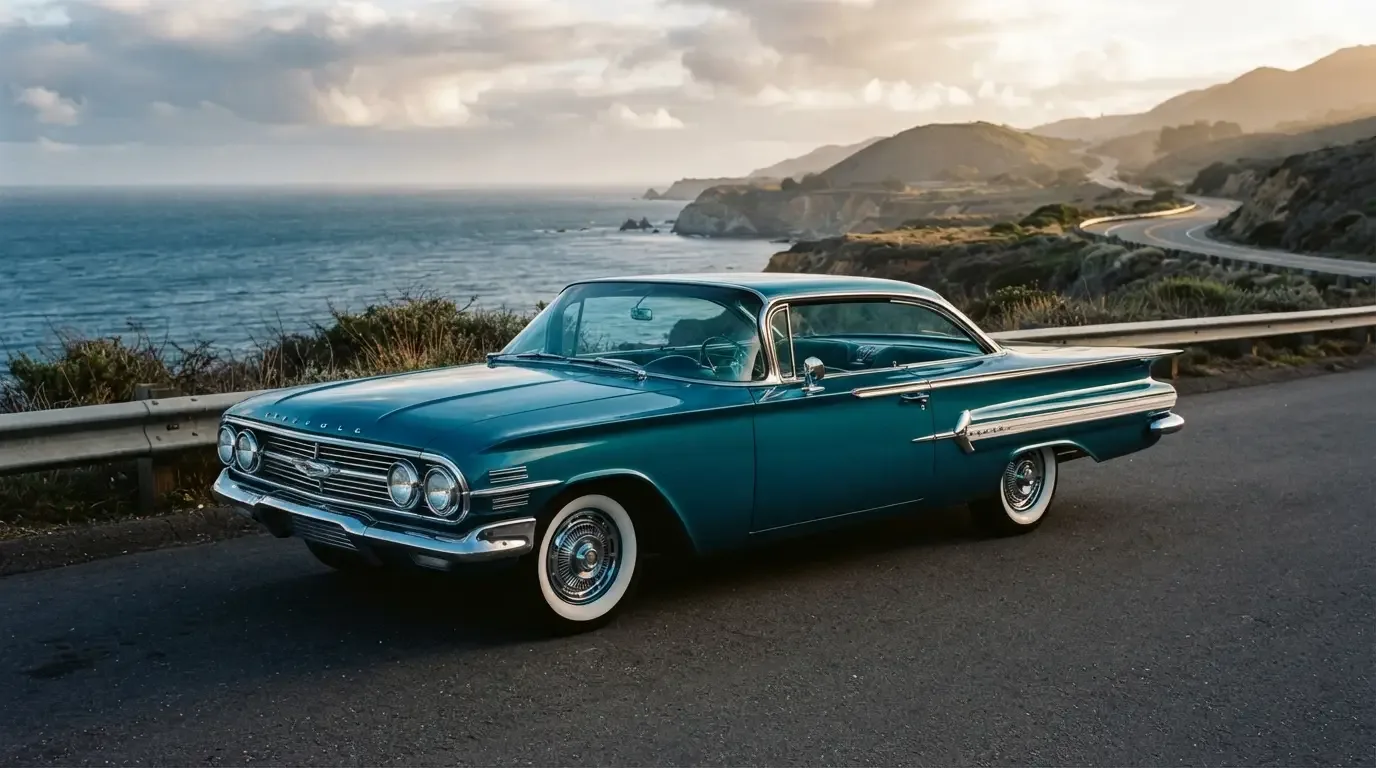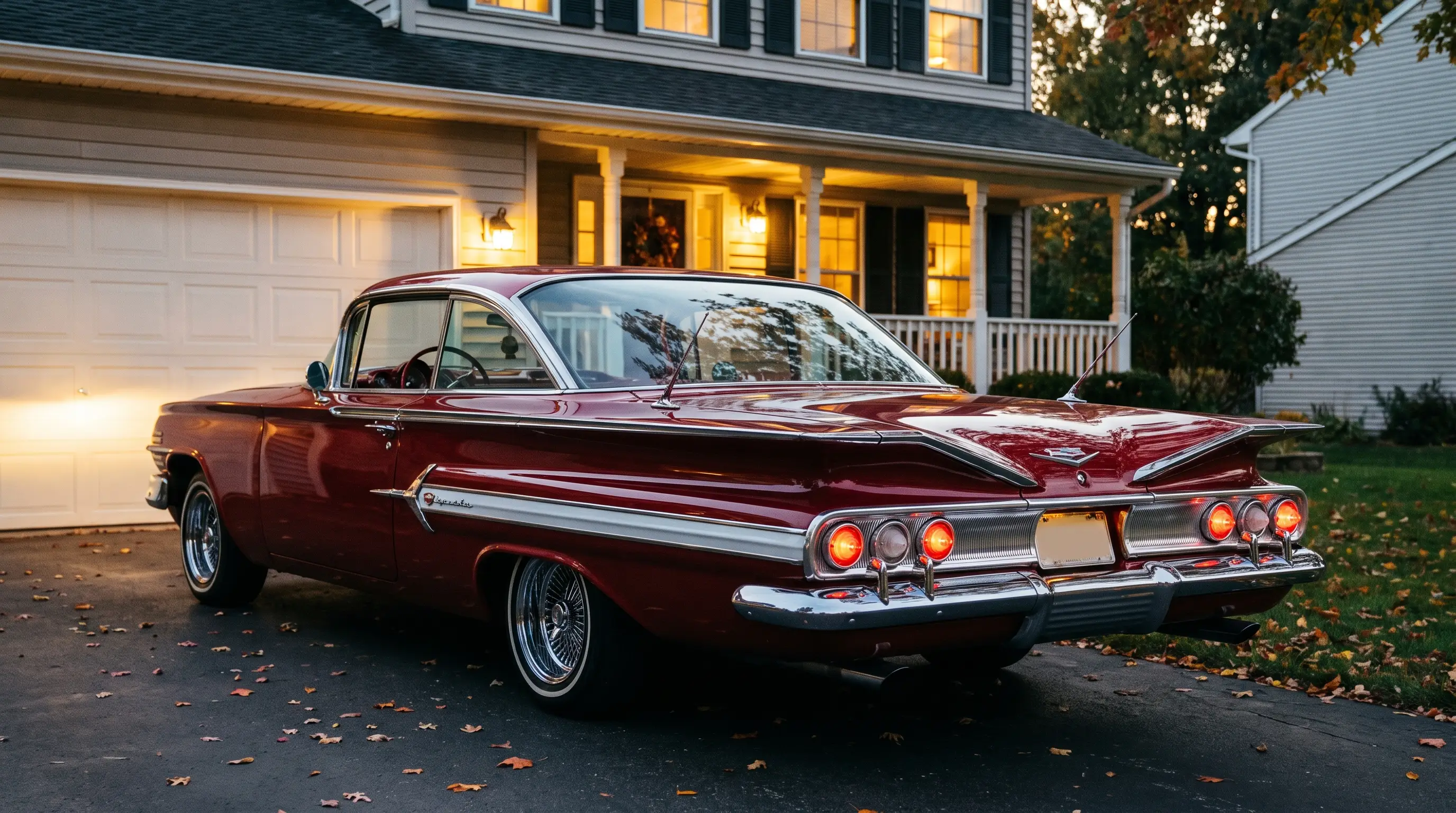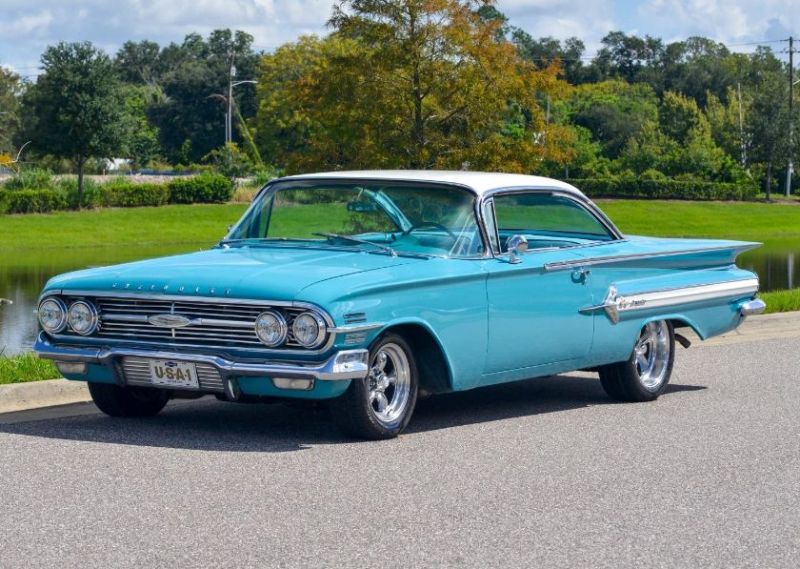
The 1959 Impala did not evolve from the 1958 model so much as it replaced it wholesale. Chevrolet's full-size cars for 1959 rode on an all-new body, wider, lower, and longer than anything the division had built before, and the styling language covering that body owed almost nothing to the previous year. Anyone researching 1959 Impala styling quickly runs into the same fact: this was one of the most abrupt design pivots in the company's history, and the paperwork behind it tells a more interesting story than the folklore usually allows.
General Motors had been developing a more conservative facelift of the existing 1958 platform when Chrysler's 1957 "Forward Look" lineup, with its low beltlines and dramatic fins, reshaped customer expectations faster than anyone at GM had planned for. Design vice president Bill Mitchell, who was then succeeding the retiring Harley Earl, launched a crash program around 1956 and 1957 to reshape all five GM divisions' upcoming 1959 models, sharing greenhouses, firewalls, and inner body panels across the brands to compress the schedule. The result, as the story is usually told among Chevrolet historians, was a compressed and urgent redesign that produced the 1959 body in a fraction of the normal development window. Whether or not every detail of that account holds up to archival scrutiny, the finished car unmistakably reflects a design team reacting to outside pressure rather than working from a settled long-range plan.
A wider, lower stance across the board
The 1959 full-size Chevrolet grew in every dimension that mattered to a showroom customer. Width increased noticeably over 1958, giving the car a low, planted look that Chevrolet's marketing leaned on hard. Overall height dropped, continuing the industry-wide trend toward a lower roofline that had been building since the early part of the decade. The Impala, as the top trim in the lineup for 1959, carried this new body with the most brightwork and the cleanest presentation of any full-size Chevrolet that year.
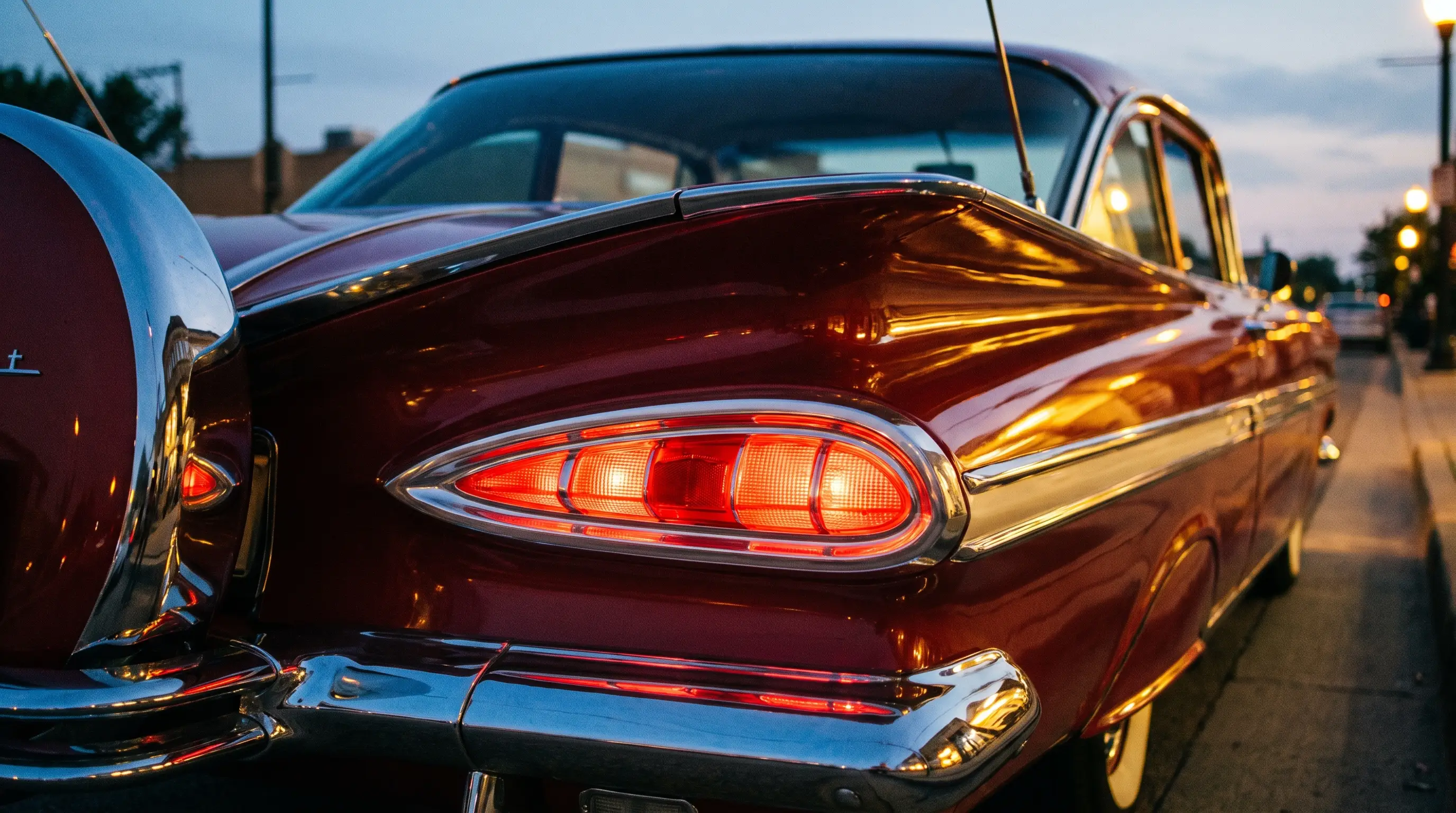
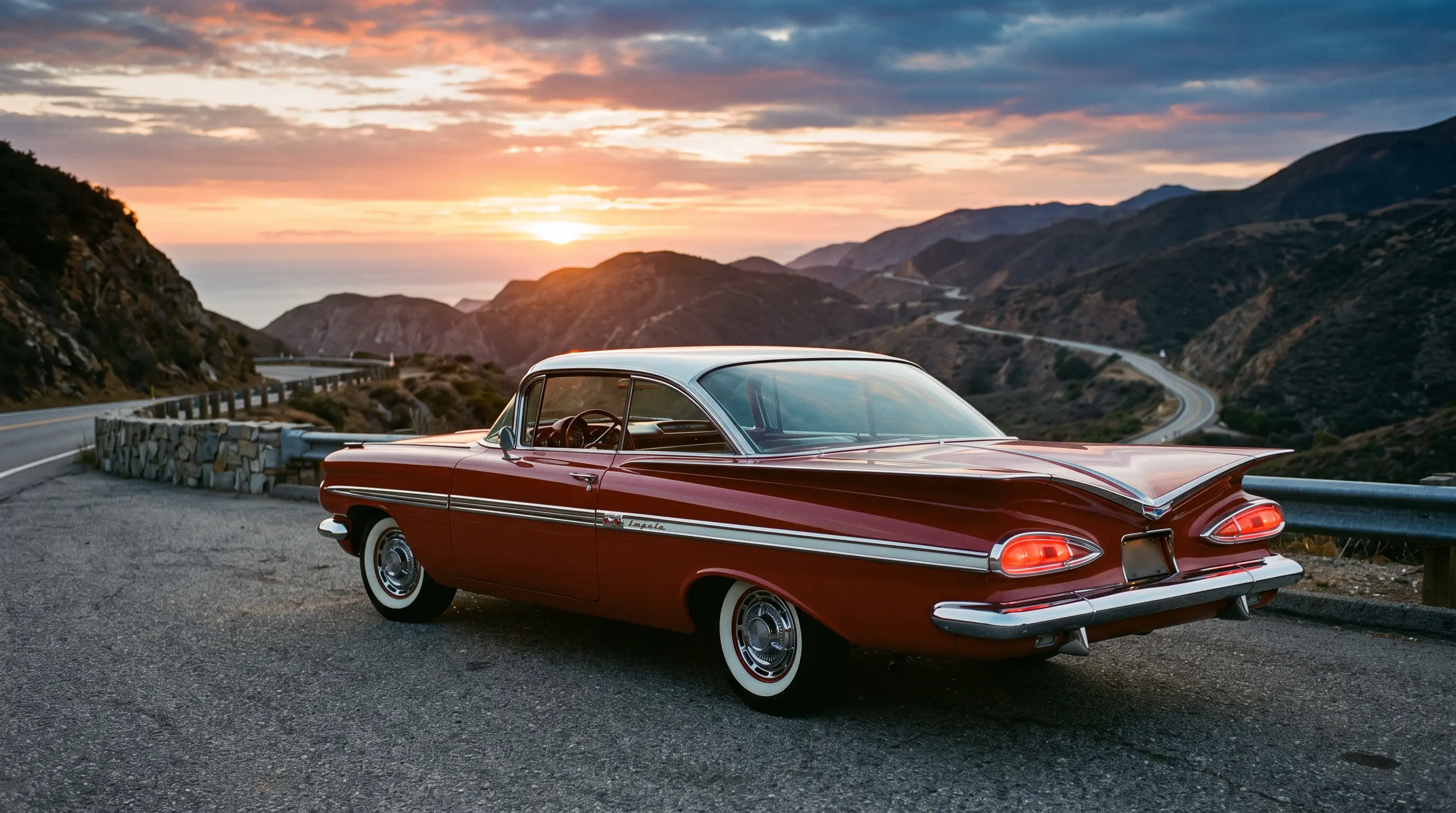
The horizontal emphasis is the detail worth dwelling on. Where the 1958 Chevrolet still carried some vertical styling cues left over from earlier in the decade, the 1959 car flattened everything: a wide grille, a straight beltline, and the now-famous bat-wing rear fin that swept out horizontally rather than climbing skyward. That fin, more than any other single element, defines 1959 Impala styling in the popular imagination, and it appeared on the car for exactly one model year before Chevrolet's designers moved in a different direction.
The grille, the glass, and the greenhouse
Up front, the 1959 Impala wore a wide grille with a concave center section and quad headlights set into the leading edge of the fenders, a treatment shared with the rest of the GM full-size lineup that year but distinguished on the Impala by extra trim. The windshield wrapped further around the A-pillar than on the 1958 car, part of a broader industry push toward panoramic glass that Chevrolet had been building on for several years. Sport Coupe models carried a distinctive flat-topped roofline with thin pillars, giving the hardtop body style an open, airy cabin that buyers of the period specifically sought out.
Inside the greenhouse, the flatter roof and reduced pillar bulk on the pillarless hardtop styles made the cabin feel considerably more modern than the outgoing model, even though the mechanical layout underneath had not changed nearly as dramatically as the sheet metal above it.
Color, trim, and the two-tone era
Two-tone and even three-tone paint combinations were common practice across the American industry by 1959, and Chevrolet offered an extensive palette on the Impala that let buyers pair a light roof with a darker lower body or vice versa, with the paint break often following the character line that ran the length of the car. Anodized aluminum trim panels on the rear deck, positioned around the cat's-eye taillights, added a further layer of two-tone visual interest that lesser Chevrolet series did without. Sport Coupe and convertible models tended to receive the most adventurous color pairings in period brochures, since those body styles were aimed squarely at buyers who wanted to be seen in a new car rather than simply transported by one.
"Every full-size American car from 1959 looks dramatic next to what came ten years earlier, but the Impala specifically was built to look dramatic next to the car Chevrolet had sold the year before. That is a different design problem, and you can see the studio wrestling with it in every panel."
- Tom Ramirez
Why 1959 styling did not carry into 1960
Chevrolet revised the full-size body again for 1960, softening the bat-wing fin into a more restrained shape and replacing the cat's-eye taillight with the triple round lamp arrangement that would become a long-running Chevrolet signature. That quick pivot away from the most extreme elements of the 1959 design supports the idea that the 1959 body had been, in large part, a reaction to a specific competitive moment rather than a styling direction Chevrolet intended to hold onto for years. If you want to read the background on how the two years connect mechanically and historically, that context fills in what changed and why. The 1960 restyle is worth a look too if you want to see how quickly Chevrolet's designers walked back the more extroverted elements of the 1959 body once the immediate competitive pressure had passed.
Dashboard and interior styling cues
The instrument panel for 1959 followed the same wide, horizontal theme as the exterior, with a broad speedometer housing and a passenger-side grab bar that period brochures photographed almost as often as the exterior fins. Upholstery patterns on Impala-specific trim ran to woven vinyl and cloth combinations not offered on the lesser Biscayne or Bel Air, another example of how Chevrolet used interior material as a status marker rather than relying purely on badges. Steering wheels on Impala models carried a distinct crest in the center hub, a small detail that dealers used to distinguish the top series from the rest of the showroom floor at a glance.
Door panels picked up the same horizontal design language as the exterior sheet metal, with a sweeping chrome strip that echoed the character line running the length of the body. None of this interior work was radical on its own, but taken together with the dramatic exterior it reinforced the sense that Impala buyers were getting a genuinely different experience from a Biscayne buyer sitting in a mechanically similar car.
| Dimension | 1958 full-size Chevrolet | 1959 Impala |
|---|---|---|
| Overall width | 77.5 inches | 79.9 inches, about 2.4 inches wider |
| Wheelbase | 117.5 inches | 119 inches, 1.5 inches longer |
| Rear fin style | Vertical cue | Horizontal bat-wing |
| Taillight shape | Round/oval | Cat's-eye lens |
Collecting the styling, not just the car
Because the 1959 Impala's styling exists nowhere else in Chevrolet's catalog, before or after, collectors treat it as a distinct object rather than one point along a gradual evolution. Original trim pieces, correct two-tone paint documentation, and unmolested rear fin panels carry a premium precisely because the look cannot be replicated by simply finding a similar year. Buyers serious about the era should shop classic Impala listings with an eye toward originality of the sheet metal and trim specific to 1959, since a car wearing later parts loses the very thing that made the design notable in the first place.