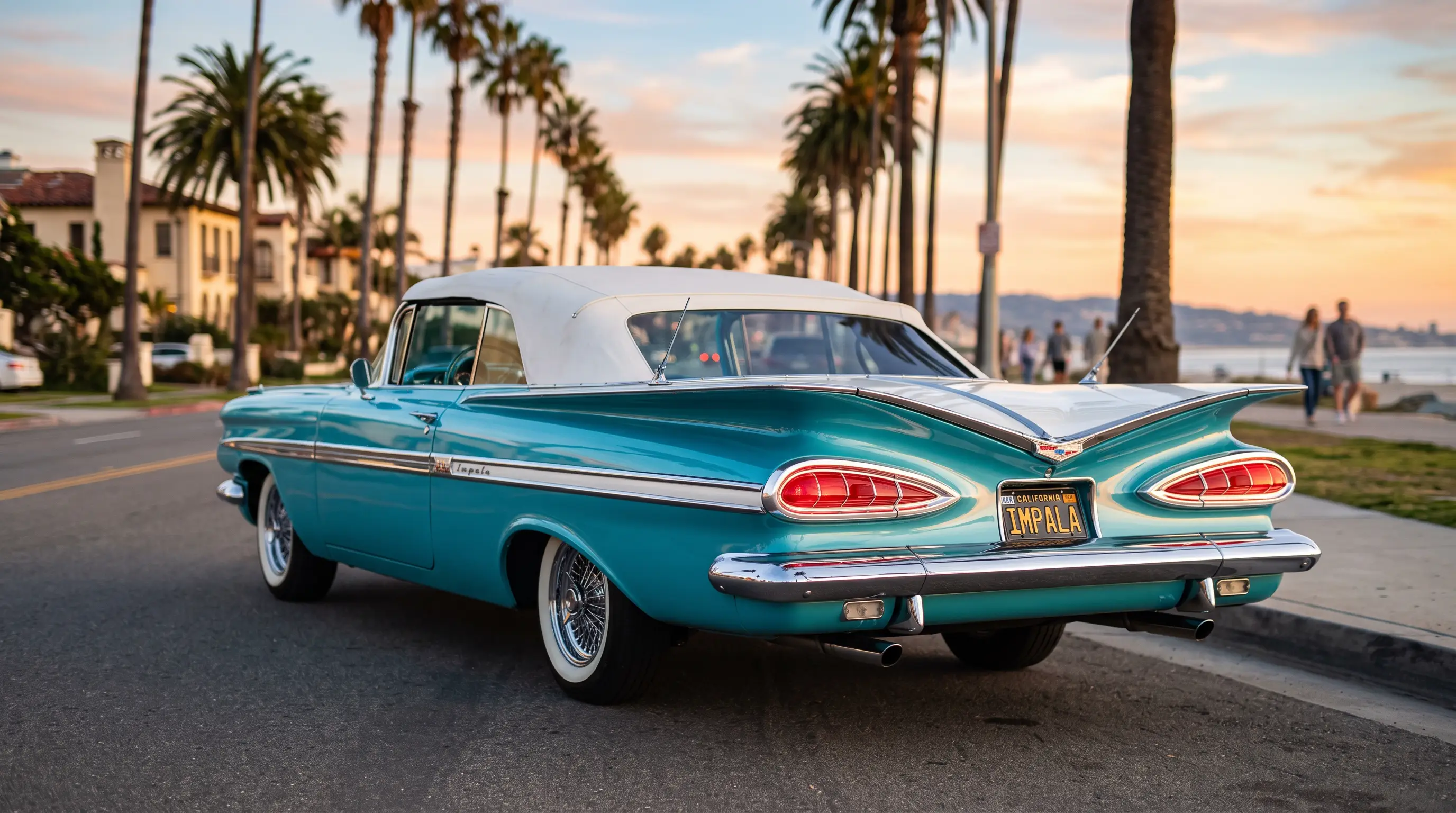
Chevrolet's decision to spin Impala off into its own series for 1959 was a gamble on paper and a clear win in the sales ledger. The 1959 Impala production numbers, broken down across the four available body styles, show a car that immediately became the sales leader within Chevrolet's own full-size lineup, outselling the Bel Air and Biscayne trims it had only recently been promoted above.
From trim level to top seller in one year
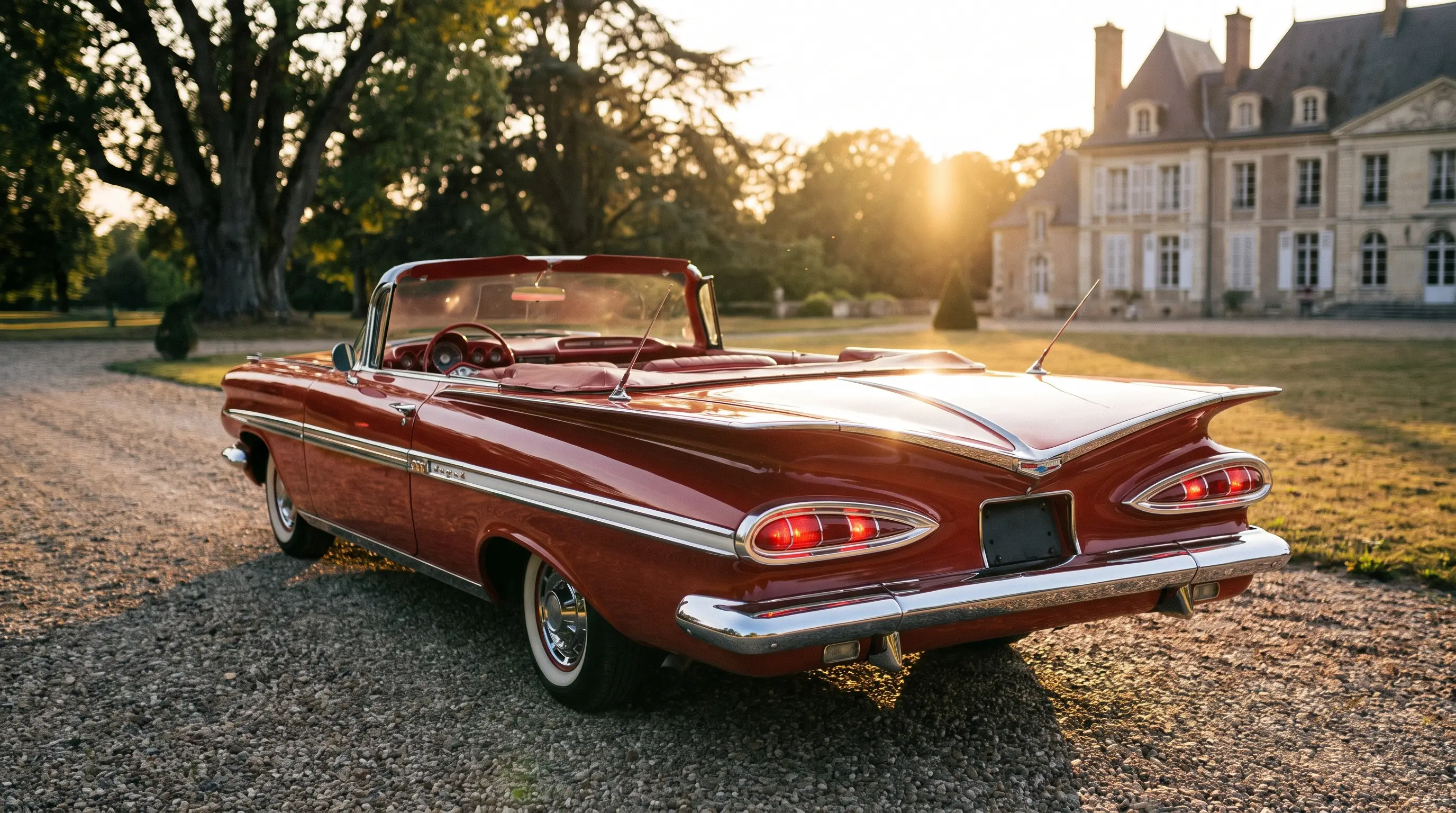
Impala existed for 1958 as a top-of-line option within the Bel Air series, not a standalone model. When Chevrolet made it a full series for 1959, sitting above Bel Air, Biscayne, and the fleet-focused Delray, the change was as much a business decision as a styling one. Production figures for the year show that the gamble paid off quickly, with Impala output for 1959 reaching roughly 473,000 units and comfortably exceeding the roughly 447,000 units reported for the Bel Air series it had been promoted above, making Impala Chevrolet's best-selling nameplate in its very first year as a standalone series.
Body style by body style
Production split unevenly across the four 1959 Impala body styles, following a pattern common across the American industry that year. The Sport Coupe, the two-door hardtop, and the four-door Sport Sedan hardtop together accounted for a substantial share of volume, reflecting buyer preference for the more modern pillarless roofline over the conventional four-door sedan, though the plain sedan remained a strong seller in its own right. The convertible, as the most expensive and most specialized body style, was built in the smallest numbers of the four, at roughly 72,000 units, a pattern that held true for essentially every full-size convertible offered by any American manufacturer in this period.
What drove the numbers
Several factors converged to make 1959 an unusually strong year for Chevrolet's full-size lineup as a whole. The all-new body, wider and lower than the outgoing 1958 car, gave the lineup genuine showroom novelty at a moment when competing manufacturers were also pushing dramatic new styling. Chevrolet's decision to position Impala as the aspirational top series, rather than burying its best trim inside the Bel Air name, gave the marketing department a cleaner story to sell: buy the Impala, get the best Chevrolet money can buy, without needing to explain trim sub-levels to a showroom customer.
How 1960 compared
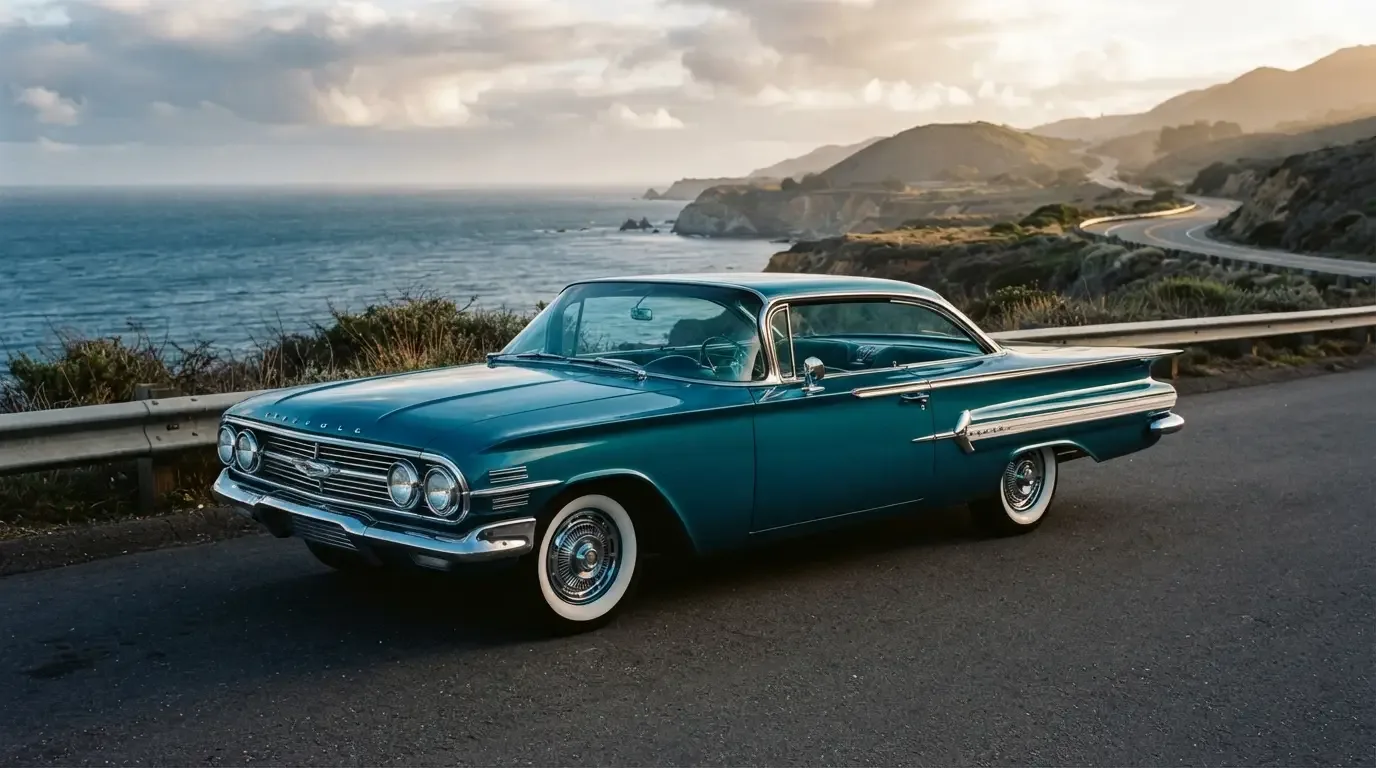
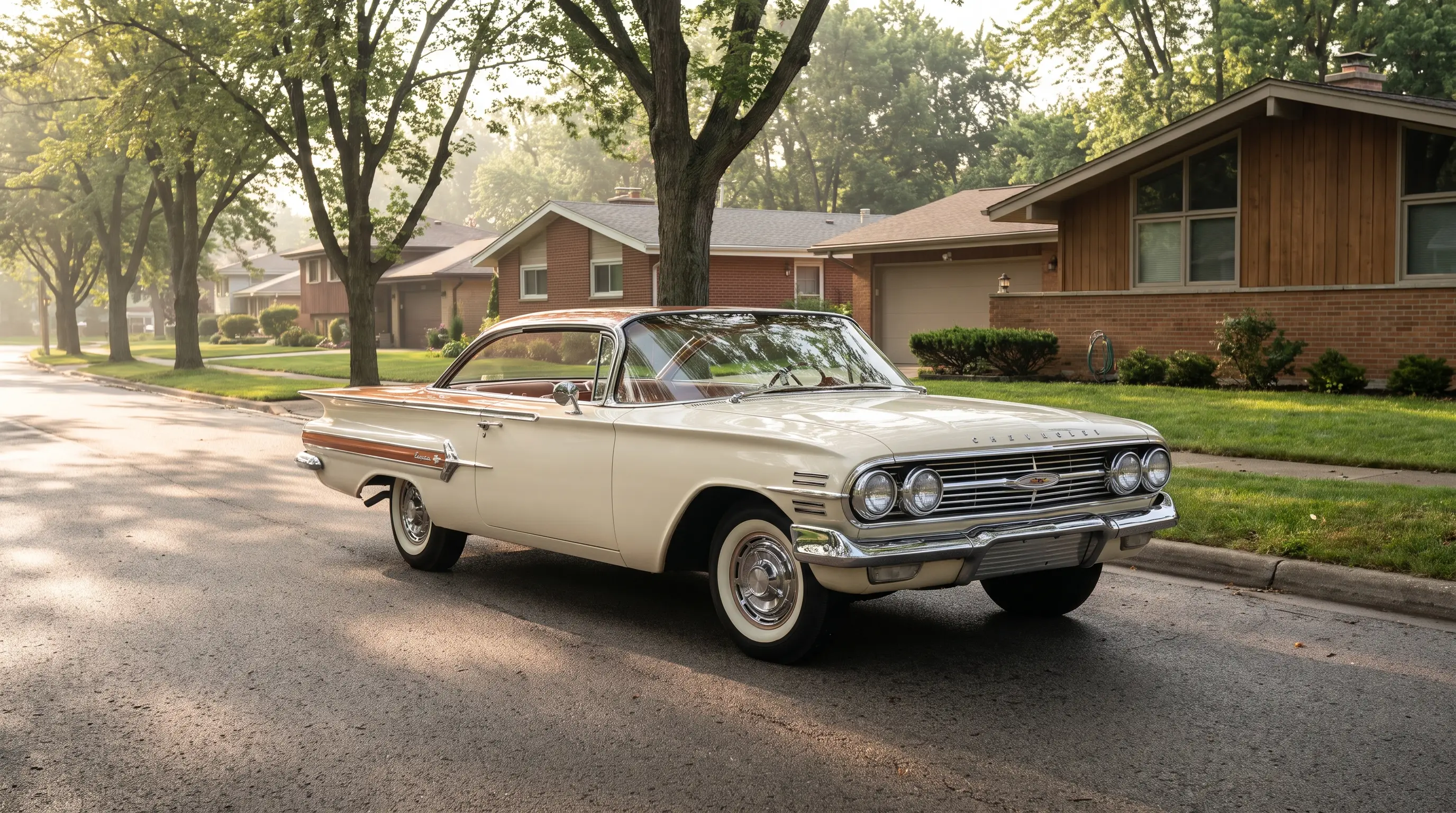
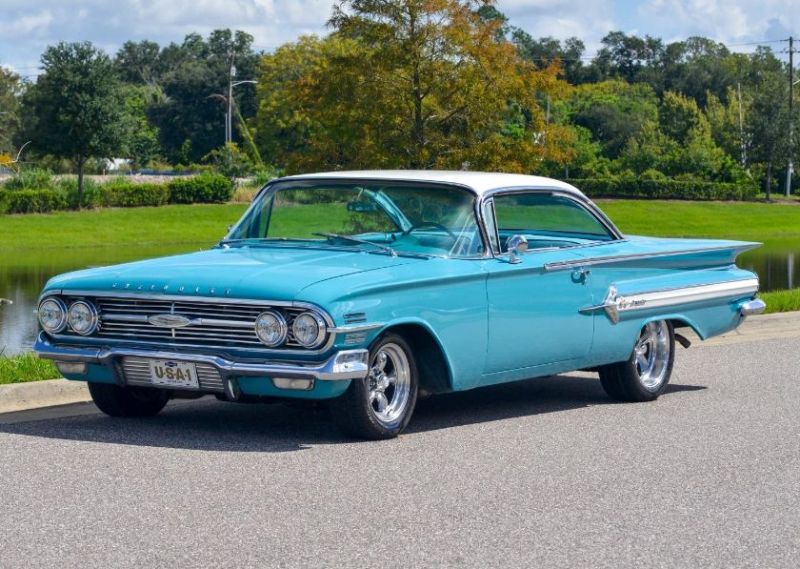
Impala carried its sales momentum into 1960 despite the toned-down restyle that replaced the dramatic bat-wing fin and cat's-eye taillight with a more restrained body and the new triple taillight arrangement. Production for 1960 continued to run strong across the same four body styles, with total Impala output reported at around 490,000 units, confirming that the 1959 result had not been a one-year novelty effect tied purely to the shock of the new styling.
"The easy story is that Chevrolet got lucky with a dramatic new body in 1959. The harder, more accurate story is that Impala kept selling well in 1960 once the drama had worn off, which tells you the series had real staying power beyond the styling shock of that first year."
- Tom Ramirez
Comparing Impala against its Chevrolet stablemates
Placing 1959 Impala production next to Biscayne, Bel Air, and Delray output for the same year shows how quickly the new series reordered Chevrolet's internal hierarchy. Biscayne and Delray, positioned as value-focused and fleet-oriented respectively, moved meaningful volume but never competed with Impala for the image-conscious retail buyer the new series was built to attract. Bel Air, which had housed the Impala name as a trim level just one year earlier, continued to sell reasonably well as a mid-range choice, but the promotion of Impala to its own series effectively created a new ceiling above it that redirected a large share of buyers who previously would have topped out at a well-equipped Bel Air, a shift reflected in Bel Air's roughly 447,000 units for 1959 versus Impala's roughly 473,000.
That internal reordering is the clearest evidence that Chevrolet's decision to spin off Impala worked exactly as intended commercially, not just in absolute sales terms but in shifting where buyers who wanted the best available Chevrolet chose to spend their money.
Where the sales came from
Chevrolet's dealer network in 1959 was already the largest and most geographically spread of any American manufacturer, which gave the new Impala series an immediate distribution advantage that a smaller or newer nameplate would not have enjoyed. Regional sales patterns from the period suggest Impala performed especially well in suburban markets, where the car's combination of size, style, and Chevrolet's reputation for reliable, affordable service appealed to a growing population of buyers moving out of city centers, though detailed regional sales breakdowns are not something the surviving public production records confirm in fine detail. Fleet and taxi buyers, historically a meaningful share of full-size Chevrolet volume, gravitated toward the plainer Biscayne rather than Impala, meaning Impala production skewed almost entirely toward private retail buyers rather than commercial accounts.
That retail-heavy sales mix is part of why Impala production numbers translate so directly into today's collector interest. Cars that were bought and driven by private owners, rather than run hard as commercial vehicles, tend to survive in better condition and with more complete documentation, which is a large part of why parts support and club knowledge remain unusually strong for this model relative to lower-volume, fleet-heavy competitors from the same period.
Why production numbers matter to buyers now
Understanding where 1959 Impala production concentrated helps explain today's collector market directly. Body styles built in smaller original numbers, chiefly the convertible, sell at a premium over sedans and Sport Sedans that were built in far greater volume and remain comparatively easier to find. None of this changes the fact that Impala's overall 1959 output was strong across the board relative to the rest of Chevrolet's own lineup that year, which is exactly why parts support, club knowledge, and documentation remain unusually good for this model compared to lower-volume competitors from the same era.
For the whole picture on how the 1959 series launch connects to the styling and mechanical story around it, the production numbers are the clearest evidence that Chevrolet's gamble on promoting Impala worked exactly as intended. If the history has you curious about owning one, it is worth taking time to shop classic Impala listings across body styles, since the production gaps between them still shape what you will find and what you will pay for it more than sixty years later.
Sources and notes
- Chevrolet Impala - Wikipedia
- Chevrolet Bel Air - Wikipedia
- 1958-1965 Chevrolet full size production numbers - 348-409.com
- 1959-1960 Impala, Bel Air, Biscayne Profile - Collector Car Market
- How The Chevy Impala Became Chevrolet's Best-Selling Car - TopSpeed
Restoration shops and parts suppliers who have served this market for decades will often tell you the same thing in different words: demand for 1959 and 1960 Impala parts has stayed remarkably consistent compared with lower-volume competitors from the same period, precisely because the original production run was large enough to keep a healthy population of cars in circulation. That steady demand has, in turn, kept reproduction parts manufacturing viable for panels, trim, and glass that would otherwise have vanished from the market decades ago, which benefits every owner regardless of which body style or engine they ended up with.