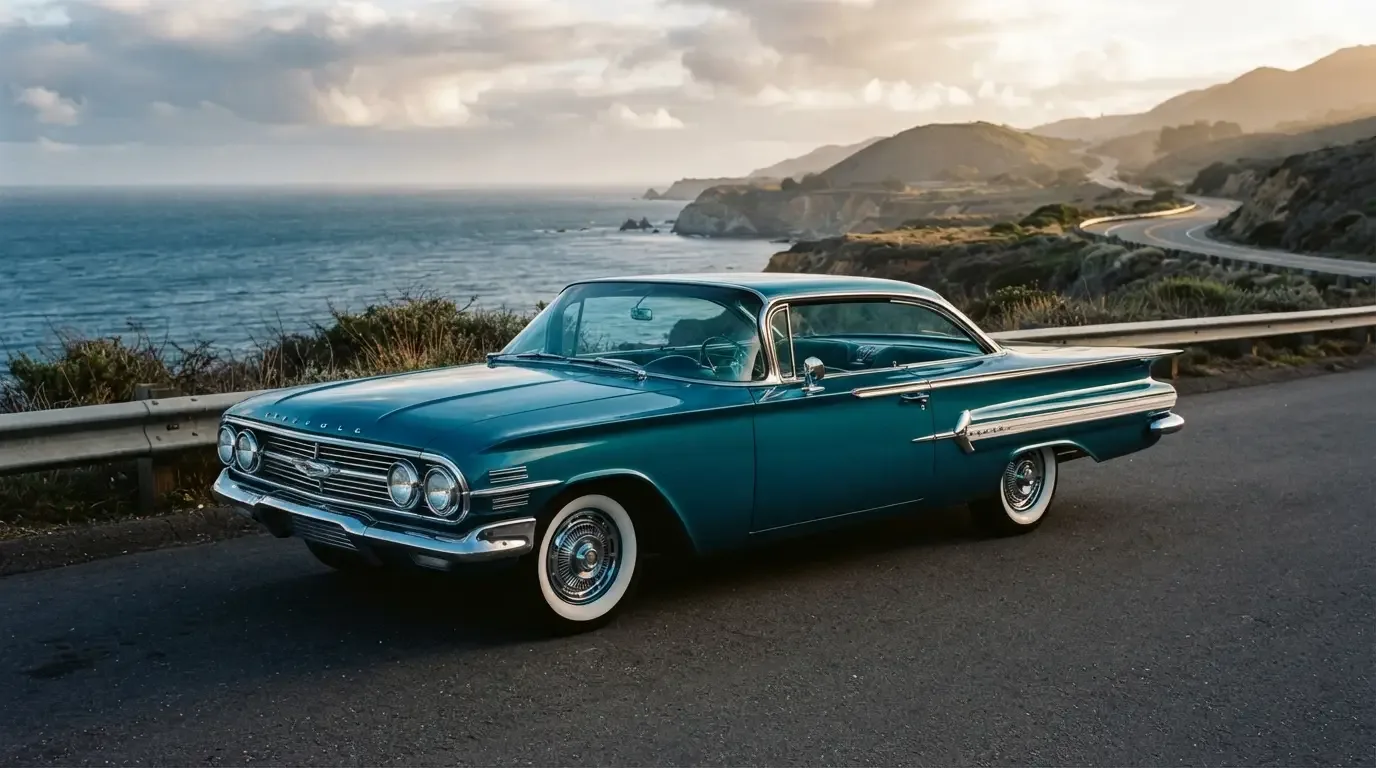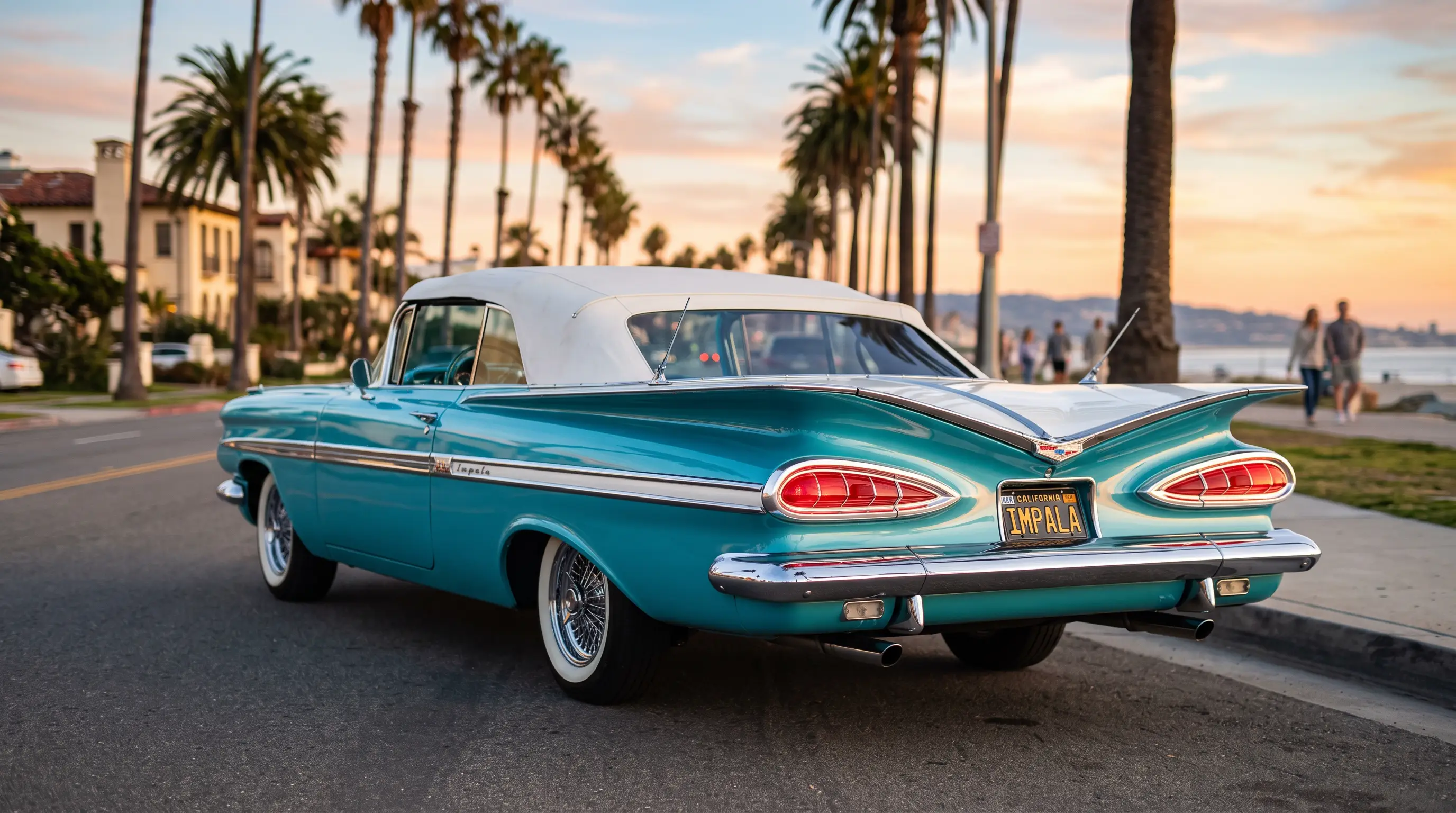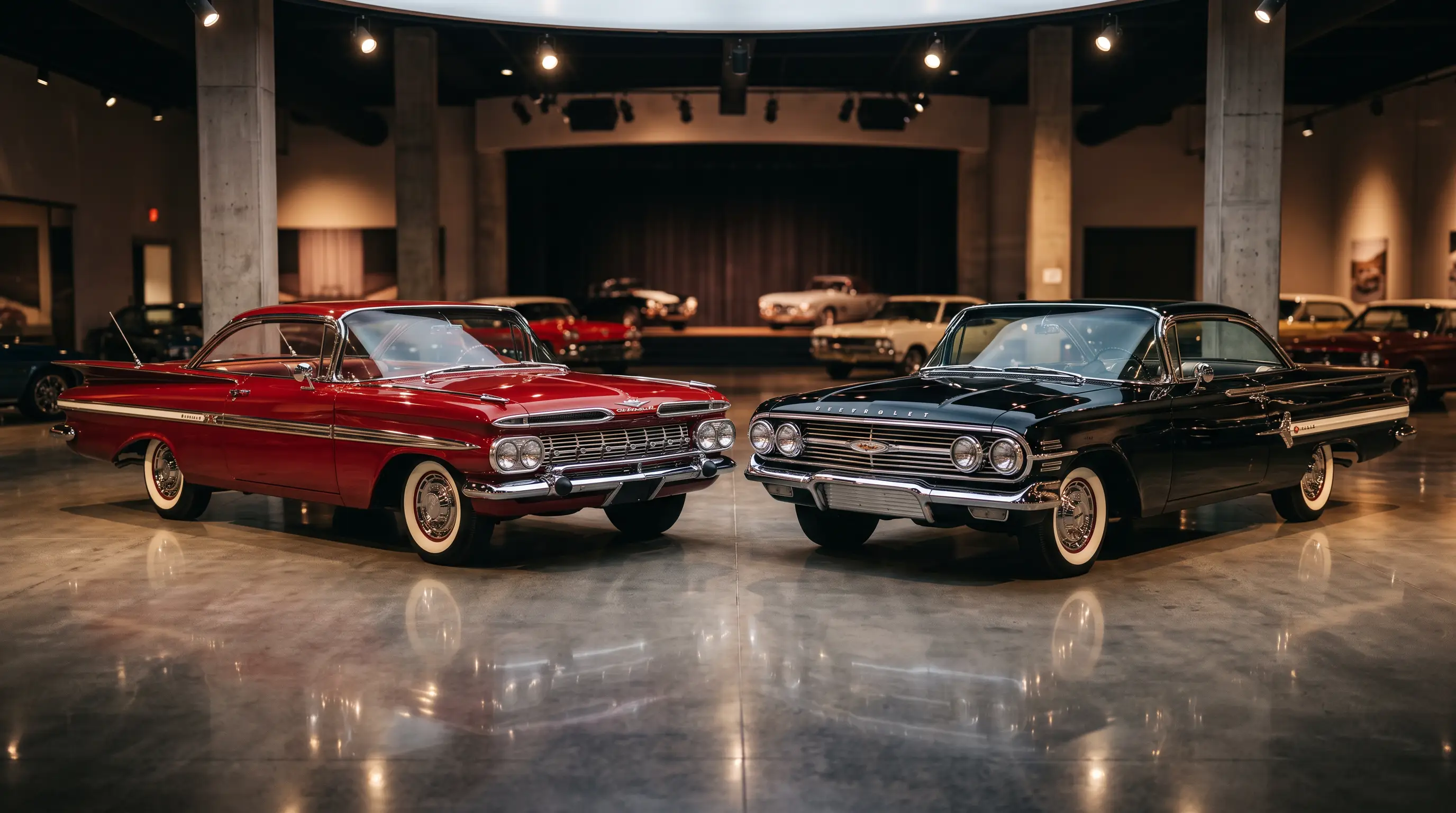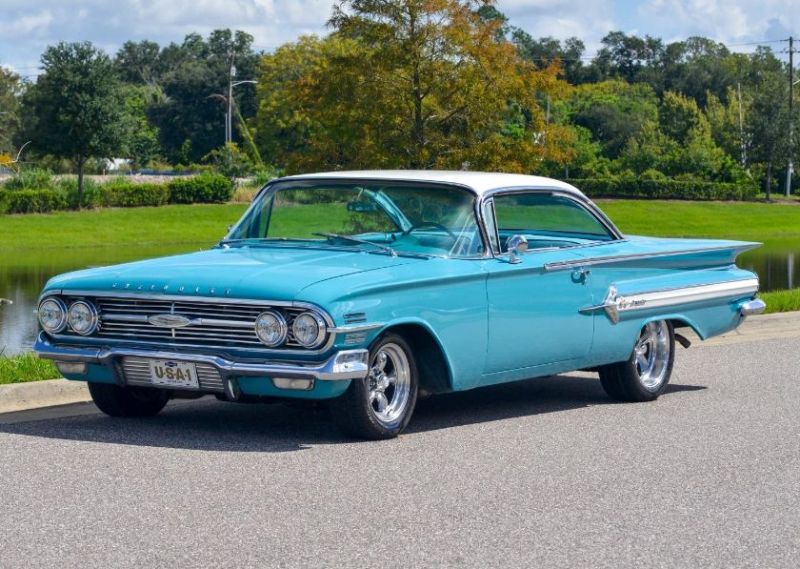
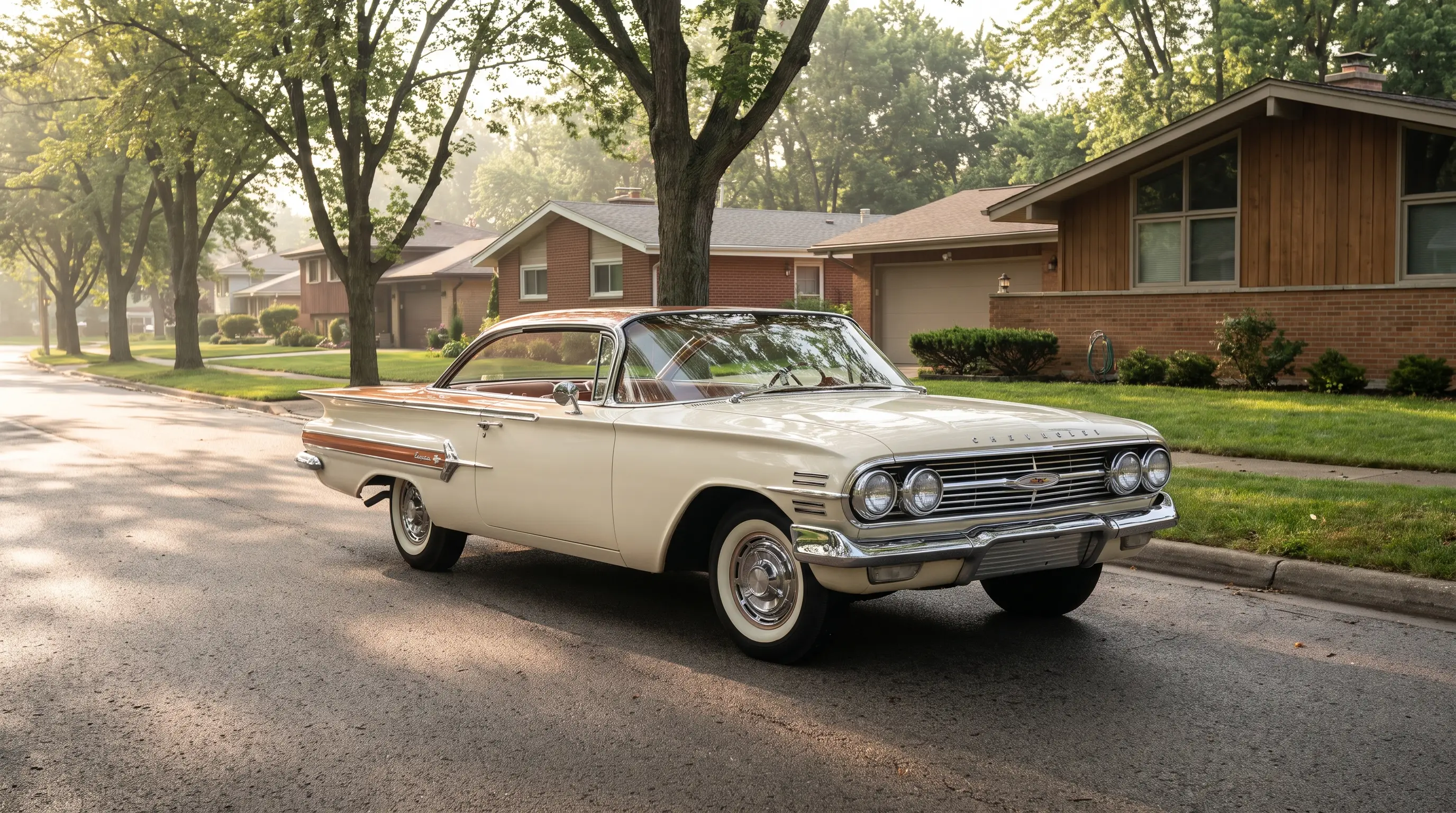
The 1960 Chevrolet Impala arrived as a car with something to prove. Chevrolet's all new 1959 lineup, with its dramatic cat's eye taillights and horizontal batwing rear deck, had been a gamble that paid off in a big way. For 1960, the question inside General Motors was simple. Could the division hold that momentum with a car that toned the theatrics down rather than up. The 1960 impala production numbers answer that question with real authority, and they tell a story about restraint selling just as well as spectacle.
Chevrolet did not touch the basic body shell for 1960. Instead the styling department, working under pressure to calm down some of the wilder 1959 details, rounded off the tailfins, simplified the grille, and gave the rear end a cleaner, less winged treatment. Buyers responded. The Impala, only in its second year as a distinct series after graduating from top-trim Bel Air status in 1958, cemented itself as Chevrolet's image leader for the new decade.
From trim level to top seller
It helps to remember where the Impala name came from. In 1958 it existed as a two-door hardtop and convertible riding on top of the Bel Air line, a halo car meant to give Chevrolet a fighting answer to the personal-luxury aspirations buyers were showing toward Pontiac and Oldsmobile. By 1959 the Impala had been promoted to its own full series, with a four-door sedan and a four-door hardtop added to the lineup. That expansion mattered enormously for 1960, because it meant Chevrolet was no longer selling a specialty two-door image car. It was selling a full range of body styles under the Impala name, and family buyers who wanted the prestige of the nameplate but needed four doors finally had a reason to check that box on the order form.
1960 impala production reflected that shift immediately. The four-door hardtop and sedan variants, unglamorous as they might look next to the convertible in a brochure, did the heavy lifting in volume. Dealers reported that customers who had been cross-shopping a loaded Bel Air were now walking out with an Impala sedan instead, because the price gap between the two had narrowed enough that the extra chrome and better interior trim felt like an easy upgrade.
What the plants were building
Chevrolet built the 1960 Impala across multiple assembly plants, spreading the volume the way it always did for its top-selling full-size line. The Impala nameplate for 1960 was offered as a two-door hardtop coupe (Sport Coupe), a four-door hardtop (Sport Sedan), a two-door convertible, and a four-door sedan. Six-cylinder Impalas existed on paper but were a rare special order in this segment of the range, since Impala buyers were shopping image and performance more than economy, and the vast majority of production left the plant with a V8 under the hood.
Total Impala production for the 1960 model year landed somewhere in the neighborhood of half a million units across all body styles, a total that, on the balance of published tallies, represented a further gain over the already strong 1959 debut year rather than a step back. That growth is the real headline. A brand new nameplate rarely improves on its launch year total, because launch-year hype often fades. The Impala did the opposite, and it did so with a more conservative face than the car it replaced.
The convertible and the Sport Coupe as image leaders
Even though the sedans and hardtop sedans carried the bulk of the volume, Chevrolet's advertising leaned hard on the convertible and the two-door Sport Coupe, because those were the body styles that photographed best and that dealers used to pull customers onto the lot. The convertible in particular remained a comparatively low-volume, high-margin item, and its production numbers were a fraction of the closed-body totals, which is exactly why surviving 1960 Impala convertibles command such outsized attention from collectors today compared to the humble sedan that actually built the sales record.
Anyone researching the 1959 impala story will recognize the pattern immediately, because the debut year set up exactly this dynamic: a flagship convertible for the showroom floor and a sedan doing the real work in the ledger.
Reading the story in the numbers
For the researcher trying to make sense of 1960 impala production, the useful exercise is not memorizing a single total figure. It is understanding the shape of the production run, body style by body style, and matching that shape against what actually survives today. A high sedan production count paired with a low surviving sedan population tells you those cars were driven hard, used up, and scrapped the way ordinary family transportation always is. A comparatively low original convertible count paired with a disproportionately high surviving population tells you those cars were babied from day one because owners knew, even in 1960, that they had bought something a little special.
"People assume a big production number means a common car. What it actually means is a common car in 1960. By the time you get to today's surviving population, the math has flipped completely, and the rare body styles from a high volume year are often easier to find in good condition than the volume leaders."
- Sarah Whitfield
Why 1960 matters in the bigger Impala story
It would be easy to treat 1960 as a placeholder year, the calm interlude between the sensational 1959 debut and the all new bubble-top styling that arrived for 1961. That reading undersells what happened. The 1960 model year is when Chevrolet proved the Impala nameplate itself, not just the flashy 1959 body, was the draw. Production held up and even grew on a toned-down design, which told the division's planners that a great name with broad body-style availability could carry sales even without the previous year's outrageous styling flourishes.
That lesson shaped everything that came after, from the more restrained 1961 redesign to the eventual introduction of the Impala SS later that same year. Readers who want the complete arc, from the 1958 Bel Air top-trim origins through the 1959 launch and into this pivotal second season, should read the full story for the connective tissue between each generation.
Finding a 1960 Impala today
Because the 1960 model year built on an established, well-understood platform, parts availability and mechanical familiarity are strong points for anyone shopping this specific year. Buyers researching the model should look closely at documentation tying a given car to its original body style and trim level, since a well-optioned Sport Coupe or convertible with matching numbers carries meaningfully more value than a base sedan, even though both left the same assembly line the same year. Shoppers who want to see what is currently available can browse classic Impalas on the market to get a feel for current pricing across the different 1960 body styles before deciding which one fits a given budget and use case.
The 1960 Impala rarely gets the spotlight that its dramatic 1959 predecessor or its bubble-top 1961 successor receive. But in production terms, it is arguably the year that mattered most, the one that turned a single sensational model year into a lasting nameplate.