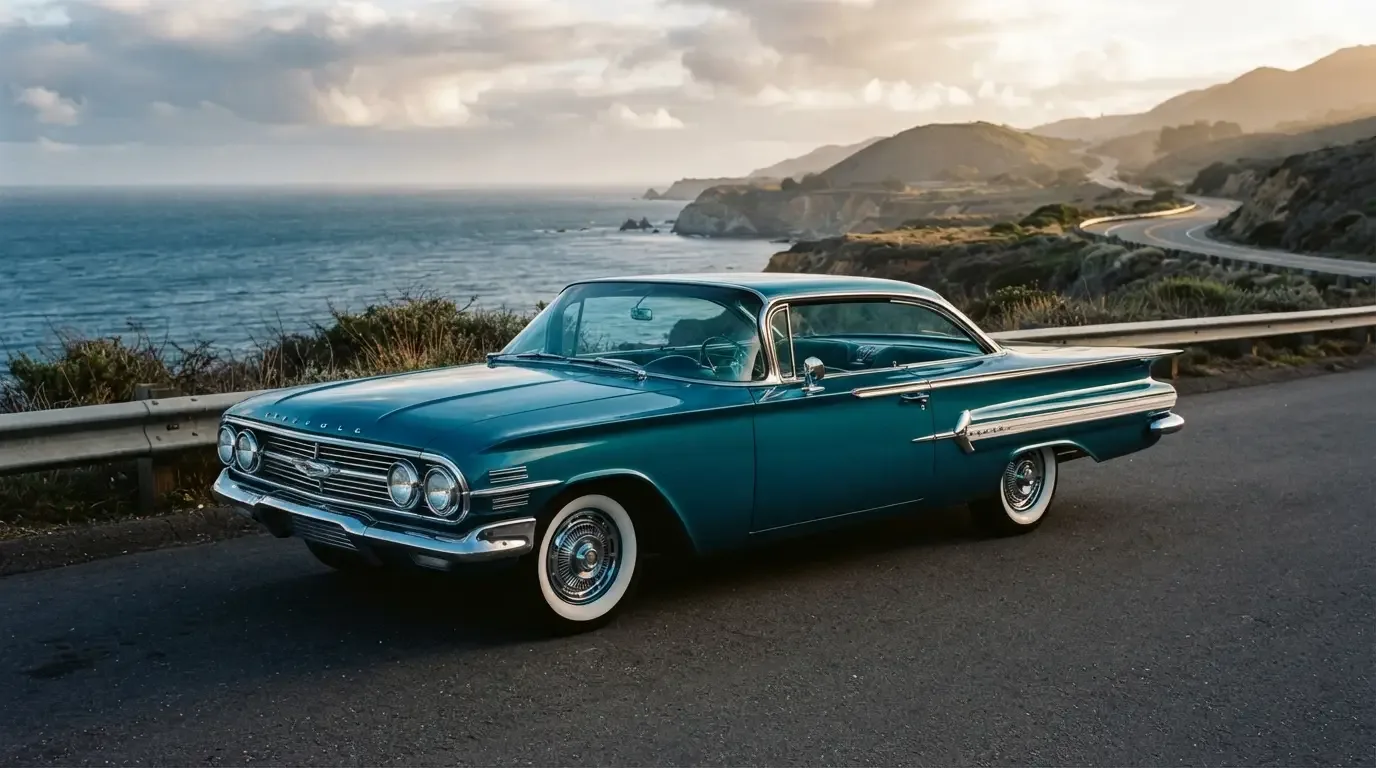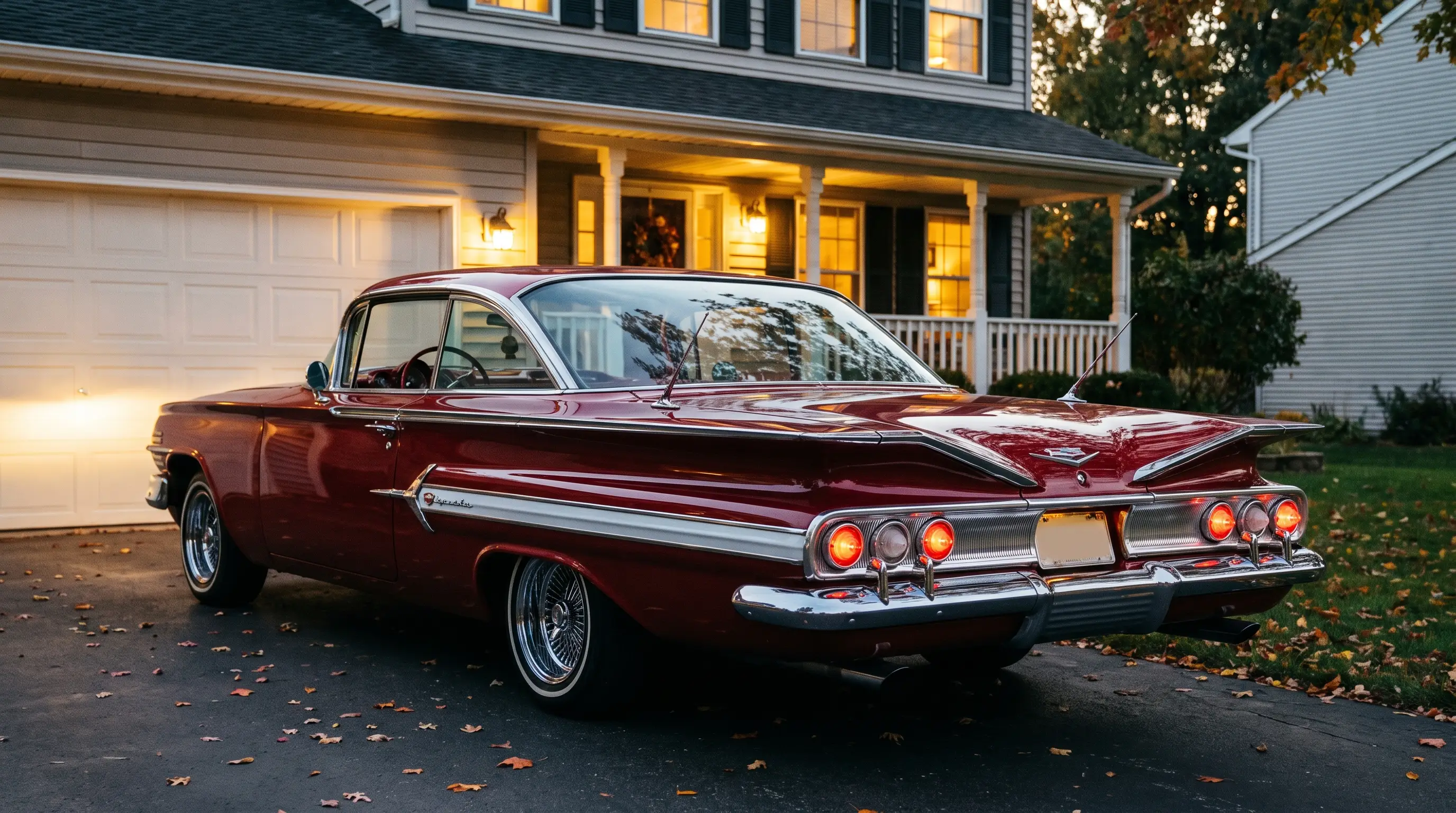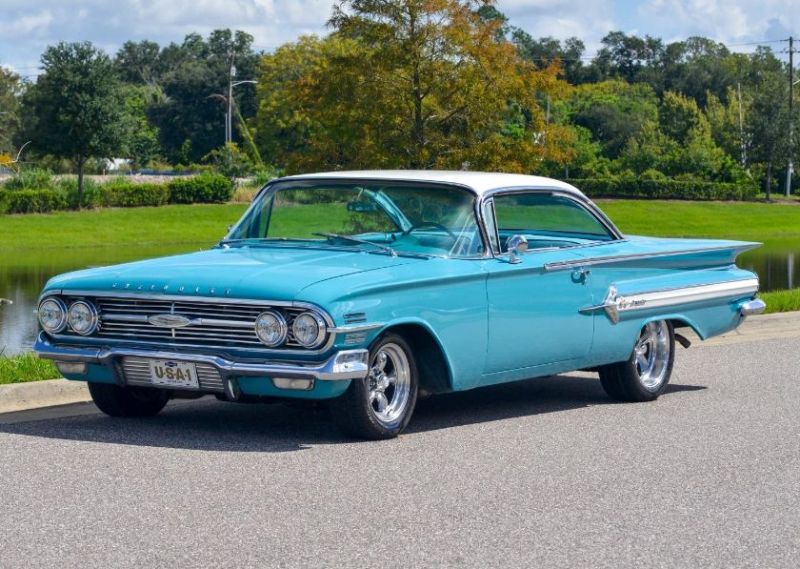
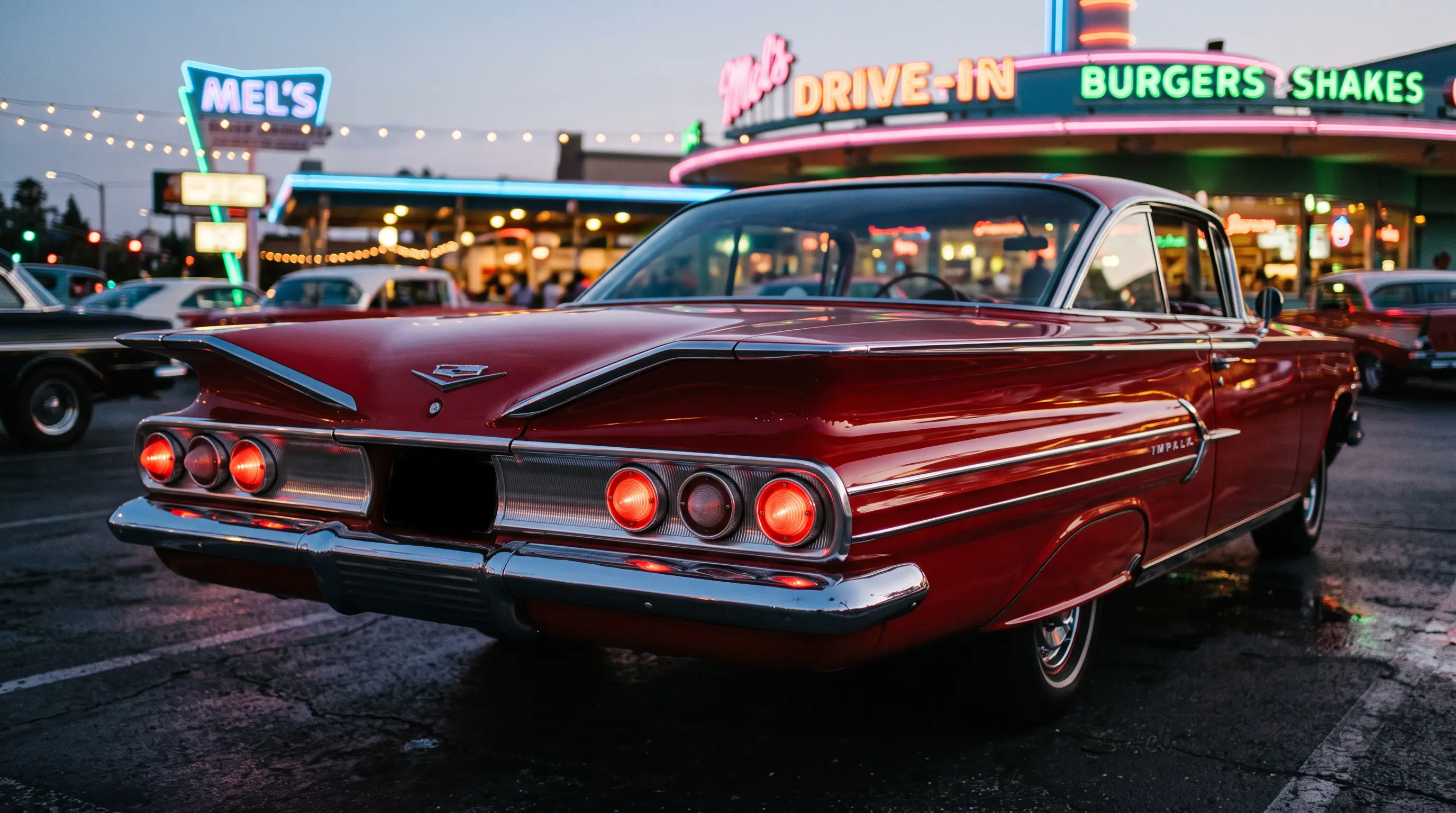
I was at a swap meet outside Springfield years ago, watching a fellow dig through a box of used taillight lenses like he was panning for gold, when he held up three small round lenses still clipped together on their original bracket and said, loud enough for half the row to hear, "there it is, the whole reason people know a Chevy from the back." He was talking about the triple taillight that Chevrolet introduced on the 1960 Impala, and forty years of club meetings later I still think he had the story about right.
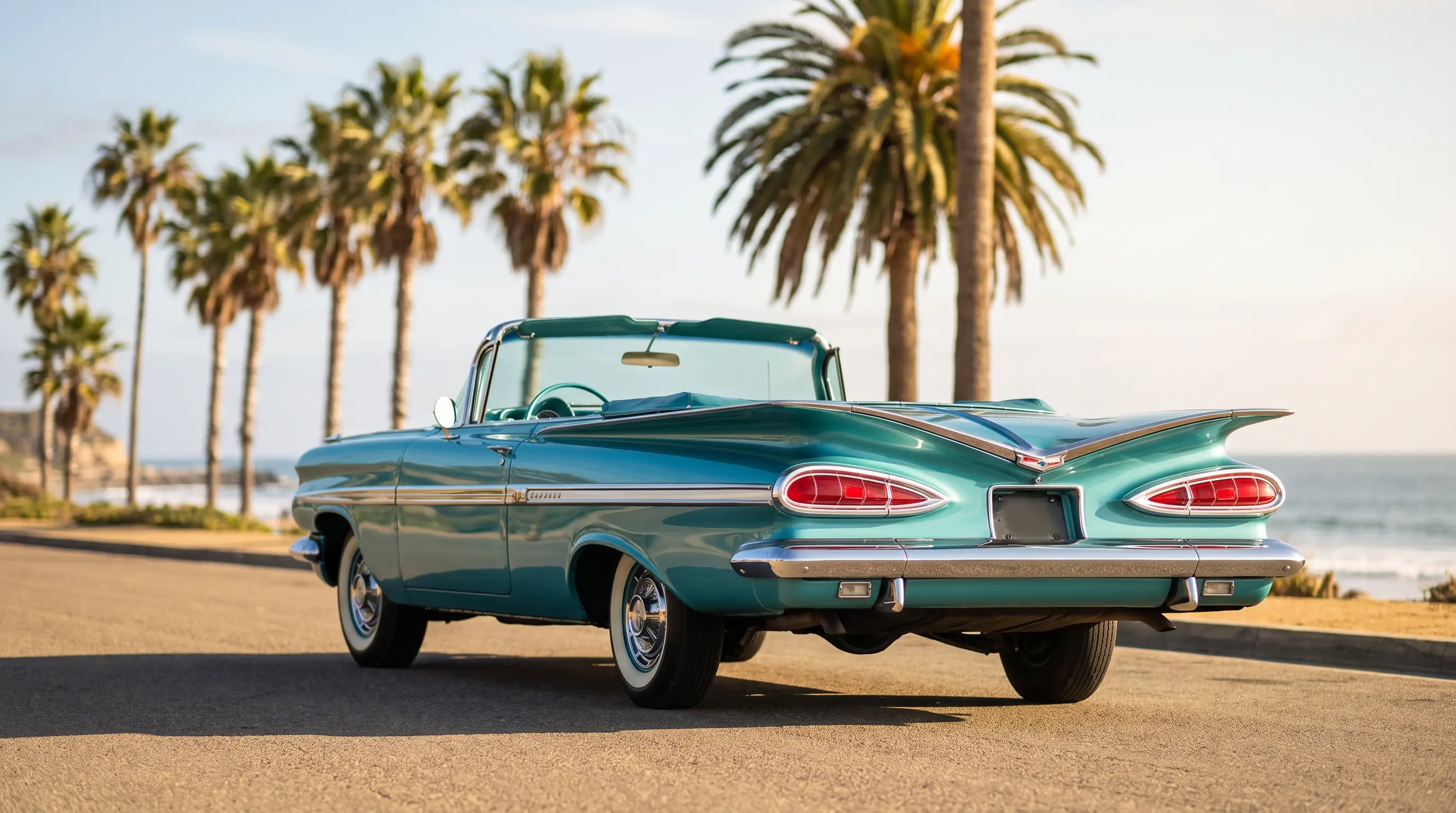
The Impala triple taillights did not arrive with much fanfare. They replaced the one-year-only cat's-eye lens from 1959, and on paper that reads like a minor trim change buried in a facelift. In practice, that cluster of three round lamps per side became one of the longest-running visual signatures Chevrolet ever put on a car, and it started, almost quietly, on the 1960 full-size lineup.
How the change happened
For 1960, Chevrolet flattened the dramatic bat-wing rear fin that had defined the 1959 Impala and needed a new taillight to suit the calmer sheet metal. Instead of one long lens shaped to follow a sweeping fin, the designers split the function into three separate round lamps, stacked or grouped depending on the exact styling of the rear panel, set into a simpler and more restrained deck. That is where this started, and it matters here: the 1959 to 1960 transition was less a slow evolution and more a course correction, and the triple lamp is one of the clearest physical markers of that correction.
What nobody at Chevrolet seems to have predicted was how well the idea would stick. The triple taillight theme reappeared on full-size Chevrolets for decades afterward, occasionally reinterpreted, sometimes dropped for a year or two, but always coming back. A one-year taillight, the cat's-eye, gave way to a design language that outlived it by a wide margin.
Why club members treat it as a signature detail
Ask around at any Chevrolet club meet and you will find people who can identify a full-size model year from thirty feet away purely off the taillight arrangement, long before they read a badge or check a grille. That kind of tribal knowledge builds up around details that matter to the people who live with these cars, and the triple lamp on the 1960 Impala is exactly that sort of detail. It gets pointed out at car shows, argued about in club newsletters, and cross-referenced obsessively when someone is trying to confirm whether a rear clip on a project car is correct for the year.
Documentation backs up what the enthusiasts already know from experience. Factory parts books and dealer literature from the period show the triple lamp housing as a distinct part number from anything used in 1959, confirming it as a deliberate, catalogued design choice rather than a running change made mid-year.
How the shape changed across the following decades
The triple lamp did not stay frozen in its 1960 form. Over the following years Chevrolet reworked the exact arrangement of the three lights on later full-size models, sometimes stacking them, sometimes grouping them side by side within a single lens, and occasionally dropping the theme for a model year or two before bringing it back. Club members who study these variations closely can often date a full-size Chevrolet within a year or two purely from the taillight cluster, without needing to check a single badge or trim tag. That level of detail sounds obsessive to an outsider and feels completely ordinary to anyone who has spent a Saturday afternoon at a club show comparing notes with other owners.
What makes the 1960 car specifically important in that longer story is that it is the origin point. Every later variation on the triple lamp theme traces back to the decision Chevrolet made when the cat's-eye lens needed replacing, and that decision has aged into one of the most recognizable pieces of brand identity the company ever produced almost by accident.
Stories from the parking lot
Every long-time Chevy person has a version of my swap meet story. Someone finds a taillight lens in a bin of unrelated parts, and the moment they recognize the shape, the whole conversation around them stops being about price and starts being about history. I have watched grown adults argue for twenty minutes over whether a particular lens texture belongs to early or late 1960 production, citing nothing but memory and old parts catalogs pulled out of a truck bed. That kind of argument, half documentation and half folklore, is how most of what we actually know about small production details gets preserved. Nobody wrote a definitive book chapter on taillight bracket variations. The clubs did the work instead, one swap meet at a time.
"You learn more about a model year from the people standing around it in a parking lot than you ever will from a brochure. The brochure tells you what Chevrolet wanted to sell. The guys with the parts bins tell you what actually survived."
- Wayne Coburn
How the housing actually sits on the car
The three lamps on the 1960 Impala are not simply three separate bulbs stuck into a flat panel. The housing follows the contour of the rear deck, angled slightly to be visible from the side as well as straight on, a detail that took some trial and error to get right according to the trim variations you can spot between early and late production cars. Wiring for the triple arrangement runs through a single harness connector shared across all three lamps, which is a small mercy for anyone doing electrical work decades later, since it means a failure in one lamp rarely takes out the whole assembly.
Chrome bezels around each individual lamp were a step up from the plainer painted surrounds used on lower trim levels within the same 1960 lineup, another example of Chevrolet using small details to separate Impala from Biscayne and Bel Air even after the more dramatic 1959 two-tone schemes had been dialed back.
What to look for if you are buying
If the triple taillight is what drew you to a 1960 Impala in the first place, take the time to look closely at all three lenses, the bezel finish, and the mounting bracket before you commit. Reproduction parts are widely available and generally good quality, but a car with a full set of correct original housings, unfaded and uncracked, is worth more to a serious collector than one running a mix of old and new. Ask the seller directly whether any lamp housings have been replaced, and do not be shy about asking to see documentation or receipts if the car has had bodywork done near the rear deck.
None of this is meant as a warning against buying a 1960 Impala with replaced taillights. Plenty of good, honest, well-loved cars wear reproduction lenses because the originals simply did not survive fifty-plus years of weather and use. It is simply the kind of detail worth knowing before you shake hands on a deal. There is a classic Impala for sale somewhere near you most months of the year if you keep an eye on the usual channels, and knowing the taillight story means you will be able to tell, at a glance, exactly what you are looking at.