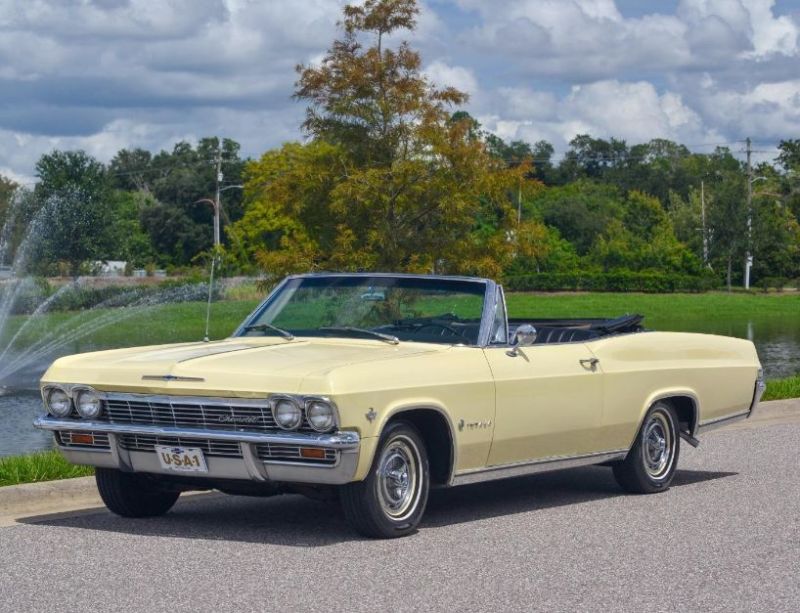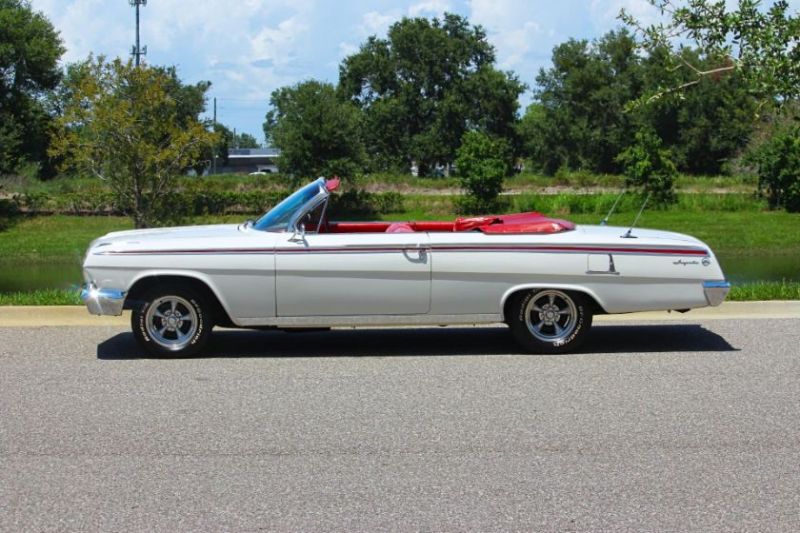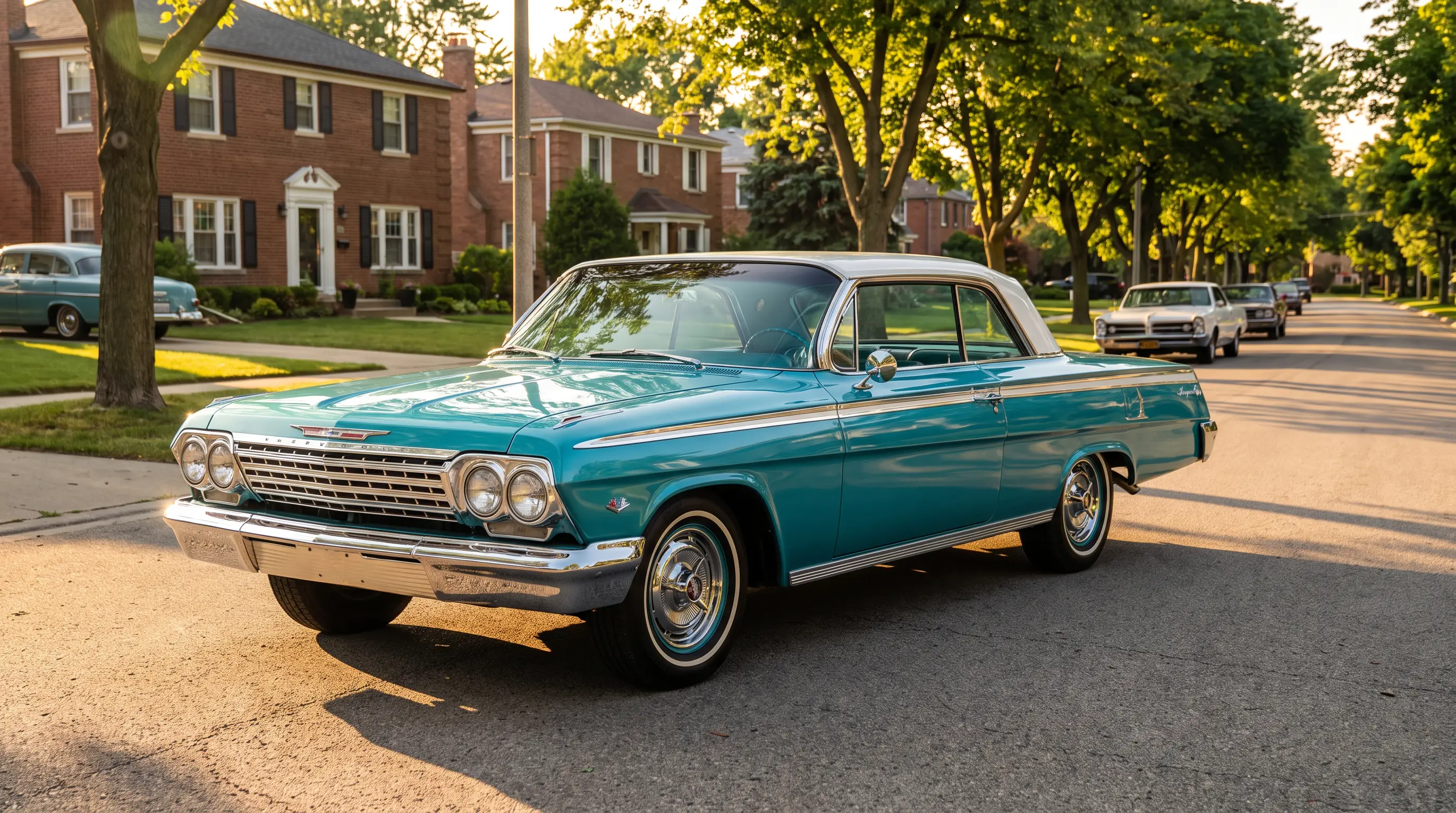
Track the Impala's body styles across 1961 through 1964 and you are really tracking a single roofline argument played out over four seasons. The sedan and the convertible stayed conceptually stable the whole time. It was the two-door Sport Coupe that changed shape year over year, and understanding that evolution is the fastest way to date a full-size Impala from this era at a glance, long before checking a VIN or a trim tag.
1961: the bubble top arrives
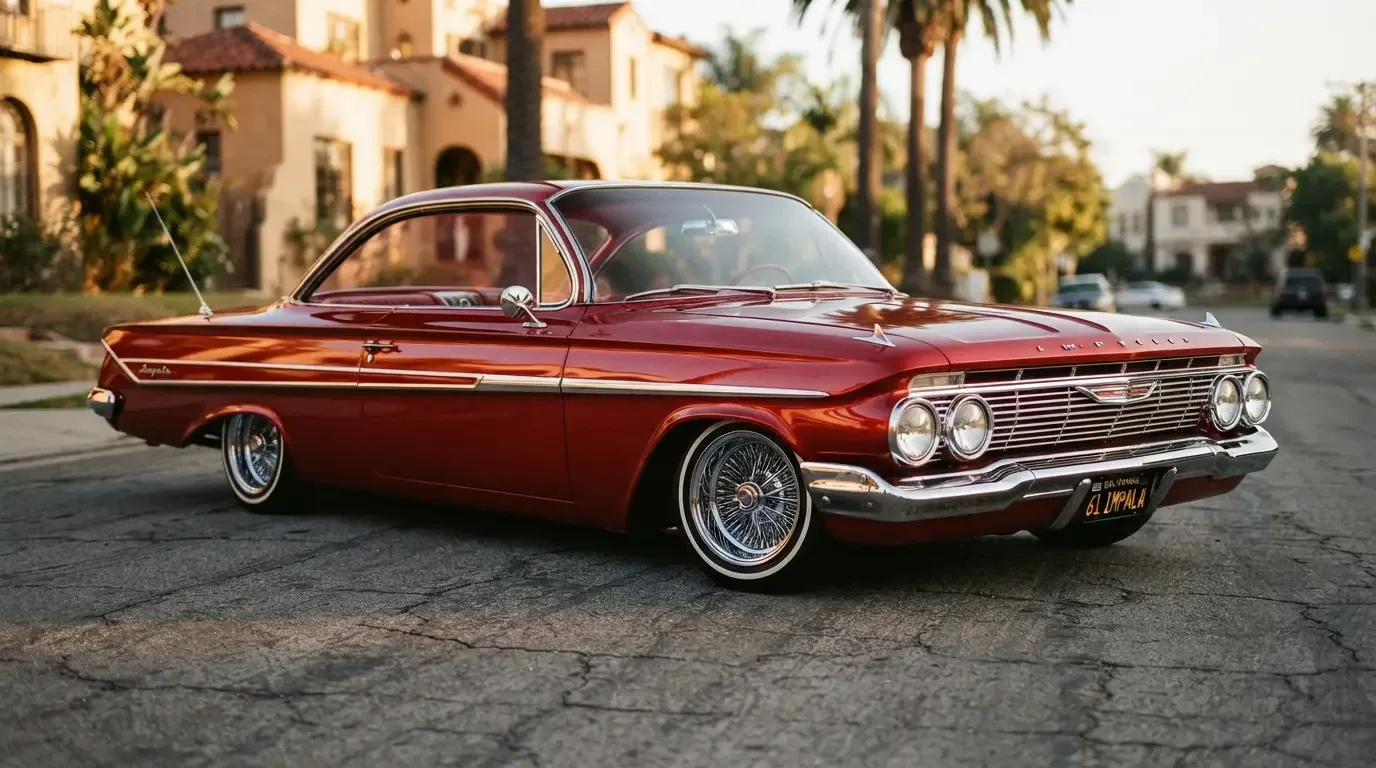
Chevrolet's full-size cars got an all-new body for 1961, and the Impala Sport Coupe introduced the roofline collectors now call the bubble top: thin pillars, heavily curved side glass, and a rounded backlight that gave the car a light, almost aircraft-canopy look from the rear three-quarter angle. It was a striking departure from the flatter, more upright rooflines of the late 1950s, and it became the signature shape most people associate with early-1960s Chevrolets even though it only lasted a few model years in this exact form. The sedan, the pillarless Sport Sedan hardtop, and the convertible rounded out the 1961 lineup, each carrying the same general proportions but without the coupe's distinctive glass.
1962: the Impala moves on, the Bel Air keeps the old roof
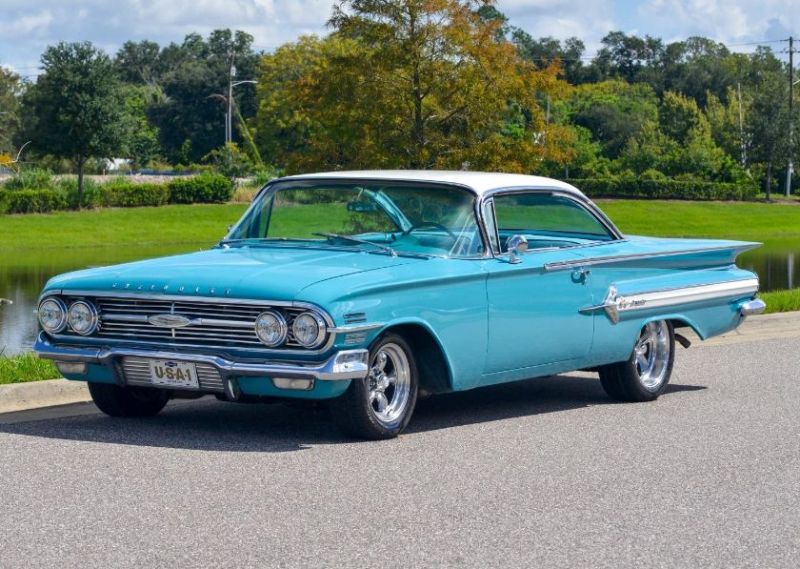
For 1962, Chevrolet moved the Impala Sport Coupe to a new formal notchback roof, with a more upright, conservative profile aimed at buyers who wanted the flagship trim to look less flashy than the outgoing shape. The bubble top curve did not disappear from the lineup that year, but it moved down a rung: Bel Air kept the old roofline for one final season while Impala buyers got the new look exclusively. The two roofs existed side by side across the full-size range in 1962, but not on the same nameplate, which means a genuine 1962 Impala Sport Coupe with a bubble top roof does not exist. Cars from this specific year require close attention for exactly that reason, since the two full-size trims now wore visibly different coupe rooflines for the first time.
1963: the notchback wins
The bubble top disappeared entirely for 1963, and every two-door Impala hardtop that year used the notchback roof exclusively. The rest of the body styles carried on with sharper, more rectilinear sheet metal that matched the division's broader styling direction for the year. This is the point where the roofline question resolves for good; from 1963 forward, the curved-glass coupe was gone from the full-size Chevrolet lineup, and the formal profile became the standard every subsequent generation would build from.
1964: refinement, not reinvention
By 1964, all four body styles, sedan, Sport Sedan hardtop, Sport Coupe, and convertible, had settled into their final form for this design generation. Chevrolet made only modest trim and detail adjustments compared to 1963, tightening the grille and refining the taillight treatment slightly, but the fundamental body shapes stayed put. That stability is part of why 1964 gets treated as the most complete expression of the whole four-year design cycle: nothing about the body styles needed further correction by that point.
| Year | Sport Coupe roofline | Notable shift |
|---|---|---|
| 1961 | Bubble top only | All-new body, curved-glass roof debuts |
| 1962 | Notchback only | Bubble top moves to Bel Air for its final season |
| 1963 | Notchback only | Bubble top discontinued |
| 1964 | Notchback only | Refinement of established shapes |
Sedan and convertible: the steady counterpoint
While the Sport Coupe roofline was going through its four-year evolution, the four-door sedan, the pillarless Sport Sedan hardtop, and the convertible changed far less dramatically year to year. They picked up the same general facelifts the coupe did, tighter grilles, adjusted taillights, smoothed body lines, but none of them went through a structural roofline debate the way the two-door coupe did. That relative stability makes them slightly easier to date by trim and badge details rather than by silhouette alone, which is the opposite of how you would approach identifying a Sport Coupe from these same four years. For the fuller account of how all four years fit together as one connected story, the whole picture covers the generation from the 1961 redesign through to 1964's final refinements.
"If you want to date a full-size Impala from this era in five seconds, look at the coupe's rear glass. Curved means 1961, upright and formal means 1962 through 1964. That one detail carries most of the story."
- Tom Ramirez
Why body style identification matters for buyers
Getting the body style and roofline right matters beyond trivia. Parts availability, trim sourcing, and market value all shift depending on which specific configuration a car actually is, and sellers occasionally misdescribe a car's roofline, whether from genuine confusion or simple carelessness in the listing copy. A buyer who understands the year-by-year progression outlined here will catch a mismatched description immediately, whether it is a "bubble top" Impala from 1962 or later that cannot exist by definition or a notchback advertised as an original 1961 example. For buyers ready to apply that knowledge to real inventory, it is worth taking time to shop classic Impala listings and verify body style details firsthand before making an offer.
Production volume shifted by body style too
Beyond roofline changes, the relative popularity of each body style shifted across these four years as well. The four-door sedan consistently outsold every other configuration by volume, reflecting its role as the practical family choice within the Impala's top-trim positioning. The Sport Coupe and convertible, while lower in raw production numbers, generated the bulk of the sales literature's attention and remain the configurations most collectors chase today. The pillarless Sport Sedan occupied a middle position, popular with buyers who wanted the open-air hardtop look without giving up rear doors, but it never matched the two-door coupe's cultural visibility. That imbalance between what sold in volume and what collectors want now is a useful reminder that period sales figures and modern collector demand do not always point in the same direction. A buyer chasing rarity within a specific body style should not assume low collector visibility means low original production; it is often the opposite, since the plainest sedans built in huge numbers are the ones least likely to survive in original condition simply because fewer owners bothered to preserve them. A genuinely unmolested 1961 or 1962 sedan with its original interior intact can, in its own narrow way, be harder to find than a restored Sport Coupe, even though the coupe will always command the higher price at sale.