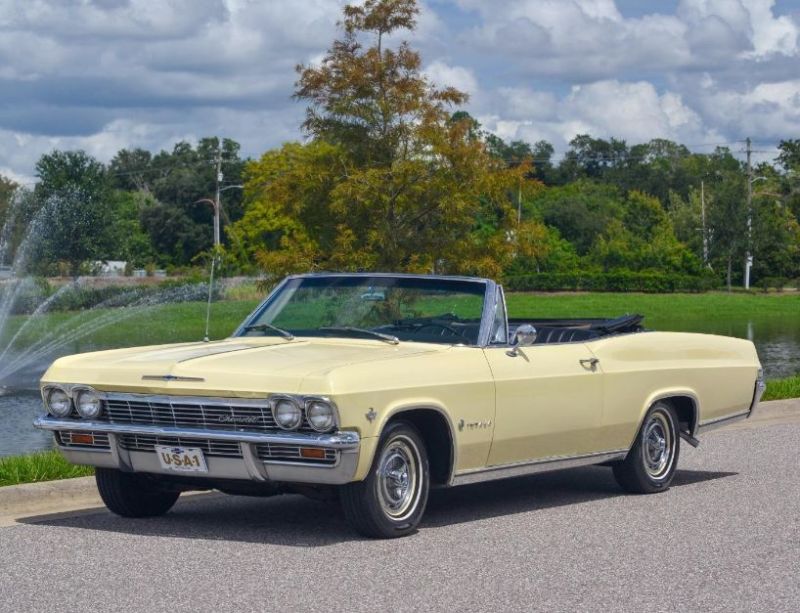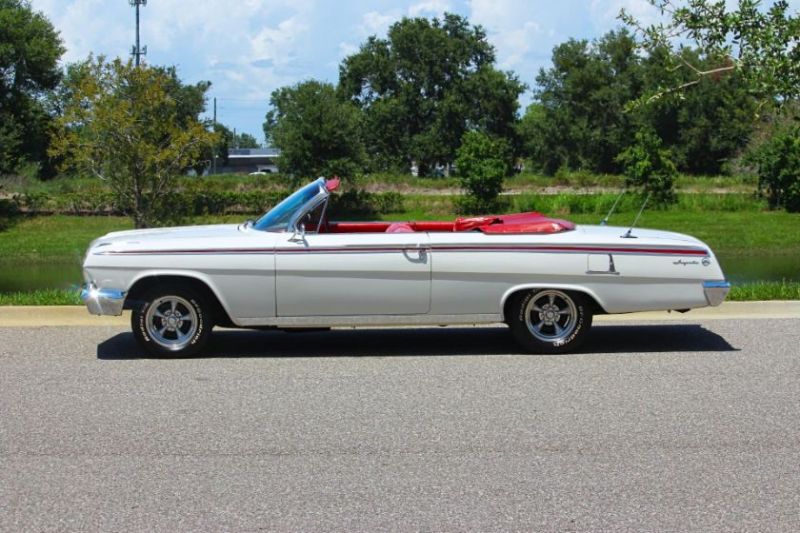
Four model years, one basic body, and an engine lineup that quietly rewrote itself every single season. The Impala built between 1961 and 1964 offers a clean look at how Chevrolet moved from a fairly conservative small block strategy toward the big block performance image that would define the rest of the decade. The 409 gets most of the attention, understandably, but the story around it is more interesting than one famous number suggests.
The six-cylinder base that nobody wanted to talk about
Every year in this generation, Chevrolet offered an inline six as the standard Impala engine, a way to sell the top trim's brightwork and interior without the cost of a V8. Buyers who actually wanted an Impala rarely stopped there, and six-cylinder cars from this era have almost no collector following today, which is a little unfair given how much of the actual engineering effort in this generation went into the small block options sitting one step above it. The six existed to hit a price point on the sticker, not to represent what the nameplate was actually selling.
The small block workhorses: 283 and 327
The 283 cubic inch V8 carried most of the Impala's real-world sales volume through these four years, offering a sensible balance of performance, weight, and running costs that made it the default choice for buyers who wanted a proper V8 without committing to a big block's fuel bills. The 327 cubic inch small block, introduced partway through this span, pushed output higher while staying in the same general weight and packaging envelope, and it became the more performance-minded buyer's practical alternative to the 409. From an engineering standpoint, the small block family did more of the heavy lifting for Chevrolet's actual sales figures than the big block ever did, even though it gets a fraction of the attention in retrospectives.
The 409: reputation built faster than the engine could really support
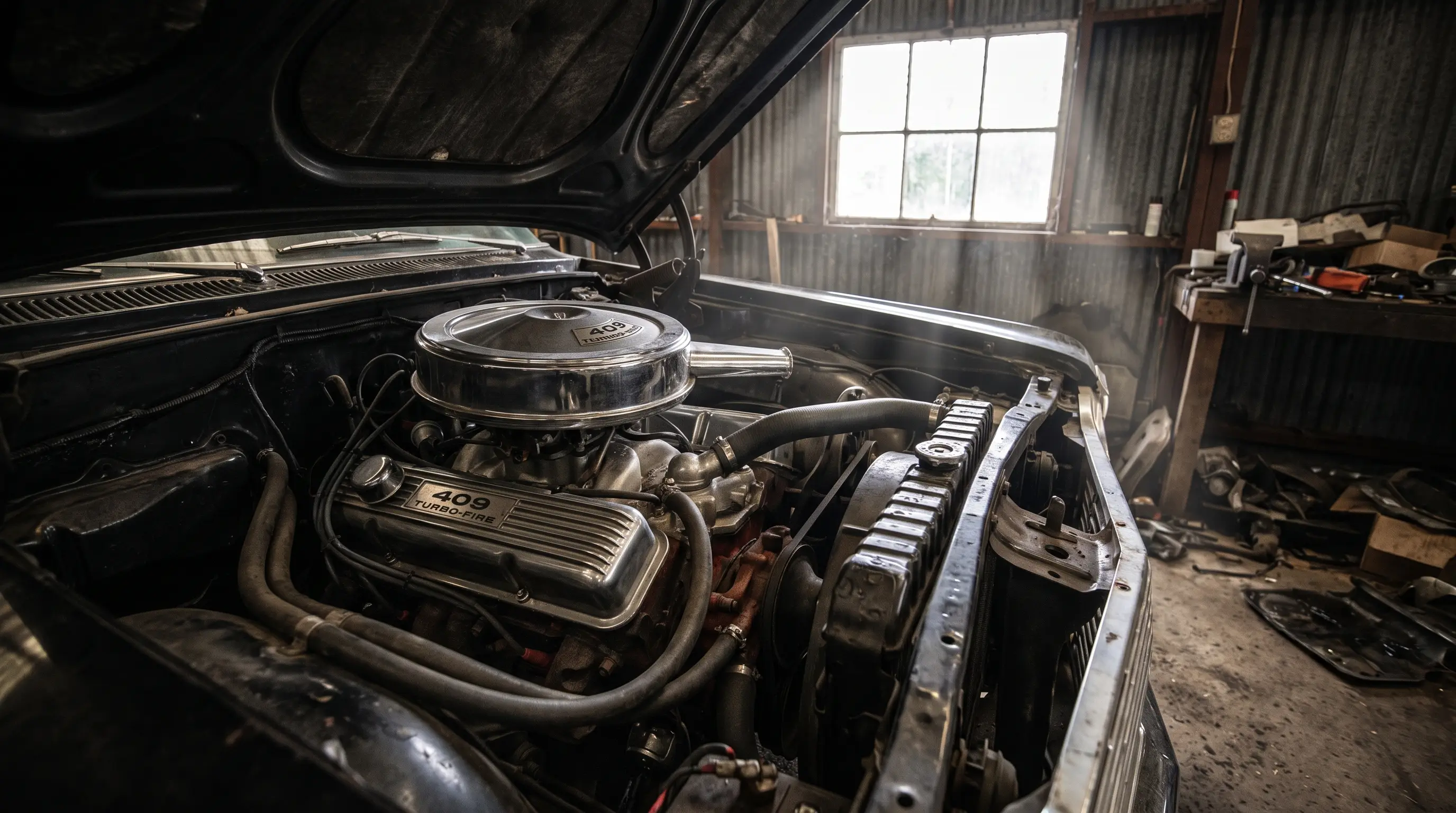
The 409 cubic inch big block arrived in limited numbers for 1961 and became genuinely famous by 1962, helped enormously by a Beach Boys single that used the displacement figure as its title. The rating climbed year over year as Chevrolet refined the package: a single four-barrel version good for 360 horsepower in its limited 1961 debut, 380 horsepower single four-barrel and 409 horsepower dual-quad forms for 1962, then a three-tier lineup for 1963 and 1964 topping out at 425 horsepower with dual quads. The engine delivered real straight-line performance at every stage, but it also came with the tradeoffs that defined big block ownership generally: worse fuel economy, higher insurance costs, and a nose-heavy handling balance compared to the small block cars. What makes the 409 an interesting case study is how much of its reputation was built on cultural momentum rather than on it being dramatically superior to a well-optioned 327 for most buyers' actual driving. The song did more for the engine's legend than the horsepower figure alone would have managed on its own.
| Engine | Displacement | Role in lineup |
|---|---|---|
| Inline six | 230-235 cid | Base engine, low collector interest |
| Small block V8 | 283 cid | Primary volume V8 across all four years |
| Small block V8 | 327 cid | Performance alternative introduced mid-generation |
| Big block V8 | 409 cid | Flagship performance engine, cultural icon |
The one-year outlier: Z11
Sitting apart from the regular production lineup entirely, the 1963 Z11 package used a specialized 427 cubic inch big block built specifically for NHRA Super Stock competition, paired with a lightened body that had almost nothing in common with a standard Impala's priorities. It is not really part of the same engine story as the 283, 327, and 409, since it was never intended for ordinary buyers, but it demonstrates how far Chevrolet was willing to push the same basic platform when racing was the goal rather than everyday transportation.
Transmission pairings across the range
Engine choice did not exist in isolation. Chevrolet paired the six-cylinder and lower-output V8s with a three-speed manual as standard, with Powerglide automatic as the common upgrade for buyers who wanted less clutch work in daily driving. Higher-output small blocks and the 409 opened up a four-speed manual option for buyers who wanted to manage the powerband themselves, a pairing that became closely associated with the more performance-minded Impala buyers of this era. The transmission choice affected real-world character as much as the engine did; a 327 paired with a four-speed feels like a genuinely different car from the same engine behind Powerglide, even though the underlying displacement and output figures on paper are identical.
What the engine progression tells you about the generation
Looking at the four years together, the pattern is fairly clear from an engineering standpoint. Chevrolet spent 1961 through 1964 gradually shifting emphasis from a conservative, six-and-small-block strategy toward a lineup that increasingly assumed buyers wanted a performance option on the sheet, whether or not they actually checked that box. The 409's fame accelerated that shift culturally even though the 327 was quietly doing more of the actual selling. By the time the 396 replaced the 409 as the range-topping big block the following generation, the groundwork for buyers expecting a serious performance engine choice on a full-size family car had already been laid during these four years. For the fuller account of how the styling and engine choices moved together across this span, the 1964 impala story covers the whole arc in one place, and the broader nameplate history is available in the full story going back to the Impala's 1958 debut.
"The 409 gets the headline, but if you actually look at production numbers, the 327 did more of the real work. That is usually how it goes with famous engines. The one everybody remembers is rarely the one that sold in volume."
- Emily Chen
Buying by engine today
Engine choice remains the single biggest value driver across this generation once body style is accounted for. A documented 409 car, especially with dual quads and matching casting numbers, commands a real premium over an equivalent small block example, and a genuine Z11 occupies a category of its own entirely. For buyers who care more about a balanced, usable classic than chasing the most famous engine on paper, a well-sorted 327 car often represents the more sensible purchase, with lower running costs and easier parts sourcing than the big block options. Anyone ready to compare engine and trim combinations against actual asking prices should take time to look through classic Impalas on the market before settling on which engine story is worth paying a premium for.
Verification matters more here than in almost any other part of buying a car from this generation. Engine swaps within this family were common over the decades, since a 283 and a 327 share enough architecture that a later owner could drop in a bigger small block without much drama, and a 409 badge on a fender means nothing without a casting number and, ideally, a build sheet to back it up. Buyers who insist on documentation before paying a premium for a specific engine protect themselves from the single most common misrepresentation in this segment of the market, a car advertised with more engine than it actually has under the hood.