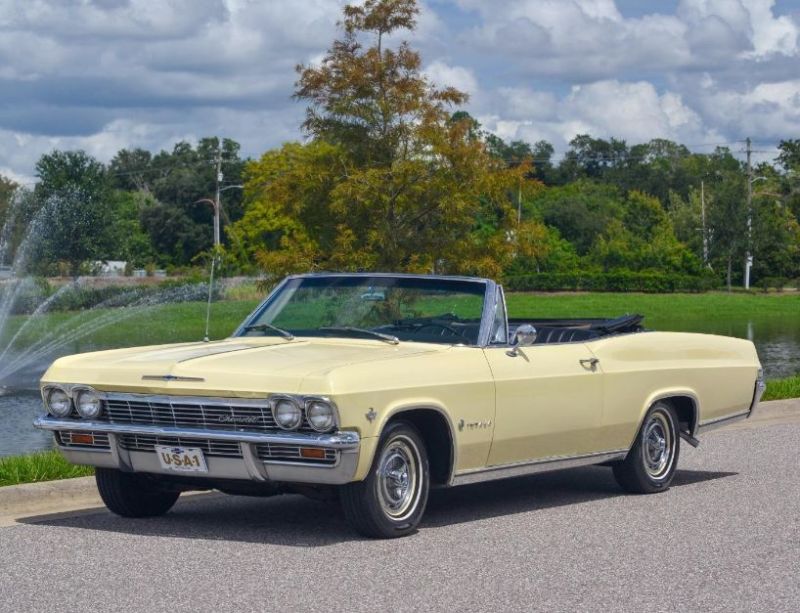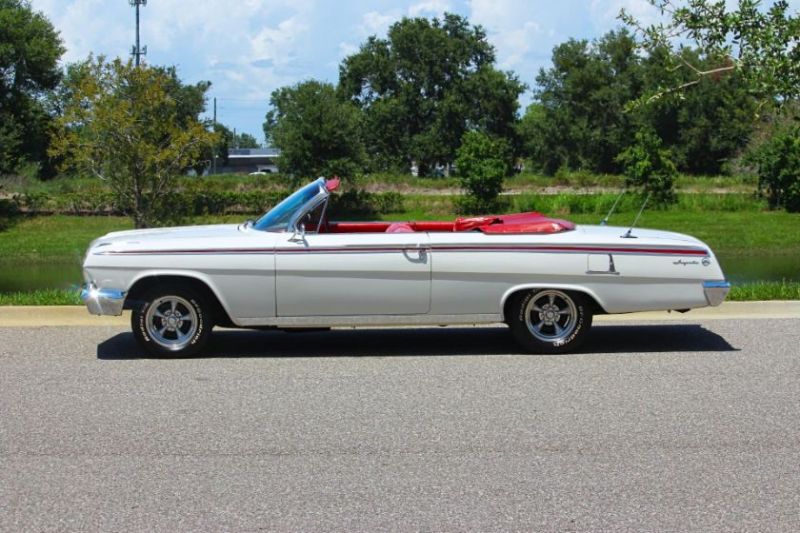
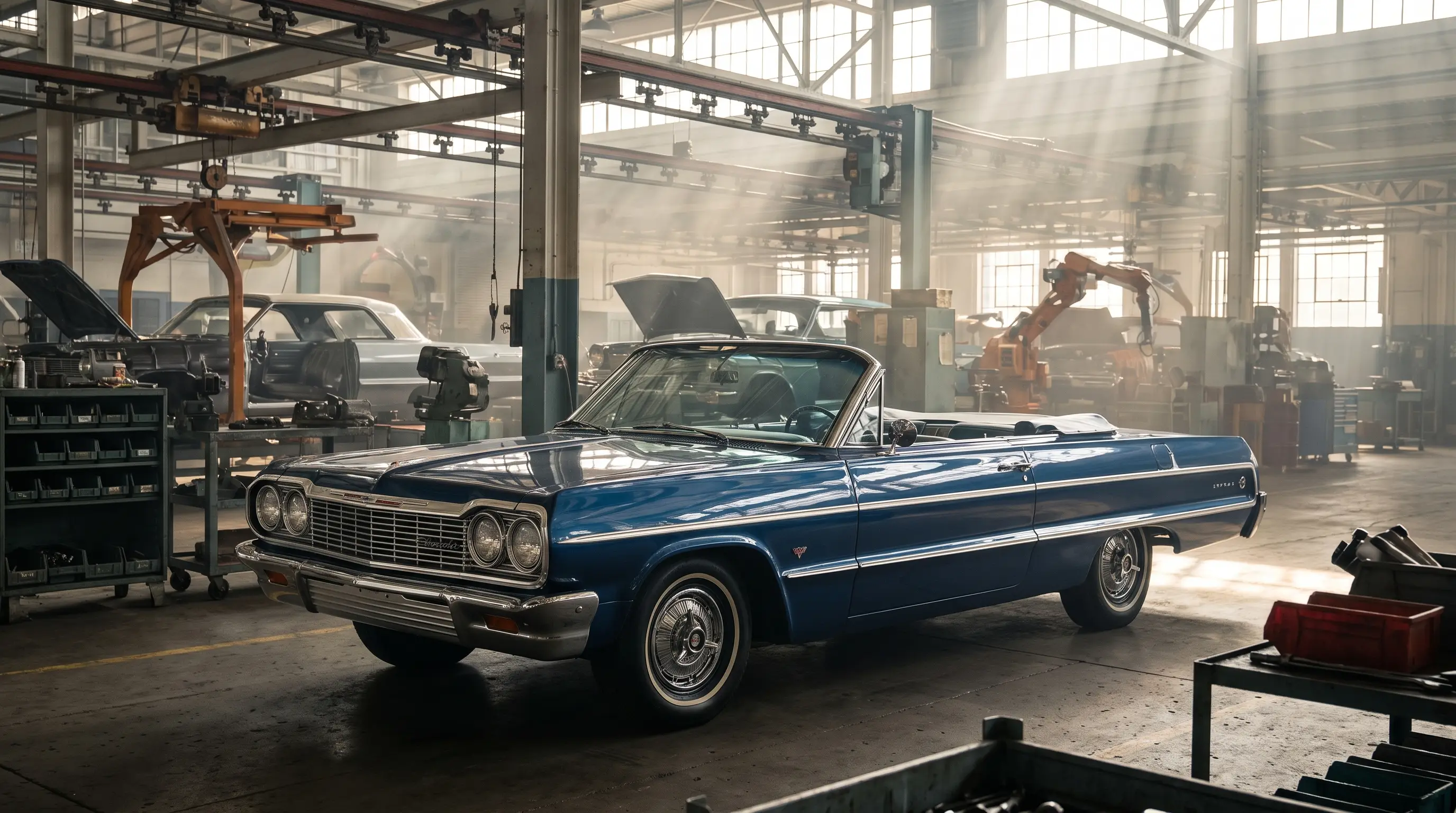
Production numbers rarely make for exciting reading on their own, but the 1964 Impala production totals tell a story that raw sales figures alone cannot capture. Between 1961 and 1964, Chevrolet's Impala line went from a strong seller to the best-selling full-size car in America, and the plants that built it had to scale accordingly. Understanding how many were built, where, and in what configuration explains why some of today's survivors are common and others are genuinely hard to find.
Scaling up across four model years
Chevrolet built the Impala across several assembly plants during this stretch, including Flint, Michigan, Baltimore, Maryland, and a handful of other regional plants that fed dealers across the country without the shipping costs of a single centralized factory. This distributed production approach was standard Detroit practice, but it means that a 1964 Impala built in Baltimore is not automatically identical in every stamped detail to one built in Flint, even though both left the factory the same week with the same trim level ordered.
Total Impala production climbed steadily across the four years. The 1961 model year introduced the Super Sport as an option package rather than a full trim level, and volumes reflected a car still finding its footing after the redesign that followed 1960's more conservative styling. By 1964, the Impala had become the singular face of Chevrolet's full-size lineup, and production of the nameplate alone reached roughly 889,600 units for the model year, a number that dwarfed the entire output of most other American nameplates combined.
Body styles and the mix that sold
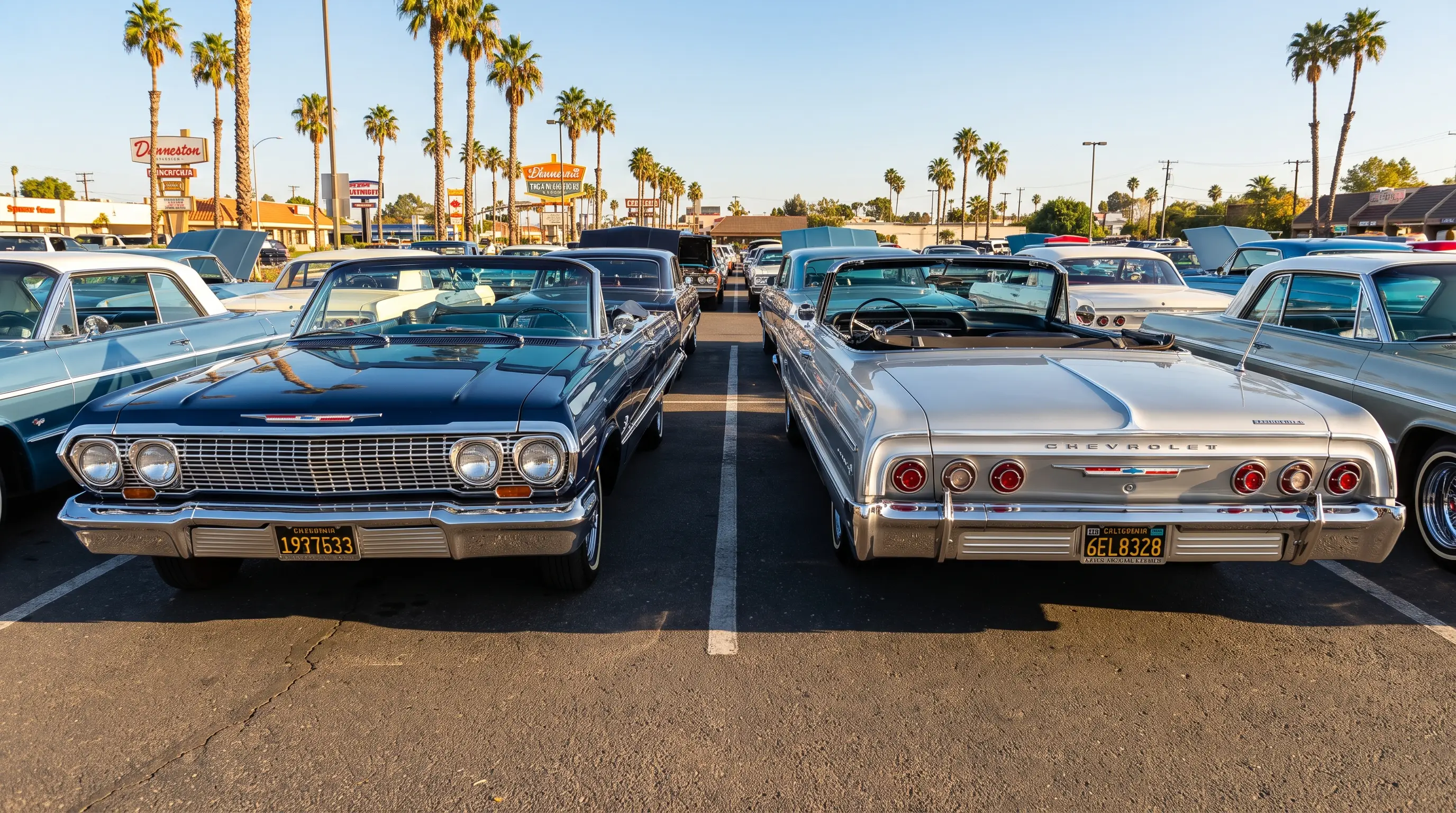
Across the 1961 to 1964 span, Chevrolet offered the Impala in a Sport Coupe hardtop, a four-door Sport Sedan, a convertible, and a four-door pillared sedan, along with a station wagon variant carrying the Impala name in later years of the run. The Sport Coupe and Sport Sedan carried the bulk of volume throughout the period, reflecting a buyer base that wanted the Impala's styling and status more than outright sportiness. Convertibles, while the most visually memorable body style today, were always a minority of total production, which is a major reason convertible survivors now command a real premium over closed cars with otherwise identical specifications.
| Model year | Approx. total Impala production | Notable shift |
|---|---|---|
| 1961 | approx. 491,000 | SS introduced as option package |
| 1962 | approx. 704,900 | Impala becomes best-selling Chevrolet trim |
| 1963 | approx. 832,600 | Sport Sedan gains popularity |
| 1964 | approx. 889,600 | Widest engine range of the generation |
Why the numbers matter for today's owners
Raw production totals only tell part of the story. What matters more to a current owner or buyer is how many of a specific configuration survive today, and that number is almost always a small fraction of original production. A 409-powered 1964 Impala represented a small slice of that year's roughly 889,600 units (only about 8,684 came with the 409 that year), and surviving examples with original drivetrains intact are smaller still after decades of engine swaps, accidents, and simple attrition.
This is why serious researchers lean on more than the headline production figure. Regional Production Order codes, body tag information, and dealer invoice records, where they survive, help narrow down not just how many cars of a given specification were built, but which plant assembled them and roughly when in the model year they left the line. For the fuller context of how the entire fourth-generation Impala evolved leading into this production peak, our 1964 impala history coverage lays out the generation from its 1961 debut forward.
Export production adds another wrinkle researchers sometimes overlook. Chevrolet shipped a portion of Impala production to Canada, where cars were often assembled with minor trim variations to satisfy local content requirements, and a smaller number reached other international markets through independent distributors. These export cars can carry slightly different equipment codes than their domestic counterparts, which occasionally confuses owners trying to match a car against strictly domestic build sheet references. Anyone researching an Impala with an uncertain origin should account for the possibility of Canadian assembly before assuming a mismatch means the car is somehow incorrect or altered.
Reading the shift year to year
Comparing 1963 and 1964 production data in particular shows an interesting pattern. The two years look similar on the surface, both strong sales years for the same basic body style, but the details Chevrolet changed under the skin between them shifted buyer preferences within the lineup, particularly around engine selection and interior trim. Readers interested specifically in what separated those two model years mechanically and cosmetically can find a related story that breaks down those changes directly.
The production story across 1961 to 1964 is ultimately one of a car finding, then dominating, its market segment. Chevrolet did not stumble into building the best-selling full-size car in America. The company scaled tooling, distributed assembly across multiple plants, and adjusted the lineup year over year based on what buyers were actually ordering, all while keeping the core platform stable enough that parts and service remained straightforward for dealers nationwide.
Dealer ordering patterns also shaped what actually reached showrooms in each region. A dealer in a warmer climate might order a heavier mix of convertibles and lighter interior colors, while a dealer in the industrial Midwest leaned toward sedans and wagons built for practicality over show. These regional ordering habits mean that certain color, engine, and body style combinations turn up far more often in some parts of the country than others even today, a pattern that traces directly back to how dealers stocked their lots in 1961 through 1964 rather than any factory-wide rule about what was available.
"A production number by itself tells you almost nothing. Cross-reference it against body tags and Regional Production Orders, and suddenly you know which cars are genuinely rare and which just feel rare because nobody bothered to check."
- Tom Ramirez
What this means for buyers today
For a buyer weighing a specific 1964 Impala against the broader production record, the lesson is straightforward. High total production for the model year does not mean every configuration is common, and low apparent rarity claims from a seller should be checked against surviving documentation rather than taken at face value. Shoppers who want to see how these production realities are reflected in today's asking prices can browse Impalas for sale now and compare documented, verifiable examples against cars whose history is thinner on paper.
Ultimately, the production record from 1961 through 1964 is less a set of dry statistics and more a map of how one nameplate captured a market and held it. Every plant location, every regional ordering quirk, and every model year total adds a layer of context that helps separate a genuinely rare survivor from a common car dressed up with an uncommon story. Buyers who take the time to check the paper trail against the production record tend to end up with fewer surprises down the road than those who trust a seller's word alone.
Sources and notes
- 1958-90 Impala and Passenger Car Production Figures - Classic Industries
- 1961 Chevrolet Impala Series Specifications - Conceptcarz
- 1963 Chevrolet Impala Series Specifications - Conceptcarz
- 1964 Chevrolet Impala Series Specifications - Conceptcarz
- Chevrolet's 1963 Z-11 Impala - 348-409.com
- Chevrolet Impala - Wikipedia