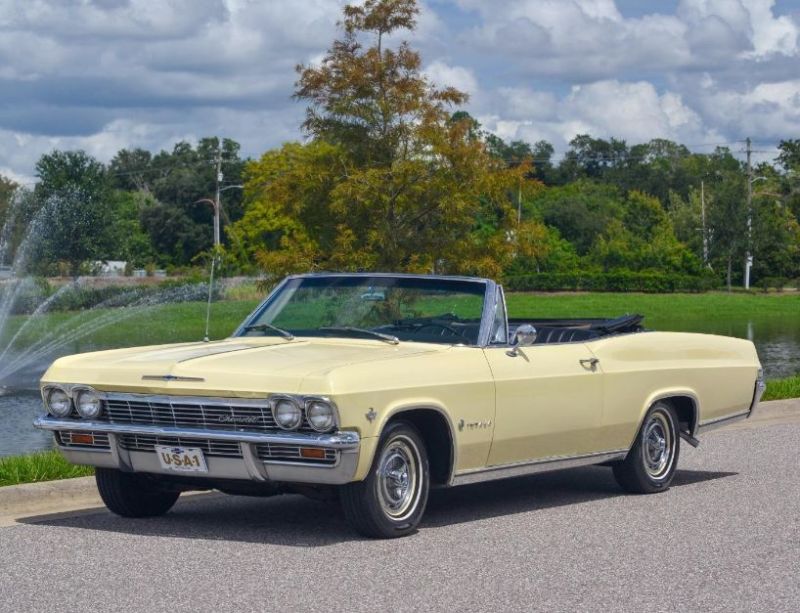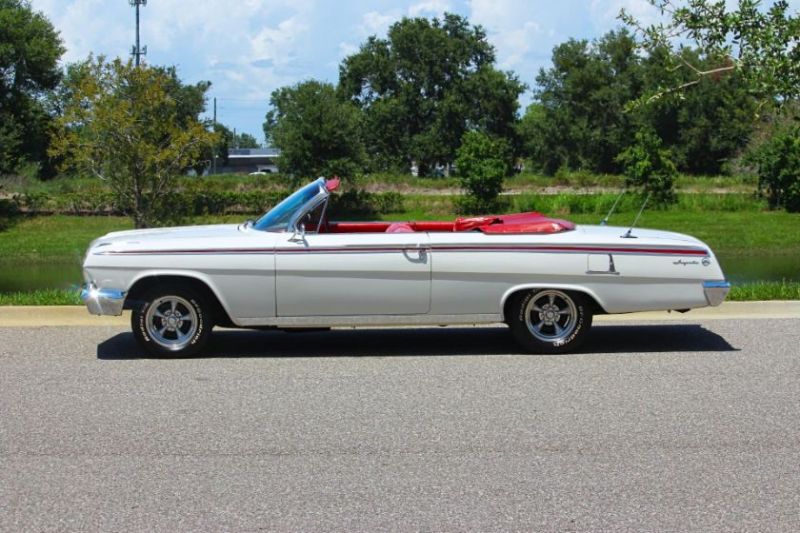
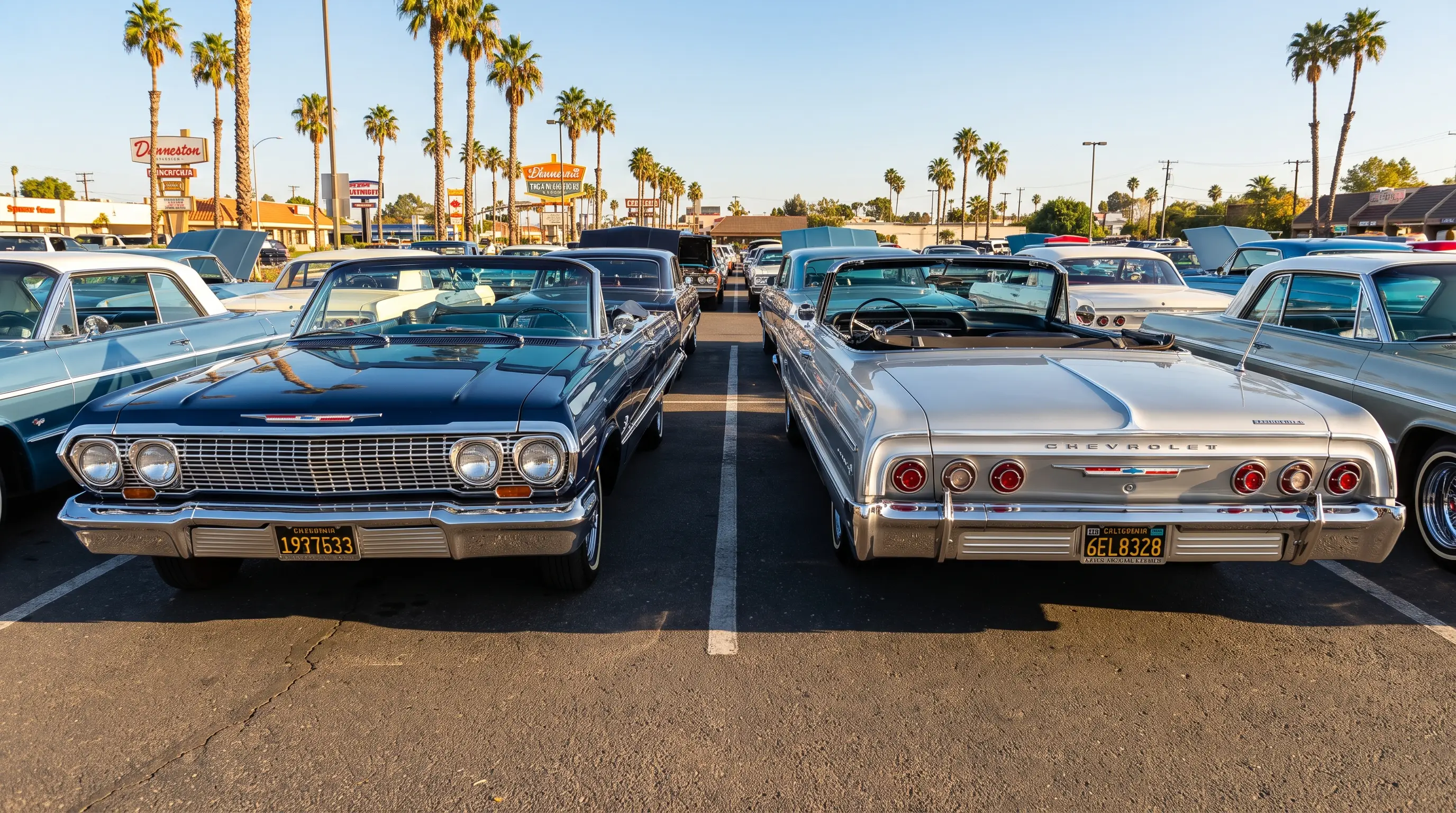
From ten feet away, a 1963 Impala and a 1964 Impala look like the same car, and in most structural respects they are. But a 1963 vs 1964 Impala comparison done at the level a documentation specialist actually works at reveals a series of deliberate, recorded changes that matter enormously when authenticating a specific surviving car. These are not stylistic footnotes. They are the kind of detail that separates a correctly restored example from one quietly assembled with the wrong year's parts.
Front end and roofline changes
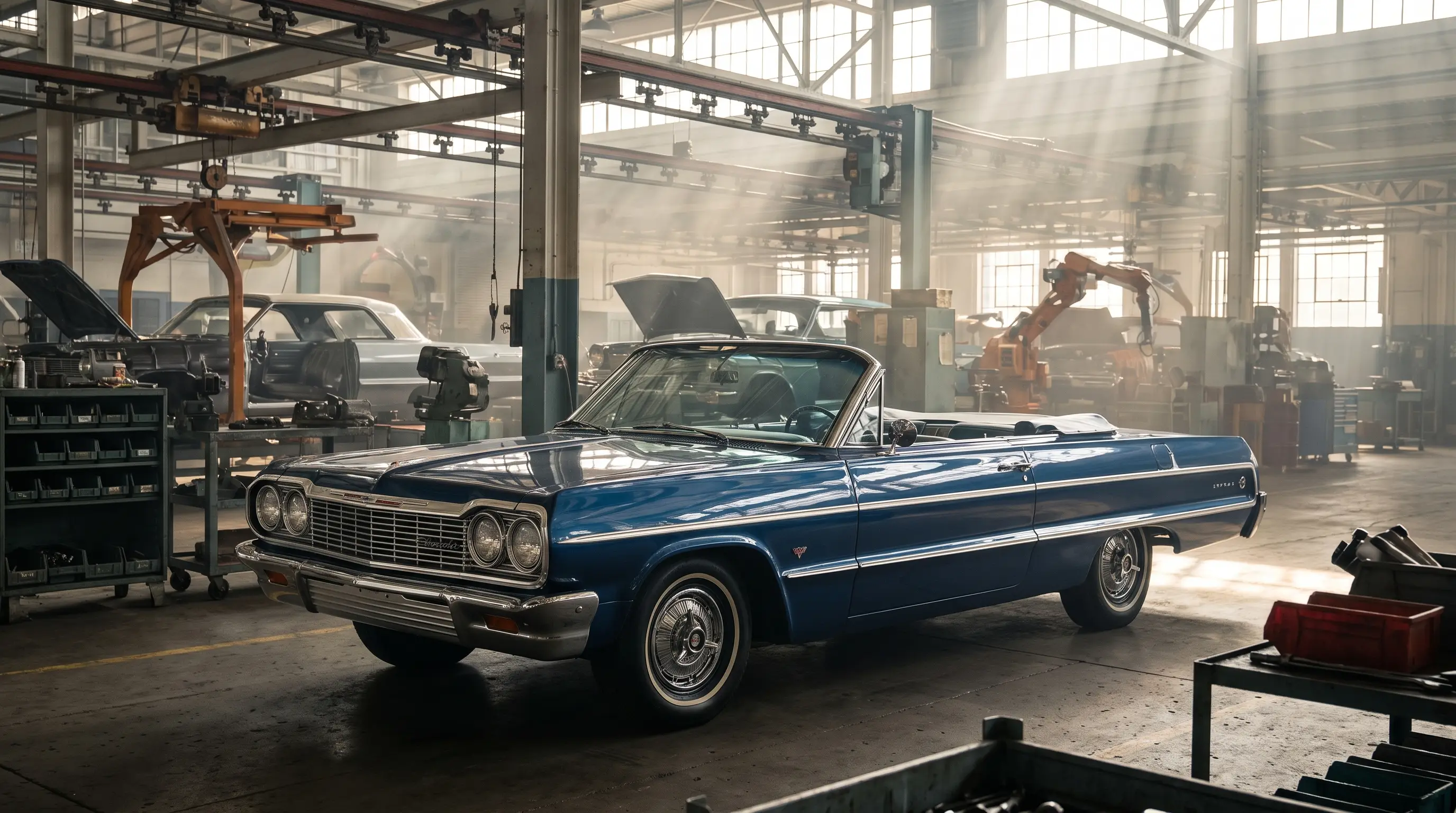
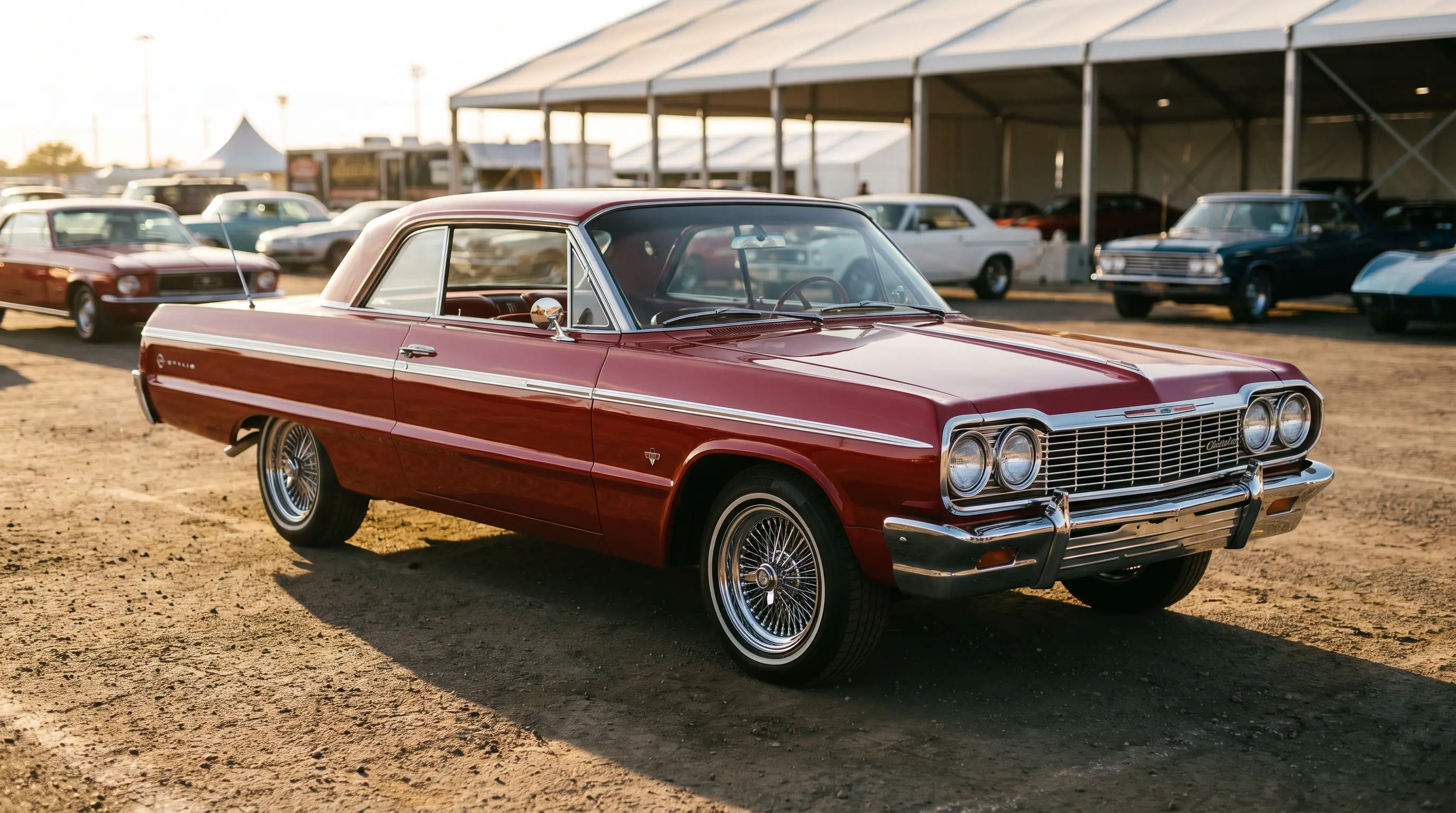
The most immediately visible shift between the two years sits at the front of the car. The 1963 Impala carried headlamps set inside the grille opening with smaller parking lamps positioned below and between them, while the 1964 grille moved to a wider oval shape with dual headlights in round bezels and relocated the front parking lamps down into the bumper, a quick way to identify a 1964 car at a glance. The taillights changed as well: the 1963 cars kept a continuous ring of trim around the triple taillights, while the 1964 assembly used an upside-down U shaped aluminum strip above the lights with a body-colored panel around them.
The body sculpting also shifted between the two years, though the underlying Sport Coupe roof stamping carried over largely unchanged. The 1963 car wore a more angular design with straight character lines down the sides, while the 1964 rounded off some of those sharper edges, with an upper body line that looped back around the rear fender instead of coming to a point. Anyone restoring a car should never assume a piece of exterior trim is interchangeable between the two years without checking a parts catalog specific to the exact model year, even where the underlying roof panel itself did not change.
Interior and instrument panel updates
Inside the car, the dashboard layout carried over in basic architecture but received revised trim and switchgear detailing for 1964. Upholstery patterns changed between the two model years as well, with Chevrolet rotating fabric and vinyl patterns annually as a matter of course, which means an interior swapped in from the wrong year, however well executed, will not match factory records for a documented restoration. Steering wheel design also shifted subtly, a detail restorers frequently get wrong when sourcing parts from swap meets without cross-referencing the correct year.
| Feature | 1963 Impala | 1964 Impala |
|---|---|---|
| Grille and headlamps | Headlamps inside grille, park lamps below/between | Wide oval grille, round headlamp bezels, park lamps in bumper |
| Taillight trim | Continuous ring around triple lamps | Upside-down U aluminum strip above lamps |
| Body side sculpting | Angular, straight character lines | Rounded-off upper body line at rear fender |
| Top engine option | 409 cid V8 | 409 cid V8, revised tune options |
Mechanical carryover versus refinement
Mechanically, the two years shared far more than they changed. The core engine lineup carried over from 1963 into 1964 with some tuning refinements, and the chassis and suspension architecture remained fundamentally the same platform Chevrolet had introduced back in 1961. This carryover is actually helpful for restorers today, since many drivetrain and suspension components interchange cleanly between the two years even though body trim and interior parts frequently do not. Knowing exactly which categories of parts carried over and which did not is the difference between a restoration that reads as correct to a judge or serious buyer and one that looks close but falls apart under close inspection.
Transmission and rear axle codes also require care when comparing the two years, since Chevrolet made running changes within a model year as well as between years, meaning two 1964 Impalas built months apart can carry different codes for what looks like the same component. Relying on stamped codes rather than assumptions about what "should" be there is the only reliable method for confirming originality on either year.
Wheel covers and exterior brightwork saw quieter updates as well. The 1964 cars carried a revised hub cap design that period parts catalogs list under a distinct part number from the 1963 equivalent, and the two are close enough in appearance that a casual glance often fails to catch the difference. Side trim spears, particularly on Impala and Super Sport models, also shifted in placement and profile between the two years, another detail that surfaces most often when a restorer is trying to source replacement trim from a swap meet vendor who simply labels a box "1963 to 1964 Impala parts" without separating the two.
Why the distinction matters to collectors
For a collector or judge evaluating a car at a concours or club event, these details are not academic. A restoration that mixes 1963 and 1964 parts, even done with good intentions and quality craftsmanship, will not score correctly against a judging standard built around single-year accuracy. This is a common and honest mistake among restorers working from incomplete reference material, but it is a mistake all the same, and a discerning buyer researching a specific car should ask pointed questions about where individual components were sourced.
Set against the broader arc of the fourth-generation Impala, these two model years represent a period of steady refinement rather than dramatic reinvention. Readers who want the whole picture of how the generation evolved from its 1961 introduction through this later refinement can find that context laid out in full in our companion coverage of the era.
Judged side by side at a show, a well-documented 1963 and a well-documented 1964 Impala often draw the same appreciative reaction from onlookers who cannot name a single specific difference between them. That is, in a sense, the point. Chevrolet's design language across these two years was meant to feel continuous to the buying public even as the engineering and styling teams tracked every individual change with far more precision than any showroom visitor would ever notice. The gap between casual appreciation and documented authentication is exactly where a knowledgeable researcher earns their keep.
"People assume a one-year difference means nothing changed. Then you put a 1963 and 1964 taillight lens side by side and the whole assumption falls apart in about four seconds."
- Sarah Whitfield
Practical guidance for today's buyers
For someone actively shopping either model year, the practical takeaway is straightforward. Confirm body tag and trim codes against a year-specific reference before assuming any part, panel, or trim piece is original to the car in front of you. A seller's confident description is not a substitute for checking the actual stamped codes yourself or having someone qualified do it for you. Buyers who want to compare 1963 and 1964 examples currently on the market can find a classic Impala and use the details above as a starting checklist before making an offer.
It is also worth asking a seller directly whether any bodywork, trim replacement, or interior work has been performed, and if so, whether the parts used were sourced specifically for the correct model year. A straightforward answer, backed by receipts naming part numbers, is a far better sign than vague reassurance that "everything is correct." Sellers who have done the work properly tend to welcome these questions rather than deflect them, and that willingness to engage with specifics is itself a useful signal about how the car has actually been maintained.
Sources and notes
- 1958-64 Impala Identification Guide and Model Year Changes - Classic Industries
- Chevrolet Impala (fourth generation) - Wikipedia
- 1963 Chevrolet Impala Series Specifications - Conceptcarz
- 1964 Chevrolet Impala Series Specifications - Conceptcarz
- 1961-1964 Chevrolet Impala Super Sport - HowStuffWorks
- 1958-90 Impala and Passenger Car Production Figures - Classic Industries