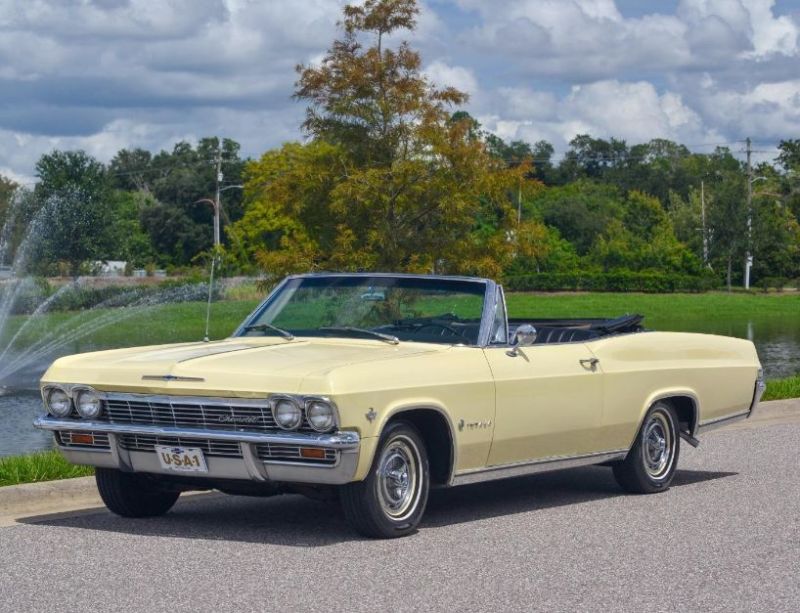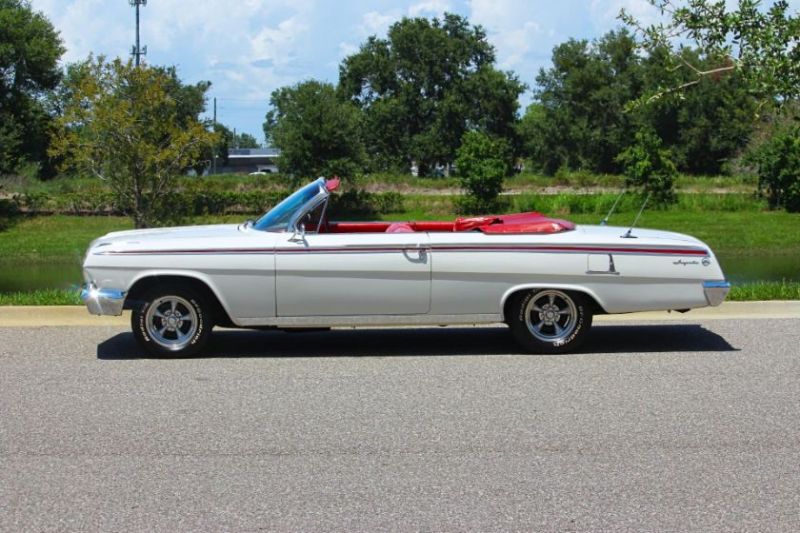
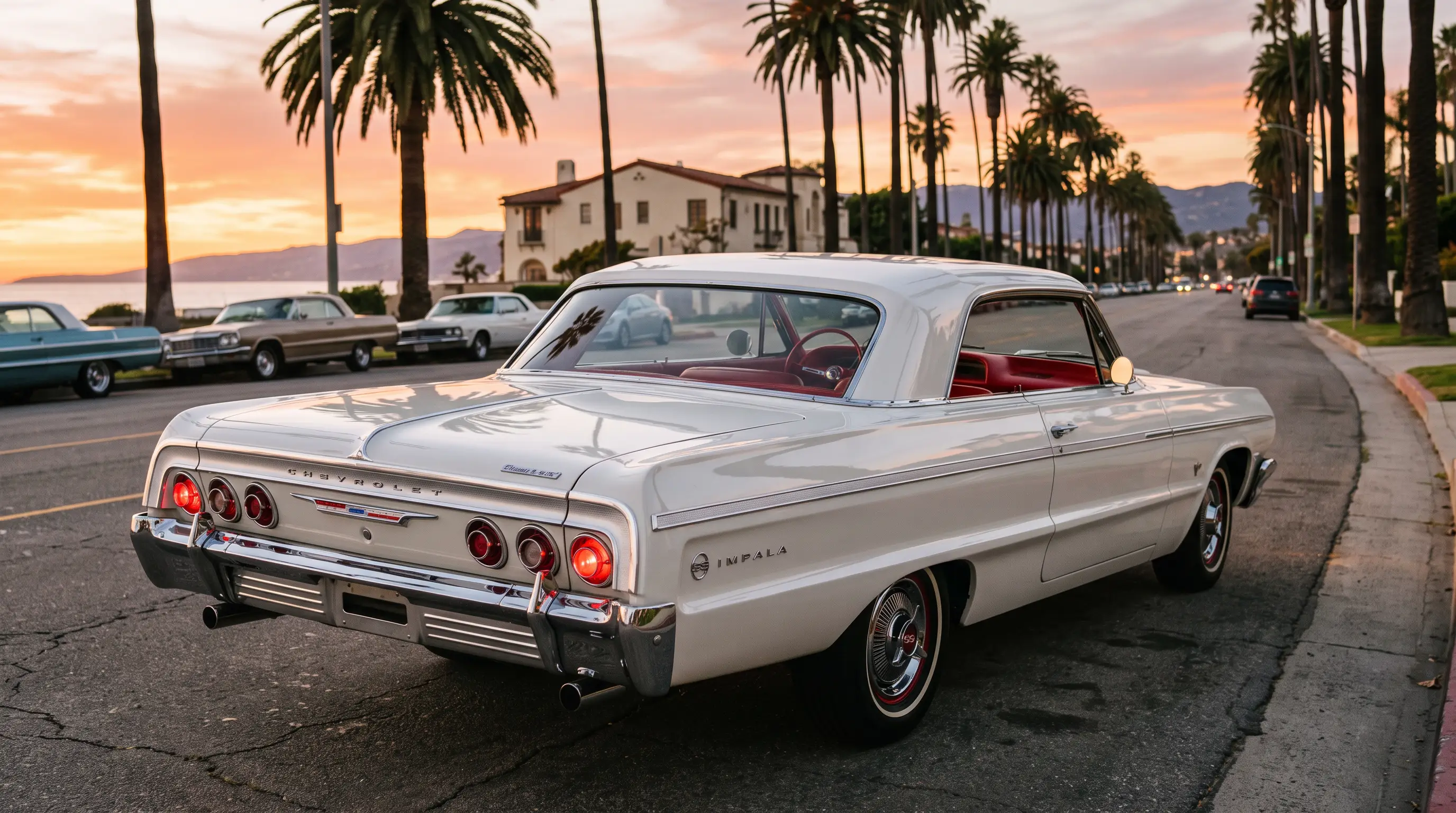
The 1964 Impala SS arrived at the end of a design cycle rather than the start of one, and that fact shaped everything about the car. Chevrolet's engineers and stylists had spent three years refining the same basic platform, and by 1964 the Impala Super Sport represented the most resolved version of a formula the company had been perfecting since 1961. Anyone studying the model year against period documentation quickly notices how deliberate the details had become compared to the rougher edges of the car's first outing.
A design at its most settled
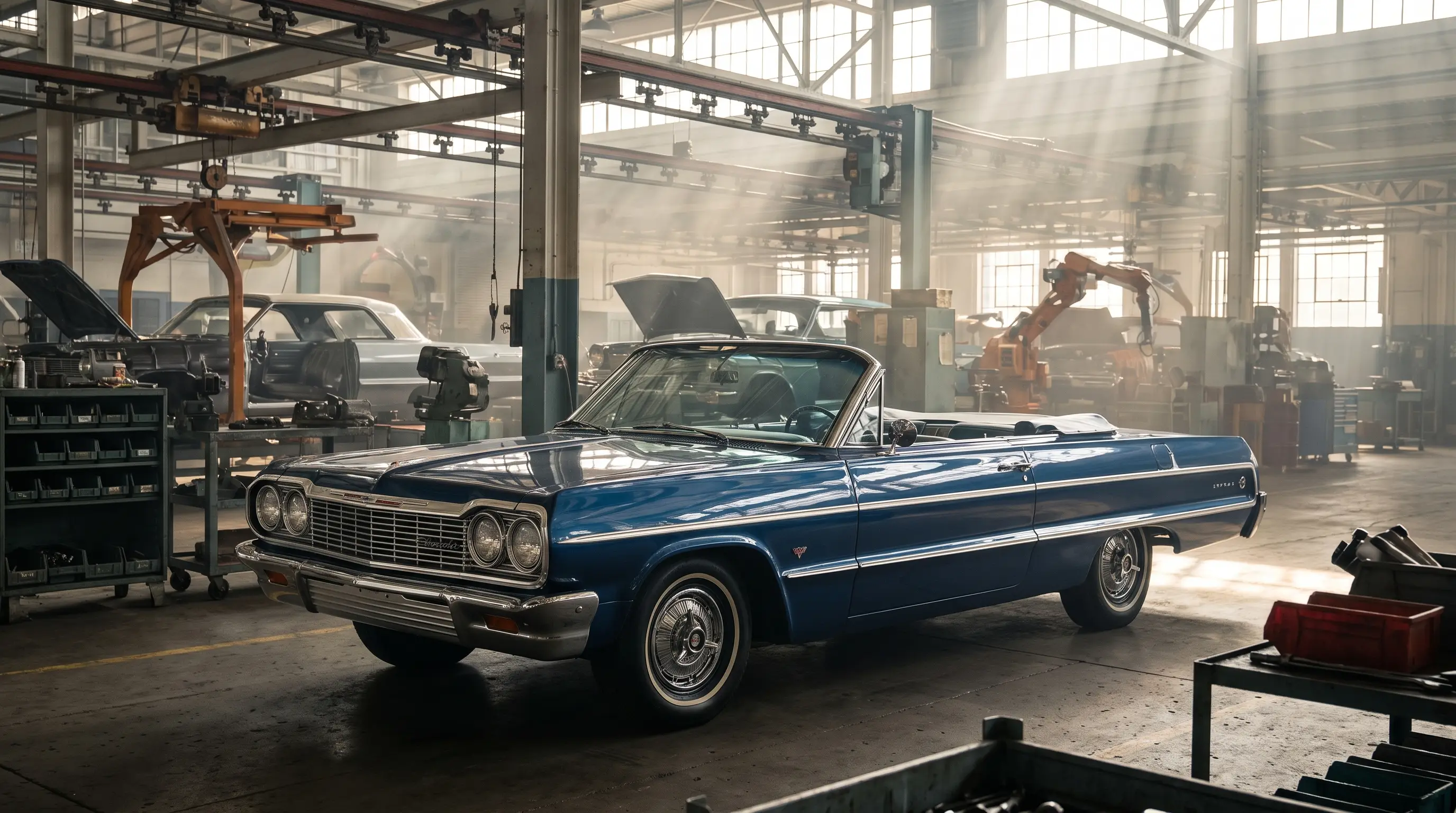
The 1964 body brought a crisper beltline and a more formal roofline on the Sport Coupe than the 1963 car, with less chrome fuss than the 1961 original and a wider, more confident stance than any Impala before it. Chevrolet's stylists under Bill Mitchell's design leadership had learned exactly how far to push the Super Sport's identity without alienating the buyers who wanted a full-size family car that simply looked sharper than its neighbor's.
SS badging appeared on the grille, the deck lid, and the door panels, paired with a distinct brushed aluminum trim panel on the rear cove that no other Impala trim level carried. Inside, the Super Sport's bucket seats and center console gave the interior a genuinely different character from a standard Impala Sport Sedan, closer in feel to a personal car than a family sedan despite sharing most of its structure with cars built for exactly that purpose.
Engines that spanned two philosophies
What makes documenting the 1964 Impala SS interesting from an archival standpoint is the sheer range of engines Chevrolet allowed under that badge in a single model year. A buyer could order an SS with the base 230 cubic inch six-cylinder, which meant the Super Sport badge in 1964 did not guarantee performance at all, only trim level. At the other end sat the 409 cubic inch V8, offered in multiple states of tune up through a factory-rated configuration that pushed past 400 horsepower in its most aggressive form.
Factory records and period road tests show the 327 cubic inch small block as the volume choice among buyers who wanted genuine performance without the 409's price premium or its reputation for being temperamental outside a narrow tuning window. This spread of engine choices under one nameplate is a detail modern shoppers sometimes miss, assuming every Super Sport was a big-block car when the build sheets tell a far more varied story.
| Engine option | Displacement | Approx. horsepower |
|---|---|---|
| Base six-cylinder | 230 cid | 140 hp |
| Small block V8 | 283 cid | 195 hp |
| Small block V8 | 327 cid | 250 to 300 hp |
| Big block V8 | 409 cid | 340 to 425 hp |
Production and the paper trail
Chevrolet's 1964 production figures for the Impala line as a whole reached well over a million units, an extraordinary number that makes the Super Sport itself, while popular, still a minority of total output. Original build sheets and the Protect-O-Plate system Chevrolet used to track factory installed options remain the gold standard for verifying whether a given 1964 SS actually left the factory with the engine and equipment its current owner claims. Cars have been reshuffled and re-badged for decades, and a documented, numbers-matching Super Sport carries a meaningfully different value than one assembled later from parts.
Anyone researching a specific car should treat the factory paperwork as the primary source and treat seller descriptions, however confident, as secondary until the numbers confirm them. This is standard practice for any serious archival research into mid-1960s Detroit iron, and the Impala is no exception simply because it was popular.
Color and trim combination records add another layer of verification that many owners overlook. Chevrolet's build sheets list specific paint and interior codes, and cross-referencing those codes against surviving factory literature can confirm whether a car's current color is original or a repaint applied at some point in its history. This matters more for a Super Sport than for a base Impala, since certain color and interior combinations were rarer than others and can meaningfully affect how a documented, correct example is valued against a car that has been repainted or reupholstered outside its original specification. Dealers who specialized in Chevrolet during this period often kept their own records as well, and locating a surviving dealer invoice alongside factory paperwork gives a researcher two independent sources that should, ideally, agree with each other on every detail that matters.
Where the 1964 SS sits in the family record
Set against the broader arc of the Impala's early years, the 1964 model represents the final chapter of the second-generation Super Sport before Chevrolet reworked the entire full-size line for 1965. Readers who want the full arc, from the Super Sport's 1961 debut through this closing model year, can find our complete history of the generation, which places the 1964 car's specific engineering and styling choices in the context of what came before it.
What stands out most in the archival record is how confident Chevrolet had become by 1964 in selling a genuinely broad range of buyers under one badge. The Super Sport nameplate covered a grandmother's grocery-getter with a six-cylinder engine and a teenager's 409-powered street car with equal legitimacy, a marketing approach that would be almost unthinkable for a single trim level today.
Chevrolet's advertising for 1964 leaned into this breadth rather than hiding it. Print campaigns showed the Super Sport as a car for a young professional, a family on vacation, and a weekend racer in the same brochure cycle, trusting buyers to project whichever version of the car matched their own circumstances. That flexibility helped make 1964 one of the strongest sales years the full-size Chevrolet line ever recorded, and it is part of why so many 1964 Impala SS cars survive today in such varied original condition, from garage queens that never saw serious use to cars that were clearly driven hard and repaired repeatedly before finally landing with a collector who valued the history over a pristine appearance.
"The paperwork tells you what the sheet metal cannot. A 1964 SS without its build sheet is a good story. One with the build sheet is a documented artifact."
- Sarah Whitfield
What buyers should look for now
For a collector evaluating a 1964 Impala SS today, matching numbers, an intact Protect-O-Plate or dealer paperwork, and consistent VIN and body tag information should come before any conversation about condition or price. A rough car with airtight documentation is often a better long-term purchase than a beautifully restored car with no paper trail to confirm what it actually is. Buyers ready to compare current examples on the market can browse classic Impala listings to see how documentation, engine configuration, and condition are affecting asking prices for this model year right now.
Sources and notes
- Impala Engine Options: 1964 - Chevy Hardcore
- 1964 Chevrolet Impala Series Specifications - Conceptcarz
- 1964 Chevrolet Impala Hardtop Coupe Full Range Specs - Automobile Catalog
- 1964 Chevrolet Impala Valuation - Hagerty
- 1964 Chevrolet Full Size Cars Fact Sheet - Over Drive Magazine
- Chevrolet Impala - Wikipedia