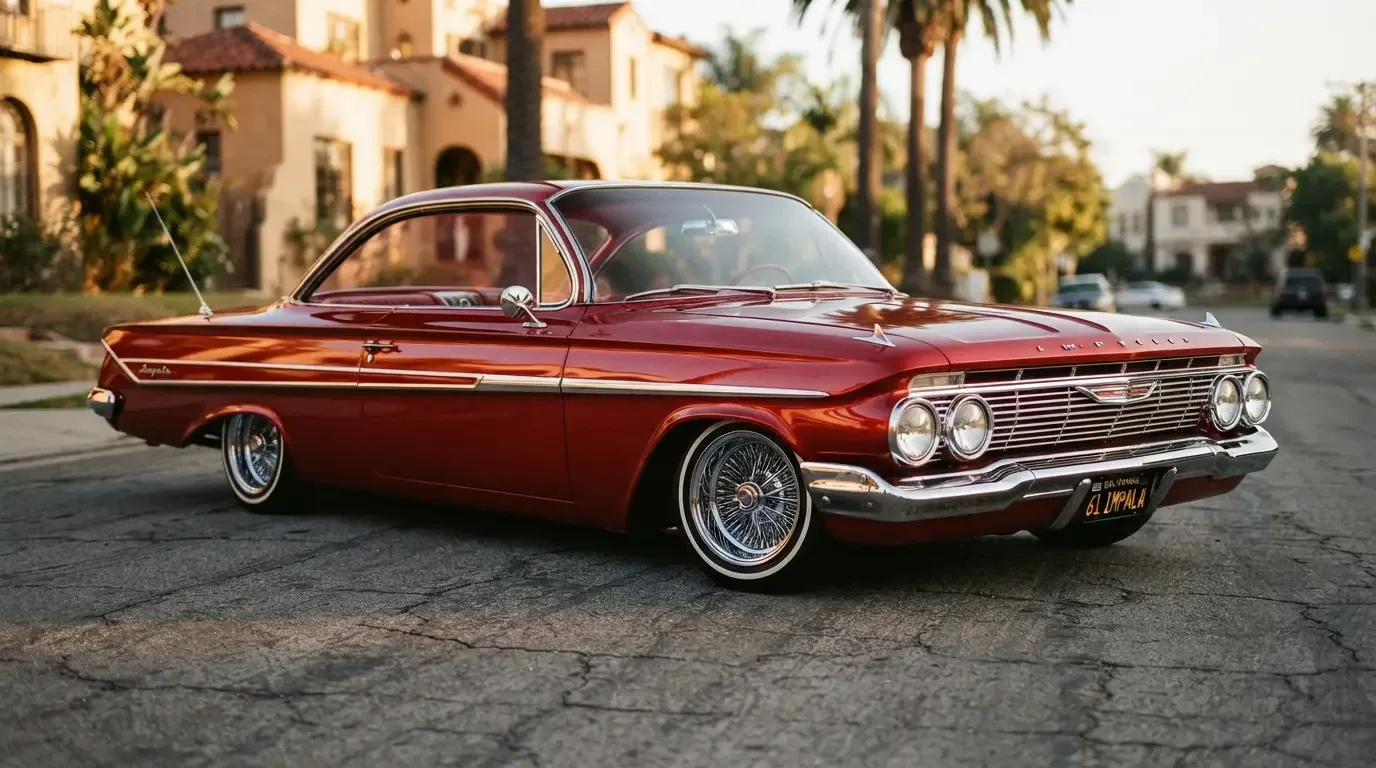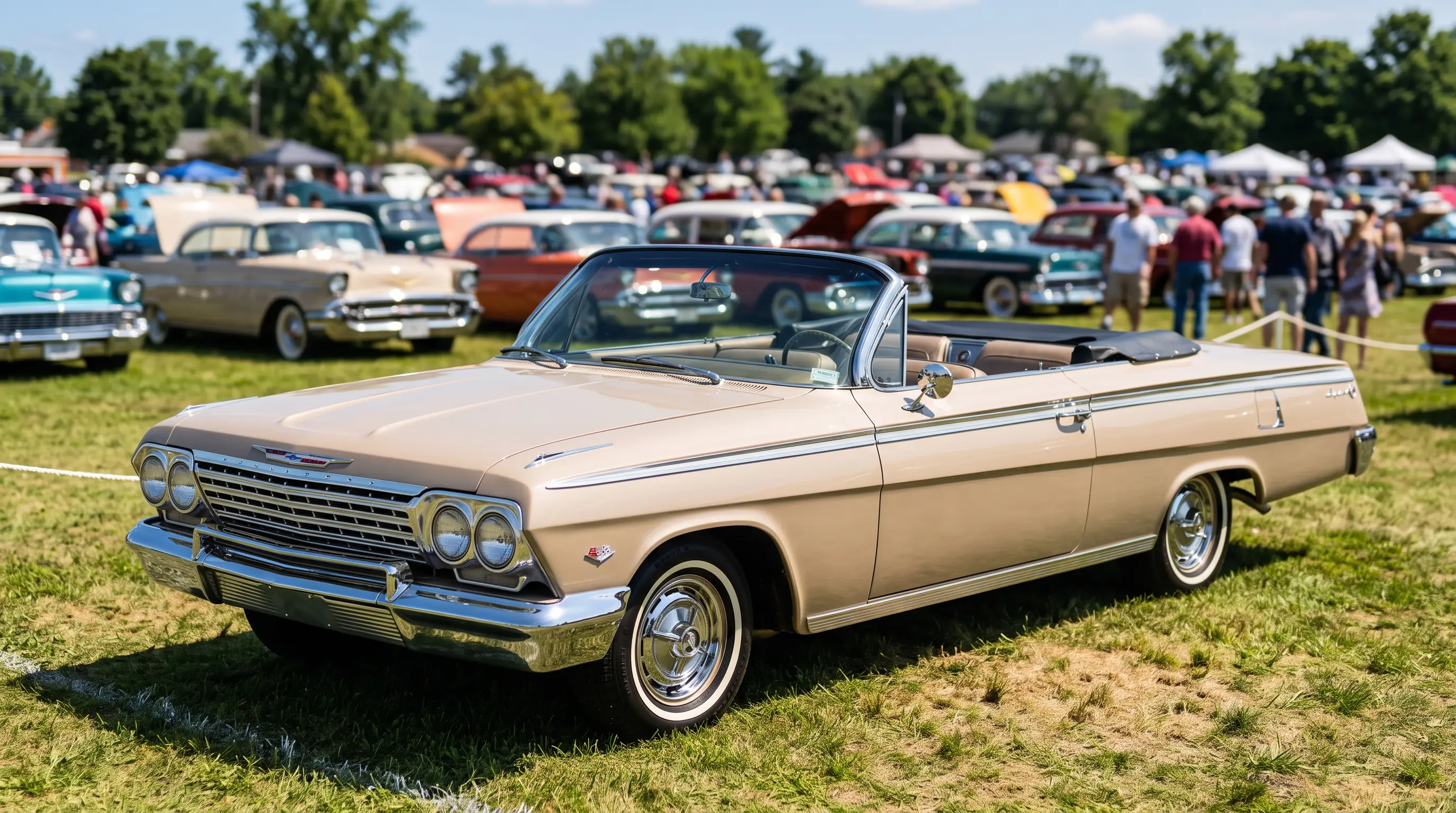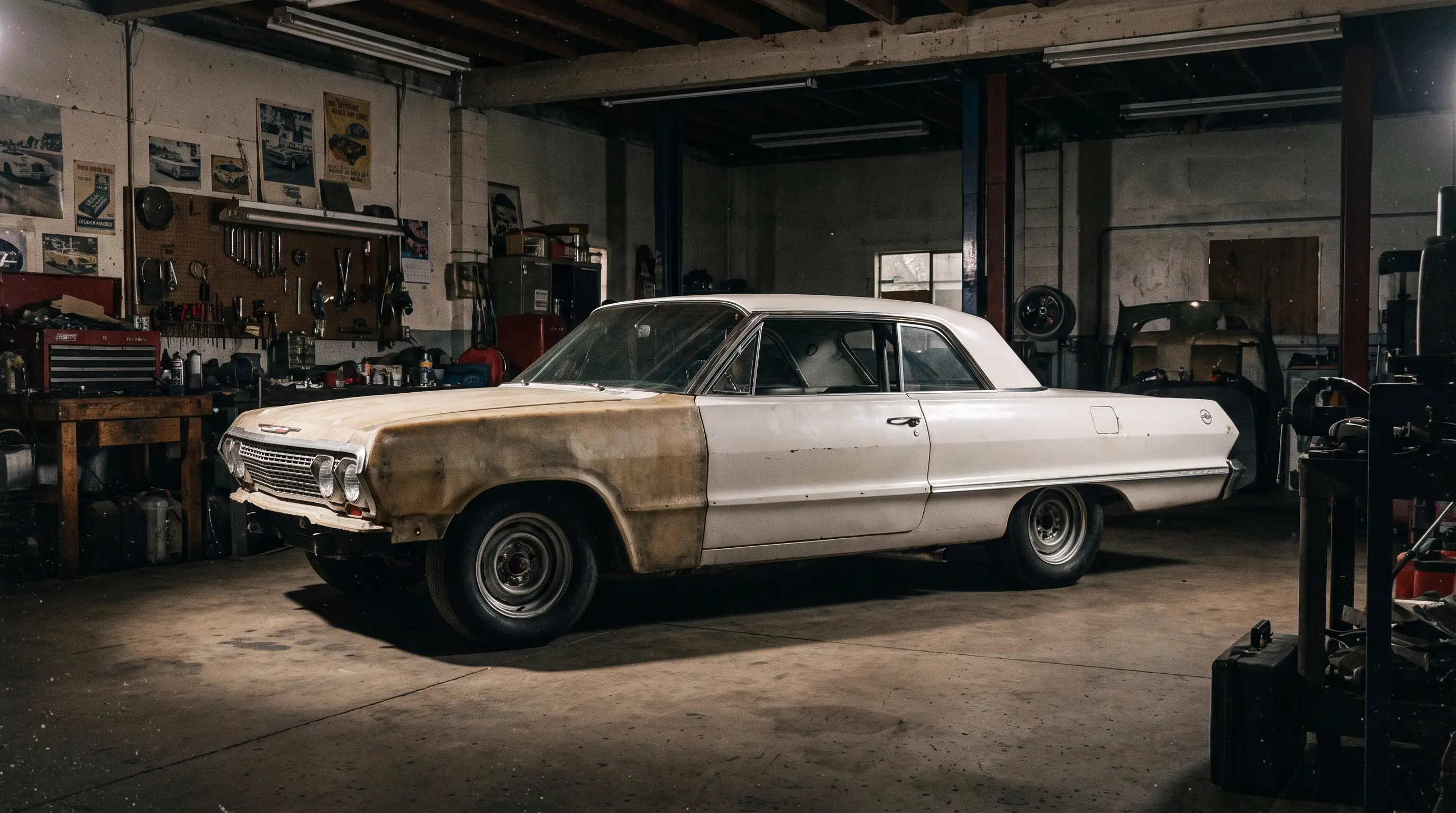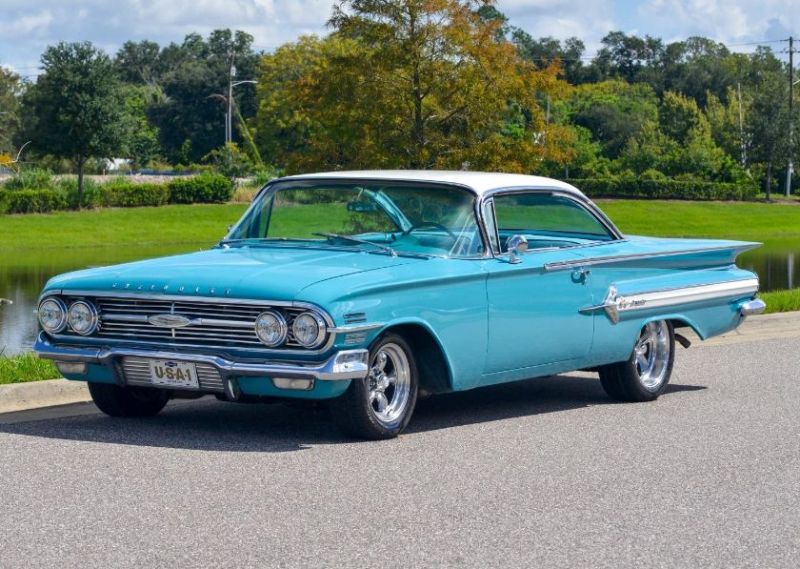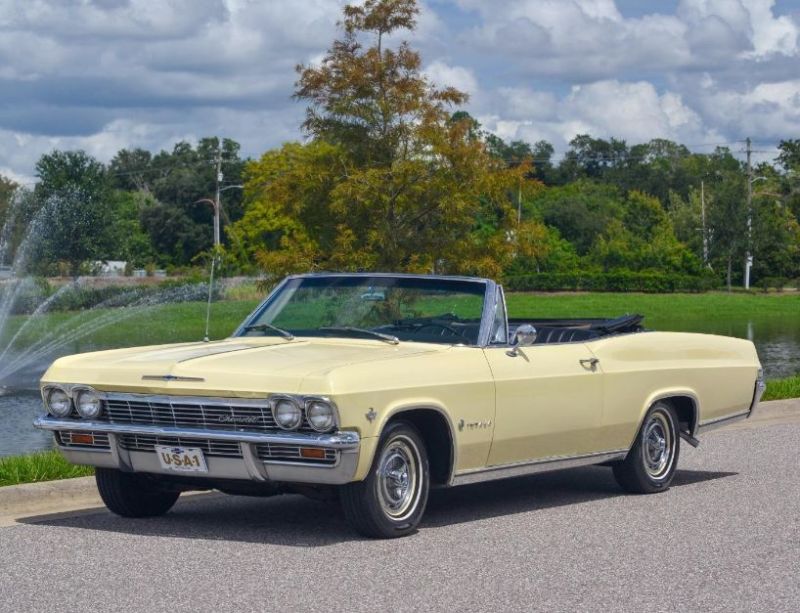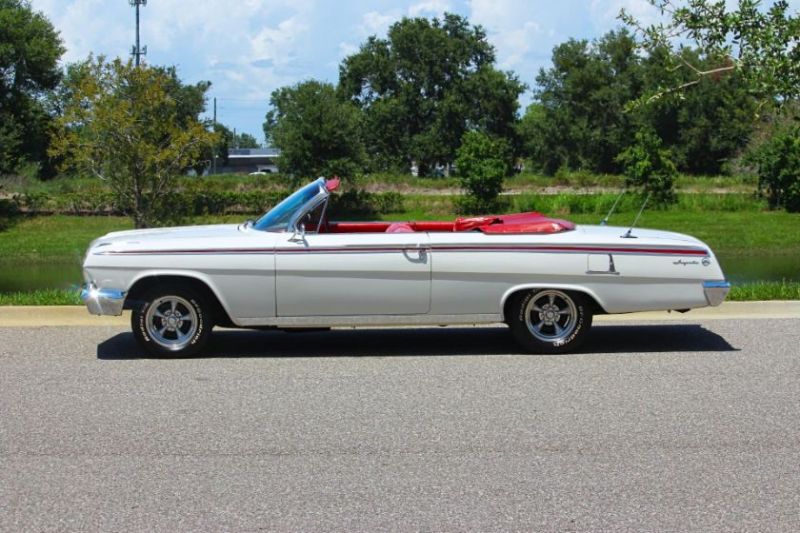
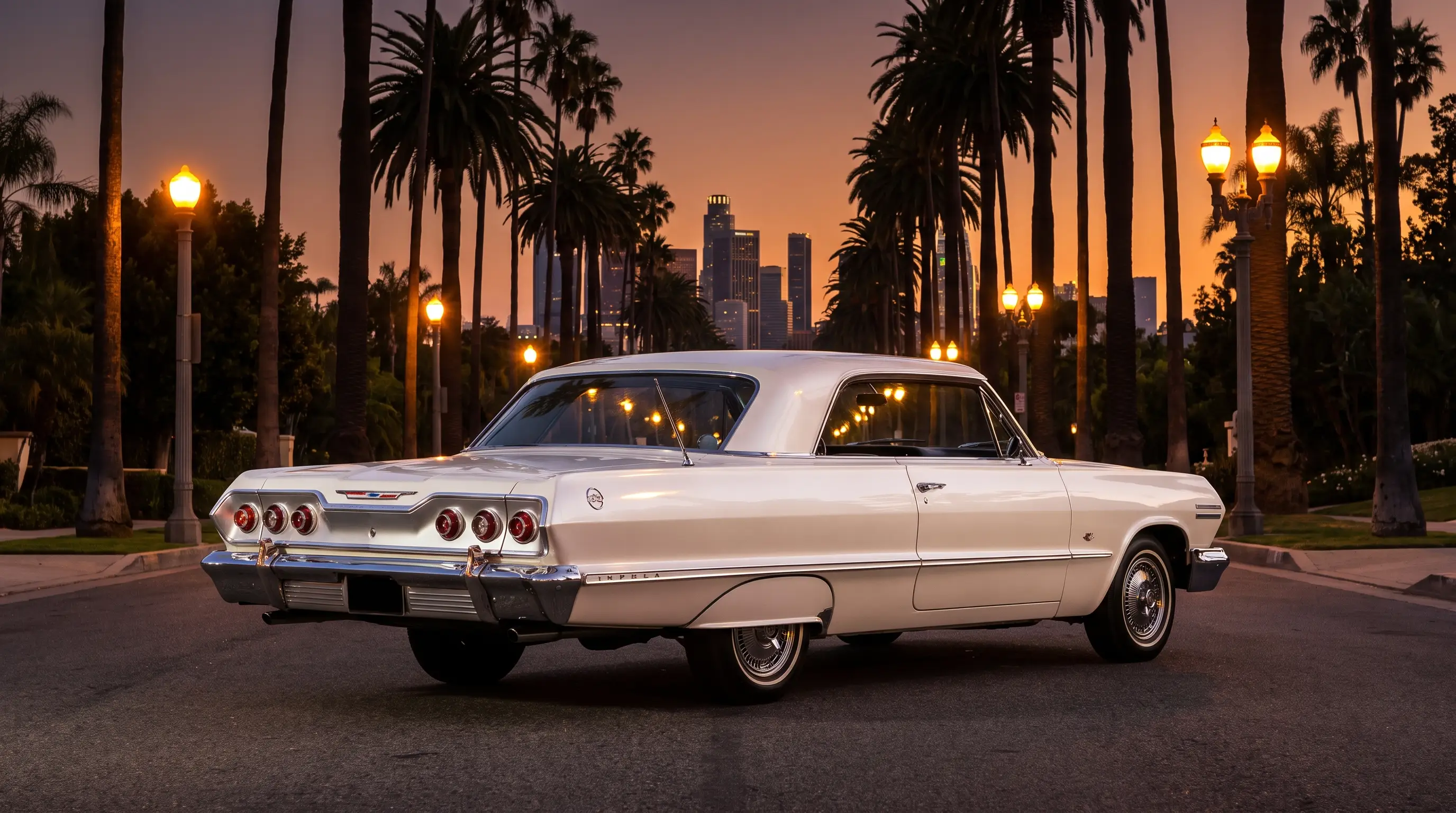
The 1963 Impala is the year the bubble top finally lost its argument. Chevrolet's full-size lineup had carried the curved, thin-pillar roofline since 1961, but for 1963 the notchback that had been an option the year before became the only Sport Coupe roof on offer. It was a small decision on paper and a real turning point in how the Impala looked for the rest of the decade. Everything else about the car got sharper too, from the sheet metal to the trim, making 1963 read as a more finished, more confident version of the formula Chevrolet had been refining since the decade began.
A more sculpted body
Chevrolet's stylists gave the full-size cars a cleaner, more rectilinear look for 1963. The fender lines were straighter, the greenhouse was more upright across every body style, and the ornamentation that had softened the 1961 and 1962 cars was pared back further. Impala kept its position as the top trim, distinguished from Bel Air and Biscayne by extra brightwork, wheel covers, and interior trim, but the overall shape of the car had shifted toward something closer to what buyers would recognize in the mid-1960s full-size Chevrolets. The horizontal taillight arrangement and the cleaner rear deck are among the details collectors use to spot a 1963 at a glance today.
The bubble top's last year on paper, gone in practice
Here is where 1963 gets interesting for anyone tracking the roofline story across the whole generation. The curved-glass bubble top coupe, standard since 1961 and optional alongside the notchback in 1962, was dropped from the Impala Sport Coupe entirely for 1963. Every two-door Impala hardtop that year used the formal notchback roof that had been introduced as an alternative the season before. The shift was not really about buyer resistance to the older look so much as Chevrolet standardizing its full-size coupe roofline across the lineup, matching the direction most of the industry was already moving. Anyone curious about how that decision fits into the bigger four-year picture should where this started for the full account of the 1961 through 1964 generation.
The 409 and the SS package matures
The 409 cubic inch V8 carried into 1963 as the range-topping engine, now offered in three states of tune: a 340 horsepower single four-barrel version with hydraulic lifters, a 400 horsepower single four-barrel version with a higher 11.0:1 compression ratio, and a dual-quad top option rated at 425 horsepower, a step up from the 409 hp dual-quad rating the engine carried in 1962. Below it, the 283 and 327 small blocks remained the practical performance choices for buyers who wanted a V8 without the big block's fuel and insurance costs. The Impala Super Sport package, introduced in 1961 as a trim and handling option rather than a distinct model, continued to grow in popularity through 1963, adding bucket seats, a center console, and SS badging to whichever body style and engine a buyer chose. It was not yet the standalone performance model it would become later in the decade, but the direction was already clear.
| Spec | 1963 Impala |
|---|---|
| Sport Coupe roof | Notchback only, bubble top discontinued |
| Base engine | 230 cid inline six |
| Top V8 | 409 cid, up to 425 hp (dual quad) |
| SS package | Bucket seats, console, badging across body styles |
| Body styles | Sedan, Sport Sedan hardtop, Sport Coupe, convertible |
The interior and what buyers actually got
Inside, the 1963 Impala carried the same tiered approach to trim that defined the whole full-size range. Bench seat models came standard with a woven pattern upholstery and a two-spoke steering wheel, while cars ordered with the SS package or bucket seat option got a more distinctive layout, including a floor-mounted shifter when paired with the optional four-speed manual. Door panels carried Impala-specific brightwork and courtesy lighting that the Bel Air and Biscayne did without, part of Chevrolet's ongoing strategy of making the top trim feel meaningfully upgraded rather than just a badge change. Dash layouts stayed conventional for the era, with a horizontal speedometer and simple gauge cluster, though full instrumentation was reserved for cars ordered with the console and tachometer option that appealed to buyers chasing the performance image the 409 and SS package projected.
Why collectors treat 1963 as a sweet spot
Cars from this model year sit in an interesting position for buyers. They carry the cleaner, more resolved styling that came after Chevrolet worked out the kinks of the 1961 redesign, but they still predate the more aggressive muscle car era that reshaped the Impala SS later in the 1960s. A well-optioned 1963 Impala Sport Coupe or convertible, especially with the 409 and the SS package, hits a balance of period-correct restraint and genuine performance that some buyers find more appealing than the flashier cars that came after it. Values reflect that: documented 409 cars with SS trim consistently outsell six-cylinder sedans by a wide margin, and body style continues to matter as much as engine choice when it comes to what a car is actually worth.
"Dropping the bubble top in 1963 gets treated as a footnote, but it is the moment Chevrolet committed to a roofline that would define every full-size coupe for years. It is one of the clearest examples of a styling decision that looks small in the moment and huge in hindsight."
- Tom Ramirez
What to look for when shopping this year
Originality checks matter as much on a 1963 as on any other year in this generation. Buyers should confirm that engine, transmission, and rear axle codes match the factory build sheet where documentation exists, since a 409 badge on the fender means little without paperwork or a verified block casting to back it up. Trim completeness is another area worth checking closely, since Impala-specific brightwork and SS-specific interior pieces are not always interchangeable with the lesser trims underneath them. Interior color and pattern combinations were tied to specific exterior paint codes that model year, so a repainted car with the wrong upholstery pattern for its original color is a sign the car has been altered from its factory configuration at some point.
Rust is the other practical concern on any full-size Chevrolet from this era, and 1963 cars are no exception. Lower quarter panels, trunk floors, and the areas around the rear window on Sport Coupe models are common trouble spots, particularly on cars that spent decades in the salt belt states. A car that looks straight from ten feet away can still hide filler and patch panels underneath, so a careful buyer checks these areas in person rather than relying on photographs. Convertibles carry the added concern of top frame condition and the structural reinforcement underneath the rear seat area, which corrodes quietly and is expensive to address once it has gone too far.
For buyers ready to compare actual cars rather than just specifications on paper, it is worth taking the time to browse classic Impala for sale and see how 1963 examples stack up against the years just before and after it. A side-by-side look at asking prices across body styles and engine combinations tends to clarify quickly which cars are priced on documentation and condition and which are priced mostly on optimism.
Sources and notes
- Over-Drive Magazine: Chevrolet's 409
- Old Car Memories: 1961-1965 Chevrolet 409 V8
- Automobile Catalog: 1963 Impala Convertible 409 V-8 400-hp specs
- Automobile Catalog: 1963 Impala Sport Coupe 409 V-8 425-hp performance review
- Mac's Motor City Garage: The Ragtop Look, 1962-64 Impala Sport Coupes
- Wikipedia: Chevrolet Impala