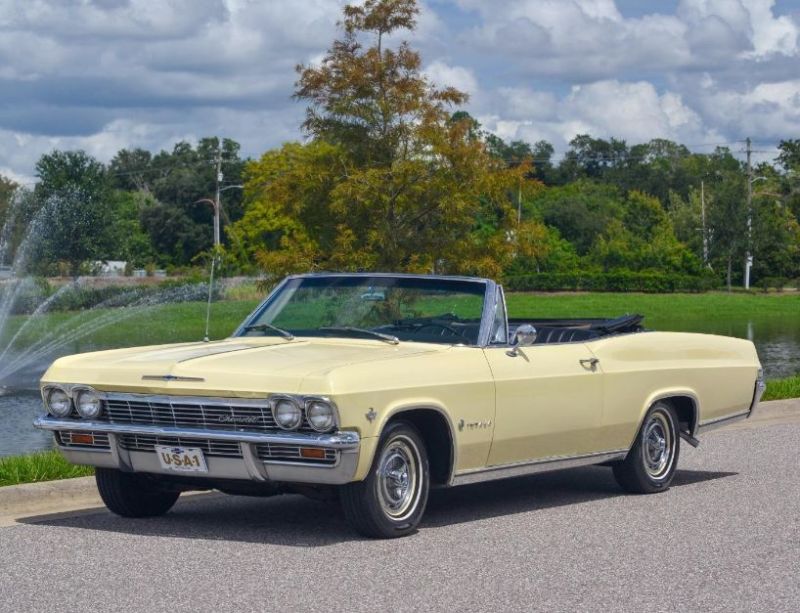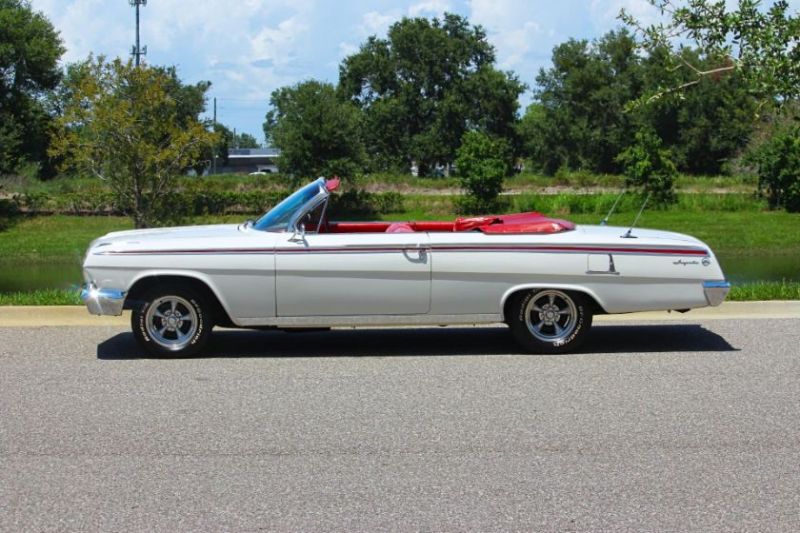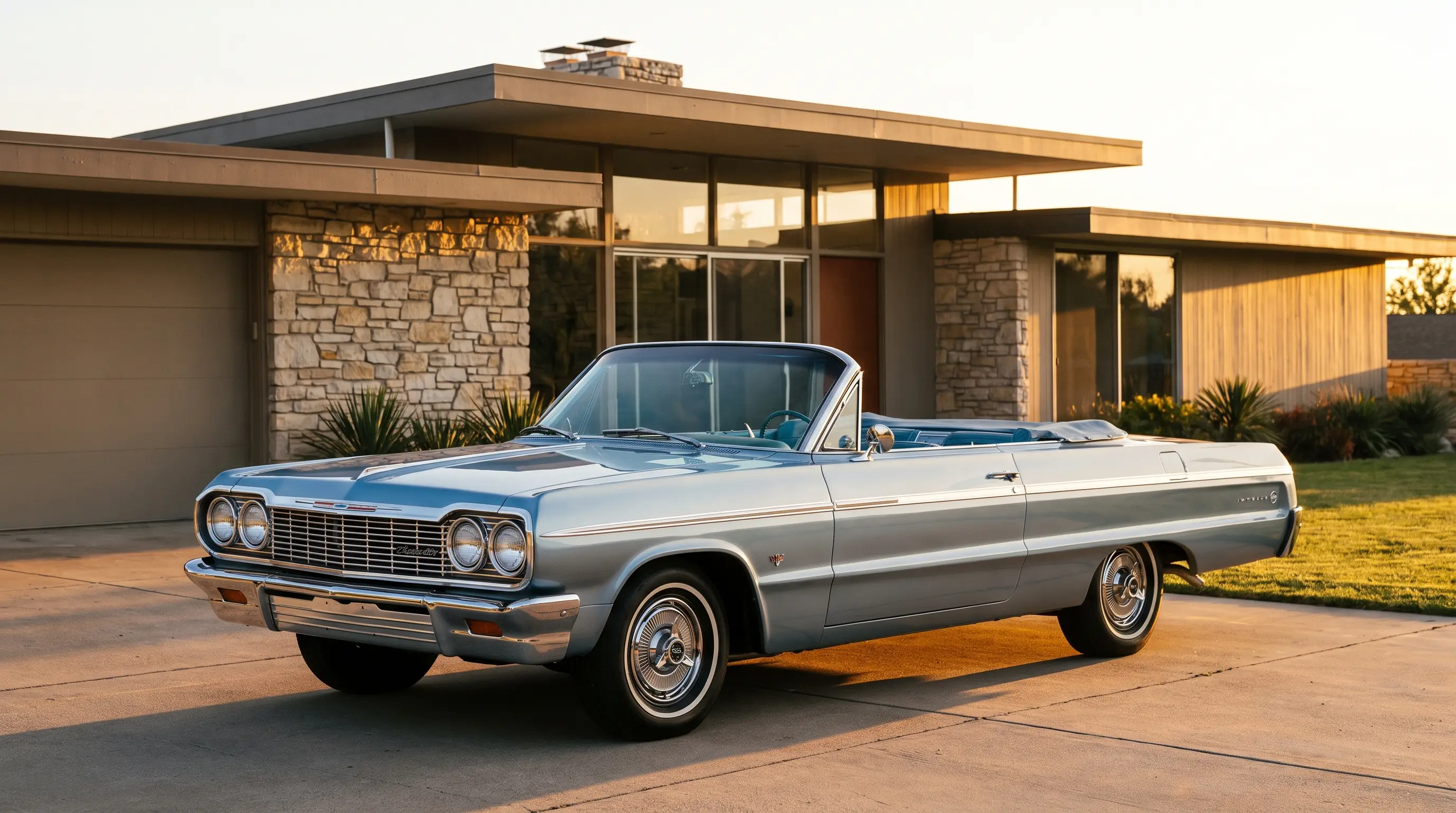
The 1964 Impala closed out the four-year styling cycle Chevrolet had started in 1961, and it did it with the most fully resolved version of the formula yet. By this point the division had worked through the bubble top roof, tried a formal notchback alongside it, then dropped the bubble top entirely, and settled the full-size lineup into clean, squared-off proportions that would carry Chevrolet's image for the rest of the decade. The 1964 Impala is often treated as the definitive full-size Chevy of its era, not because it changed the most from the year before, but because it changed the least and got almost everything right as a result.
The last year of a distinct design generation
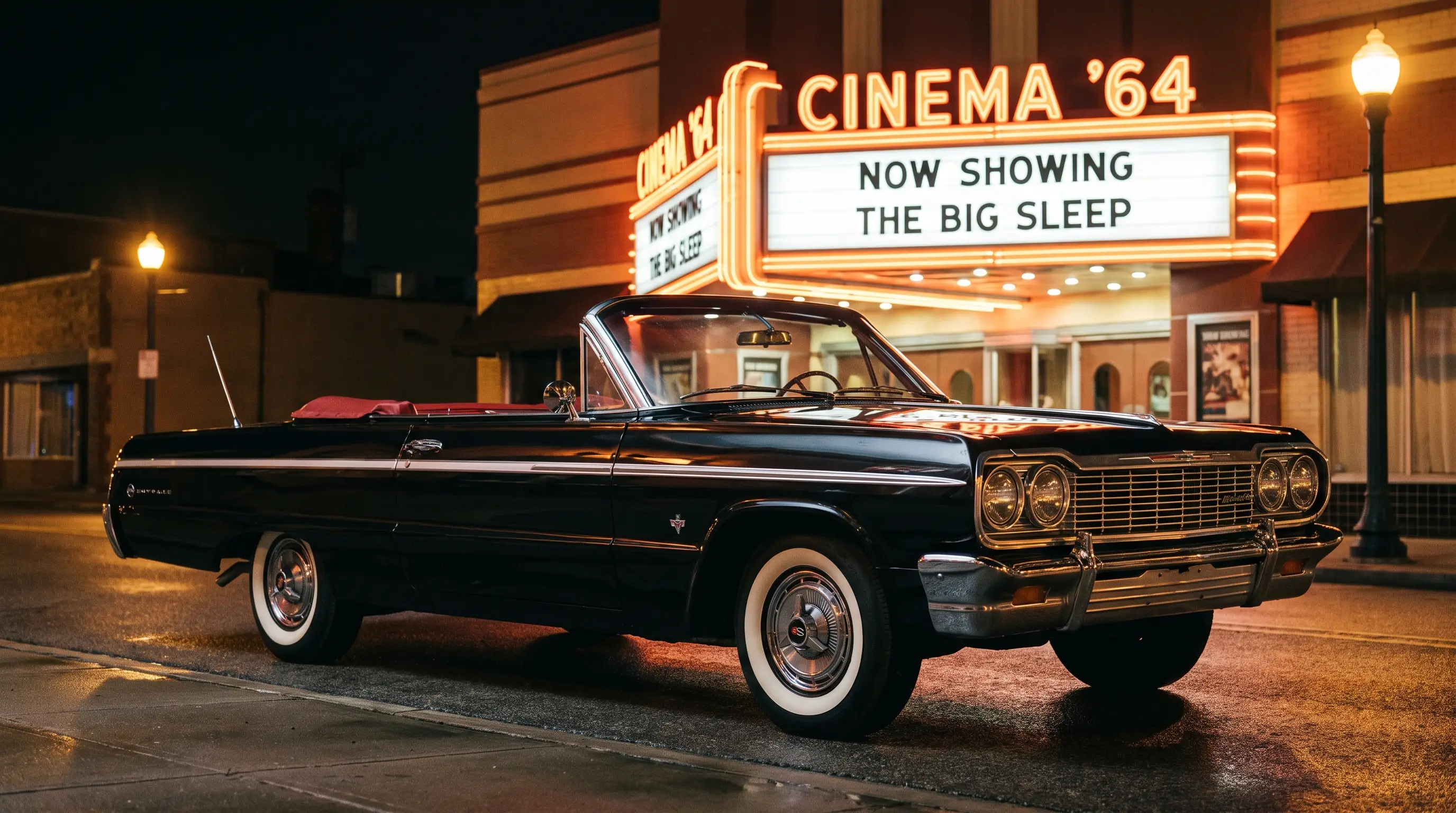
Chevrolet gave the full-size cars a subtle facelift for 1964 rather than a full redesign, tightening up the grille, adjusting the taillight treatment, and smoothing the body lines slightly compared to 1963. The changes were evolutionary rather than dramatic, which meant Impala buyers in 1964 were getting a thoroughly sorted car rather than a first-year experiment. Every body style from the previous three seasons carried over: the four-door sedan, the pillarless Sport Sedan hardtop, the two-door Sport Coupe with its now-standard notchback roof, and the convertible. Impala kept its position above Bel Air and Biscayne in the lineup, with the usual extra brightwork, wheel covers, and interior trim marking the difference.
Engines: the 409 shares the stage
The 409 cubic inch V8 remained available in 1964, still the engine most associated with the era's Impala performance image, but it was no longer the only serious option under the hood. The 327 cubic inch small block had grown more capable, and Chevrolet's engineering was already pointing toward the 396 big block that would take over the performance conversation the following year. For 1964 buyers, the choice came down to whether they wanted the 409's reputation or the 327's better balance of weight, fuel economy, and cost. The 409 carried over the same three-tier lineup it had in 1963: 340 and 400 horsepower single four-barrel versions and a 425 horsepower dual-quad top option, though 409-equipped cars made up a small share of total Impala and Impala SS production that year. Base models still shipped with an inline six for buyers who wanted Impala trim without the V8 premium, though six-cylinder Impalas from any year in this generation draw little collector interest today.
The Super Sport comes into its own
By 1964, the Impala Super Sport package had matured into a genuinely popular option rather than a niche add-on. SS trim brought bucket seats, a center console, unique wheel covers, and badging that set the car apart on the road, and it could be paired with any of the available engines, from the 327 up through the 409. Chevrolet was clearly reading the market correctly. Buyers wanted the visual and mechanical cues of performance even when they were not necessarily ordering the biggest engine on the sheet, and the SS package let Chevrolet sell that image at scale rather than reserving it for a handful of specialty buyers.
| Spec | 1964 Impala |
|---|---|
| Base engine | 230 cid inline six |
| Popular V8 | 283 cid / 327 cid |
| Top V8 | 409 cid, up to 425 hp (dual quad) |
| Body styles | Sedan, Sport Sedan hardtop, Sport Coupe, convertible |
| SS package | Bucket seats, console, unique trim across body styles |
Why 1964 is called the definitive year
Calling any single model year "definitive" invites argument among people who collect this generation, but the case for 1964 rests on a simple point: it is the version of the car built with the most accumulated experience and the fewest first-year compromises. The styling had been refined across four seasons, the SS package had matured into something buyers genuinely wanted rather than a curiosity, and the engine lineup offered real choice without yet tipping into the more expensive, more specialized muscle car era that followed. Production numbers back up how well the formula worked. Chevrolet sold Impalas in enormous volume in 1964, making it one of the best-selling individual car models in America that year, a scale that later performance-focused Impalas never matched again. For a deeper look at why this particular year gets singled out so often, a related story examines the argument directly.
"1964 does not have a dramatic story attached to it the way 1961's redesign or 1963's roofline change do. What it has is a company that had finally finished refining a shape, and buyers responded by making it one of the best-selling cars in the country that year."
- Tom Ramirez
Trim and interior details worth knowing
Inside, the 1964 Impala continued the tiered approach that separated it from Bel Air and Biscayne. Standard cars got woven upholstery and simple door panel trim, while SS-equipped examples added bucket seats upholstered in vinyl or a cloth and vinyl combination, along with a floor-mounted shifter when ordered with the optional four-speed manual or console-shift automatic. Dash layouts remained straightforward, with a horizontal speedometer and a simple gauge cluster shared broadly across the lineup, though full instrumentation with a tachometer was reserved for buyers who specifically ordered it alongside the SS package. Exterior color choices for 1964 included several two-tone combinations that had become less common by the following year, making certain paint and trim pairings a useful way to spot a 1964 car even before checking the taillight shape or grille details.
Shopping the 1964 today
Because so many were built, 1964 Impalas are relatively easier to find than earlier years in this generation, though condition and documentation still separate a strong example from an ordinary one. SS-optioned cars with a big block command a real premium over base sedans, and body style continues to matter as much as engine choice, with convertibles and Sport Coupes outselling four-door cars at auction consistently. Buyers researching the whole four-year span this car belongs to should start with our 1964 impala retrospective for the fuller context, and anyone ready to compare real inventory should look at Impalas for sale now to see how 1964 examples are priced against the years around them.
Rust and prior repairs are worth checking closely regardless of how clean a car looks in photographs. Trunk floors, lower quarter panels, and the frame sections beneath the rear seat area are common problem spots on any full-size Chevrolet from this generation that spent years in a wet climate. A convertible adds the additional concern of top mechanism condition and the reinforced structure that supports it, since replacement parts for the folding top hardware are scarcer than the shared mechanical components underneath most 1964 Impalas. Buyers who take the time to verify casting numbers, trim codes, and paint and interior combinations against known factory records tend to end up with cars that hold their value better than ones bought on curb appeal alone. Because the model sold in such volume, parts availability for common trim and mechanical components remains better than for the rarer, earlier years of this generation, which makes ownership costs more predictable even if it does slightly dent the exclusivity a buyer might be chasing.