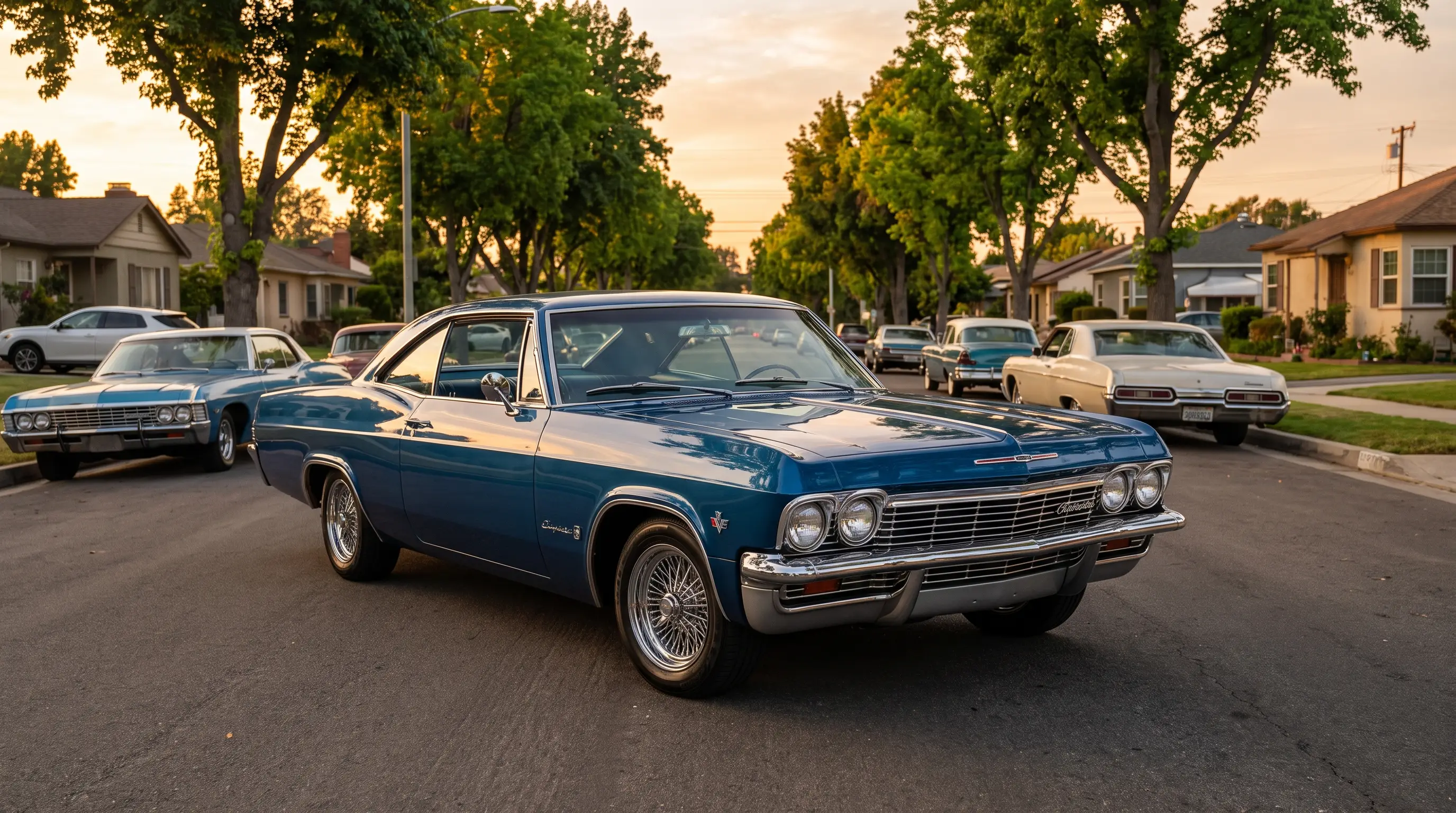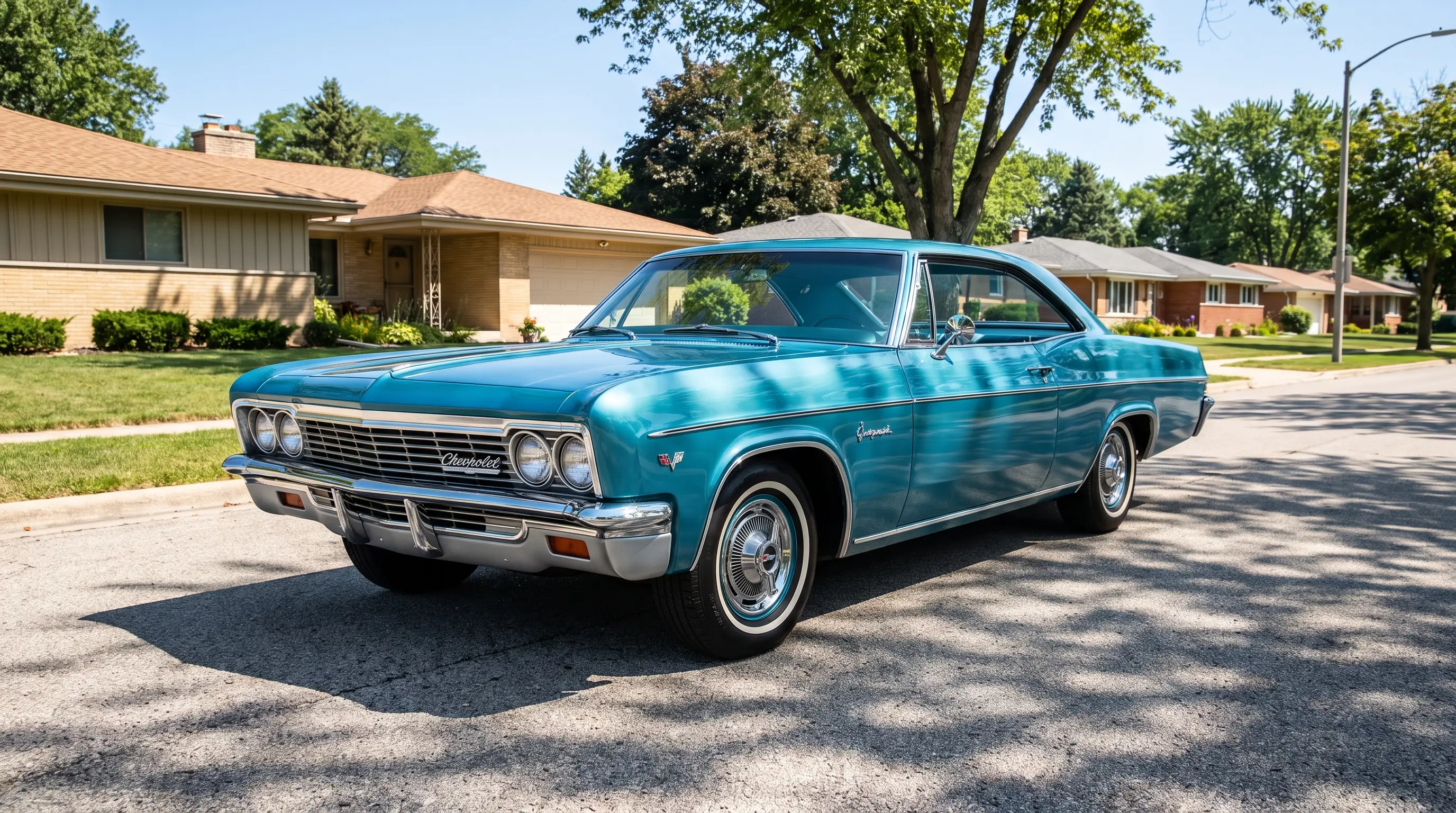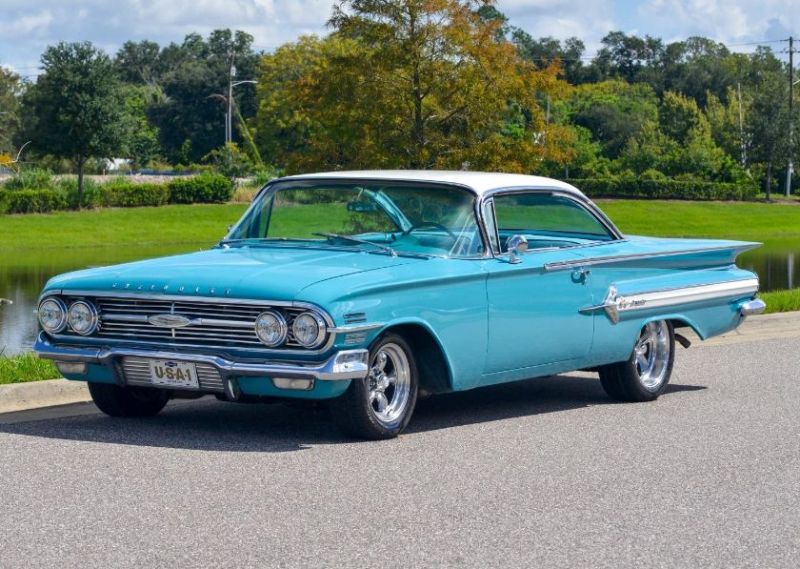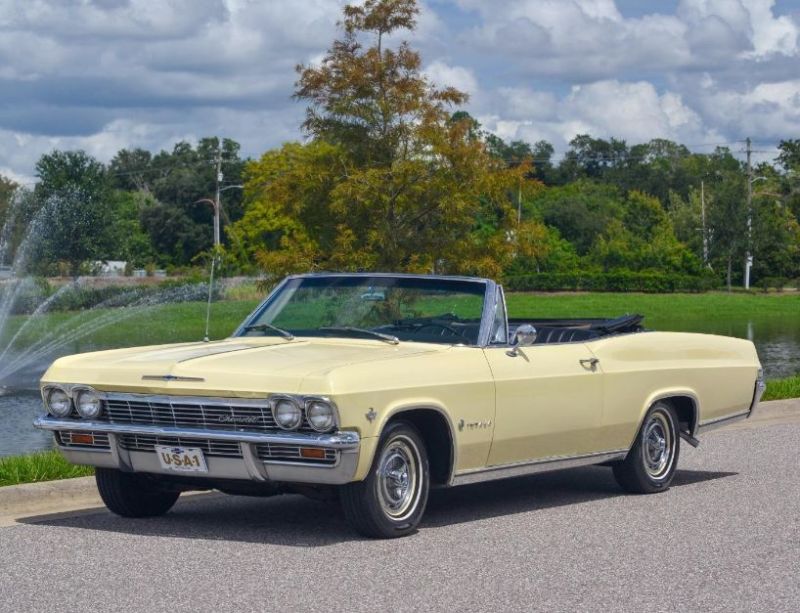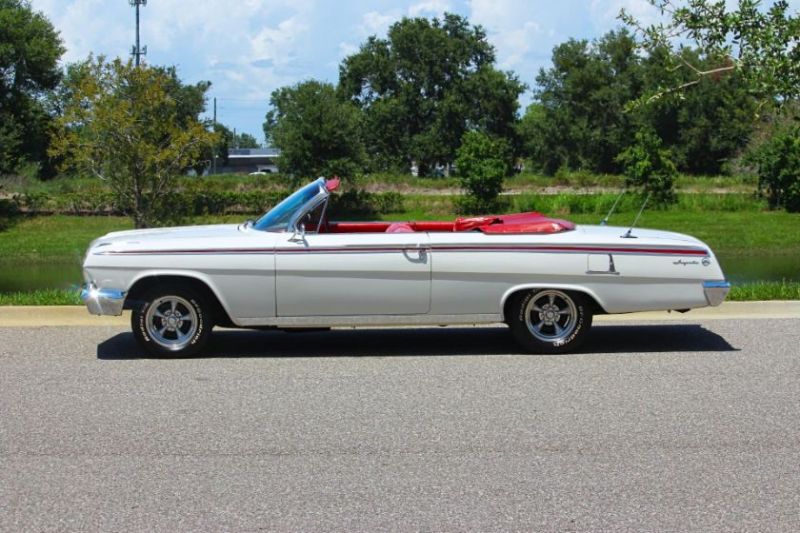
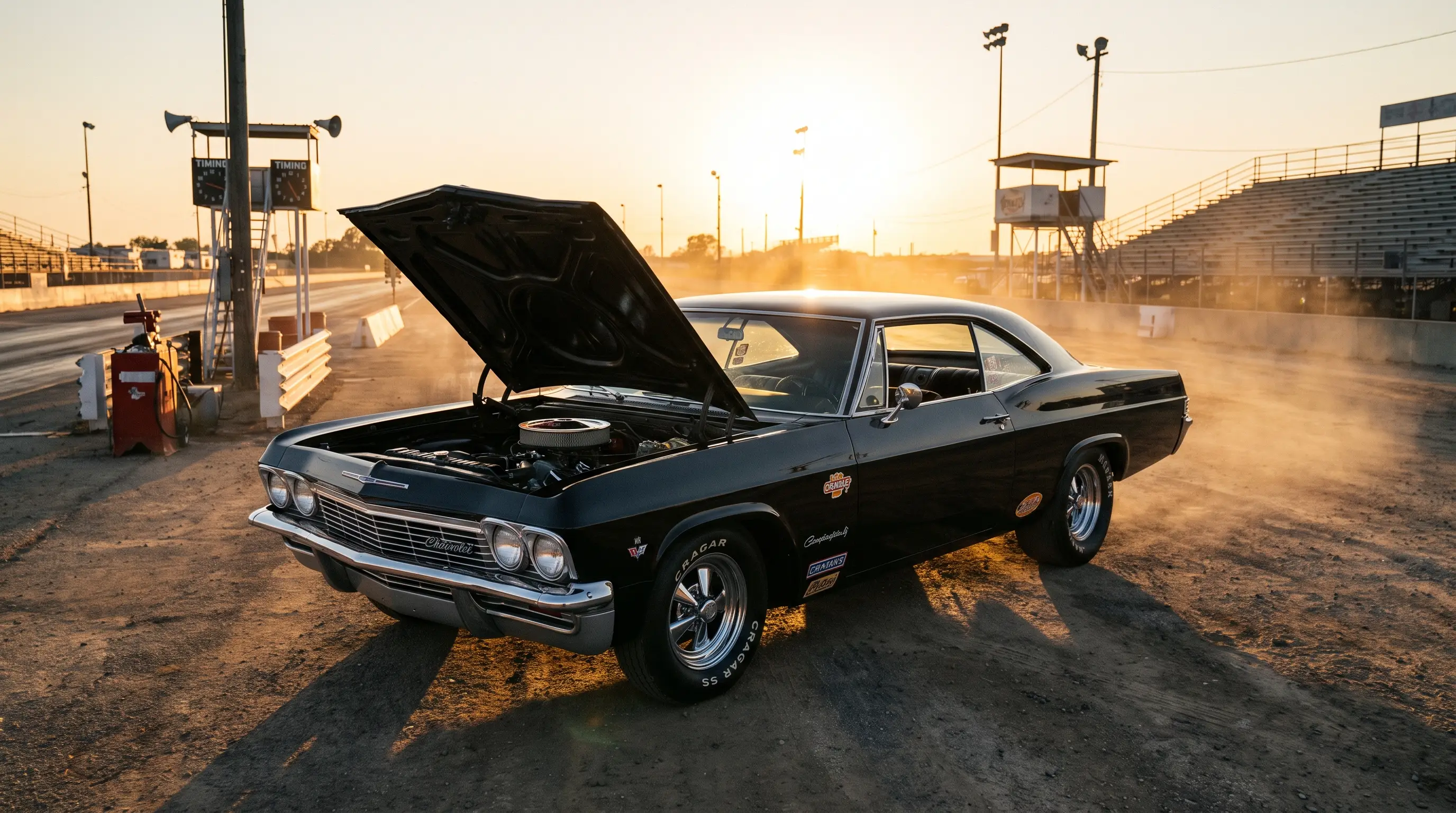
The 1965 Impala 396 is a short chapter with a long tail. Chevrolet built a limited run of full-size Impalas fitted with the new 396 cubic inch Turbo-Jet big block that year, a preview of an engine family that would go on to power Chevrolet performance cars for the rest of the decade. Here is the plain version of the story, without the padding some of these histories get dressed up with.
What the 396 actually was in 1965
Chevrolet had already built its reputation on the 409, but by 1965 that engine was reaching the end of its practical development, and the corporation had a newer big block architecture ready to take over. The 396 Turbo-Jet came in three states of tune for 1965: a base 325 hp version with a hydraulic-lifter cam and 10.25:1 compression, a 375 hp version with a solid-lifter cam and 11.0:1 compression, and the rare top L78 option rated at 425 horsepower, a figure that matched what the outgoing 409 could produce in its final year.
The important detail is production volume, and it depends which state of tune you mean. The base 325 hp and 375 hp 396 options went into full-size Chevrolets in meaningful numbers that year. The rare top L78 option, the 425 hp version, was far more limited: Chevrolet built only about 1,838 L78-equipped full-size cars across the entire Impala, Bel Air, Biscayne, and Caprice lineup for 1965, a figure shared across all those body styles rather than Impala alone. That scarcity is the whole reason this specific configuration commands the attention it does today. Compare that to the tens of thousands of small block Impalas built the same year, and you start to understand why a documented 1965 Impala 396 sells for a multiple of an otherwise similar V8 car.
Structurally, fitting this bigger engine into the redesigned 1965 body was not a trivial swap either. The new perimeter frame and revised engine bay dimensions that came with that year's full-body redesign had to accommodate the physically larger 396 block alongside the cooling and exhaust changes it required. That is part of why this was treated internally as a limited option rather than something Chevrolet rushed to every dealer lot in year one. Engineering validation on a new platform takes time, even when the underlying demand is obvious.
Why the numbers matter more than the story here
I do not care much about mythology on this one. The 1965 Impala 396 is a straightforward case of a manufacturer field-testing a new engine platform in a low-volume, high-visibility application before rolling it out broadly the following year. The 1966 model year saw the 396 become a more widely available option across Chevrolet's lineup, proof that the 1965 run was exactly what it looks like: a limited preview, not a mass-market launch.
Buyers sometimes want to attach more legend to this specific car than the facts support. It was not a secret skunkworks project. It was Chevrolet testing demand and manufacturing feasibility for a new big block in a package buyers could actually order, ahead of a wider rollout. That is a less romantic story than some retellings suggest, and it is also the accurate one.
| Spec | 1965 Impala 396 |
|---|---|
| Displacement | 396 cubic inches |
| Peak rated output | 425 hp (L78) |
| Production volume | Approx. 1,838 L78 units, full-size lineup wide |
| Successor rollout | Broader 396 availability in 1966 |
It is also worth comparing what this engine meant for the driving experience against the 409 it effectively replaced. Owners and period reviewers who drove both back to back generally described the 396 as smoother and more refined under load, a product of a full generation of engineering improvement rather than a simple displacement bump. The 409 had earned its reputation through raw character. The 396 earned its long-term place in Chevrolet's lineup through being the more complete engine, even if it never got its own hit song to ride on.
What it means for value
Here is the number that actually matters if you are shopping one: documentation changes price more on this specific car than on almost any other 1965 Impala configuration, because the production run was small enough that fakes and mismatched claims are a real, ongoing problem. A build sheet or factory invoice confirming the 396 option is not optional paperwork for this car. It is the difference between buying a genuine limited-production piece and buying a standard 1965 Impala with a later engine swap dressed up to look period-correct.
If you strip away the rarity premium, the 396 Turbo-Jet is a good engine, not a mythical one. It is a solid, well-engineered big block that Chevrolet kept developing and improving for years after 1965. The premium buyers pay for the 1965 application specifically reflects how few cars got it that year, not some unique performance characteristic absent from later 396-equipped Chevrolets.
One more practical note for anyone actually researching a specific car. Because the 1965 396 option was so limited, dealer records and regional distribution data are thinner than for higher-volume options built the same year. That makes third-party documentation, magazine road tests from the period, factory press releases, and any surviving dealer invoices more valuable than usual when trying to confirm a specific car's history. Do not rely on a single source, and treat any claim that cannot be cross-checked against at least two independent records with real caution.
Where this fits in the bigger picture
For the full account of the 1965 model year, including the styling changes and broader sales context around this generation, read the background for the complete history. The following model year is worth understanding too, since it shows how the 396 option matured from a limited test into a regular part of the Impala order sheet, and worth a look too covers that transition directly.
"The 1965 Impala 396 is a small production run that gets talked about like it changed everything. It didn't change everything. It previewed what came next, and the numbers back that up better than any story does."
- Dan Reeves
Restoration cost is another factor buyers underweight. Parts specific to the 1965 396 application, from correct exhaust manifolds to date-appropriate carburetor casting numbers, are harder to source than parts for the more common 1966 396 cars, simply because so few 1965 examples were built to begin with. A restoration shop quoting a 1965 396 job needs to account for that scarcity in both time and cost, and buyers should build that reality into their budget before they fall in love with a project car's price tag.
Shopping for one today
If you want a genuine 1965 Impala 396, expect a slow search and a demanding documentation checklist. These cars do not turn over quickly, and sellers who cannot produce paperwork should be treated with real skepticism regardless of how convincing the car looks in photos. For buyers open to the broader 1965 to 1966 Impala range rather than this one specific rare option, you can shop classic Impala listings and compare documented big block cars against more common small block configurations before deciding where your budget actually fits.