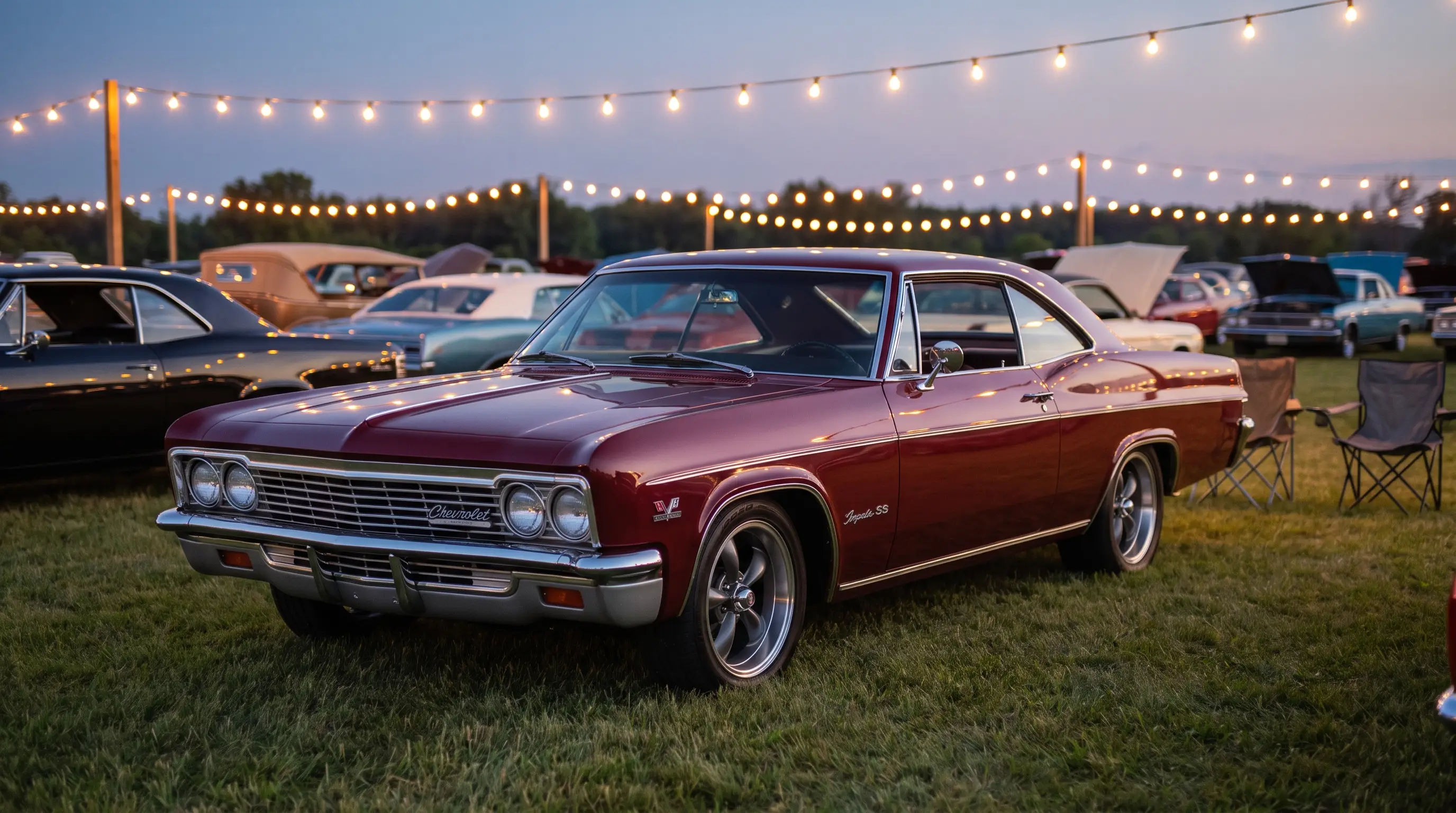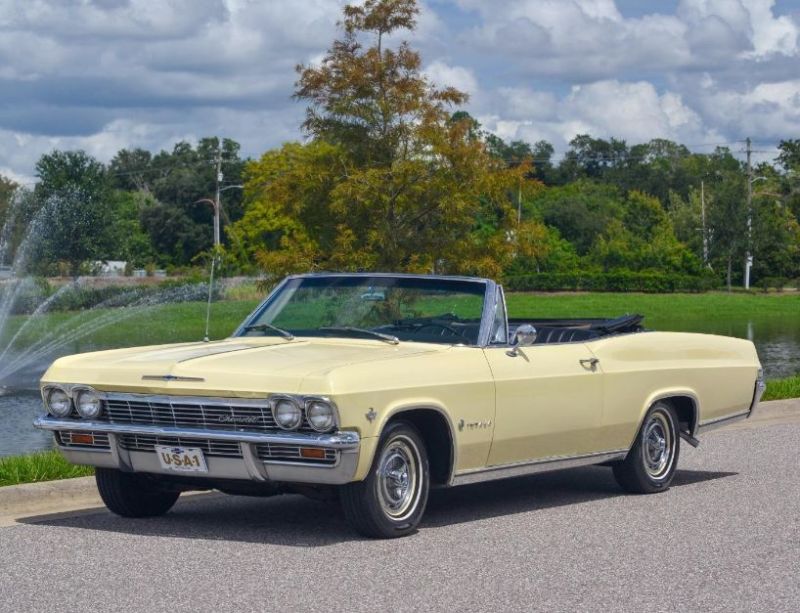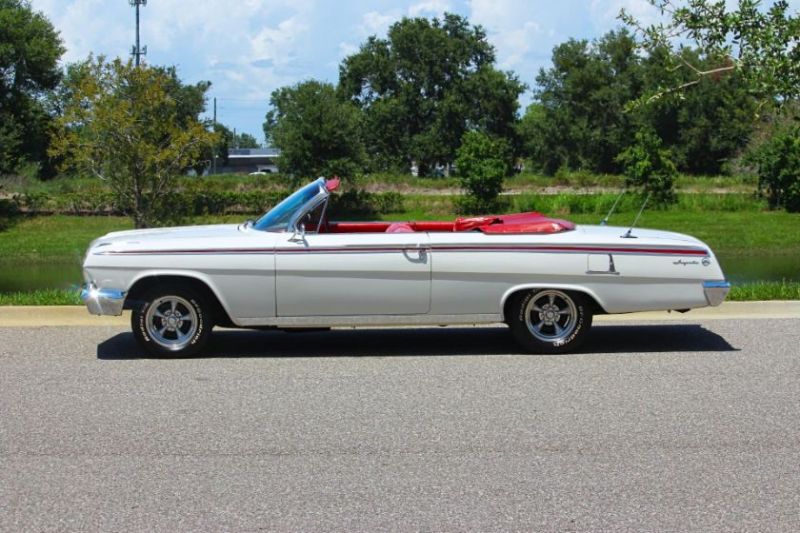
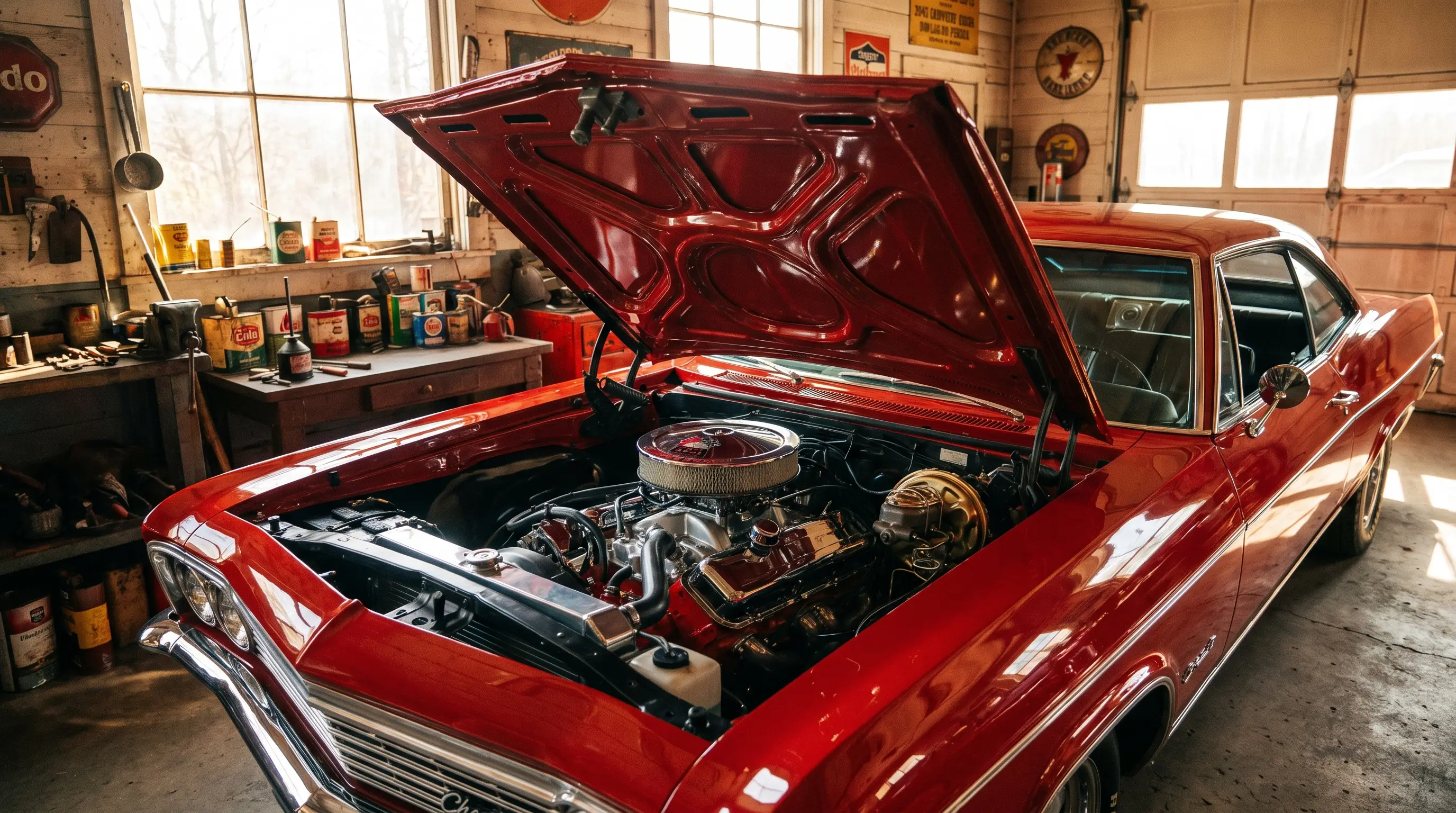
Seven or eight engines depending on the year. That is the range Chevrolet offered across the 1965 and 1966 Impala, from a plain inline six up to a big block that grew from 396 to 427 cubic inches over those two model years. The 1966 impala engines lineup carried the same basic structure as 1965, but the specifics shifted more than people assume, and the numbers tell a clear story about what buyers actually wanted, which was not always the biggest option on the sheet.
The base six and why it mattered
The standard engine for 1965 was a 230 cubic inch inline six making 140 horsepower. For 1966, Chevrolet enlarged the base six to 250 cubic inches and 155 horsepower. Nobody bought an Impala for that engine's excitement. They bought it because it was cheap, durable, and good on fuel, and a huge share of fleet and budget minded buyers ordered exactly that combination. The six kept the Impala's base price competitive against Ford and Plymouth, and it is the engine most often forgotten when people talk about this generation.
Numbers matter here. A six cylinder Impala from this era is worth less today than a V8 equivalent, often by a wide margin, but that gap says more about modern buyer taste than it does about the car's original purpose.
The small block V8 range
Above the six sat a series of 283 and 327 cubic inch V8s. The 283 came as a 195 horsepower two barrel both years, joined in 1966 by a 220 horsepower four barrel version. The 327 was offered in 250 and 300 horsepower tunes for 1965, while 1966 simplified that to a single 275 horsepower version. This was the sweet spot for most buyers. It gave real performance over the six without the insurance and fuel cost of a big block, and it is why small block cars dominate surviving population counts today.
A 250 horsepower 327 was the most common V8 choice in 1965, with the 275 horsepower version taking over that role in 1966. Neither was a rare engine, and that is exactly the point. They did the job Chevrolet designed them to do, quietly and reliably, in more Impalas than any other gasoline engine offered.
The big block: 396 in 1965, and a 427 joins for 1966
For 1965, the top engine was the newly introduced 396 cubic inch big block, offered in a milder 325 horsepower hydraulic lifter tune and, for buyers who checked the right box, a 425 horsepower solid lifter version. Chevrolet built this engine's reputation on the track before bringing a street version to market, and buyers who checked that box on the order form got a genuinely quick full size car.
For 1966, the 396 carried over in its milder 325 horsepower form, but Chevrolet introduced the 427 cubic inch Mark IV big block as the new range topper, available with 390 horsepower and hydraulic lifters or a high revving 425 horsepower solid lifter version. Either way, few buyers checked that box. Most SS buyers chose a smaller V8, which means a documented big block car from 1965 or 1966 is a real find, not a common one.
Price reflects that gap today. A verified big block car sells for a real premium over an equivalent small block car with the same trim, and that gap only grows as buyers learn to check cowl tags and casting numbers instead of trusting badges.
Transmissions paired with each engine
Engine choice was not made in isolation. The base six typically paired with a three speed manual or the Powerglide two speed automatic. Small block V8 buyers had access to the same two options plus a four speed manual on certain higher output combinations. Big block 396 cars could be ordered with a heavier duty three speed manual, a four speed, or a strengthened automatic, since the standard drivetrain components used behind the six and small block simply were not built to handle that much torque reliably.
That means an engine and transmission combination on a surviving car is itself a piece of documentation. A 396 paired with a light duty automatic that was never rated for that torque is a red flag worth investigating, either a non original drivetrain swap or a transmission replaced at some point without matching the car's original specification.
What the whole picture tells buyers
Look at the whole picture of this generation and the engine story fits a pattern seen across the entire American car industry in the mid 1960s. Manufacturers offered a wide range of engines to hit every price point, but the middle of that range, not the extremes, is where most cars actually sold. That means the most common Impala from these years is a V8 car with modest power, comfortable, reliable, and not particularly quick.
For buyers today, that has practical implications. If you want a driver that is cheap to maintain and easy to insure, a small block car in the 250 to 300 horsepower range delivers exactly what most original buyers got. If you want investment grade rarity, you need documentation proving a genuine 396, and you need to expect to pay for it.
"Everyone asks about the 396. Almost nobody bought the 396. Know that going in and you will shop smarter."
- Dan Reeves
| Engine | Displacement | Horsepower Range |
|---|---|---|
| Base Six (1965 / 1966) | 230 / 250 cubic inches | 140 hp / 155 hp |
| Small Block V8 | 283 to 327 cubic inches | 195 to 300 hp |
| Big Block V8, 1965 | 396 cubic inches | 325 to 425 hp |
| Big Block V8, 1966 | 396 / 427 cubic inches | 325 hp / 390 to 425 hp |
Verify any high output claim before you pay for it. Casting numbers and cowl tags exist for a reason, and a seller who cannot produce them is asking you to pay a premium on faith. If you want to compare current inventory across engine options, you can shop classic Impala listings and see how much the engine under the hood actually moves the asking price.
Bottom line: the engine range in the 1965 and 1966 Impala was wide, but the market for these cars today rewards documentation over displacement. Know what you are buying before you decide what it is worth.
Ordering an engine versus ordering the whole car
It is worth remembering that the engine was one line on a much longer order form. A buyer picking the base six was often making a budget decision that touched the whole car, skipping power steering, power brakes, and other comfort options right along with the smaller engine. A buyer stepping up to the 396 was usually already committed to a well equipped car in other respects. That correlation between engine choice and overall equipment level is one more reason a stripped down big block car, or a heavily optioned six cylinder car, both stand out as unusual today.
Fuel, maintenance, and daily reality
None of these engines were designed with fuel economy as a priority, but they varied enough in real world consumption that the choice mattered to period buyers watching their budget. The six was the clear economy leader, the small block V8s sat in the middle, and the big block was thirstiest by a wide margin, especially under the kind of hard use that made it worth ordering in the first place. That difference still matters today for anyone planning to drive one of these cars regularly rather than store it.
Maintenance costs follow a similar pattern. Parts for the small block V8 range remain the most widely available and generally the most affordable, since Chevrolet used variations of that engine family across an enormous range of vehicles for decades. Big block parts are more specialized and often carry a real premium, another factor that pushes routine ownership costs up alongside the purchase price for anyone chasing a 396 or 427 car. Factor that ongoing cost difference into any purchase decision, not just the sticker price at the point of sale.