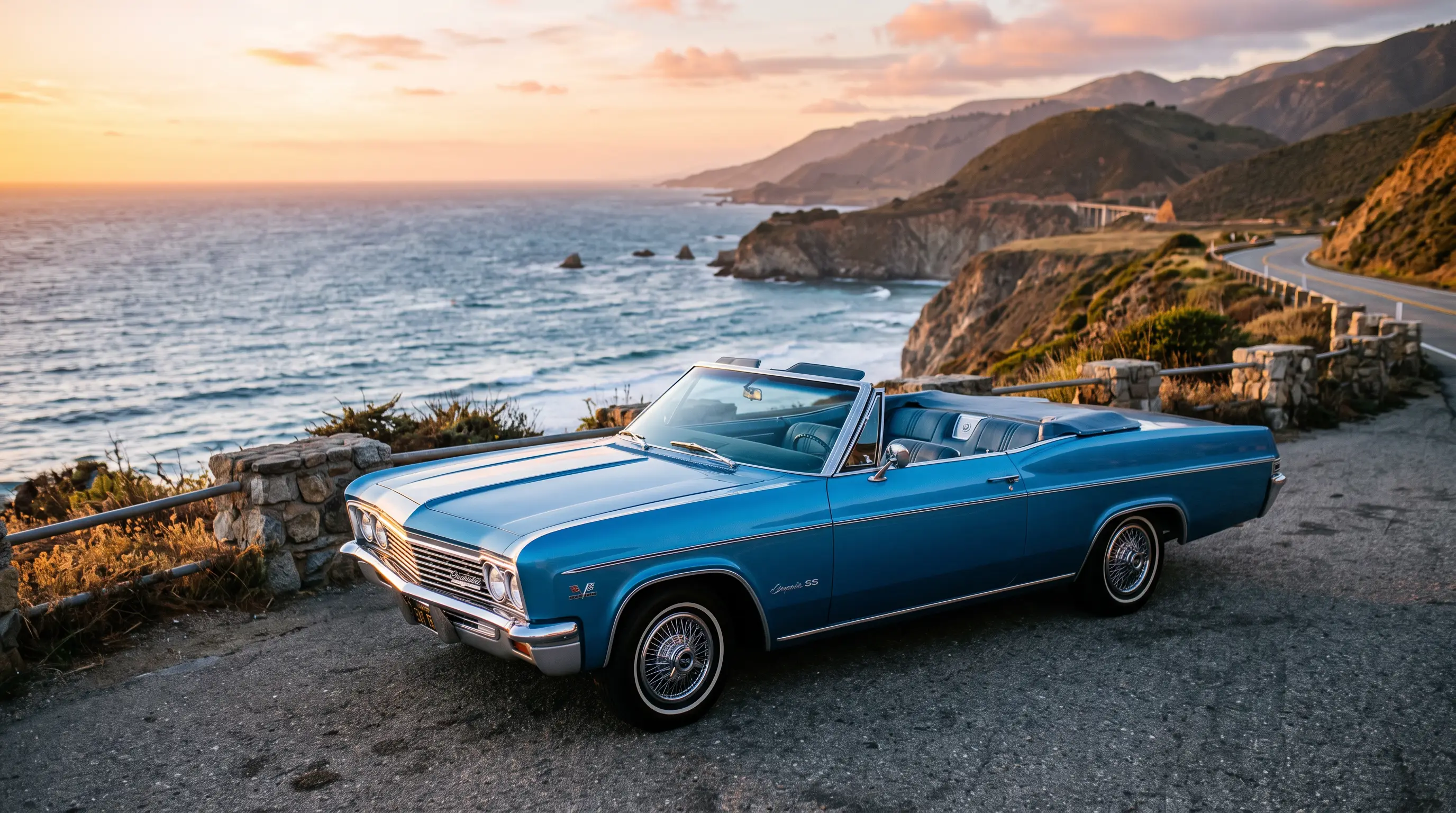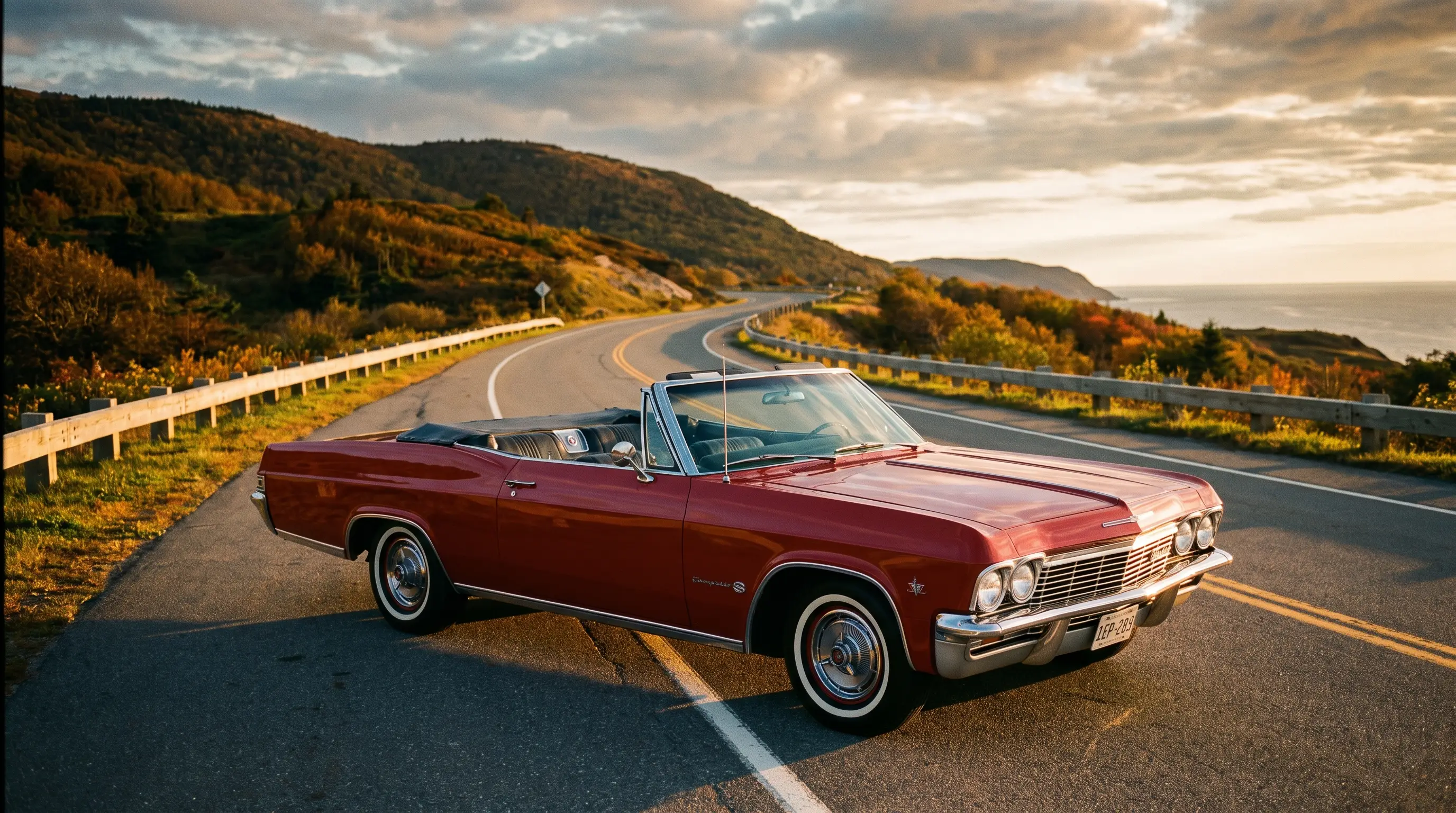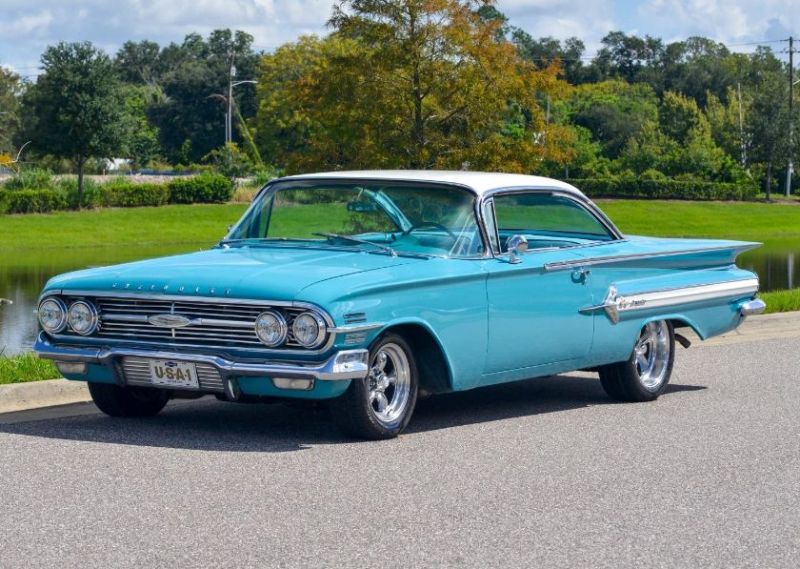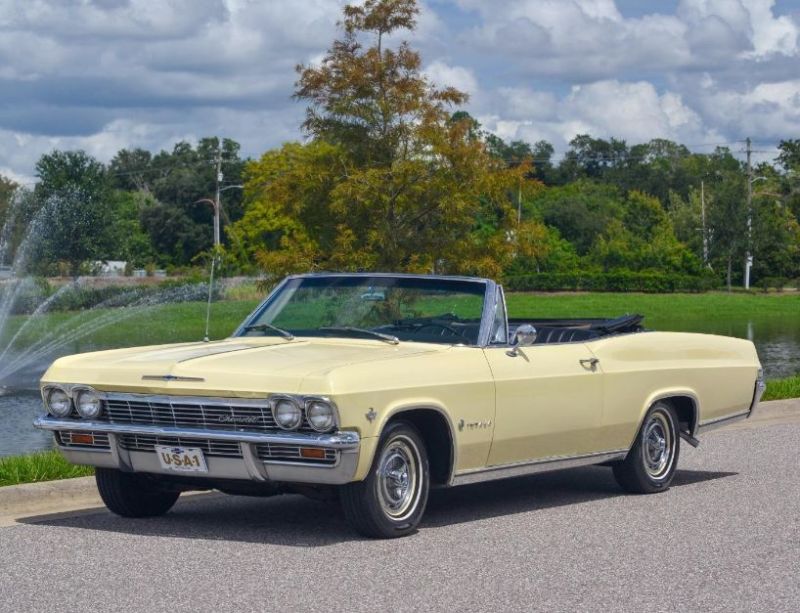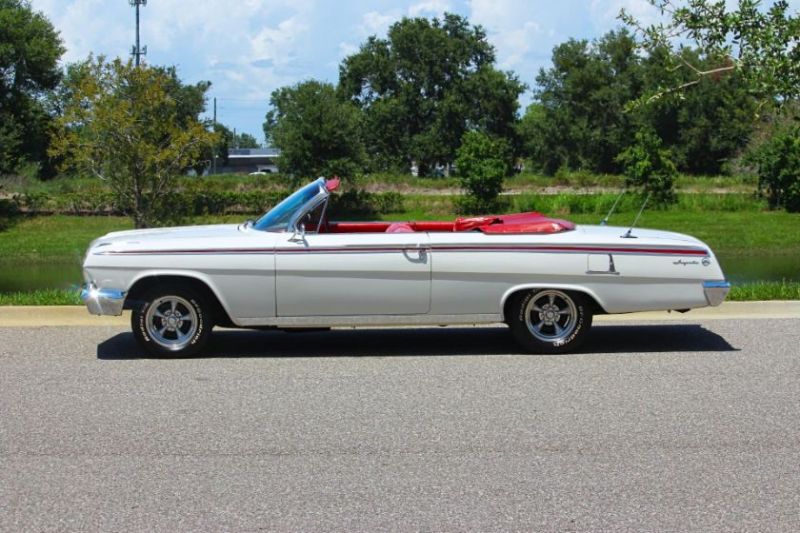
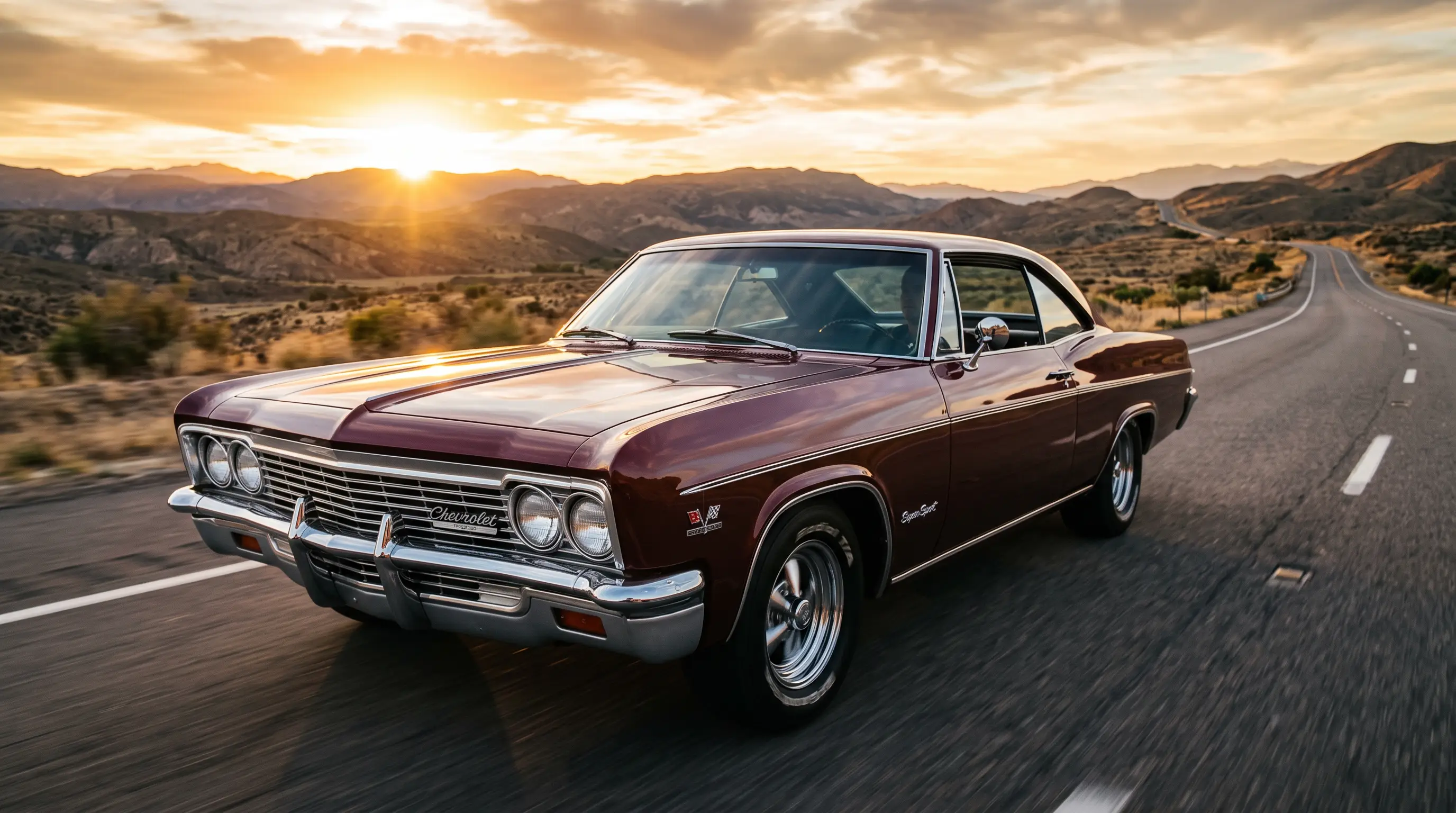
The 1966 Impala 427 is the year Chevrolet finally gave its biggest passenger car the biggest engine in the corporate arsenal. Through 1965 the largest option under an Impala hood had been the 396 cubic inch big block, itself only a year old. For 1966 Chevrolet slotted in the 427, a genuinely new tool for a genuinely different kind of buyer, the one who wanted a full size car that could embarrass smaller machines at a stoplight without announcing it with a scoop or a stripe.
Two versions of the 427 reached Impala order sheets that year. The L36 used a mild hydraulic lifter cam, a single four barrel carburetor, and a factory rating of 390 hp. It was tuned to be lived with, an engine that idled fine, ran on regular fuel by the standards of the day, and pulled a two ton car with authority rather than drama. The L72 was the other animal entirely. Solid lifters, a bigger carburetor, 425 hp, and a personality that did not want to be driven gently. Chevrolet did not build many L72 Impalas, and the ones that survive tend to get treated like the mechanical equivalent of a loaded gun in a display case.
Why the 427 mattered to a full size car
Horsepower wars in 1966 were mostly a mid size and pony car story. The GTO, the 4-4-2, the early Mustang GT, these were the cars getting magazine covers. The 1966 Impala 427 was Chevrolet quietly proving that a full size sedan or coupe did not have to be a horsepower afterthought. Numbers-comfortable engineers at the time understood the math: more displacement means more torque at low RPM, and a heavy car needs torque more than it needs a screaming redline. The 427 gave the Impala real torque, not just a bigger number on the window sticker.
It also meant the SS trim, which by 1966 was mostly about bucket seats, console shifter, and trim badges, could be backed up with genuine mechanical substance if the buyer checked the right box. Most SS 396 buyers left it there. The Impala 427 crowd generally knew exactly what they were ordering and why.
What a 1966 Impala 427 actually drives like
Reports from owners and restorers are consistent on one point: the L36 is the version most people should actually want to own. It has enough torque to make the car feel alive in traffic, it runs cooler and more predictably than the solid lifter L72, and it does not punish a driver for treating it like a normal car nine days out of ten. The L72 is a project for someone who wants the fastest possible full size Chevrolet from 1966 and is willing to accept a cantankerous idle and a thirst for premium fuel as the cost of admission.
Transmission choices followed the usual pattern of the era, a three or four speed manual or the Turbo Hydra-Matic automatic, with the automatic being the far more common pairing in a car this size and this heavy.
| Spec | L36 427 | L72 427 |
|---|---|---|
| Displacement | 427 cubic inches | 427 cubic inches |
| Valvetrain | Hydraulic lifters | Solid lifters |
| Rated output | 390 hp | 425 hp |
| Character | Daily driveable torque | High strung, race bred |
"The L36 is the engine you actually want to own. The L72 is the engine you want to have owned, which is a different thing entirely."
- Emily Chen
Rarity and what survives today
Production splits between the two 427 codes were never close to even, and L72 cars in particular were built in small numbers relative to the overall Impala run. Documentation matters enormously here. A build sheet, a Protect-O-Plate, or period paperwork tying a specific car to its original engine code turns a good story into a provable one, and that provability is most of what separates a valuable 1966 Impala 427 from an Impala with a 427 in it now. Engine swaps happened, sometimes decades ago and sometimes recently, so a buyer chasing this specific car needs to verify numbers match rather than take a seller's word for it.
Anyone trying to piece together how the 1966 model year fits into the broader run of these cars should look at the whole picture rather than treat 1966 as an island. The two years share a great deal of sheet metal and a great deal of engineering, and the 427's arrival only makes sense against that backdrop.
How the 427 compares to the 396 it sat alongside
Chevrolet did not retire the 396 when the 427 arrived. The two big blocks shared showroom space for the entire 1966 model year, and most Impala SS buyers still chose the smaller engine, largely because it cost less to insure, cost less to option, and was plenty of car for someone who wanted the look and the badge more than the last word in straight line performance. The 427 buyer was a narrower slice of the market, someone who had already decided the 396 was not enough and was willing to pay the premium in both purchase price and running cost.
That narrower slice is exactly why 427 cars command a premium today. Fewer were built, fewer survive with their original drivetrain intact, and the ones that do survive tend to have been cared for by owners who understood what they had. A 396 car from 1966 is a good looking, competent cruiser. A documented 427 car is a genuine performance artifact from a period when Detroit was throwing engineering resources at full size cars in a way that would not last much past the decade.
Reading a 1966 Impala's build sheet
Any serious evaluation of a claimed 427 car starts with the paperwork trail rather than the engine bay. The cowl tag, the trim tag, and any surviving Protect-O-Plate or dealer invoice will list an engine code that should match what is actually bolted between the frame rails. Casting numbers on the block, heads, and intake tell a more granular story, since Chevrolet reused some casting patterns across model years and a numbers matching claim needs those specifics, not just a general shape under the air cleaner. Buyers who skip this step and rely purely on a seller's description are gambling on a car's identity, not just its condition.
None of this is a reason to avoid the model. It is a reason to slow down, ask for documentation before money changes hands, and treat a confident verbal claim of "original 427" with the same skepticism an engineer would apply to any unverified spec sheet.
Buying one today
The market for a documented 1966 Impala 427, especially an L72, has grown steadily as buyers who grew up wanting one finally have the means to chase it. Condition and paperwork drive price far more than color or trim level. A rough L36 car with solid documentation is often a smarter purchase than a shiny L72 with a murky history, because the shiny car with no paper trail is a bigger financial risk even if it is more fun in the driveway this weekend. For anyone ready to go looking, it is worth taking the time to find a classic Impala with real records attached rather than settling for the first clean looking example that shows up.