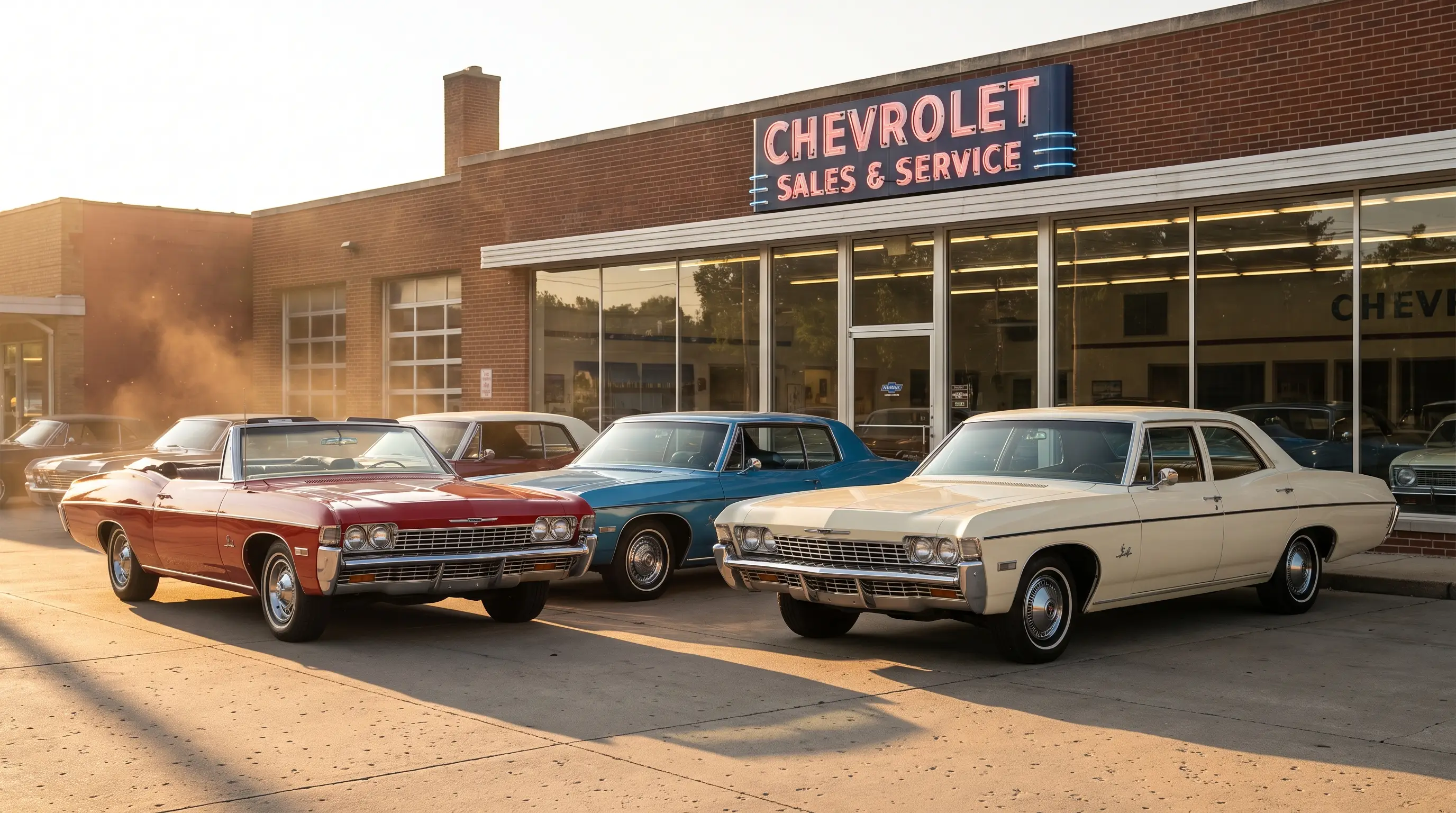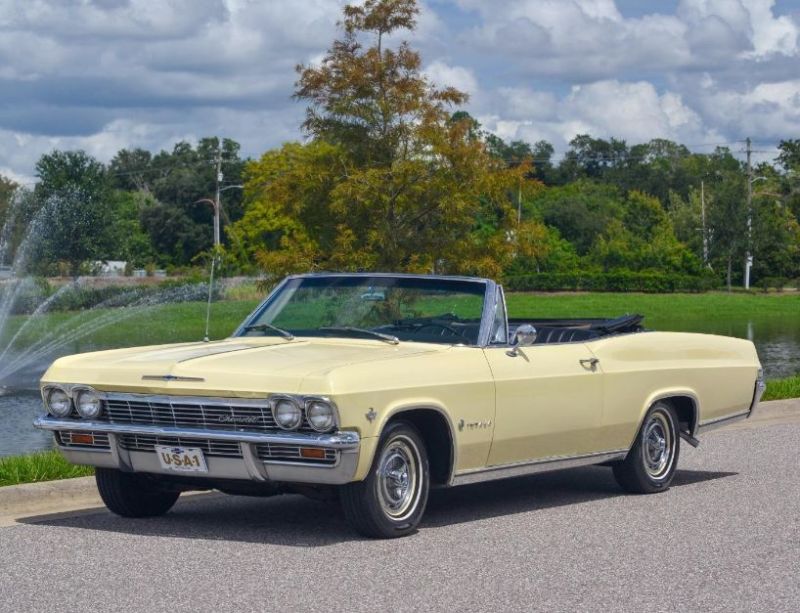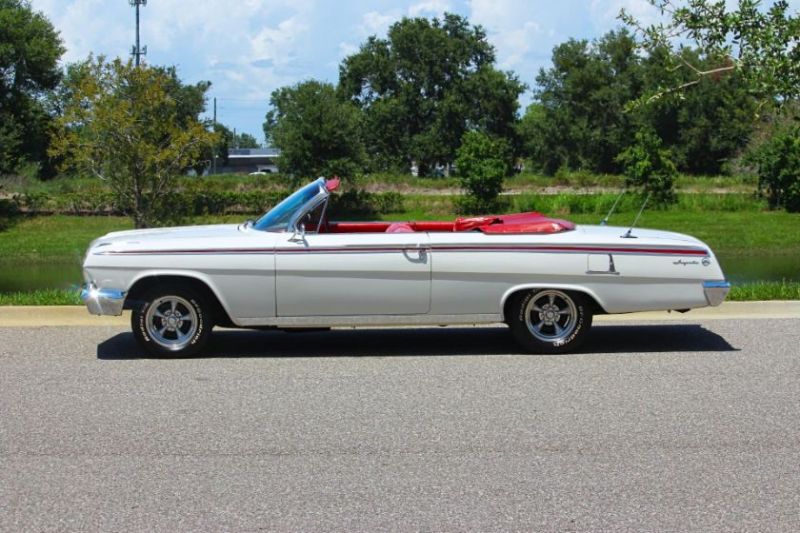
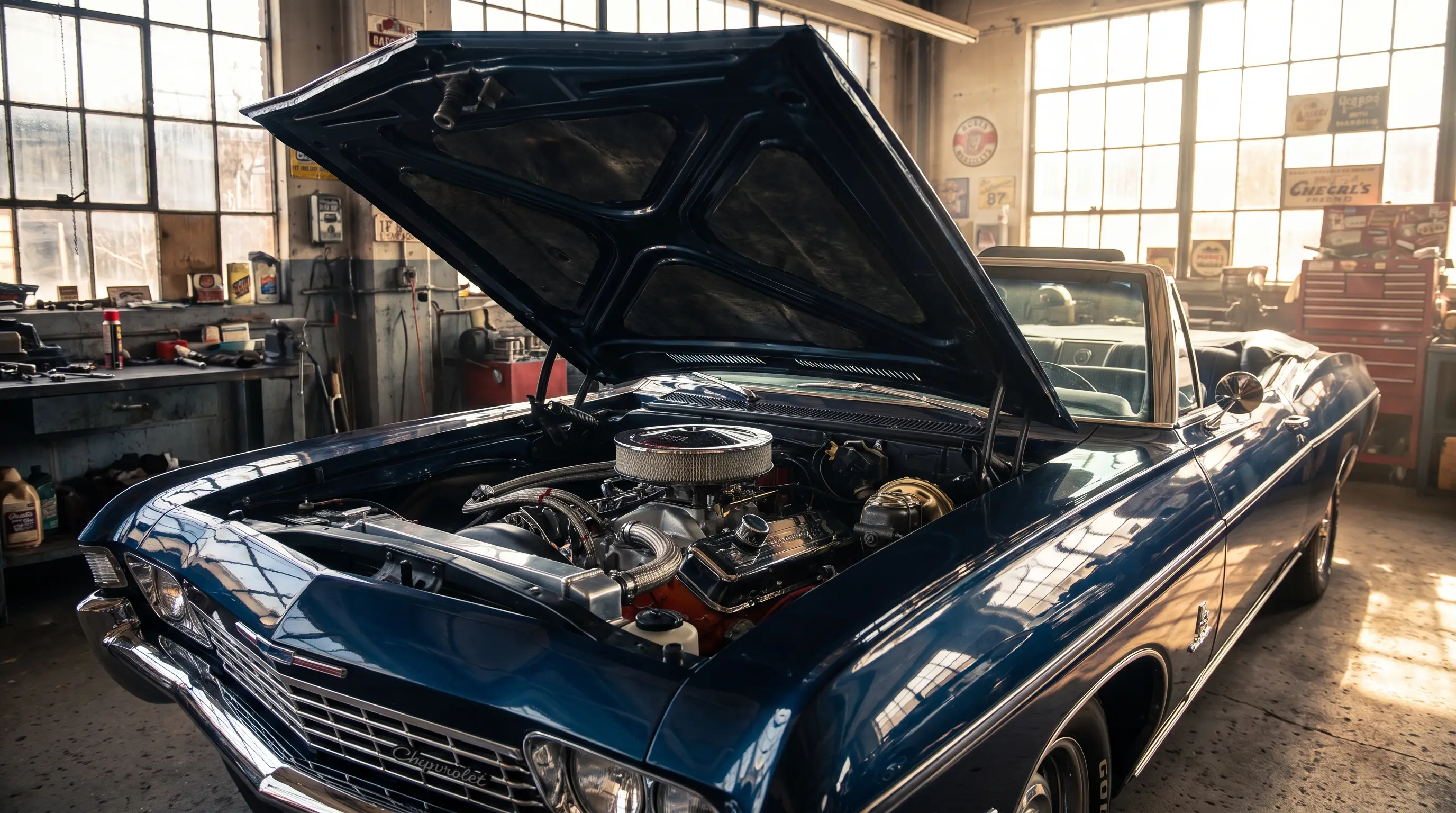
The 1968 Impala engine lineup is a case study in how a single manufacturer served wildly different customers off one assembly line. A buyer could order a modest six-cylinder for a company car fleet or spec a solid-lifter big-block capable of embarrassing dedicated muscle cars, and both configurations rolled out of the same Chevrolet plants wearing the same badge. Understanding that spread matters more than memorizing a single horsepower figure, because the engine bay tells you what kind of car you are actually looking at.
The base six and small-block, doing the real work
Most 1968 Impalas left the factory with either the 250 cubic inch inline six or the 307 cubic inch small-block V8, and these two engines accounted for the overwhelming majority of production. Neither was exciting on paper, but both were durable, cheap to service, and well suited to the car's actual job as family and commuter transportation. The 307 in particular deserves more credit than it usually gets. It was not a performance engine, but it delivered adequate power with genuinely low maintenance demands, which is exactly what most Impala buyers wanted from a full-size car in 1968.
The 327 and 350, the middle ground
Above the base engines sat the 327 cubic inch V8, carried over from earlier years, and for 1969 Chevrolet introduced the 350 cubic inch small-block that would go on to become one of the most widely produced engines in American automotive history. These mid-range engines gave Impala buyers genuine performance without stepping up to big-block displacement, insurance costs, or fuel consumption. A well-optioned 327 or 350 Impala could move with real authority while remaining an entirely reasonable daily driver, a balance the base engines could not match and the big-blocks did not need to bother with.
The big-block options and the SS connection
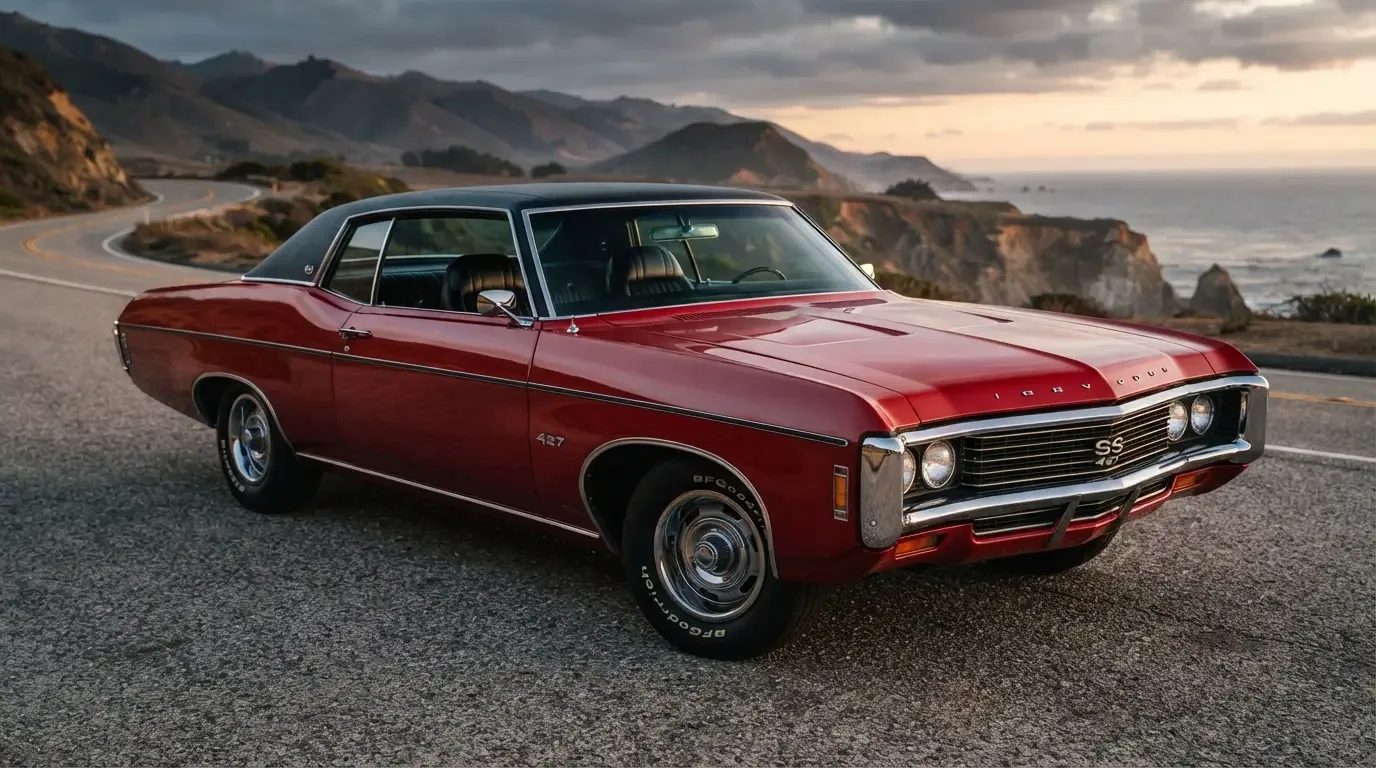
For buyers who wanted to order genuine performance, Chevrolet offered the 396 cubic inch big-block across multiple horsepower tunes depending on carburetion, camshaft, and cylinder head casting. The top-tier L78 396 variant, built with solid lifters and a more aggressive cam profile, delivered 375 horsepower, a figure that put a full-size Impala within striking distance of the era's dedicated muscle cars in a straight line, if not in outright agility. This engine paired most often with the SS package and the fastback Sport Coupe body, giving buyers a complete performance statement rather than just a heavy engine bolted into a soft chassis.
Readers wanting the complete generational arc that surrounds these engine choices, including the styling and body changes that came alongside them, should read the 1967 impala story, which covers the years this engine lineup spans.
How the numbers actually break down
| Engine | Displacement | Typical use | Approx. output |
|---|---|---|---|
| Inline six | 250 cid | Base, fleet, economy | 155 hp |
| Small-block V8 | 307 cid | Standard V8 buyer | 200 hp |
| Small-block V8 | 327 cid | Mid-range performance | 250 hp |
| Big-block V8 | 396 cid | SS, performance buyer | 325 to 375 hp |
The gap between the top and bottom of that table is the story. Chevrolet was not building one car with one engine bolted in as an afterthought. It was building a platform flexible enough to serve a taxi fleet and a stoplight racer without either buyer feeling shortchanged, which is a harder engineering and marketing trick than it sounds.
Transmission pairing and why it mattered
Engine choice rarely stood alone. Base six-cylinder cars typically paired with a three-speed manual or the two-speed Powerglide automatic, while V8 buyers increasingly chose the three-speed Turbo Hydra-Matic as the decade progressed. The big-block SS cars almost always left the factory with the Turbo Hydra-Matic or, less commonly, a four-speed manual for buyers chasing the most direct performance experience. A big-block Impala paired with a base-spec two-speed automatic would have been a genuine mismatch, and Chevrolet's engineers generally kept drivetrain combinations sensible rather than letting the order sheet create nonsensical pairings.
"People fixate on peak horsepower numbers and skip right past the more useful question, which is what the engine was actually engineered to do well. The 307 was never meant to be fast. It was meant to run for 150,000 miles with an oil change and not much else, and by that measure it was one of the more successful engines Chevrolet ever built."
- Emily Chen
What buyers should verify today
Engine originality is one of the single biggest value drivers on this generation of Impala, and it is also one of the easiest things to misrepresent. Casting numbers on the block, cylinder heads, and intake manifold should all correspond to a documented, era-correct combination, and a mismatched set of numbers does not automatically mean fraud, since plenty of these cars received legitimate factory-authorized service replacements over the decades. It does mean a buyer should ask more questions before paying a numbers-matching premium. For the fuller history of how this model evolved across its full production run beyond just the engine bay, the full story covers the broader arc the 1968 engine lineup sits inside.
Why the engine spread still matters to collectors
The range of 1968 Impala engines is exactly why the model attracts such a wide buyer base today. A shopper chasing an honest, cheap-to-run classic can find a six-cylinder or 307 car at a reasonable price, while a buyer chasing genuine period performance can pursue a documented 396 SS and accept the premium that comes with it. Both are legitimate ways to own this generation of Impala, and neither buyer is wrong for wanting what they want. Anyone ready to compare engine configurations against real inventory can look at classic Impalas on the market to see how pricing actually reflects this spread across engine and trim combinations available today.
The case for the underdog engines
It is easy for engine coverage to skew entirely toward the 396 and ignore the cars most people actually drove, but that would misrepresent what the 1968 Impala was. The small-block cars, particularly the 307 and 327, are underrated as usable classics. They are lighter over the front axle than a big-block car, easier on brakes and suspension components that were never over-engineered for extra mass, and cheaper to maintain when parts are needed. A buyer who wants weekend driving enjoyment rather than a numbers-matching investment piece often ends up happier with a well-sorted small-block car than with a big-block example they are afraid to drive hard for fear of devaluing it.
There is also a practical maintenance argument. Small-block Chevrolet V8s from this era share enough parts commonality with engines produced for decades afterward that sourcing components remains straightforward and inexpensive. Big-block parts, while not impossible to find, command higher prices and occasionally longer wait times, particularly for date-correct or numbers-matching replacement components. That difference in ownership cost rarely makes it into casual conversation about this generation, but it shapes real-world ownership experience just as much as the horsepower figures on a dealer brochure ever did.
Sources and notes
- Chevrolet Impala (fourth generation) - Wikipedia
- 1968 Chevrolet Impala 307 V-8 Specs - Automobile Catalog
- 1968 Chevrolet Impala 327 V-8 250-hp Specs - Automobile Catalog
- 1968 Chevrolet Impala 396 V-8 325-hp Specs - Automobile Catalog
- 1968 Chevrolet Full Size Cars Fact Sheet - Over-Drive Magazine
- 1968 Chevrolet Impala Series Specifications - conceptcarz.com