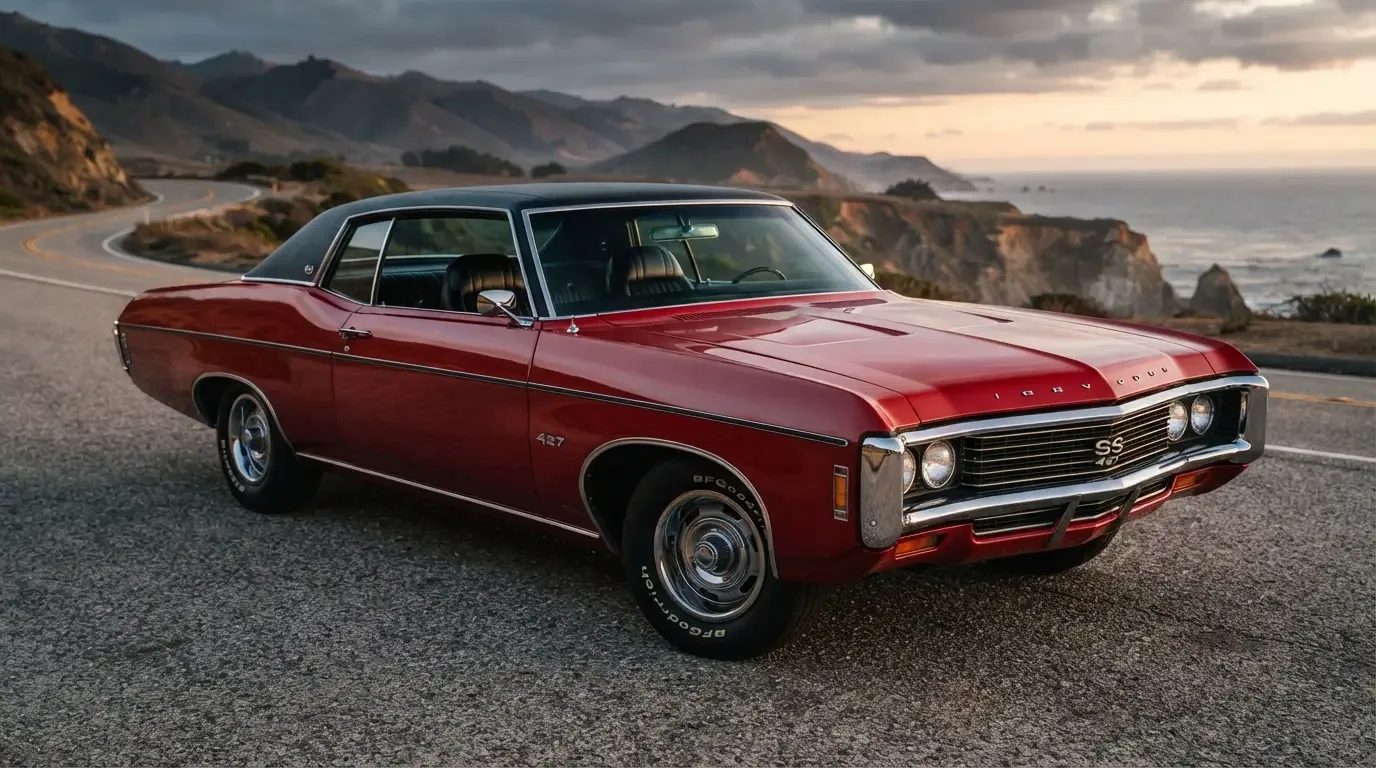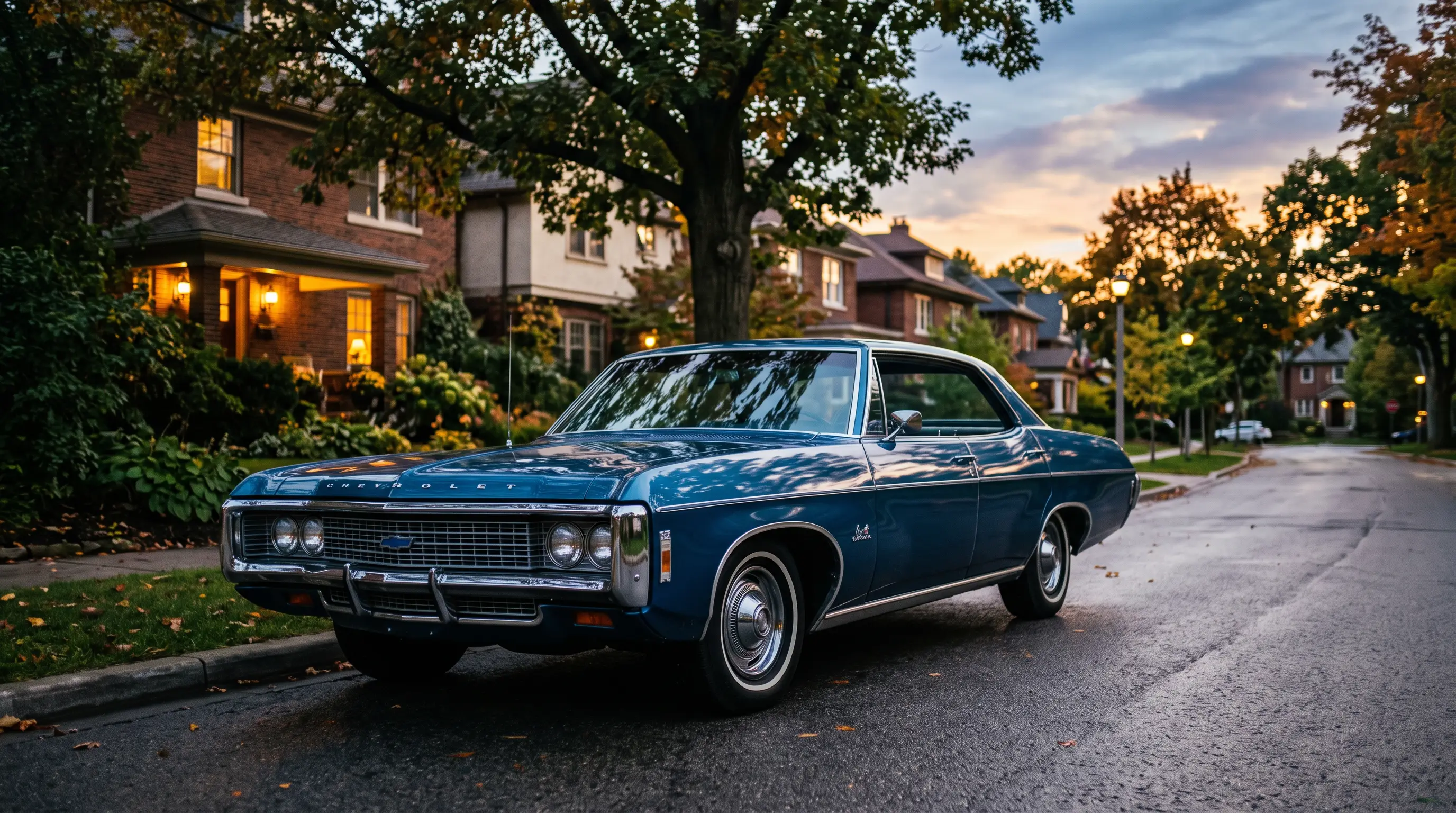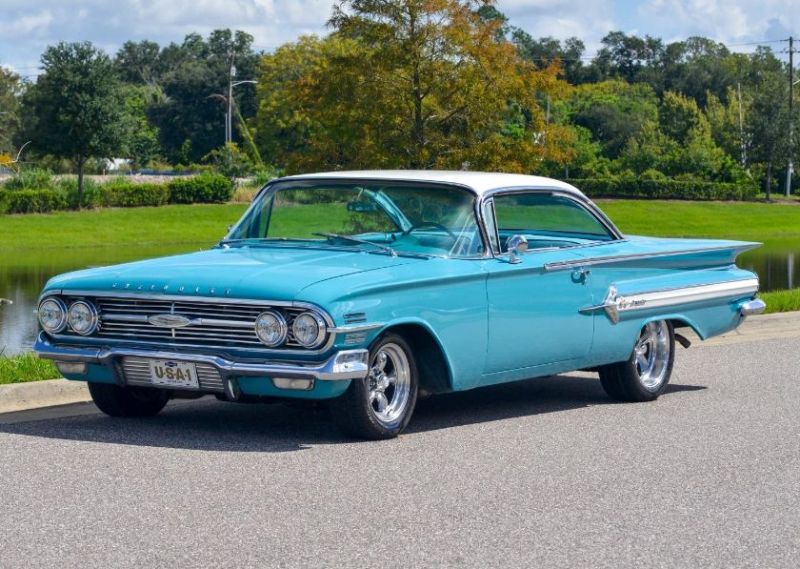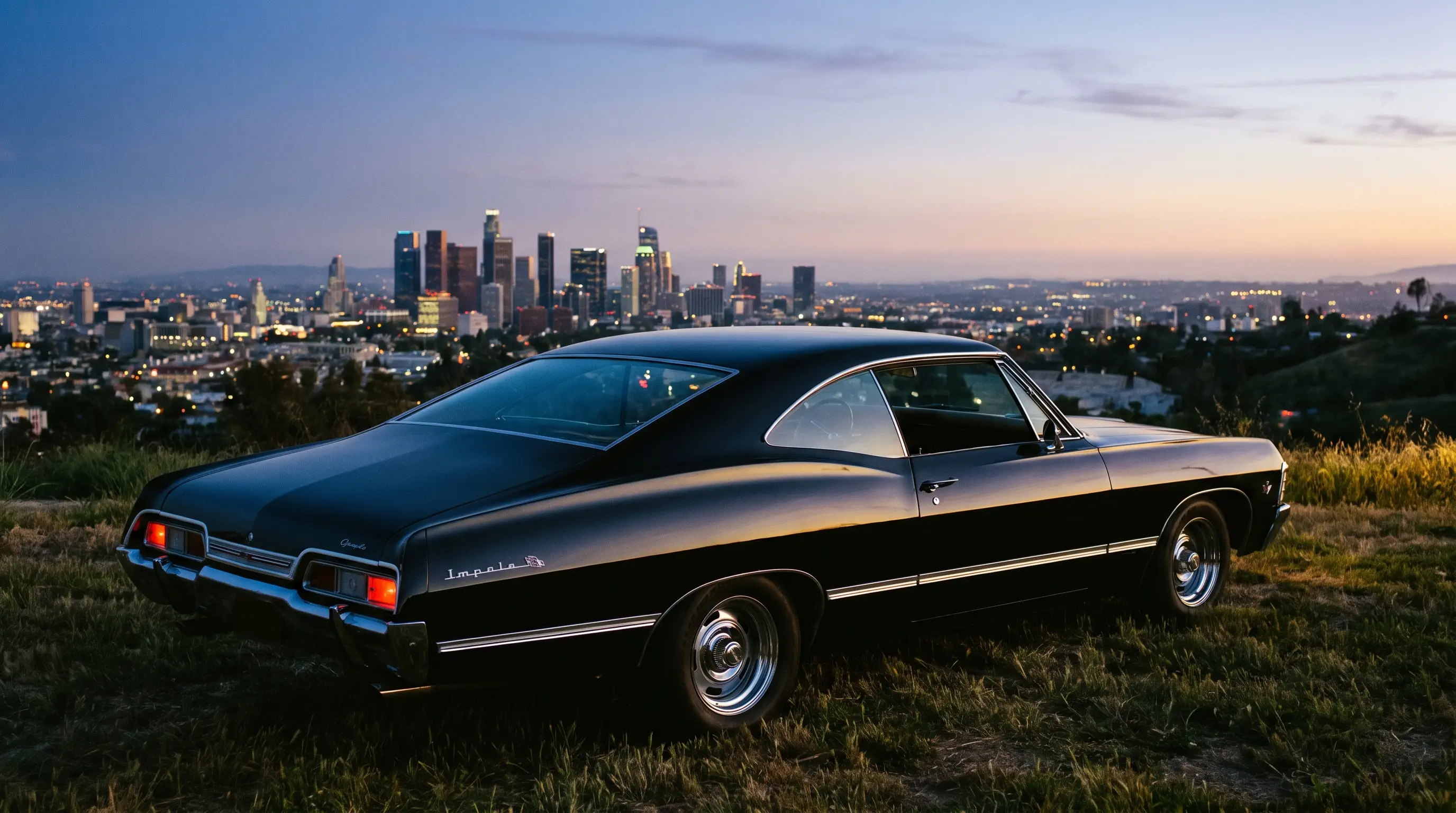
The 1967 Impala fastback is the roofline that turned a family car into something a teenager would pin to a bedroom wall. Chevrolet redesigned the full-size body for 1967 and gave the Sport Coupe a long, sweeping rear window that dropped away from the roof at a shallow angle, a departure from the more upright notchback profile of previous years. It was a styling decision built for one purpose: making the Impala look fast standing still.
Where the fastback came from
General Motors had been experimenting with semi-fastback rooflines across its divisions in the mid-1960s, and Chevrolet's own Chevelle and Corvette had already shown how a long, tapering rear glass could change a car's entire read from the side. When the fourth-generation Impala arrived for 1967, Chevrolet applied the same logic to the Sport Coupe, extending the roofline into a shallow fastback that carried through to a shorter rear deck. The effect was calculated. Buyers responded to a silhouette that looked like it belonged on the street, at a track, or parked outside a drive-in, without giving up the back seat room a family still needed.
How it differed from the notchback
Chevrolet did not abandon the traditional notchback hardtop entirely. The Sport Coupe fastback and a more formal-roofed coupe coexisted in the lineup depending on the model year, and telling them apart at a glance comes down to the rear window rake and the shape of the trunk lid. The fastback's glass runs nearly uninterrupted from the base of the roof to the trunk, while the notchback keeps a more traditional break between roof and deck. For the SS buyer chasing the sportiest possible look, the fastback was the obvious choice, and Chevrolet marketed it accordingly.
The engines that suited the look
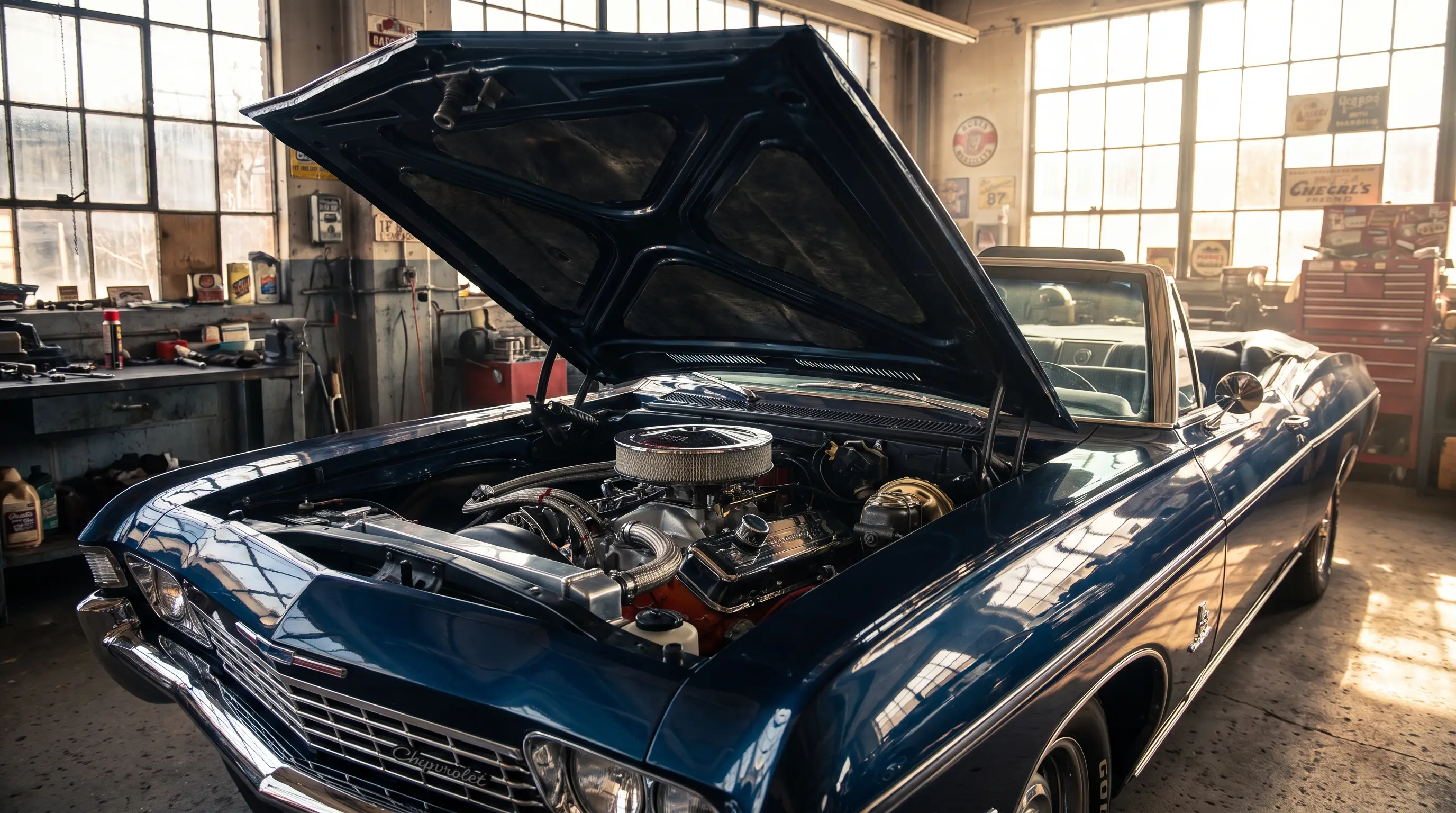
A fastback body without power under the hood is just a shape, and Chevrolet made sure the Impala SS had the muscle to back up its profile. The 396 cubic inch big-block, available in multiple horsepower tunes depending on carburetion and cylinder head casting, gave the SS a genuine performance case. Buyers who wanted the fastest street Impala Chevrolet built could combine the L78-code 396 with the fastback body and come away with a full-size car that could embarrass plenty of smaller machinery at a stoplight. It was never marketed as a pure muscle car in the way a Chevelle SS was, but the combination of body and engine gave it real credibility.
Why the fastback disappeared from later years
The pronounced fastback look softened as the fourth generation moved toward 1970, with rooflines becoming more conventional and the SS package eventually folding into a more understated trim rather than a distinct styling statement. Tastes shifted, and buyers in the early 1970s leaned toward heavier, more formal-looking full-size cars rather than the swoopier lines that defined 1967 and 1968. That makes the earliest fastback Impalas a genuine snapshot of a specific styling moment, one Chevrolet did not repeat once the decade turned.
The fuller context behind this generation, including how the body evolved before and after the fastback's introduction, is covered in the whole picture, which traces the years surrounding this particular roofline.
"I've pulled build sheets on a dozen of these cars over the years, and the ones that get people excited at a show are never the base sedans. It's always the fastback SS, because that roofline did exactly what Chevrolet designed it to do. It still looks like motion when the car is parked."
- Tom Ramirez
Collectibility and what buyers should watch for
Because the fastback Sport Coupe is the most desirable non-convertible body style from this generation, it is also the one most frequently targeted by cosmetic-only restorations that gloss over deeper issues. Buyers should check the roof stamping and rear window trim carefully, since panel replacement on this roofline is more involved than on a flat notchback, and shoddy work here is harder to hide than on flatter surfaces. Rust at the base of the rear window and along the trunk lip is common given how water tends to collect on this shape, and a careful inspection there tells you more about a car's honesty than the paint job ever will.
Documentation matters just as much as sheet metal. A fastback SS with a broadcast sheet, original tank sticker, or dealer invoice carries a real premium over an undocumented twin, and buyers chasing this body style should expect to pay for that paperwork when it exists. Numbers-matching 396 cars in particular have become difficult to find without some history of engine work, since these were driven hard by original owners who bought them precisely because they wanted the performance the fastback promised.
Finding one today
The fastback Impala SS remains one of the more attainable big-block muscle era classics, priced below its Chevelle and Camaro contemporaries despite offering a similar driving experience in a larger, more comfortable package. That value gap has narrowed in recent years as buyers rediscover the body style, but it still represents a way into genuine 1960s Chevrolet performance without competing directly against the most inflated corners of the muscle car market. Anyone ready to compare current listings against everything discussed here can shop classic Impala listings and see how fastback examples are priced against notchback and sedan variants from the same years.
Fastback SS engine options for 1967
| Engine | Displacement | Approx. horsepower | Notes |
|---|---|---|---|
| Turbo-Fire 327 | 327 cid | 275 hp | Base SS V8 |
| Turbo-Jet 396 | 396 cid | 325 hp | Mid-range big-block |
| Turbo-Jet 396 L78 | 396 cid | 375 hp | Top performance option |
Matching the right engine code to the right fastback body is part of what makes this generation interesting to research. A base 327 fastback and an L78 396 fastback look nearly the same from across a parking lot, and only the paperwork, casting numbers, and careful inspection separate a genuinely rare performance car from a well-dressed six-passenger cruiser wearing the same roofline.
A shape that still holds up
Six decades on, the 1967 fastback Impala reads as confident rather than dated, a rare quality for a full-size American car from this period. Chevrolet took a risk applying sports car styling cues to its bread-and-butter full-size line, and the payoff was a roofline that collectors still chase specifically, by name, rather than settling for whatever Impala happens to be for sale. That specificity of demand is the clearest sign a design decision succeeded exactly as intended. It is also a reminder that good proportion never really goes out of style, even when the rest of a car's era has been reduced to a period photograph in a dealer brochure.
Sources and notes
- 1967 Chevrolet Impala SS Sport Coupe 327 275-hp Specs - Automobile Catalog
- 1967 Chevrolet Impala SS Sport Coupe 396 325-hp Specs - Automobile Catalog
- Chevrolet Impala (fourth generation) - Wikipedia
- 1967 Chevrolet Full Size Cars Fact Sheet - Over-Drive Magazine
- 1967 Chevrolet Impala Series Specifications - conceptcarz.com
- 1967 Chevrolet Impala SS 327 4-Speed - Barn Finds