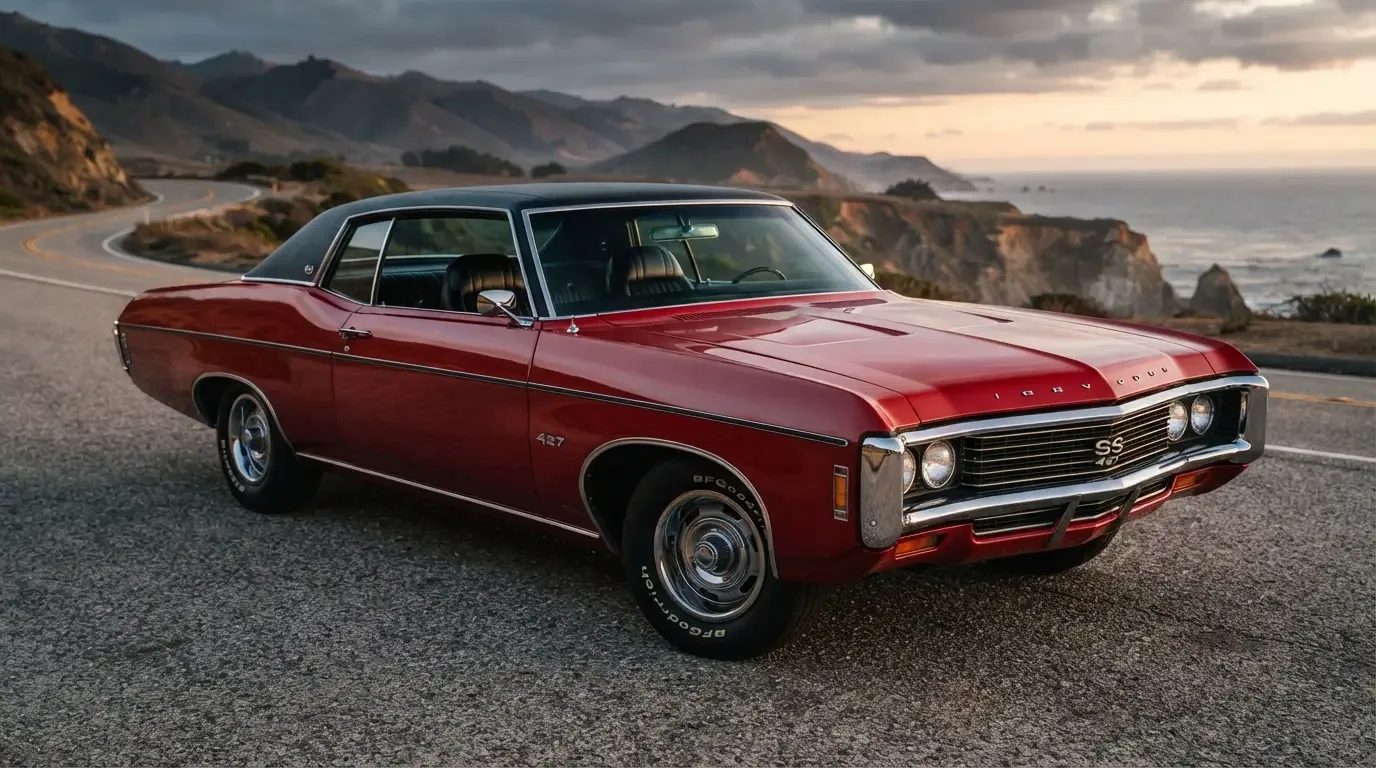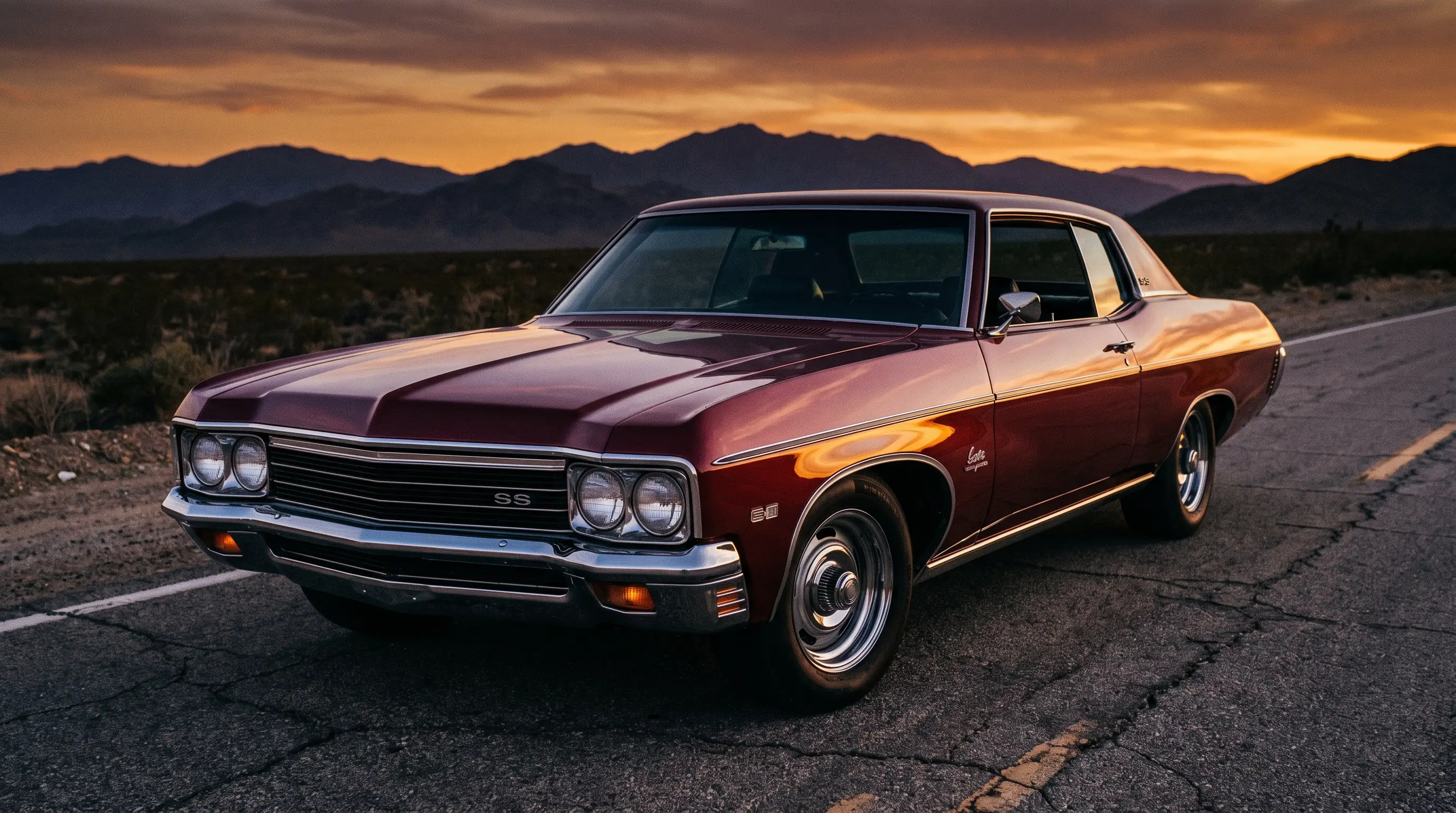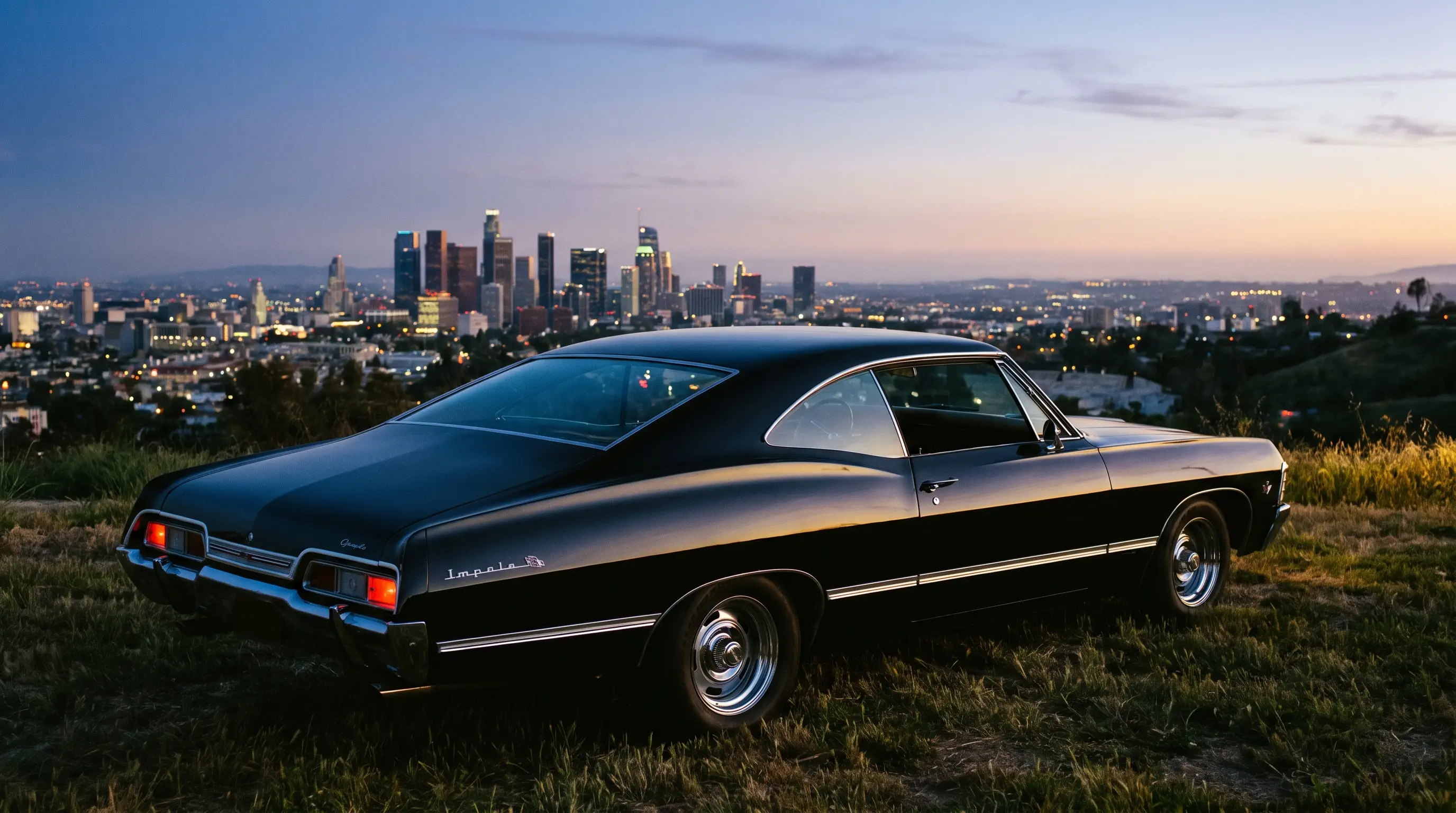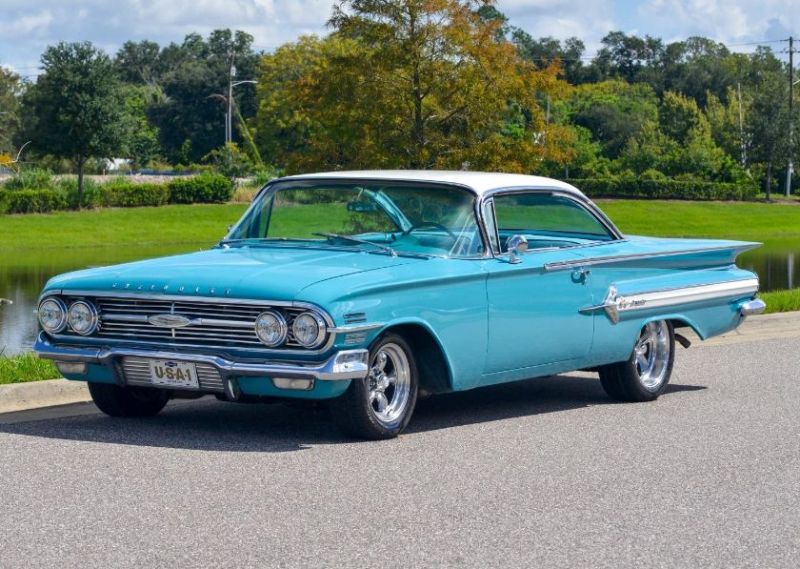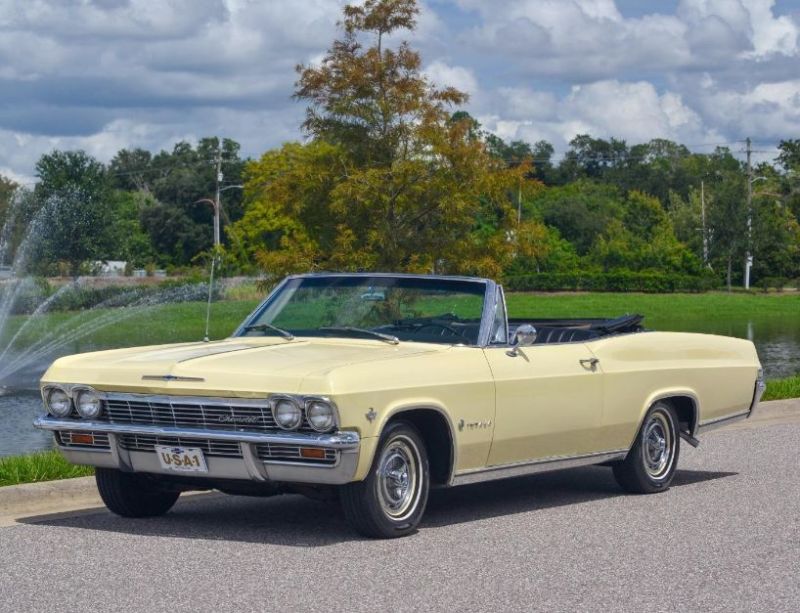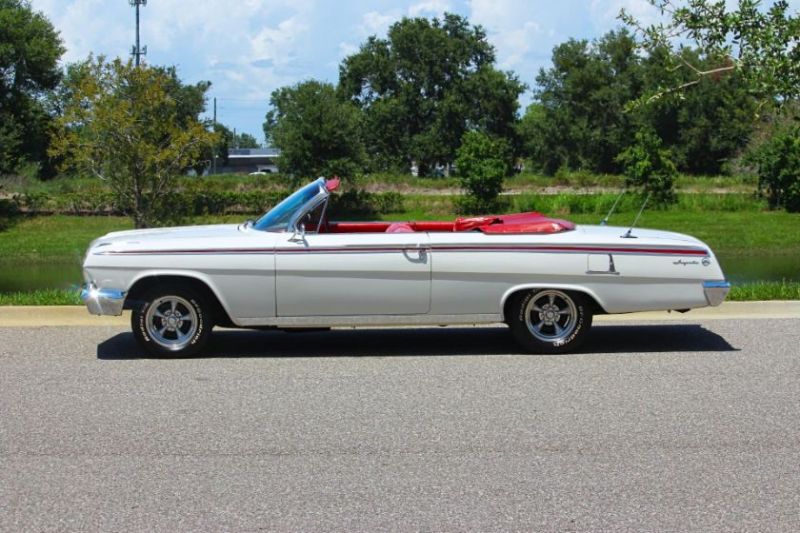
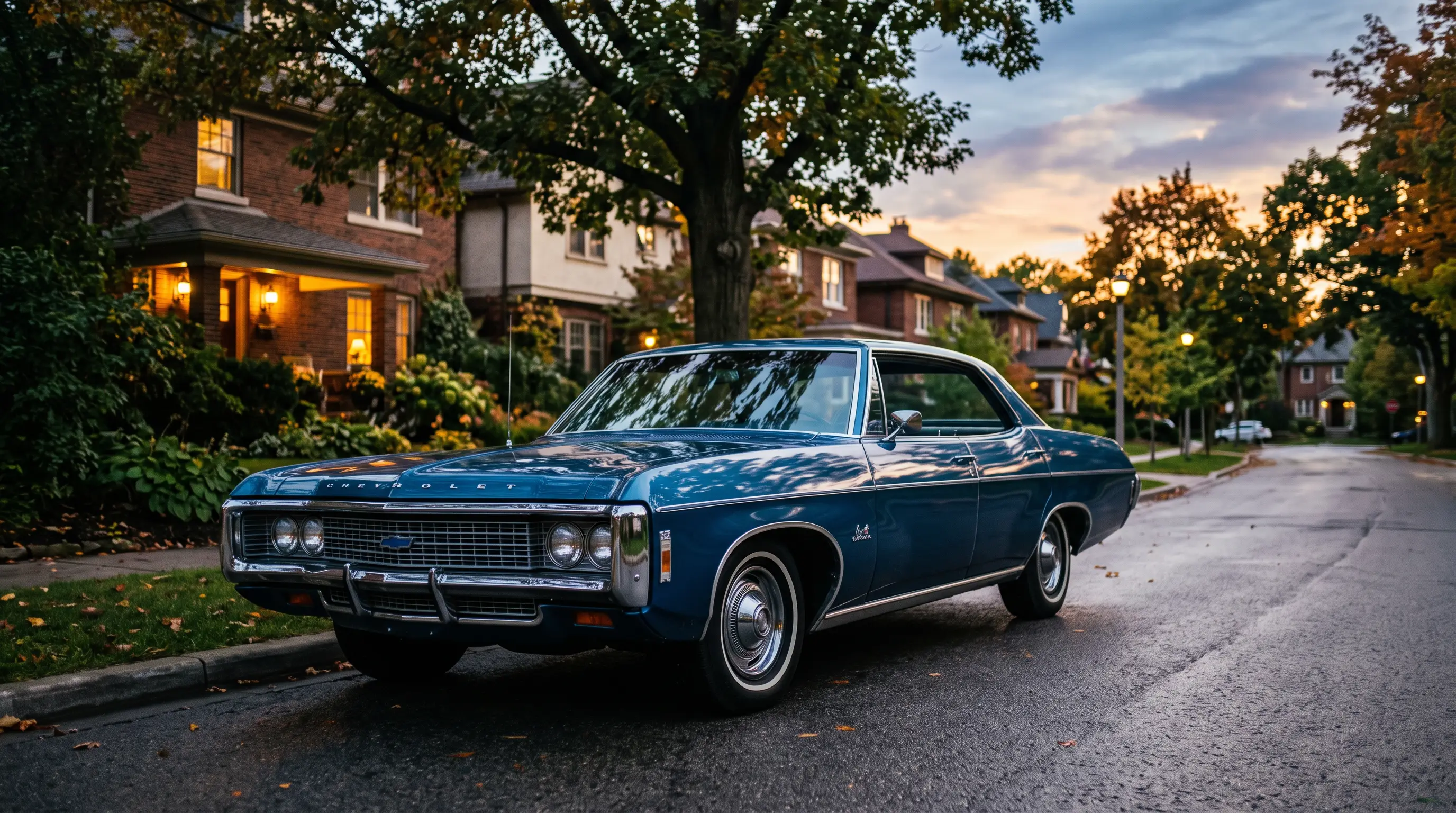
Cataloguing 1967 Impala body styles properly means resisting the urge to treat the fourth generation as one uniform shape. Chevrolet offered the Impala across five distinct body configurations for 1967, and each one carried its own proportions, its own market, and its own survival rate today. A concours judge or a serious buyer needs to know the difference, because the wrong roofline on the wrong chassis code tells you immediately whether a car is original or reassembled from parts.
The four-door sedan and the volume seller
The four-door sedan was the Impala's bread and butter in 1967, accounting for the largest share of production by a wide margin. It carried a formal, upright roofline with narrow pillars and a flat rear window, built for practicality rather than style. Surviving examples are common but underappreciated, since most were used hard as family transportation and few were preserved with any ceremony. A documented, low-mileage sedan is actually rarer at shows today than the sportier body styles, simply because so few owners bothered to keep one nice.
The Sport Coupe hardtop
The two-door hardtop, marketed as the Sport Coupe, is the body style most associated with the Impala's image in this era. It dropped the center B-pillar entirely, giving an open, glass-heavy profile when both windows were down, and it carried a sweeping fastback-adjacent roofline that Chevrolet refined further for 1967 with a more raked rear window. This is the body most SS buyers chose, and it remains the most collected configuration from the generation, commanding the strongest prices among non-convertible variants.
A close cousin of the Sport Coupe, the true fastback roofline used on certain 1967 and 1968 SS models, gets its own detailed treatment given how distinct that silhouette is from the standard notchback hardtop.
The four-door hardtop, a body style that no longer exists
Chevrolet also built a four-door hardtop, badged as the Sport Sedan, which combined four doors with the pillarless glass treatment of the two-door coupe. This body style has effectively vanished from the modern automotive landscape, and seeing one at a show today is a genuine surprise for anyone under sixty. It offered family practicality without sacrificing the open, airy glass area buyers associated with performance and style, a combination the market eventually decided it did not need once federal side-impact and roof-crush standards changed how cars were engineered.
The convertible
The Impala convertible carried real prestige in 1967, priced above the hardtop and built in far smaller numbers. Its power-operated top, reinforced frame, and standard front bucket seat option in SS trim made it the most expensive way to buy an Impala short of loading a Sport Coupe with every option on the sheet. Convertibles from this generation have appreciated the most of any body style over the last two decades, driven by a straightforward calculus: fewer were built, fewer survived open-top use and weather damage, and buyer demand for drop-top classics has only grown.
"When I'm asked to verify a car's body style at a show, I'm not looking at the badge. I'm looking at the roof stamping, the door count, and whether the pillar structure matches what the factory actually built that year. Owners get the badge right far more often than they get the story right."
- Sarah Whitfield
The wagon, built for a different buyer entirely
The Impala wagon served a family market that had little interest in the Sport Coupe's styling flourishes. Built on a longer wheelbase with a flat load floor and available two-way tailgate, it prioritized cargo space and towing capacity over silhouette. Wagons from this generation are enjoying a renewed appreciation today among collectors who want something usable and distinctive rather than another two-door hardtop, and clean survivors are increasingly hard to find since most were driven until they were worn out.
Reading the changes across 1967 through 1970
Body style availability stayed largely consistent across the fourth generation, but details shifted year to year in ways that matter for authentication. Roof stampings, window trim, and even the depth of the wheel arch cutouts changed subtly between 1967 and 1970, and a car with a mismatched combination of these details is usually telling you something about its history that the paperwork does not. For the fuller account of how the generation developed and what changed beyond body styling, read the background on the years surrounding this body style lineup.
What this means for buyers today
Body style drives value more than almost any other single factor in this generation, with convertibles commanding the top of the market, Sport Coupes close behind, and sedans and wagons offering the most car for the money to buyers who care more about driving than investment potential. Anyone shopping this era should understand which body style they are actually looking at and what that means for both price and rarity before making an offer. Buyers ready to compare body styles directly against current inventory can find a classic Impala and see how these configurations are priced against one another in today's market.
Body styles at a glance
| Body style | Doors | Pillar type | Relative rarity today |
|---|---|---|---|
| Sedan | 4 | Fixed B-pillar | Common, low survival of clean examples |
| Sport Coupe hardtop | 2 | Pillarless | Most collected non-convertible |
| Sport Sedan hardtop | 4 | Pillarless | Rare, largely vanished configuration |
| Convertible | 2 | None, folding top | Scarcest, highest values |
| Wagon | 4 | Fixed B-pillar | Increasingly hard to find clean |
Laid out this way, the hierarchy of the market becomes obvious. Pillarless construction, whether on two doors or four, consistently commands more attention from buyers than fixed-pillar bodies, and the rarest configurations within that group draw the steepest premiums. A judge or appraiser working this generation learns to read the table almost automatically after enough time spent at shows and auctions.
Why the distinctions still matter
Fifty years on, the body style differences that once simply reflected a buyer's budget and taste now function as a rough guide to rarity and desirability. A sedan and a convertible built on the same chassis code, in the same year, with the same engine, can carry price gaps of tens of thousands of dollars once condition and documentation are equal, purely because of the roof and door configuration Chevrolet stamped onto the body in 1967. Understanding that hierarchy is the first real step toward buying, judging, or simply appreciating an Impala from this generation with any accuracy.
It also explains why so much fraud in this hobby involves body style claims rather than engine claims. Swapping a set of fender badges is trivial. Turning a sedan into a convertible, or a coupe into a four-door hardtop, is not something anyone does convincingly, which is why body style verification remains one of the most reliable ways to confirm a car is exactly what its paperwork claims.
Sources and notes
- Chevrolet Impala (fourth generation) - Wikipedia
- 1967 Chevrolet Impala Series Specifications - conceptcarz.com
- 1968 Chevrolet Impala Series Specifications - conceptcarz.com
- 1967 Chevrolet Full Size Cars Fact Sheet - Over-Drive Magazine
- 1968 Chevrolet Full Size Cars Fact Sheet - Over-Drive Magazine
- Hagerty Valuation Tools, Chevrolet Impala