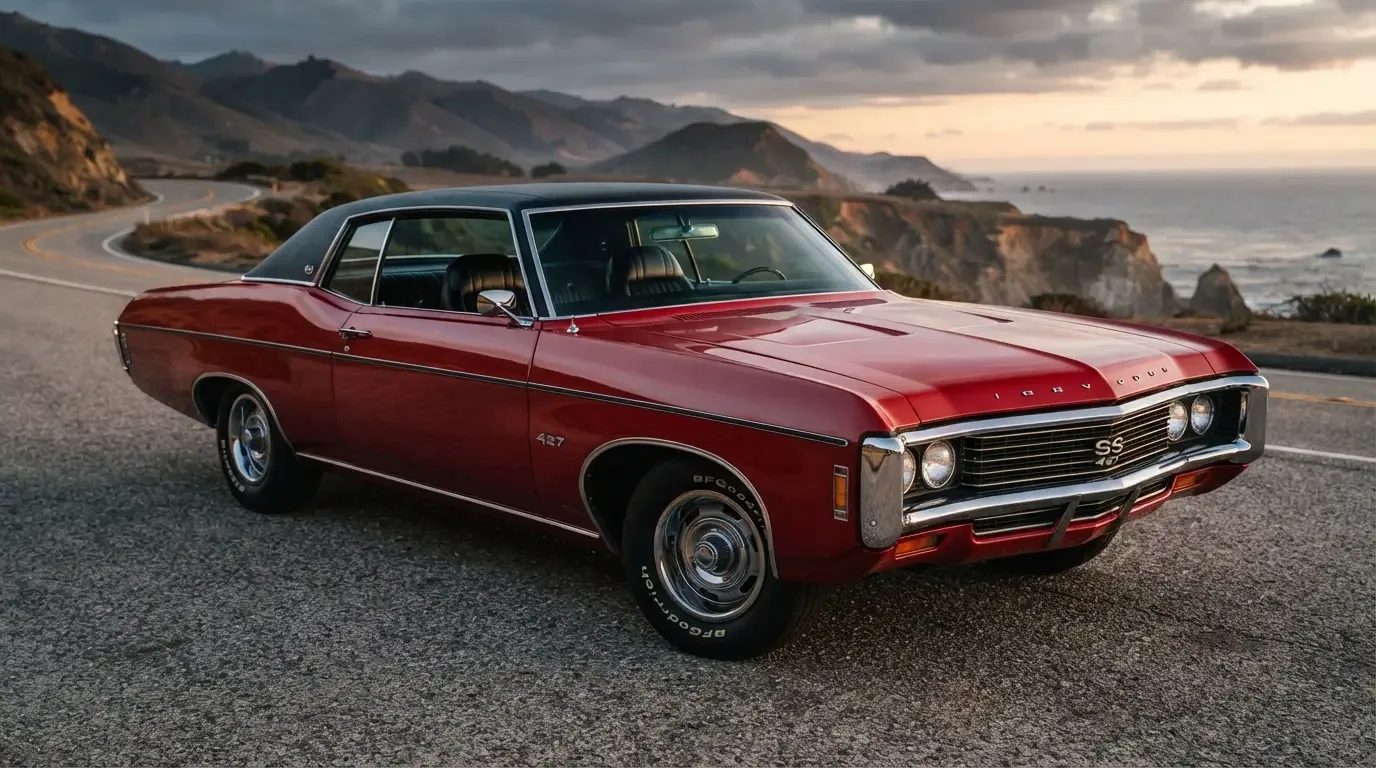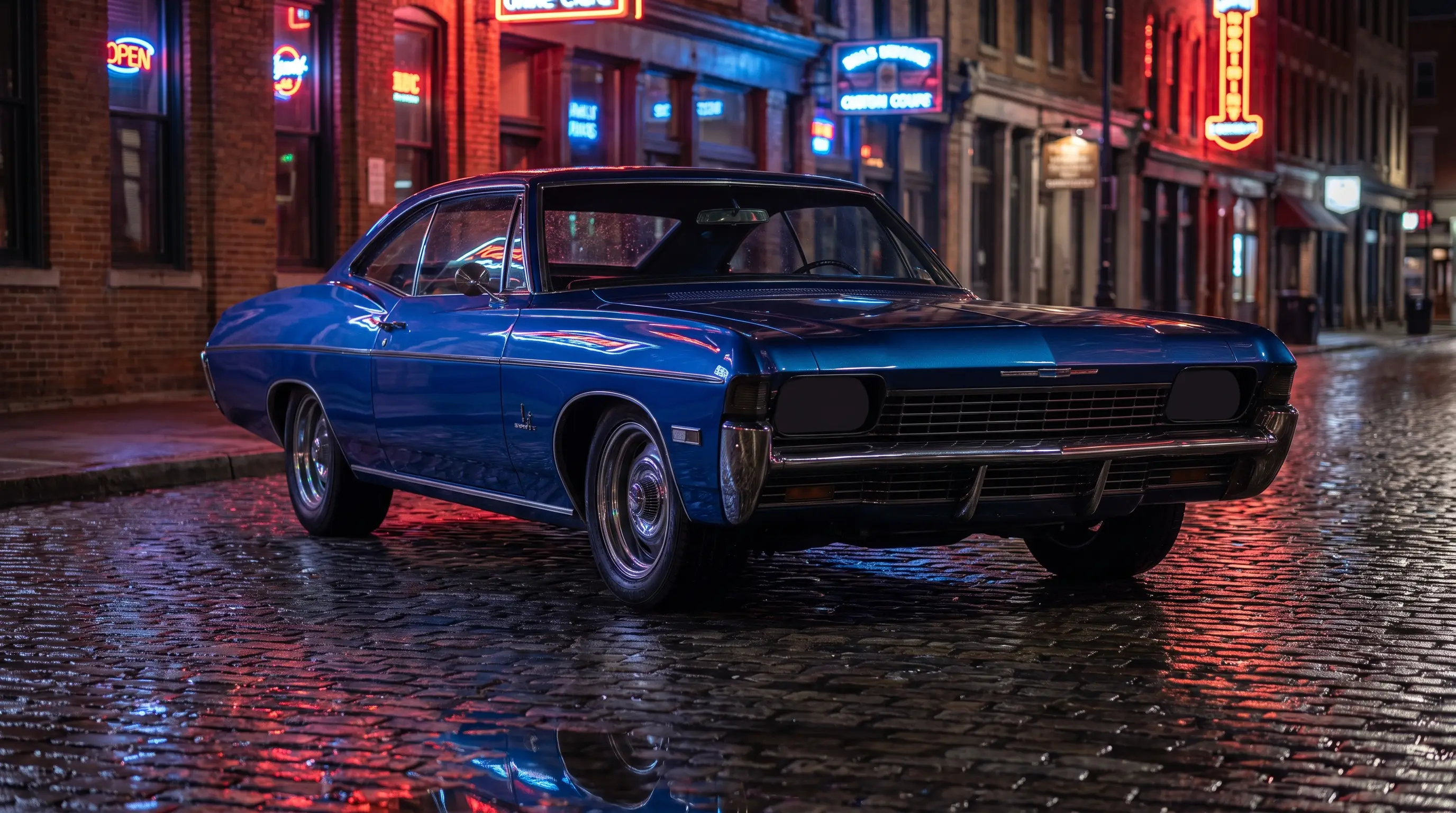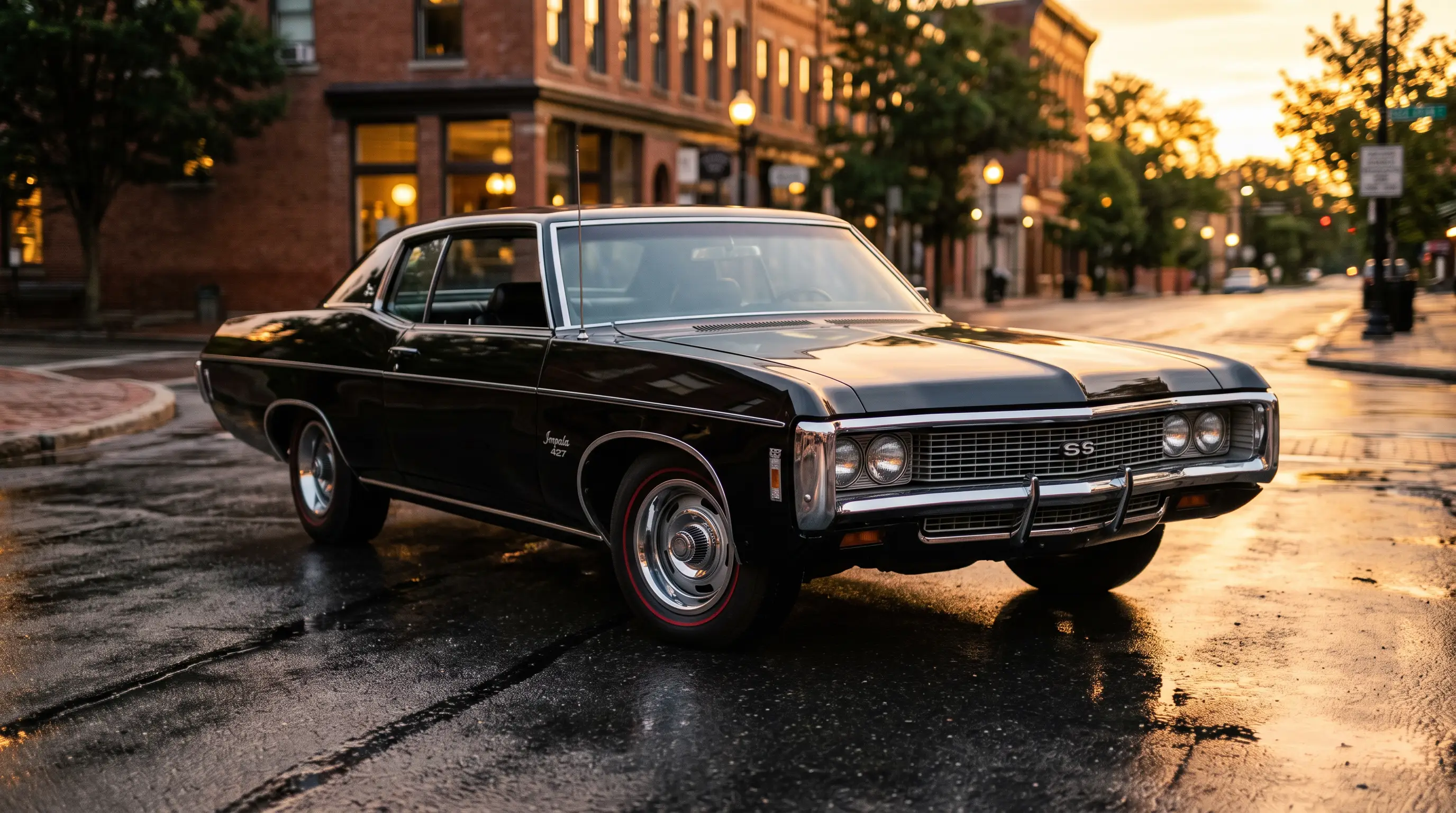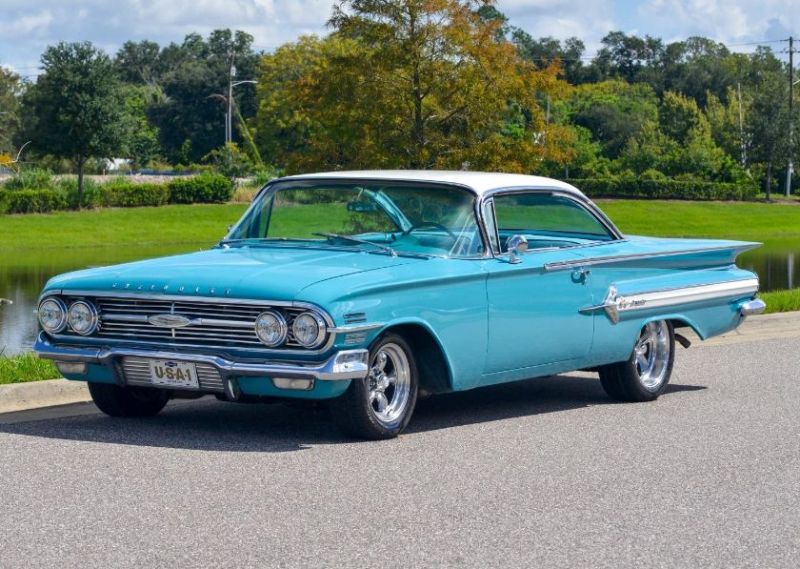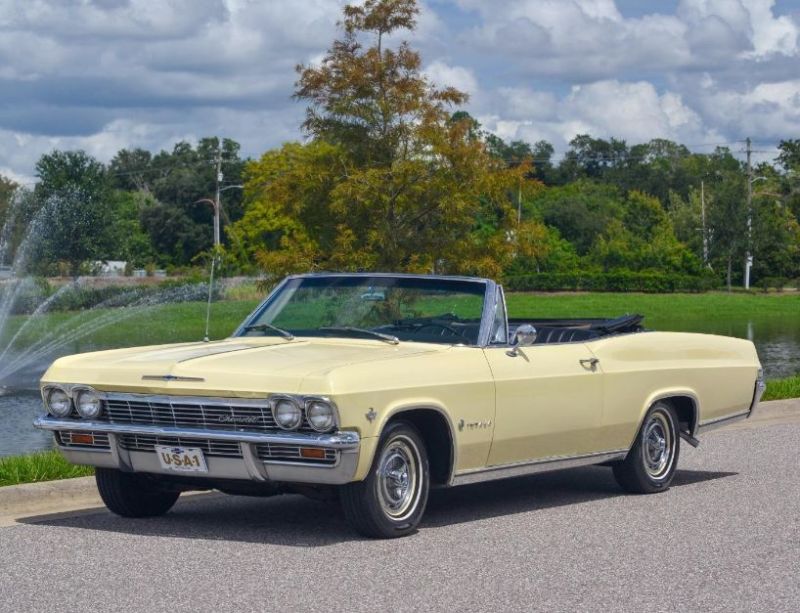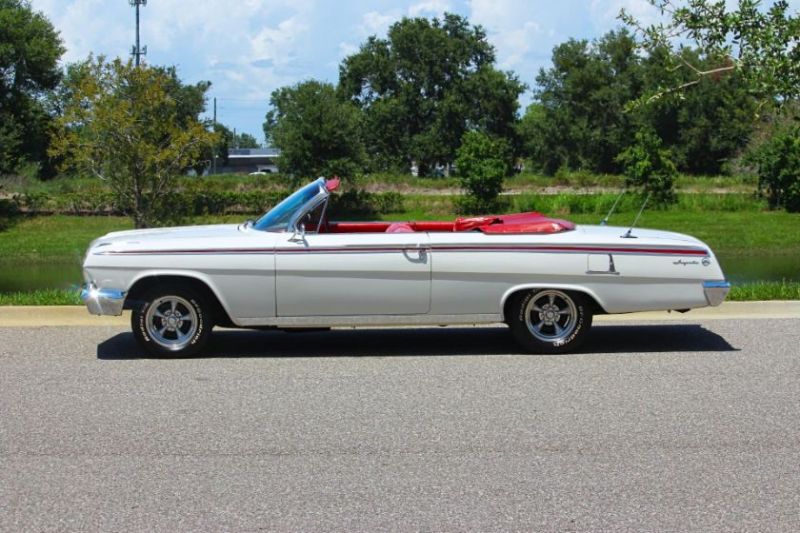
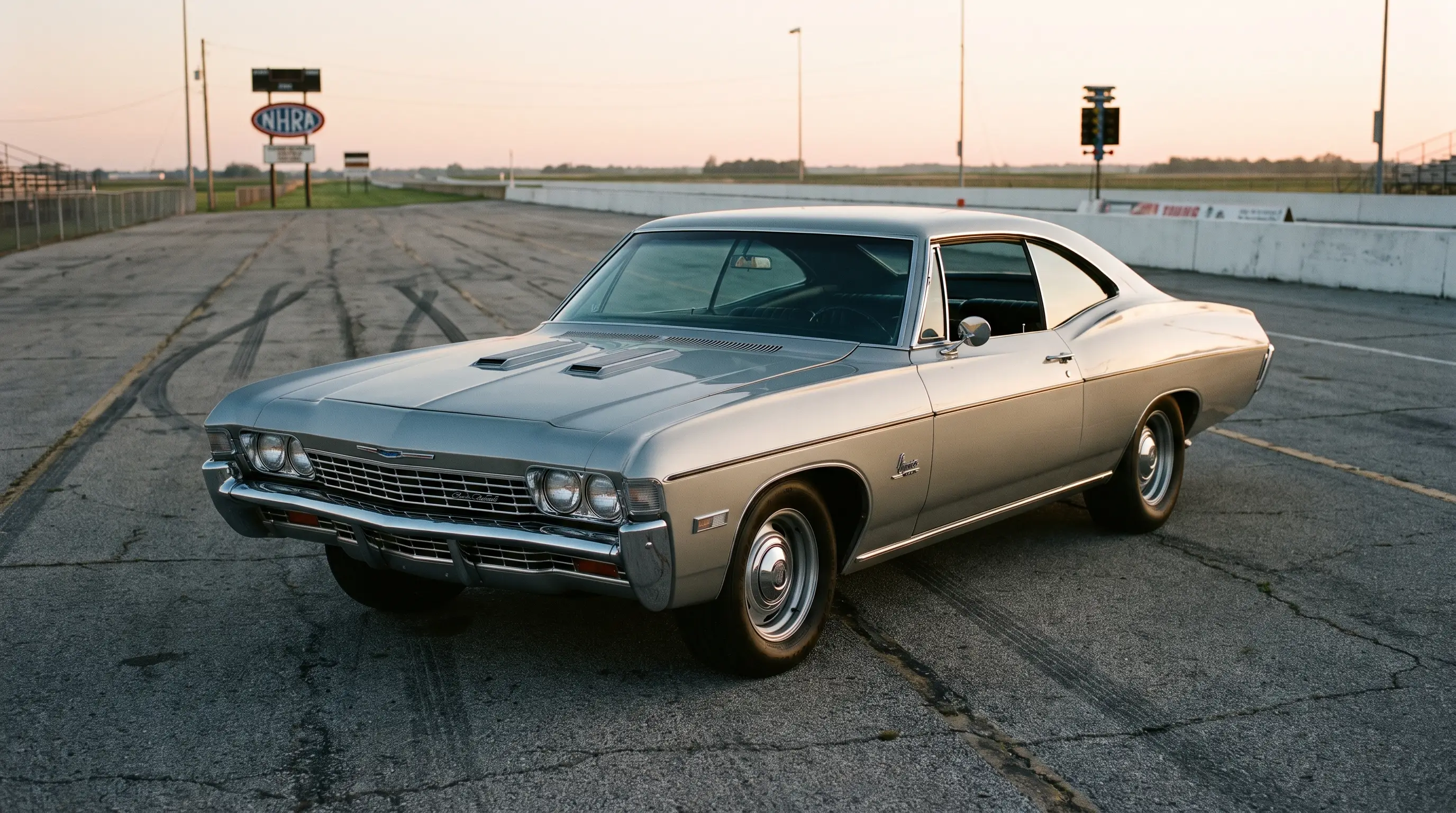
The 1968 Impala 427 is a case study in an engine option that stayed mechanically consistent while everything around it kept shifting. Chevrolet carried the 427 big block forward into the restyled 1968 body largely unchanged from an engineering standpoint, offering buyers the same basic L36 and L72 variants that had been available in the previous two model years, now wrapped in a car with concealed wipers, a new grille, and revised taillamps.
The engine itself, unchanged where it counted
The L36 remained the hydraulic lifter, single four barrel version rated at 385 hp, built for a buyer who wanted big block torque without big block temperament. The L72 remained the solid lifter, high compression version at 425 hp, a genuinely serious engine wrapped in a car that, on the outside, looked like it was built for the country club parking lot rather than the drag strip. That contrast, understated exterior over a genuinely potent drivetrain, is a lot of the appeal for collectors chasing this specific combination today.
What is worth stating plainly for anyone comparing years: the fundamental math of the 427 option did not meaningfully improve from 1966 through 1968. Chevrolet was not chasing bigger horsepower numbers year over year with this engine in the full size line the way some rival manufacturers were in their mid size performance models. The 427's job in an Impala was consistent, effortless torque for a heavy car, and Chevrolet did not see a reason to keep revising a formula that already worked.
Why the 1968 version gets overlooked
Sitting between the widely discussed 1967 SS427 and the final 427 year of 1969, the 1968 version of this engine option tends to get skipped over in casual enthusiast writing. That is a data gap, not a reflection of the car's actual merit. The 1968 427, whether L36 or L72, delivers the same fundamental driving experience as its more talked about siblings, and in some cases represents better relative value precisely because it gets less attention at auction and in private sale listings.
| Spec | 1968 L36 427 | 1968 L72 427 |
|---|---|---|
| Displacement | 427 cubic inches | 427 cubic inches |
| Valvetrain | Hydraulic lifters | Solid lifters |
| Rated output | 385 hp | 425 hp |
| Best fit | Regular use, long trips | Committed performance buyer |
"The 1968 427 gets ignored because it sits between two more famous years. The engine does not know that, and it drives exactly as well as its more celebrated siblings."
- Emily Chen
Where 1968 fits in the broader Impala 427 story
Understanding this specific model year requires context from the years around it. The styling changes and platform decisions that shaped the 1968 Impala are covered in more on the 1967 impala, since the body underneath this engine option carried forward from that generation's design work. Going back further, readers curious about how the Impala nameplate reached this point in the first place should look at where this started, the origin story that eventually led to a full size car carrying a 427 cubic inch engine at all.
Documentation, as always with a claimed numbers matching engine option, is the single most important factor in verifying what a specific 1968 car actually has under the hood. Casting numbers, trim tag codes, and any surviving factory paperwork should all agree before a buyer pays a genuine 427 premium.
Transmission and running gear behind the 1968 427
As with the 1966 and 1967 versions of this option, the Turbo Hydra-Matic automatic was the far more common transmission pairing behind either 427 variant in 1968, and it remains the pairing most owners today find easiest to live with. A four speed manual exists in period documentation as an available option, but it was a comparatively rare choice for buyers ordering a full size car meant primarily for comfortable, fast cruising rather than aggressive gear changes.
Braking and suspension specification followed the same pattern established in the previous two model years, with heavier duty components available as options rather than standard equipment. A 1968 427 car without the upgraded brake package is not unusual, and buyers evaluating an example today should check for this specifically rather than assuming a big block car automatically came with brakes to match its straight line capability.
Cooling and drivability notes specific to this generation
Owners and mechanics working on 1968 427 cars consistently flag cooling system capacity as worth checking before relying on the car for regular use, particularly with the solid lifter L72 in stop and go traffic. This is not a defect specific to the 1968 model year, it is a characteristic of the engine and body combination generally, but it is worth restating here because a buyer focused purely on the styling changes unique to 1968 can lose sight of the drivetrain realities that carried over unchanged from the years before it. A properly maintained cooling system resolves the issue for most owners, but it is a maintenance item worth budgeting for rather than a surprise to discover after purchase.
Buying a 1968 Impala 427 today
Because this specific model year attracts less attention than 1967 or 1969, patient buyers sometimes find better relative pricing on well documented 1968 examples, though the smaller collector spotlight also means fewer cars come to market at any given time, which cuts both ways for someone specifically hunting this year. Anyone ready to look at real inventory should browse classic Impalas on the market and compare documented 427 examples directly rather than assuming pricing patterns from the more talked about adjacent model years apply evenly across this one.
The final word on this specific engine and body combination is simple math applied honestly. A documented, numbers matching 1968 Impala 427 is a genuinely scarce car built during a narrow window when Chevrolet still offered serious big block power in a comfortable full size platform. That window would not stay open indefinitely, and the cars that survive from it deserve to be evaluated on their own merits rather than treated as a footnote to the years on either side.
Anyone building a shortlist of these cars should track auction results and private sale prices for the 1968 specific option separately from the more commonly cited 1967 figures, since treating them as interchangeable data points can lead a buyer to either overpay or underbid based on numbers that do not actually describe the car in front of them.
Sources and notes
- Automobile Catalog: 1968 Impala SS 427 Sport Coupe specs
- Classics on Autotrader: Dare to Be Different, 1968 Chevy Impala SS 427
- Chevy Hardcore: When Is An Impala Not An Impala? When It's An SS427
- Engine Factory: Chevrolet Impala SS 1958-1969 engine history
- Autoevolution: 1968 Chevrolet Impala SS427 back from the dead