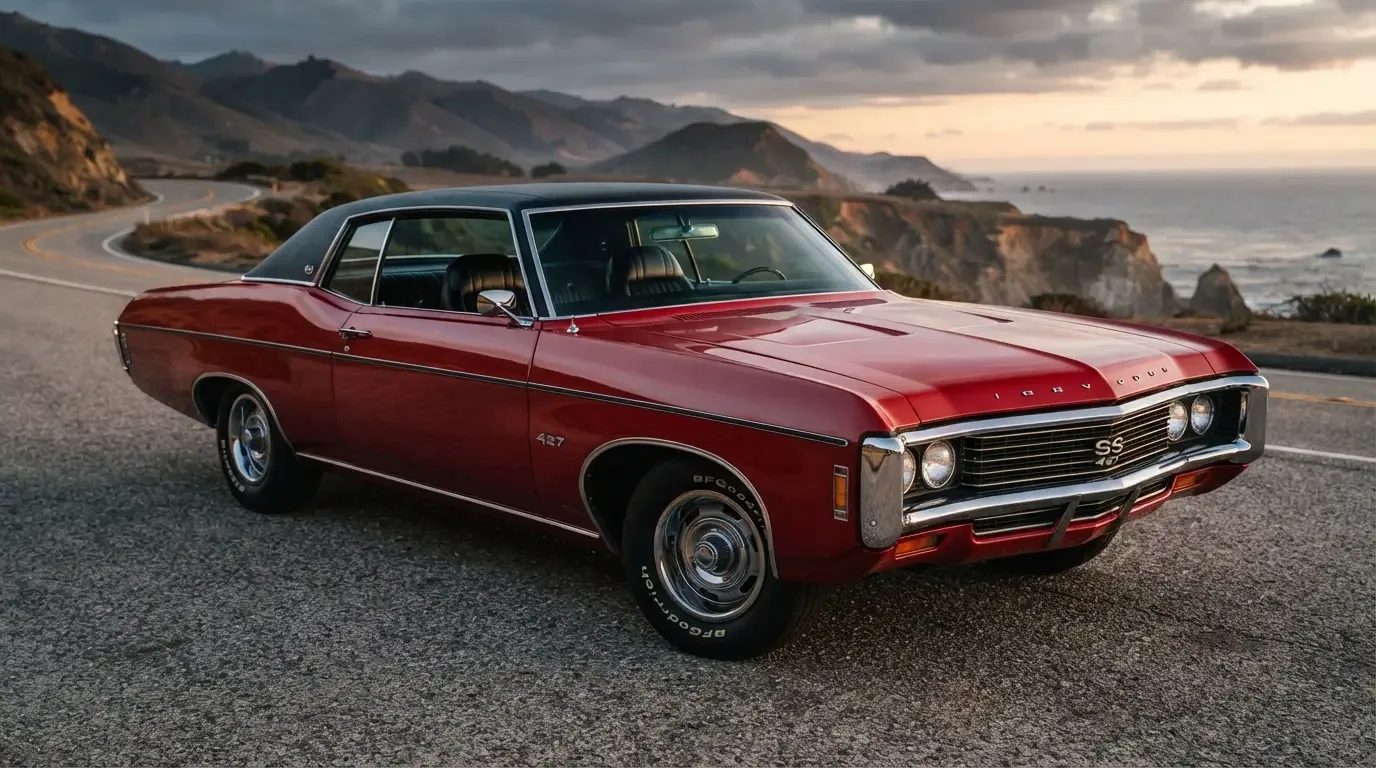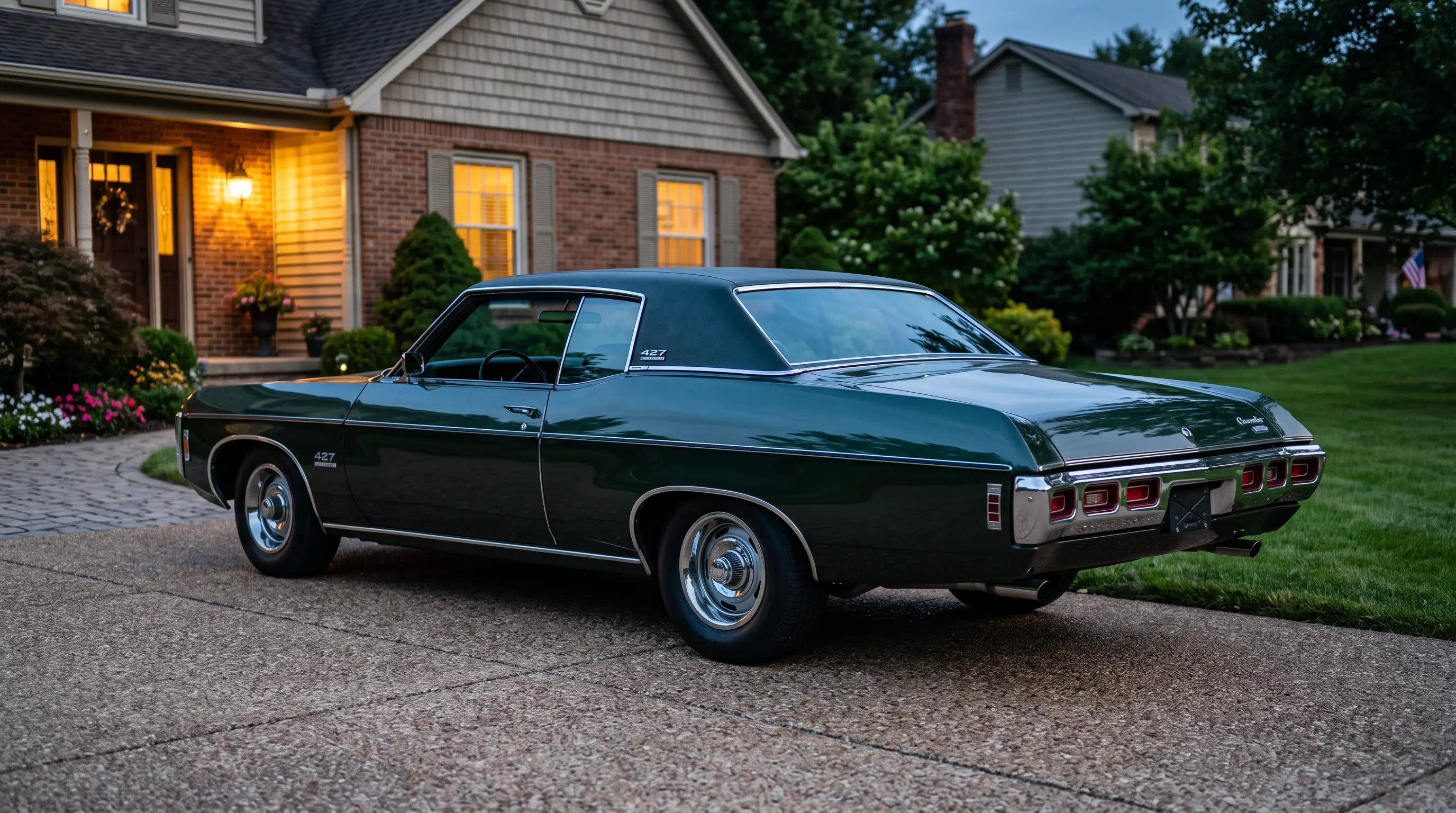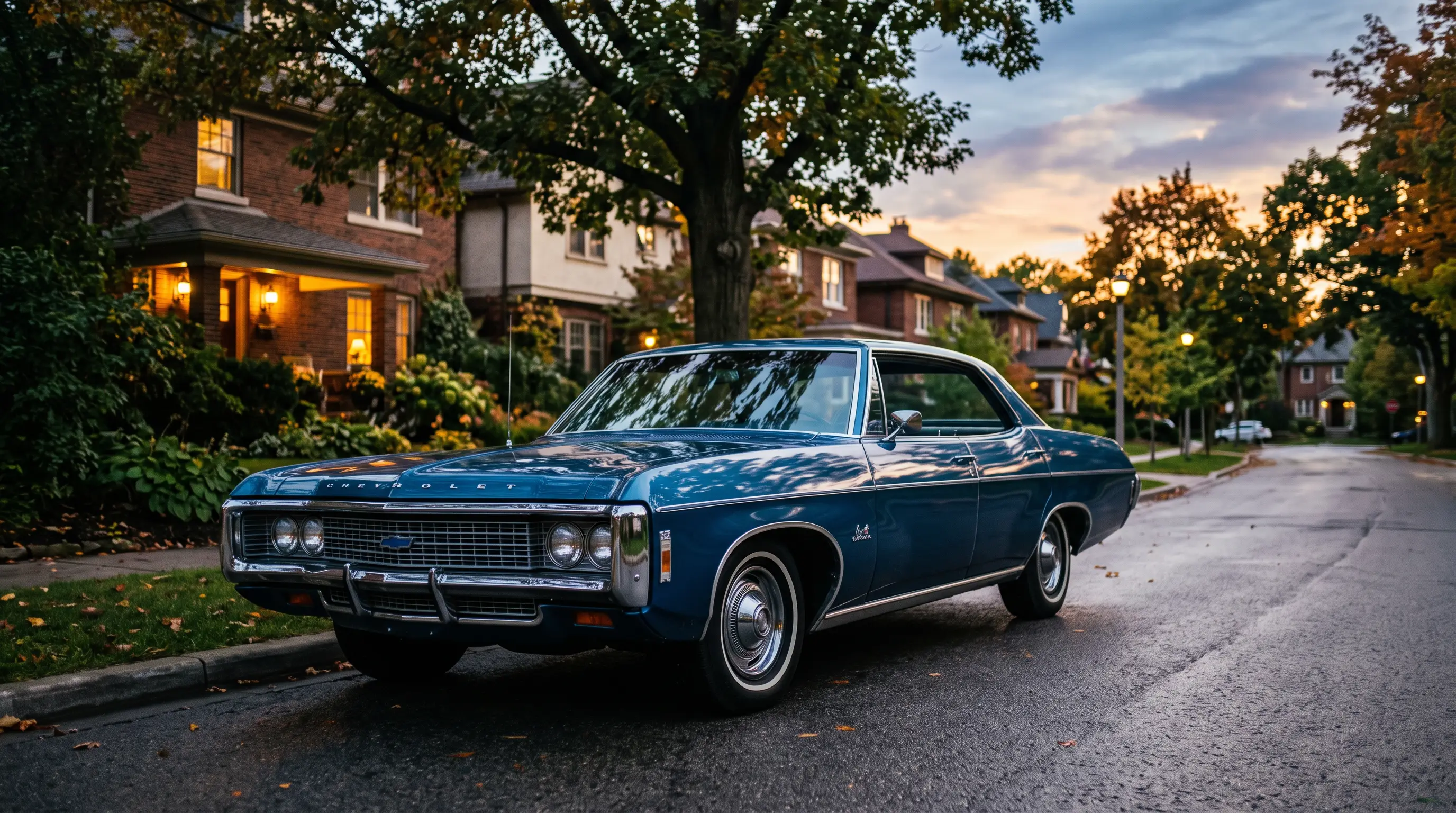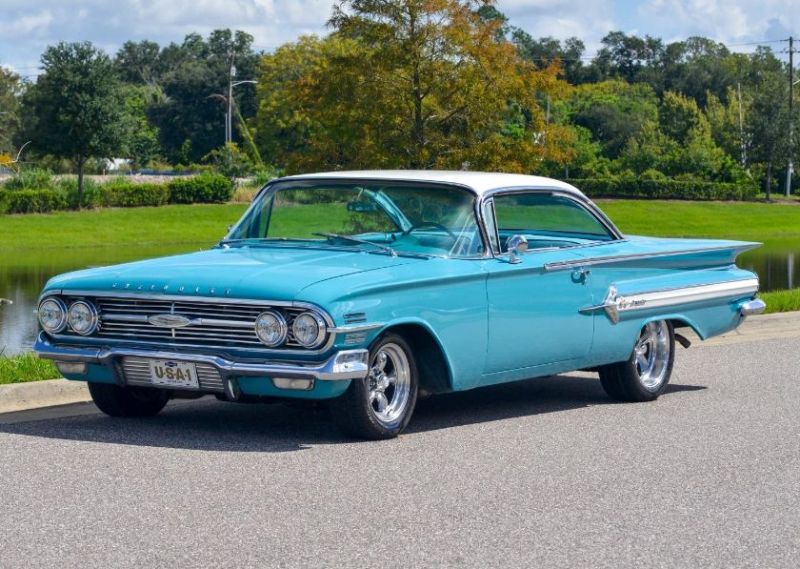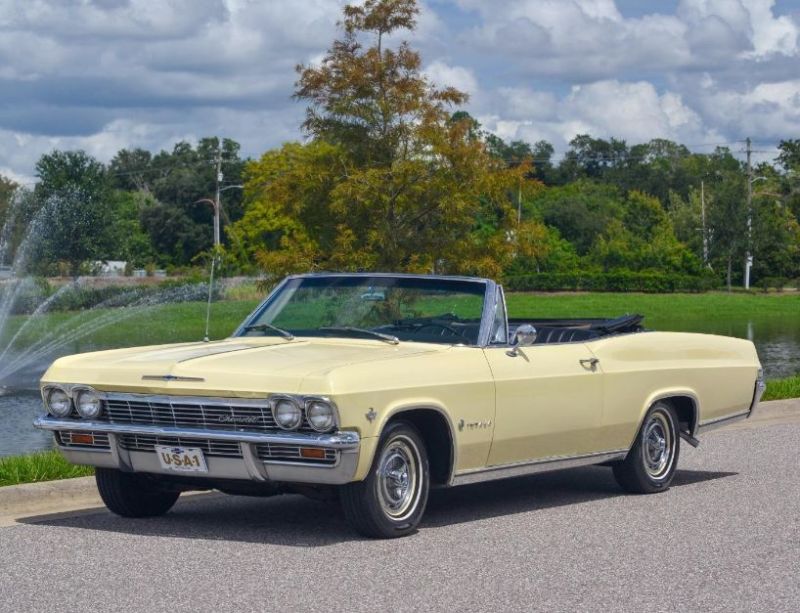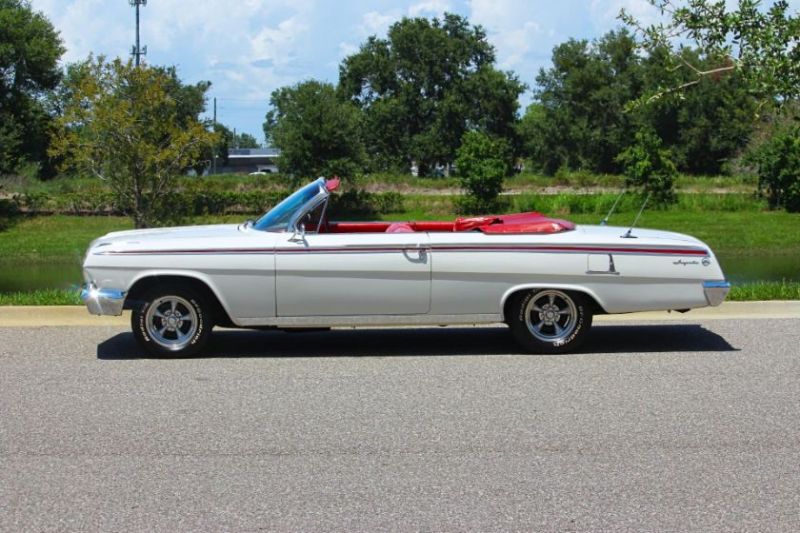
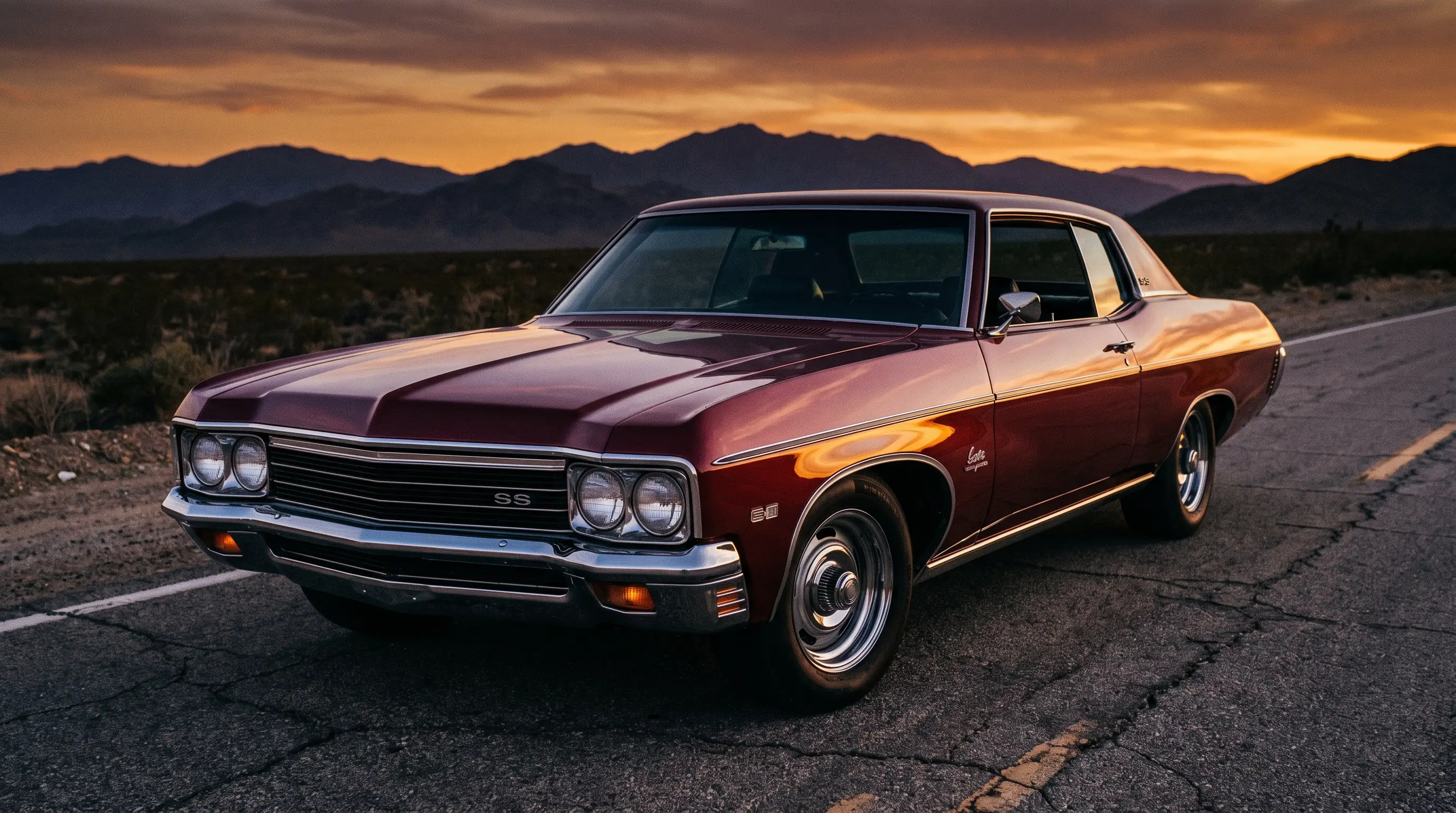
The 1970 Impala never got much credit for what it was, mostly because everyone was busy talking about what came next. Chevrolet's big full-size seller closed out the 1960s generation with a car that looked heavier, drove smoother, and carried an engine lineup that finally let a buyer order genuine muscle in a family sedan body. For collectors today, the 1970 model marks a hinge point, the last year before federal emissions rules and insurance surcharges began reshaping what a full-size Chevrolet could be.
A generation reaching its final form
By 1970, the Impala had been through three body updates since 1965, and the fourth-generation shell that debuted in 1968 had matured into something more confident. Fenders grew a touch more pronounced, the grille gained a heavier horizontal bar treatment, and the taillamp arrangement moved to a cleaner six-lamp layout across the rear valance. None of this was radical. It did not need to be. Chevrolet was selling over a million full-size cars a year across the Impala, Caprice, and Bel Air lines combined, and a manufacturer selling that many units does not throw away a working formula.
What changed under the skin mattered more. The 1970 model year introduced the 400 cubic inch small-block, a stroked version of the 350 built specifically to give buyers strong low-end torque without the fuel bill of a big-block. It slotted between the 350 and the 396 (by then technically displacing 402 cubic inches, though Chevrolet kept the 396 badge for marketing continuity). A buyer walking into a dealership that year could spec anything from a thrifty six-cylinder to the new-for-1970 454 cubic inch big-block, offered in two tunes: the LS4 at 345 horsepower and the LS5 at 390 horsepower, a spread that covered nearly every kind of driver Chevrolet wanted to reach.
The year the Impala SS badge disappeared
1970 holds a particular significance for Impala collectors for the opposite reason many assume: it was the first year in over a decade without an Impala Super Sport package on the order sheet. Chevrolet dropped the SS designation on the full-size Impala after 1969, so 1970 buyers who wanted the strongest engine simply ordered the 454 big-block on a Custom Coupe or Sport Coupe without any SS badge, trim, or dedicated appearance package attached to it. The big-block still combined with a stiffer suspension and wider tires when the F41 suspension option was checked, and it did so in a body that still looked like a family car until the driver put a foot into it. Genuine 1970 big-block cars with factory documentation intact now draw serious money at auction even without an SS badge to point to, since the performance was real whether or not Chevrolet chose to market it under that name.
Readers who want the fuller arc of how the Impala reached this point, including the body and chassis changes that preceded 1970, should check our 1967 impala retrospective, which traces the generation from its 1967 introduction through the changes that led into this final model year.
Styling details that separate 1970 from 1969
Side by side, a 1969 and a 1970 Impala can look nearly identical to a casual observer, but the differences are there for anyone who knows where to look. The grille texture changed from a finer mesh to a bolder horizontal design, the parking lights moved position, and the rear bumper and taillight assembly were reworked into a full-width treatment that gave the rear end a heavier, more planted stance. Interior trim also shifted, with new upholstery patterns and a dashboard that carried over the previous year's layout but refreshed the switchgear and trim accents.
Buyers cross-shopping body styles from this era, including the two-door hardtop, the four-door sedan, and the wagon, will find the differences and overlaps covered in a related story that walks through how each configuration evolved across the fourth generation.
Why 1970 reads differently in hindsight
Nobody buying a 1970 Impala off the lot knew they were purchasing the end of something. The 1971 redesign brought a longer, wider body that some buyers loved and others found bloated, and within a few years insurance surcharges and emissions equipment would strip much of the enthusiasm out of full-size performance ordering. Viewed from decades later, the 1970 model represents the last Impala built in an era where a factory big-block, a bench seat, and a family-hauler body could coexist without much apology.
"People ask me why the 1970 matters more than the 1969 it barely differs from. It's simple. It's the last one before everything changed, and cars at the edge of an era always get remembered longer than the ones in the middle of it."
- Tom Ramirez
What to look for in a survivor today
Original 1970 Impalas, particularly SS and convertible variants, reward buyers who chase documentation over cosmetics. A clean repaint on a car with no build sheet, no broadcast copy, and no dealer invoice is worth meaningfully less than a rougher example that comes with paper trail intact. Numbers-matching engines carry a real premium given how many big-blocks were swapped or rebuilt with non-original short blocks over five decades of ownership. Rust in the trunk floor, lower quarters, and frame rails remains the most common structural issue on surviving cars, since these Impalas spent their working lives as daily family transportation rather than garage queens.
For buyers ready to look at what is actually on the market, Impalas for sale now gives a current snapshot of what condition and pricing look like for this generation, spanning the years just before and after the 1970 close-out.
Trim levels and how they compare
| Trim | Body styles | Base engine | Notable option |
|---|---|---|---|
| Impala | Sedan, hardtop, convertible, wagon | 250 six-cylinder | 350 V8 upgrade |
| Impala Custom Coupe | Formal-roof hardtop | 350 V8 | Vinyl roof, upgraded interior |
| Impala Custom Coupe 454 | Sport Coupe hardtop | 454 V8 | Turbo Hydra-Matic, optional F41 suspension |
The spread across the lineup shows why the 1970 Impala worked as a sales strategy even as it was quietly winding down as a performance nameplate. A buyer who wanted an economical commuter and a buyer who wanted a stoplight winner could walk into the same showroom and drive away happy, both badged Impala, both built on the same basic architecture.
The lasting appeal
The 1970 Impala sells today on a combination of nostalgia and genuine engineering merit. It is a big, comfortable car that can be optioned into something quick, and it represents a design language that Chevrolet would not fully repeat once the following generation arrived. For collectors building out a complete run of fourth-generation Impalas, 1970 is the bookend year, the one that closes the story before the cars got bigger and the times got harder for full-size performance. That combination of finality and capability is exactly why the model year keeps finding new buyers instead of fading into the background of Chevrolet history. It also helps that the 1970 body style has aged well visually, with proportions that read as substantial rather than dated, which is not something every early 1970s full-size car can claim decades later.