
The 348 W-engine is Chevrolet's first big-block. Not a bigger small-block. Not a stroked 283. A different engine family, built for a different job, and it showed up under the hood of the 1958 Impala because Chevrolet needed more torque than the small-block could deliver in a heavier car. That is the whole story in one sentence. Everything else is detail.
Car Features
6 min read
The 348 W-Engine: Chevrolet's First Big-Block
The 348 W-engine was Chevrolet's first big-block, a torque-focused option built for the heavier 1958 full-size body and the ancestor of the later 409.
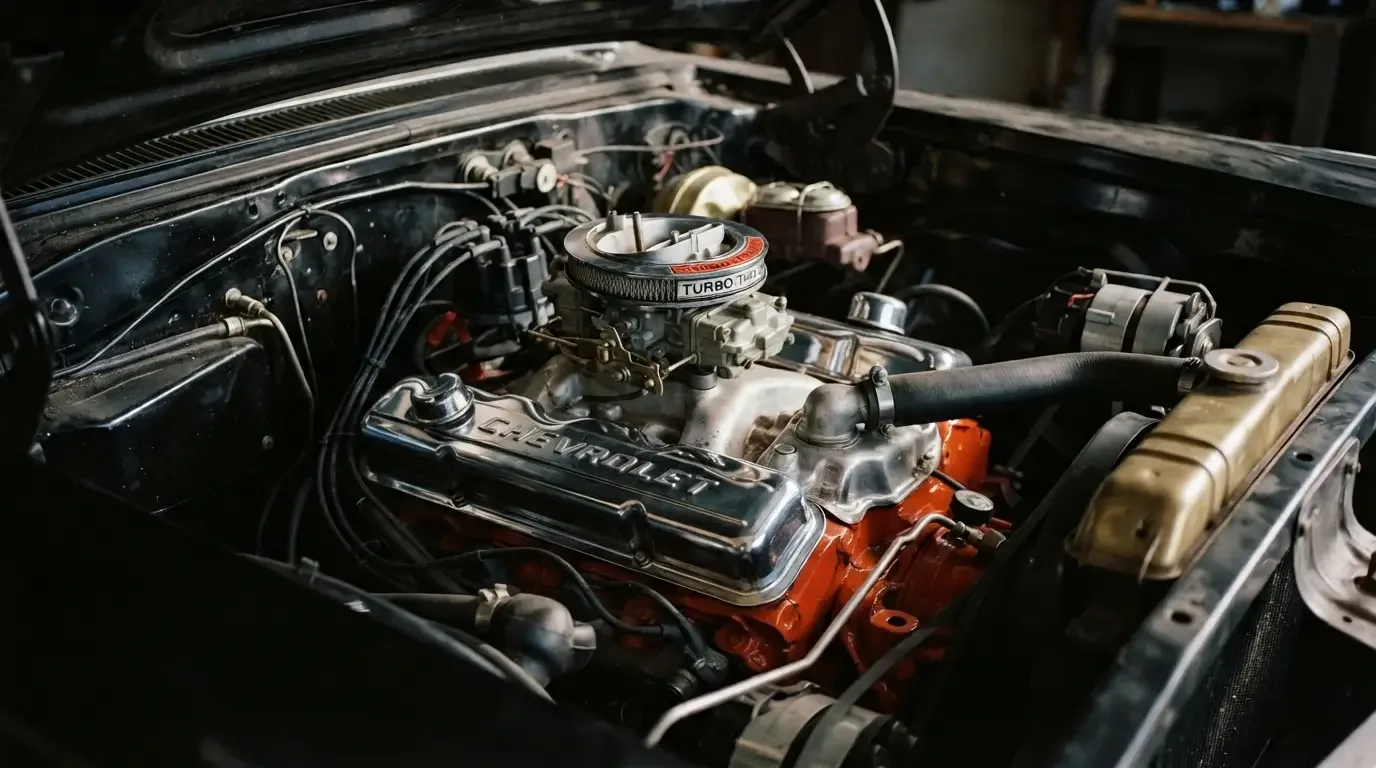
What "W-engine" actually means
The name comes from the valve cover shape. Look at one from the side and the scalloped contour resembles a W, and Chevrolet's own service literature used the term almost immediately. It stuck. The 348 was the first of that family, and it grew into the 409 a few years later using the same basic architecture. Same block family, same visual signature, bigger numbers as the decade went on.
Displacement on the original 348 sat at 348 cubic inches, hence the name, and it replaced nothing. Chevrolet kept selling the small-block 283 right alongside it. The 348 existed purely as a step up, an option for buyers who wanted more than the small-block offered and were willing to pay for it.
Why Chevrolet built it in the first place
The 1958 full-size body was bigger and heavier than the 1957 car it replaced. GM's other divisions were fielding larger displacement engines. Chevrolet needed an answer, and the small-block, for all its virtues, was already near the practical limits of what its architecture could support without a major redesign. Rather than push the 283 further than it wanted to go, Chevrolet built something new.
The 348 started life partly as a truck engine, and that lineage shows up in its combustion chamber design and its overall philosophy. It was built to make torque reliably under load, not to rev. That is not a criticism. It is exactly what a heavier full-size car needed, and exactly what a lighter, revvier small-block was never going to deliver as well.
| Spec | 348 W-Engine (1958) |
|---|---|
| Displacement | 348 cubic inches |
| Base induction | Single four-barrel carburetor |
| Top option | Tri-Power, three two-barrel carburetors |
| Peak output, Tri-Power | 280 hp (base four-barrel rated 250 hp) |
| Later derivative | 409 cubic inch W-engine |
Bore, stroke, and why the numbers matter
The 348 used a bore and stroke combination that favored low-end and mid-range torque over high-RPM output, which fits the truck-derived thinking behind the block. Compression ratios varied by carburetor configuration and model year, with the Tri-Power version running higher compression than the base four-barrel engine to take advantage of the extra breathing capacity. None of this was exotic engineering. It was Chevrolet applying straightforward, well-understood principles to a bigger displacement than the small-block had ever used, and doing it with a design that could scale up further, which it did a few years later with the 409.
Compare that to what Ford and Chrysler were running in the same segment that year, and the 348 holds its own without needing any qualifiers. Chevrolet was not playing catch-up on paper. It built an engine that matched or beat the competition's big-inch offerings while still fitting under a full-size car's hood without a major redesign of the engine bay, which is a real engineering accomplishment given how quickly it went from design to production.
The trade-offs, plainly
More weight than the small-block. Taller, so it changed hood clearance requirements. More complex when equipped with Tri-Power, since three carburetors need to stay in sync or the engine runs poorly. None of that stopped buyers from ordering it. The numbers made the case on their own. A 348 Impala pulled harder than a 283 Impala, full stop, and in a market where Ford and Plymouth were pushing bigger displacement engines of their own, Chevrolet needed a real answer rather than a marketing claim.
Reliability was solid for the era. The W-engine's biggest long-term weakness was not the engine itself but the number of Tri-Power setups that got swapped for simpler single four-barrel carburetors once original owners tired of tuning three carburetors instead of one. That is a maintenance decision, not a design flaw, but it explains why fewer numbers-matching Tri-Power cars survive today than were originally built.
"The 348 isn't glamorous the way the small-block is. It's a torque engine built to do a job, and it did that job well enough that Chevrolet kept building on the same architecture for years."
- Dan Reeves
How it compares to the small-block, directly
Put a 283 small-block and a base four-barrel 348 side by side in the same 1958 Impala body and the difference shows up mostly in how the car pulls once you're already moving, not off the line. The small-block is lighter, revs more freely, and feels livelier at low speeds around town. The 348 does its best work once you're rolling and need to pass or merge, where the extra displacement and torque make the car feel like it is barely working. Neither engine is objectively better. They are built for different priorities, and Chevrolet's decision to sell both side by side for years rather than replace one with the other tells you the market wanted both options available.
Fuel economy tilted toward the small-block, as you'd expect from a lighter engine with less displacement to fill on every intake stroke. Buyers cross-shopping the two rarely made the decision on fuel economy alone, though. The 348 buyer wanted the bigger engine specifically for the way it drove, and that remains true of the collectors chasing 348-equipped cars today. Nobody restores a numbers-matching 348 Impala because it sips less gas than the six-cylinder version.
What it means for buyers today
A documented, numbers-matching 348, especially a Tri-Power car, is worth real money above a comparable Impala with the small-block 283 or the base six. The gap is not small. Verify the block casting numbers against the car's build sheet before paying a premium, because plenty of 348s have been swapped between cars over the decades, and a correct-for-the-car engine is worth more than a correct-for-the-year engine that came from somewhere else.
For the full context of how the 348 fit into Chevrolet's 1958 lineup, start with where this started. If you are shopping rather than reading, you can find a classic Impala for sale equipped with the 348 and compare pricing directly against small-block cars. The difference will tell you how the market actually values Chevrolet's first big-block, which is a more honest answer than any brochure ever gave.
One more thing worth saying plainly: parts availability for the 348 is not what it is for the small-block. Reproduction and NOS parts for the 283 and its descendants are everywhere, because that family stayed in production for decades and fed a much bigger aftermarket. The 348 had a shorter run and a smaller built volume, which means sourcing correct carburetors, manifolds, and trim pieces takes longer and costs more. Budget for that before you commit to a 348 restoration, and don't assume the parts hunt will move at small-block speed.
Sources and notes
Related Reading
Have a
Chevrolet Impala
for Sale?
Reach thousands of serious classic car collectors across the US.
Sell It Here →
Are You a Classic Car Dealer?
List your full inventory and connect with targeted classic car buyers.
Join as a Dealer →

About the author
Dan Reeves
Performance engine builder from North Carolina's motorsports corridor, focused on swaps, forced induction and making real, repeatable power.
Related Listings - Chevrolet Impala
Comments
Be the first to comment on this article.