
I have pulled enough rusted-out CJ-5 tops off enough rusted-out CJ-5 tubs to have real opinions about what changed when Jeep finally built a proper hardtop for the CJ line. The jeep cj cj7 hardtop and doors story is a body-and-fit story before it is anything else, and if you have ever tried to hang a set of half-doors on an early CJ and gotten them to seal right, you already understand why this update mattered as much as any engine change AMC ever made to the platform.
Car Features
7 min read
The First CJ With a Real Roof: The CJ-7 Hardtop Story
A builder's take on the CJ-7's factory steel hardtop and doors, the engineering that made a real seal possible, and how to spot an original from a well-dressed replacement.
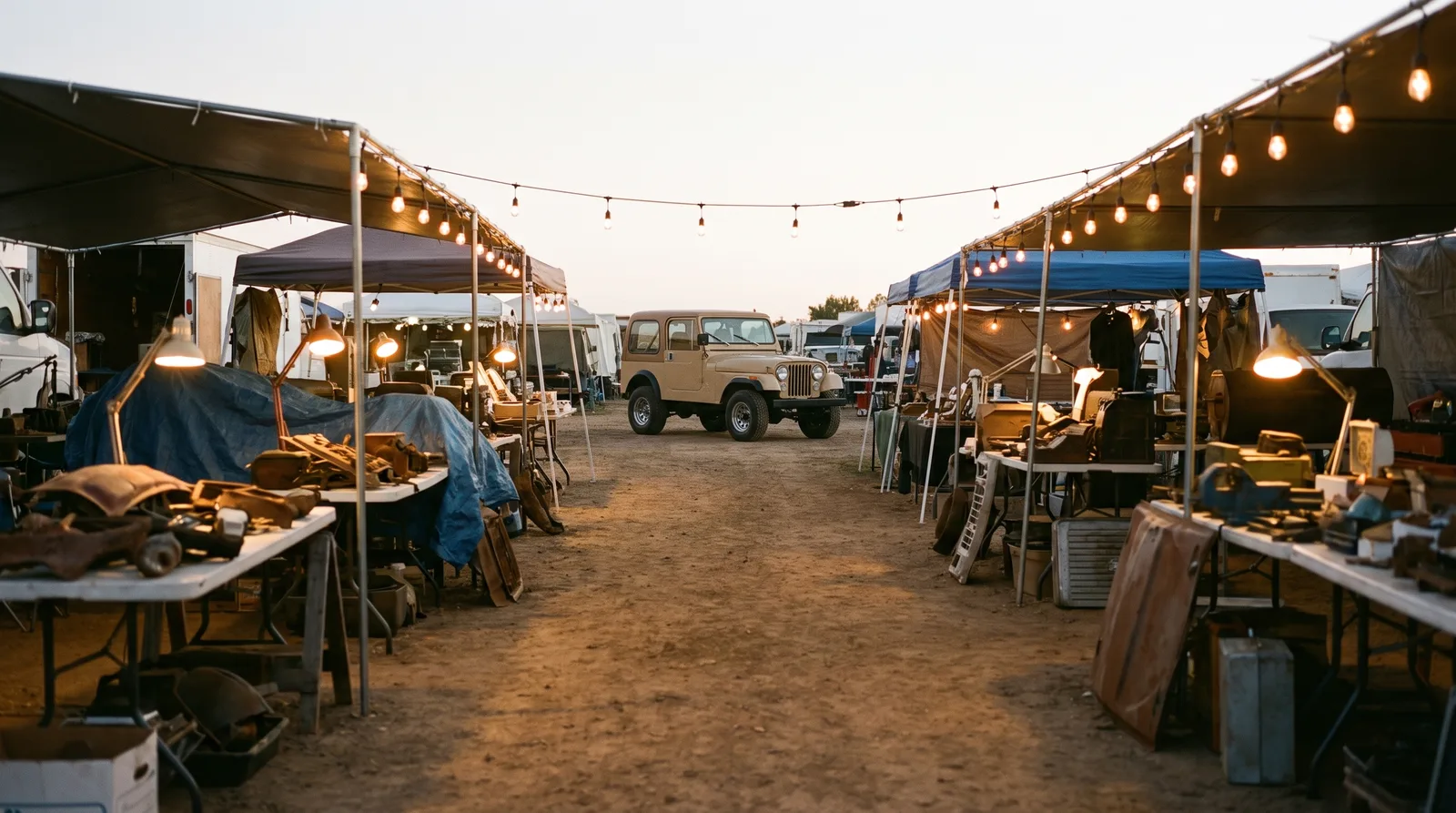
What the CJ line was working with before
The CJ-5 and earlier CJs used a soft top and half-doors that were, to put it plainly, never designed to seal like a real vehicle. That was fine for a farm jeep. Nobody expected a post-hole digger's daily driver to keep road noise or weather out. But by the mid-1970s AMC was chasing a buyer who wanted to drive the thing to work in February, and half-doors with a canvas top were never going to satisfy that customer no matter how good the drivetrain underneath was. Anyone who has actually lived with an old soft-top CJ through a wet winter knows exactly what problem AMC was solving here.
The squared-off tub that made it possible
The real engineering work happened at the back of the vehicle. The CJ-7's body was built with a squared rear opening specifically so a hardtop could mount cleanly, with real weatherstripping and a proper seal, something the rounded rear treatment on earlier CJs never accommodated well. That is not a small detail from a builder's perspective. Getting a hardtop to actually seal against a tub means the mounting points, the drip rails, and the door frame geometry all have to be designed together from the start, not bolted on as an afterthought. AMC did that work for the CJ-7, and it shows in how much better an original hardtop example holds up against water intrusion compared to a soft-top CJ-5 that somebody tried to retrofit later.
Period-correct versus poseur, from a body guy's chair
Here is where I get opinionated, because I see this mistake constantly in the restoration world. A lot of CJ-7s on the market today have had their factory hardtop swapped for an aftermarket unit somewhere along the way, usually because the original top cracked, faded, or got damaged and a replacement was cheaper and easier to source. Worth knowing before you go looking: the early factory tops, from 1976 through 1979, were actually a molded polycarbonate plastic, not steel. Jeep moved to a fiberglass hardtop starting around 1980. Only the doors on either version were steel. That is a legitimate practical choice for a driver, and I am not knocking anyone who made it to keep a jeep on the road. But calling that vehicle period-correct when you go to sell it is where I draw the line. A genuine factory hardtop, whichever material year it came from, has specific mounting hardware, specific weatherstrip channels, and a specific weight that changes how the whole vehicle sits and handles. Swap it for a generic aftermarket unit and you have a different vehicle wearing the shape of the original, not the original itself.
Doors get the same treatment. Original steel doors have a heft and a fit to the body that reproduction doors rarely match exactly, no matter how good the reproduction is. I can usually tell within thirty seconds of opening one whether I am looking at a factory door or an aftermarket replacement, just from how it swings and how it seats when it closes. Buyers who cannot tell the difference themselves should find someone who can before paying a premium for a hardtop example, because the premium only makes sense if what you are buying is actually what the seller claims it is.
| Detail | Factory hardtop | Common aftermarket replacement |
|---|---|---|
| Top material | Molded polycarbonate (1976-1979), fiberglass (1980 on) | Fiberglass, varies in gauge and finish |
| Door type | Steel, roll-up windows | Varies, often lighter-gauge reproduction |
| Weatherstrip fit | Purpose-built channels | Frequently requires adjustment or shimming |
| Weight impact on handling | Original factory balance | Can noticeably change ride characteristics |
"You can build a beautiful jeep with a fiberglass top and reproduction doors, and I've built plenty myself. Just don't call it original when you go to sell it. That's the whole disagreement in one sentence."
- Jim Vasquez
What restoring one properly actually takes
When a genuine factory hardtop shows up in rough shape, rusted along the body's drip rails or with cracked mounting points, restoring it correctly means matching the original panel material and the original seam pattern, not just patching whatever is convenient. I have seen shops take shortcuts here, filling a rusted section with material that does not match the original panel thickness, and the repair looks fine until you get water intrusion again within a couple of seasons because the seal geometry was never actually restored to spec. A correct hardtop restoration is slow, unglamorous work, closer to sheet metal fabrication than to bolt-on parts replacement, and it is one of the areas where paying a specialist who actually understands the CJ-7's specific mounting geometry is worth every dollar over a generalist body shop guessing at the fit.
Why this detail changes what you should pay
A genuine, factory hardtop CJ-7 in good condition is a meaningfully different purchase than the same jeep with a later aftermarket top, even if both look similar in photos. The original setup represents real engineering work AMC did specifically to make the CJ-7 viable as year-round transportation, and that history is worth paying for when it is verifiable. What is not worth paying for is a seller's assumption, or hope, that a fiberglass top reads as original to a buyer who has not looked closely.
For the full background on how the CJ-7 arrived at this hardtop-capable design and what else changed alongside it, read the background on the model's complete history. And since the same 1976 redesign that made the hardtop possible also brought the CJ-7's automatic transmission option, a change that mattered just as much to the daily-use buyer AMC was chasing, worth a look too covers that side of the story.
Shopping for one the right way
If you are in the market for a hardtop CJ-7 and want the real thing, not a well-presented substitute, get under the top and around the doors before you get excited about the paint. Bodywork tells the truth faster than a seller's description ever will. When you are ready to start looking with that discipline in mind, you can shop classic CJ listings and put these details to the test yourself.
At the end of the day, the jeep cj cj7 hardtop and doors story is a reminder that the most meaningful changes to a vehicle are not always the loudest ones. Nobody put the hardtop on a poster the way they might a new engine option, but it did more to change who could actually own and use a CJ-7 comfortably than almost anything else AMC touched in 1976. That is the kind of quiet engineering work I respect most as a builder, the kind that shows up not in a brochure headline but in whether the jeep still keeps you dry decades later.
Sources and notes
Related Reading

About the author
Jim Vasquez
Southern California hot rod and custom car builder with roots in the traditional kustom kulture scene.
Related Listings - Jeep CJ





Comments
Be the first to comment on this article.