
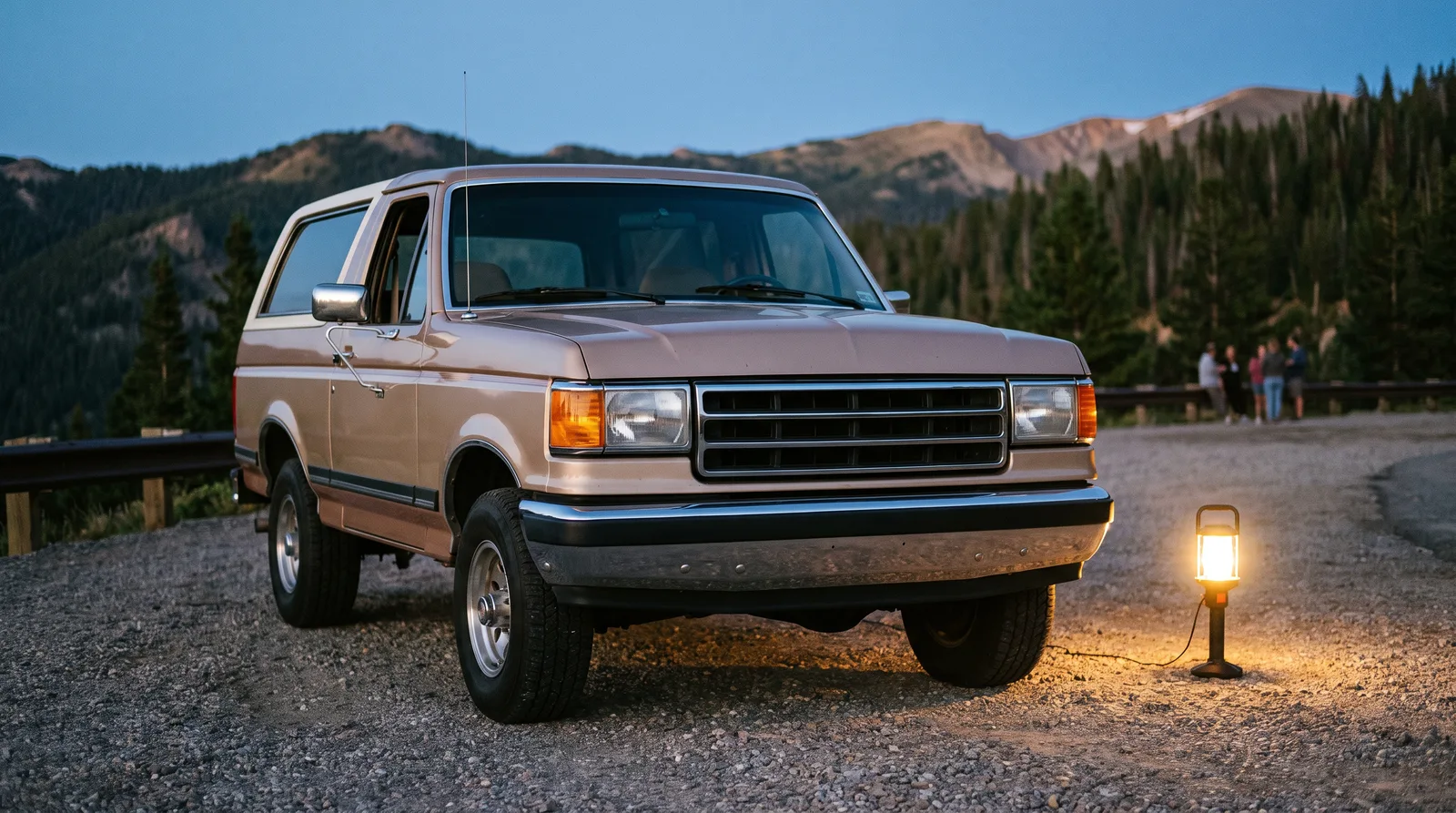
There is a photograph, the kind that ends up in a shoebox instead of a frame, of a man standing beside his truck in a gravel driveway somewhere in the Mountain West, one boot up on the rear bumper, squinting into a sun that has since set on a lot of things. The truck is a jeep cj cj8 half cab, and what strikes you first is not the paint or the year. It is the shape. Half door, half bed, a roof that ends before the truck does, like someone started building a pickup and a Jeep at the same time and simply stopped where the two ideas met.
Car Features
7 min read
The Half-Cab Scrambler: A Truck in Silhouette
A photograph of a man beside his truck leads into the quiet, working-class story of the jeep cj cj8 half cab, a shape that split the difference between cab and cargo bed.
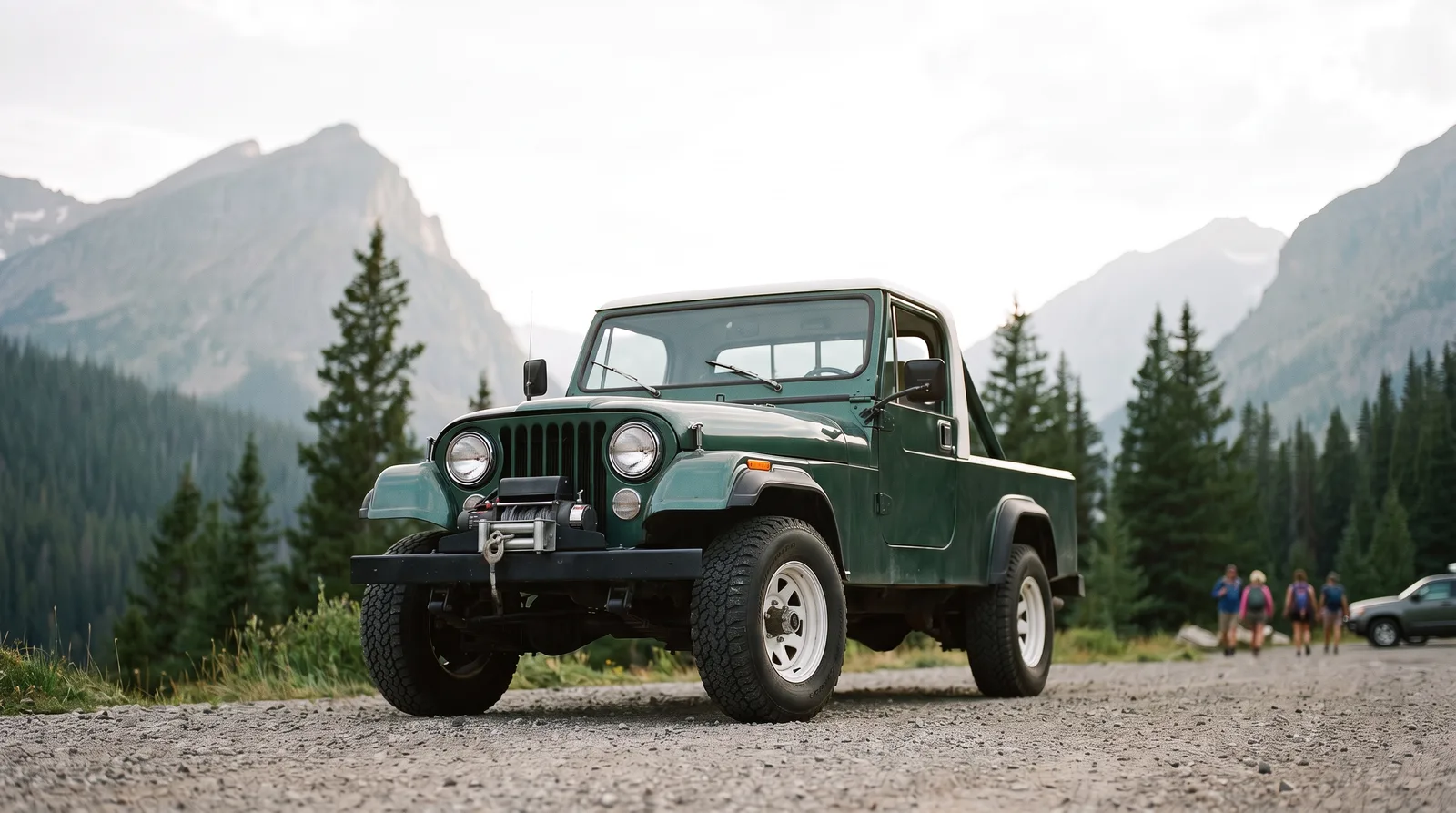
A silhouette that split the difference
The half cab configuration on the CJ-8 Scrambler was, structurally, a simple idea. The front half of the truck kept the enclosed cab, doors and a hardtop roof section over the driver and passenger. The rear half was open, a cargo bed exposed to weather the way any pickup's bed is exposed. It was not a unique concept in the industry. What made it distinct on a Scrambler was how short the whole platform already was. Stretching a CJ chassis just enough to fit a real bed, then capping only part of it with a roof, gave the truck a profile unlike anything else Jeep had built before or would build again.
Owners who lived with a half cab describe the same tradeoff, decade after decade. The enclosed front kept the weather off the driver on a highway run. The open bed meant hauling firewood, lumber, or a dirt bike without worrying about scuffing an interior that was not there to scuff. It was a truck built for people who needed to move things more than they needed to be comfortable doing it, and that honesty is part of why the shape still photographs the way it does.
The man in the driveway
Go back to that photograph. The man is not posing so much as pausing, the way people do when a truck has become less of a possession and more of a fixture, something that was simply there through a decade of ordinary Tuesdays. He is not smiling for the camera. He is looking past it, at something off frame, maybe a field he was about to drive into, maybe nothing at all. The half cab behind him has a scratch along the rear quarter that nobody ever bothered to fix, because fixing it would have meant admitting the truck was precious, and it was not precious. It was useful.
That is the quieter half of the CJ-8's story, the half that does not show up in auction catalogs. Most half cab Scramblers were bought by people who needed a truck shaped exactly this way, open where they needed open and covered where they needed covered, and who never once thought about what the silhouette would mean to someone flipping through old photographs decades later.
"The half cab was never trying to be handsome. It ended up handsome anyway, the way a tool sometimes does after enough years of being used exactly as intended."
- Nora Beckett
The practical case owners actually made
Ask an original owner why they chose the half cab over the fully enclosed Scrambler and the answer is rarely poetic. It usually comes down to what they were hauling and how often. A rancher moving fence posts and feed sacks did not need a bed liner protected from rain, because the load itself did not care about weather the way an upholstered interior would have. A weekend hauler with a dirt bike or a canoe wanted the bed open for easy loading from any angle, not boxed in by a roofline that would have made lashing down odd shaped cargo more of a chore.
The tradeoff cut both ways, of course. Owners who used the half cab for longer highway hauls learned quickly that anything valuable in the bed needed a tarp or a locking box, since there was no roof back there to stop rain, dust, or an opportunistic passerby at a rest stop. That compromise was baked into the configuration from the start, and buyers who chose it generally already understood what they were signing up for. Nobody bought a half cab by accident.
Why the proportions still read as unusual
Modern trucks smooth every transition, bed rails flowing into cab lines in a single continuous shape designed by a team with a wind tunnel. The half cab did the opposite. It let the two functions of the truck, shelter and cargo, remain visibly separate. You can see exactly where one job ends and the other begins, and there is something almost architectural about that honesty, a beam left exposed instead of boxed in behind drywall.
This is part of why the configuration still draws a second look at a car show even from people who cannot name the model. It reads as unfinished at a glance and then, a beat later, as deliberate. The truck is not hiding its compromises. It is built around them.
Look closely at the photograph again and notice the tailgate, dented in a way that looks intentional even though it almost certainly was not. That kind of wear does not happen to a truck kept in a garage. It happens to a truck used the way this one clearly was, week after week, season after season, until the dents and the scratches stopped registering as damage and simply became part of what the truck looked like.
What survives, and why it matters
Half cab Scramblers that have survived intact into the present tend to carry that same worn honesty, a bed with real scars, a cab that shows its miles. Restorers sometimes fight the instinct to make the rear half look as pristine as the front, but the truck was never meant to match itself that neatly. The best surviving examples read like the man in that gravel driveway looked, unposed, a little squinting, entirely at ease with being used.
For the wider arc of how this shape came to exist at all, the full story of the Scrambler program explains the decisions AMC made to stretch the CJ platform into pickup territory in the first place. The half cab was one answer to a question the whole Scrambler line was asking, how much truck can you build out of a Jeep without losing what made it a Jeep.
If that silhouette has gotten under your skin the way it got under mine looking at a photograph that was never meant to be historic, the way forward is simple enough. Go look at real ones. Browse classic CJ listings and see which surviving half cabs still wear their working scars honestly, because those are the ones worth a second look, the ones that never stopped being exactly what they were built to be.
Sources and notes
Related Reading
Have a
Jeep CJ
for Sale?
Reach thousands of serious classic car collectors across the US.
Sell It Here →
Selling a classic? Here's how: where to sell your classic car online
Are You a Classic Car Dealer?
List your full inventory and connect with targeted classic car buyers.
Join as a Dealer →
#classic pickup design
#Jeep CJ-8
#AMC Jeep
#Jeep collectibility
#Scrambler half cab
#Jeep Scrambler history

About the author
Nora Beckett
Automotive features writer and photographer who tells the human stories behind the cars, from show fields to cross-country road trips.
Related Listings - Jeep CJ

Comments
Be the first to comment on this article.